Shape comparison Geometry Worksheets for Ages 3-8
4 filtered results
-
From - To
Our Shape Comparison Geometry Worksheets for ages 3-8 are designed to make learning fun and engaging for young minds. These printable worksheets help children explore basic geometric concepts by comparing and contrasting different shapes, enhancing their visual and cognitive skills. Each activity is carefully crafted to suit the developmental stages of early learners, making it easy for kids to understand and enjoy. Whether you're a parent or teacher, these worksheets are an excellent resource to support your child's or student's mathematical journey. Download and watch them master the art of shape recognition and comparison!
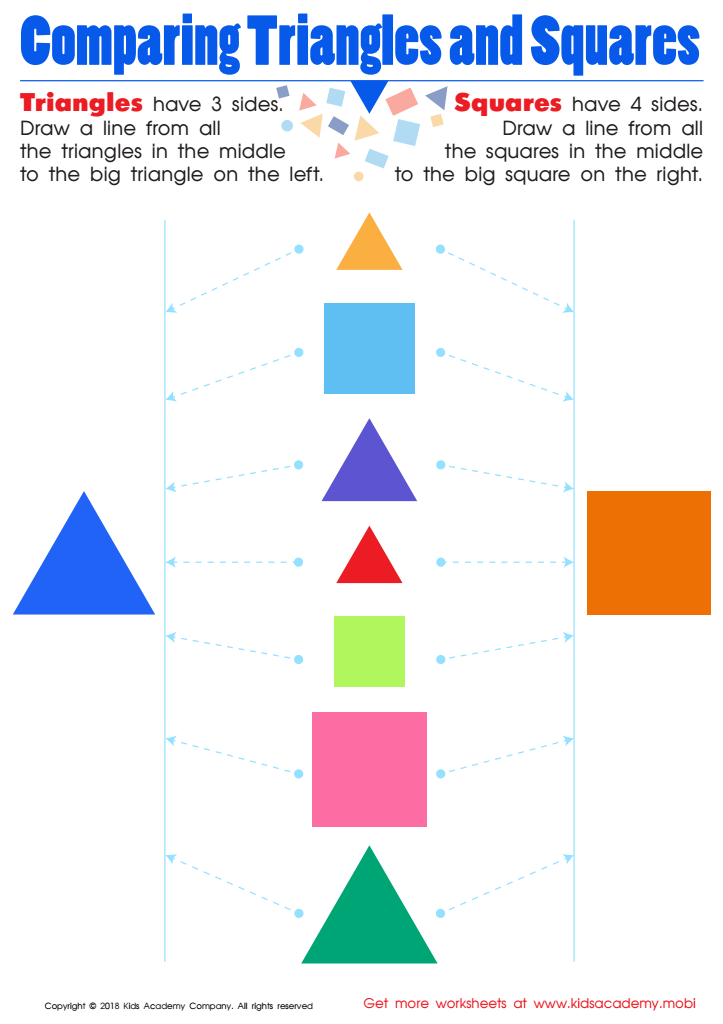
Comparing Triangles Squares Worksheet
 Assign to My Students











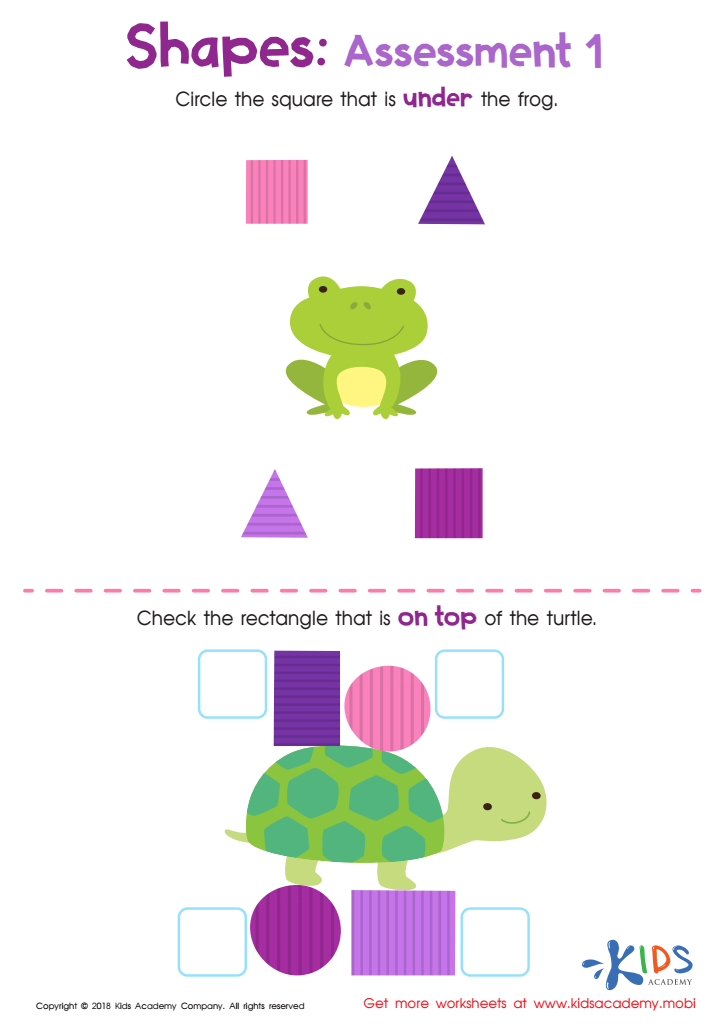
Geometry – Assessment 1 Worksheet
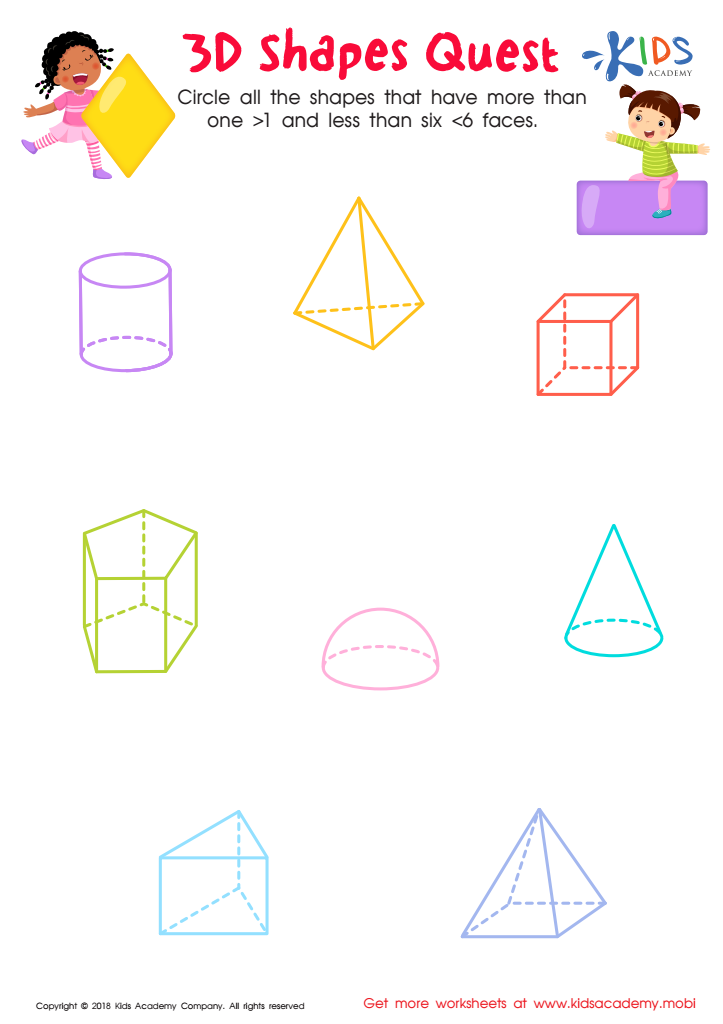
3D Shapes Quest Worksheet
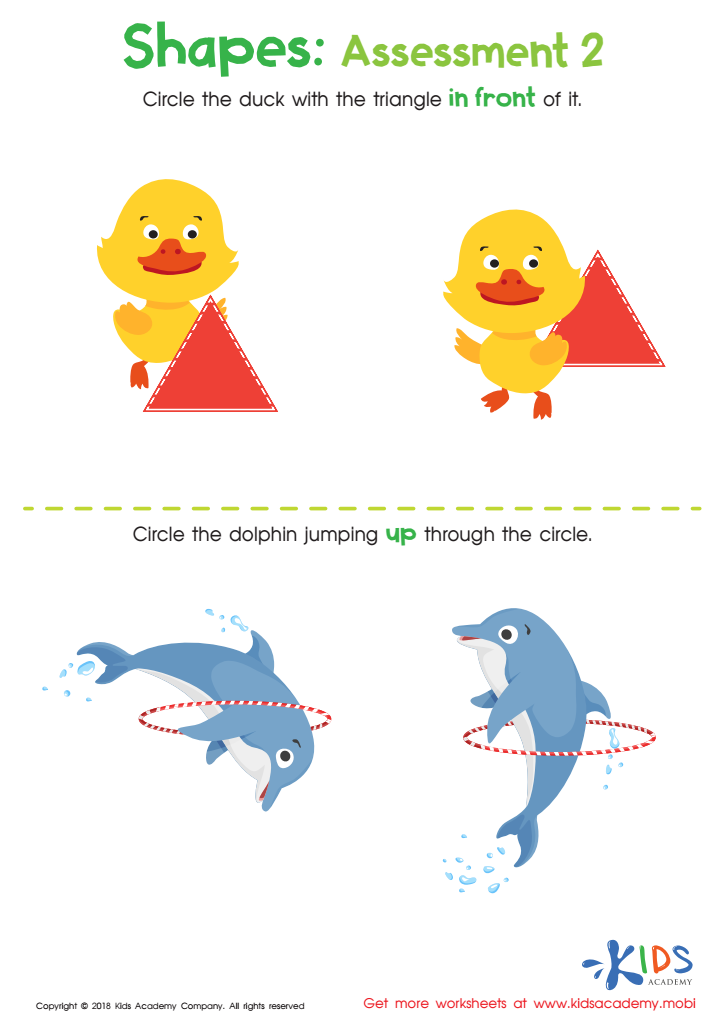
Geometry – Assessment 2 Worksheet








Shape comparison is a foundational concept in geometry, crucial for children aged 3 to 8. Both parents and teachers should care about this because it supports cognitive development and critical thinking skills. When young children compare shapes, they engage in analytical thinking by observing similarities and differences. This process enhances their visual-spatial intelligence, a key skill for subjects like mathematics, science, and even art.
For instance, identifying that a triangle has three sides while a square has four not only helps them understand basic geometry but also strengthens counting and problem-solving abilities. Such early exposure lays groundwork for complex topics later, such as geometry, measurement, and even algebra.
Moreover, recognizing shapes and their attributes develops vocabulary and communication skills. When children describe shapes—or even spot everyday objects resembling certain shapes—their language skills are enhanced. It also fosters creativity and imagination; children can compare and sort shapes to create patterns or build structures, essential for their artistic and logical growth.
Socially, engaging in shape activities often involves group work, which nurtures teamwork, cooperation, and respect for different perspectives. In sum, shape comparison is not just about geometry; it is a comprehensive activity that primes children for lifelong learning across various domains.








