Understanding area Geometry Worksheets for Ages 3-8
3 filtered results
-
From - To
Explore our "Understanding Area Geometry Worksheets" tailored for children aged 3-8! These engaging resources are designed to introduce young learners to the concept of area through fun, interactive activities. Each worksheet focuses on foundational geometry skills with colorful visuals and age-appropriate tasks, making learning enjoyable and accessible. Children will grasp essential ideas while developing critical thinking and problem-solving abilities. Whether in the classroom or at home, these worksheets are perfect for enhancing math fluency and fostering a love for learning in early education. Dive into the exciting world of geometry and help your child build strong mathematical skills with our thoughtfully designed materials!
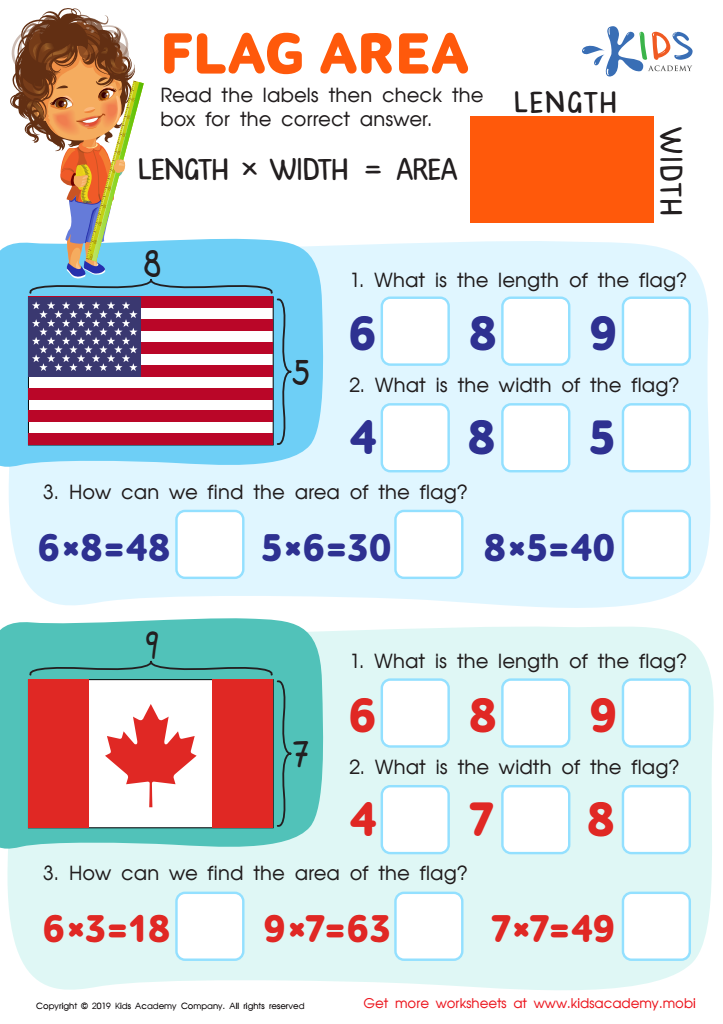
Flag Area Worksheet
 Assign to My Students











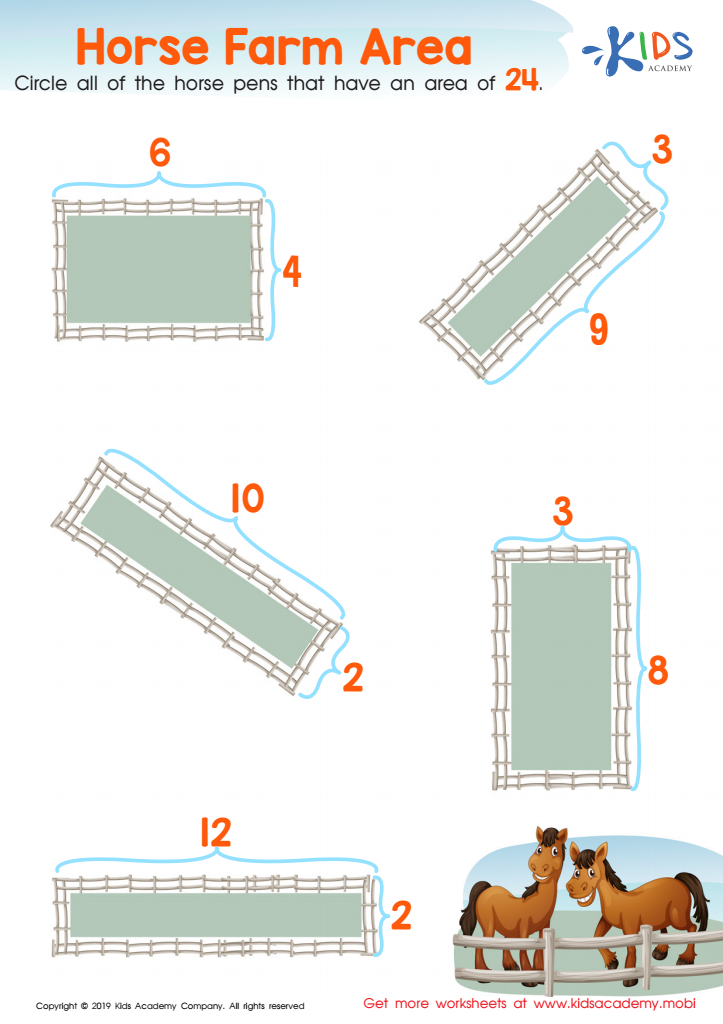
Horse Farm Area Worksheet
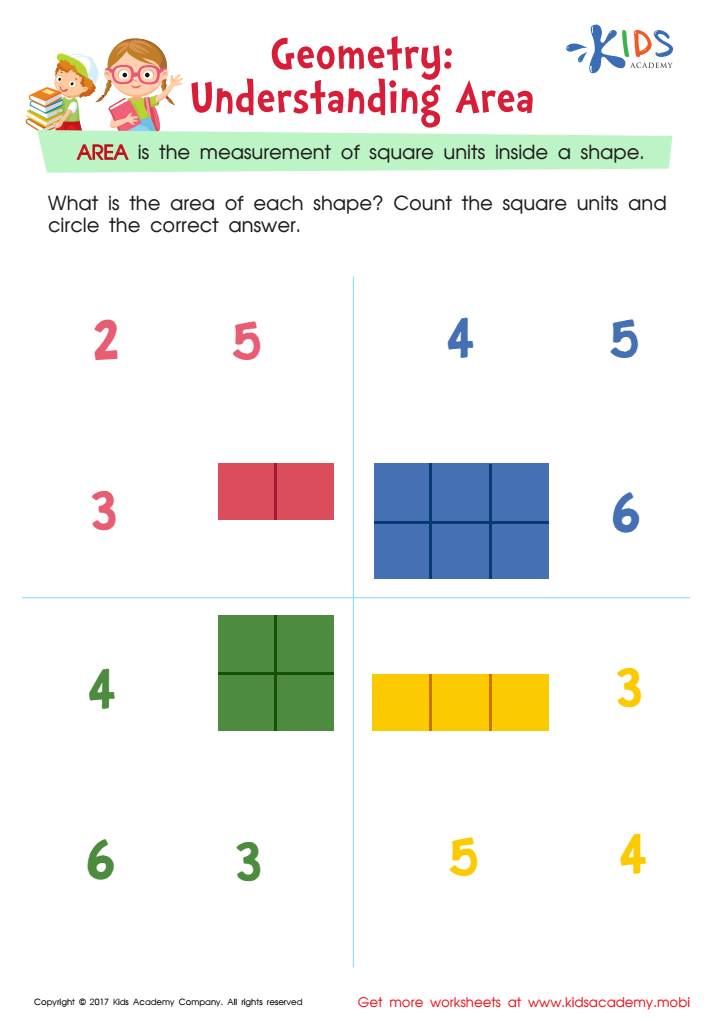
Understanding Area Worksheet








Understanding area and geometry is crucial for children aged 3 to 8 for several reasons. First, these concepts lay the foundation for essential mathematical skills. Early exposure helps children recognize shapes, spatial relationships, and measurements, forming the basis for more complex math later on.
Geometry encourages critical thinking and problem-solving skills. When children engage with the concepts of area and shape, they learn to visualize problems and think through solutions. This cognitive development is vital as it fosters creativity and logical reasoning that will serve them in various fields, not just math.
Furthermore, learning about geometry aids in real-world applications. Children encounter shapes and spatial awareness in everyday life—be it through art, construction, or play. Understanding how to measure area helps them develop practical skills, such as understanding the size of spaces and objects, which are essential for tasks like cooking or organizing.
Lastly, incorporating geometry into early education promotes engagement. Using interactive tools, games, and hands-on activities transforms abstract concepts into relatable experiences, capturing children's interest while boosting their self-confidence in math. Ultimately, nurturing a love for geometry and area opens doors to lifelong learning opportunities and a stronger foundation in STEM disciplines.








