Developing problem-solving abilities Numbers Worksheets for Ages 3-8
3 filtered results
-
From - To
Enhance your child's problem-solving skills with our engaging Numbers Worksheets, designed specifically for ages 3 to 8. These worksheets are tailored to foster critical thinking through fun and interactive math activities. Children will learn to identify patterns, solve simple equations, and navigate real-world problems using numbers. Each worksheet encourages exploration and creativity, helping young learners build a strong foundation in mathematics while boosting their confidence. Perfect for home or classroom use, these resources ensure that children develop essential skills for future academic success. Empower your child’s learning journey today with our thoughtfully designed materials that make problem-solving a joyful experience!
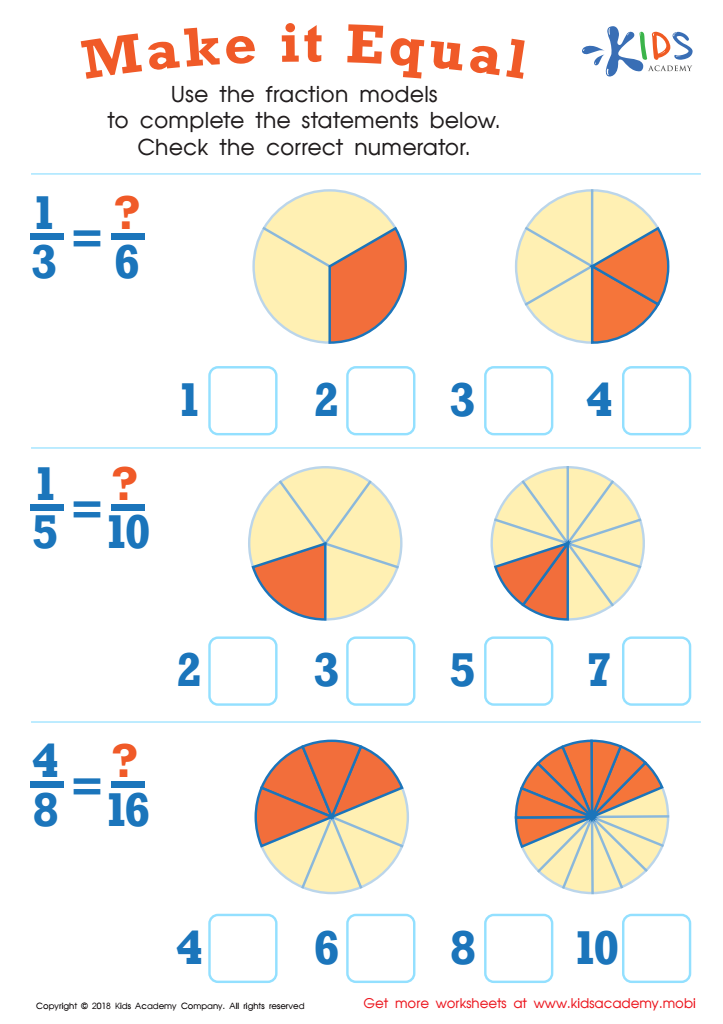
Make It Equal Worksheet
 Assign to My Students
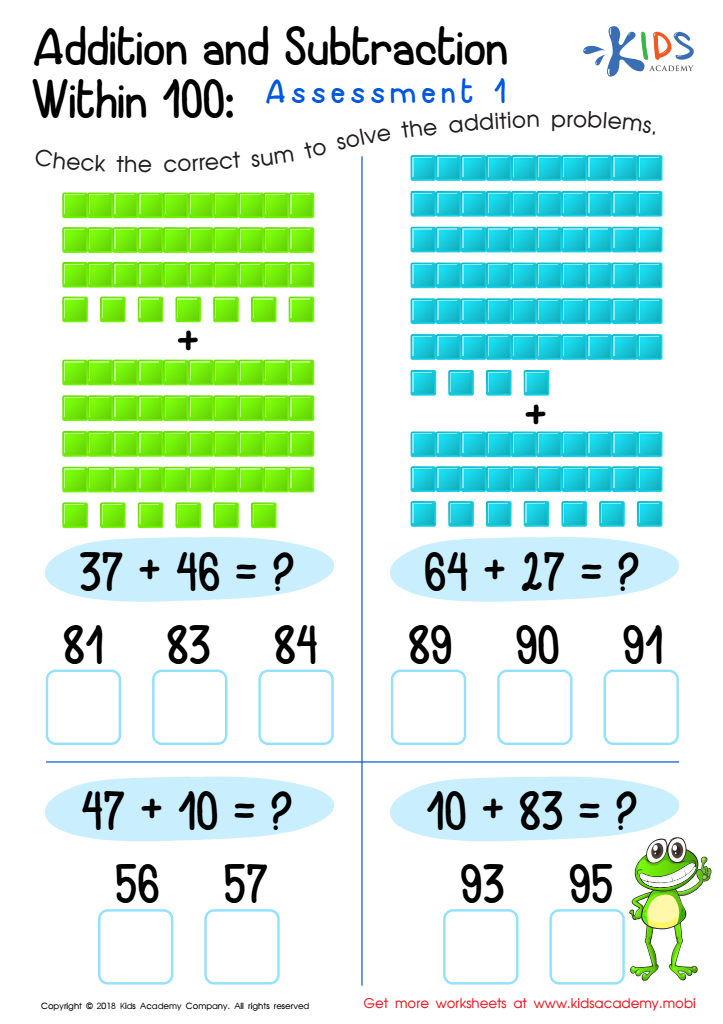
Addition and Subtraction Within 1: Assessment 1 Worksheet
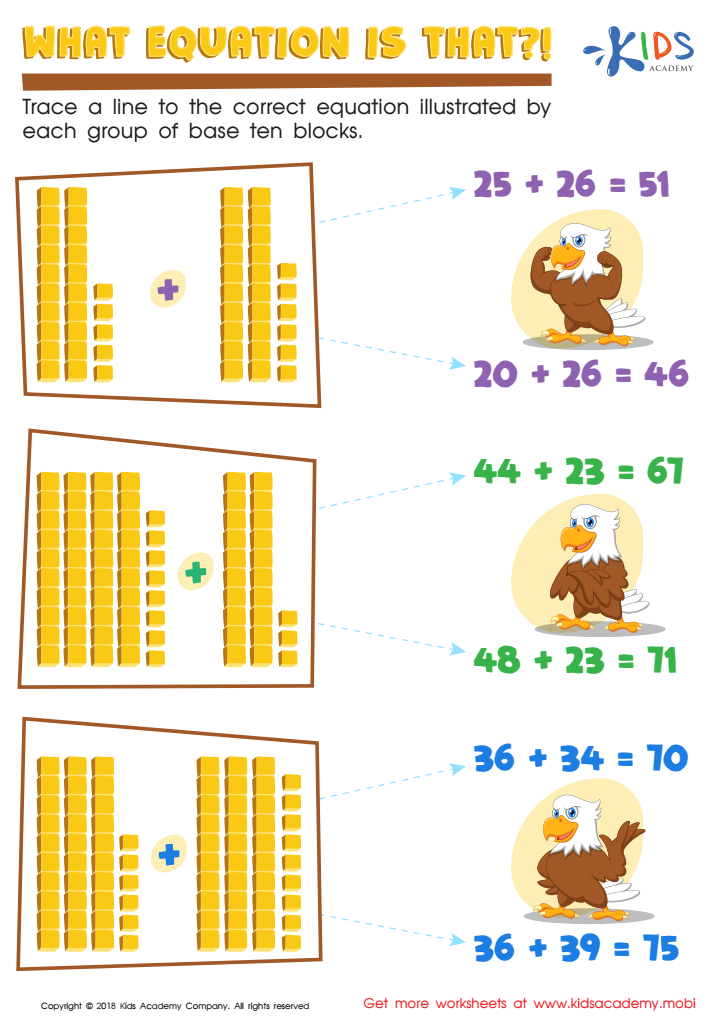
What Equation Is That? Worksheet








Developing problem-solving abilities in children aged 3-8 is essential for their cognitive, emotional, and social growth. At this stage, children begin to think more critically and creatively, laying the groundwork for their future learning. When parents and teachers prioritize problem-solving skills, they equip children to approach challenges with confidence and resilience.
Problem-solving fosters critical thinking, enabling children to analyze situations, make choices, test solutions, and learn from mistakes. Engaging children in number-related problem-solving activities, such as simple math puzzles and games, enhances their mathematical reasoning while making learning enjoyable.
Moreover, these activities develop perseverance, as children learn the importance of effort and persistence in overcoming obstacles. In group settings, problem-solving tasks encourage collaboration and communication, teaching children how to work effectively with others and share diverse perspectives.
Furthermore, strong problem-solving skills are linked to better academic performance and greater adaptability in various life situations. By nurturing these abilities early on, parents and teachers help cultivate a growth mindset in children, empowering them to tackle complexities throughout their lives. Thus, fostering problem-solving skills is foundational not just for academics but for equipping children with lifelong skills in an ever-evolving world.








