Interpreting data Numbers Worksheets for Ages 3-8
4 filtered results
-
From - To
Discover our engaging "Interpreting Data Numbers Worksheets" designed specifically for children ages 3-8. These interactive worksheets help young learners develop essential skills in understanding and analyzing data in a fun, accessible way. Featuring colorful visuals and relatable themes, our activities encourage kids to interpret graphs, charts, and simple datasets. From counting favorite fruits to analyzing classroom poll results, children will enjoy hands-on learning experiences that enhance their mathematical reasoning and critical thinking abilities. Ideal for classroom or home use, these worksheets provide a foundation in data interpretation, setting the stage for future academic success. Get started on a data adventure today!
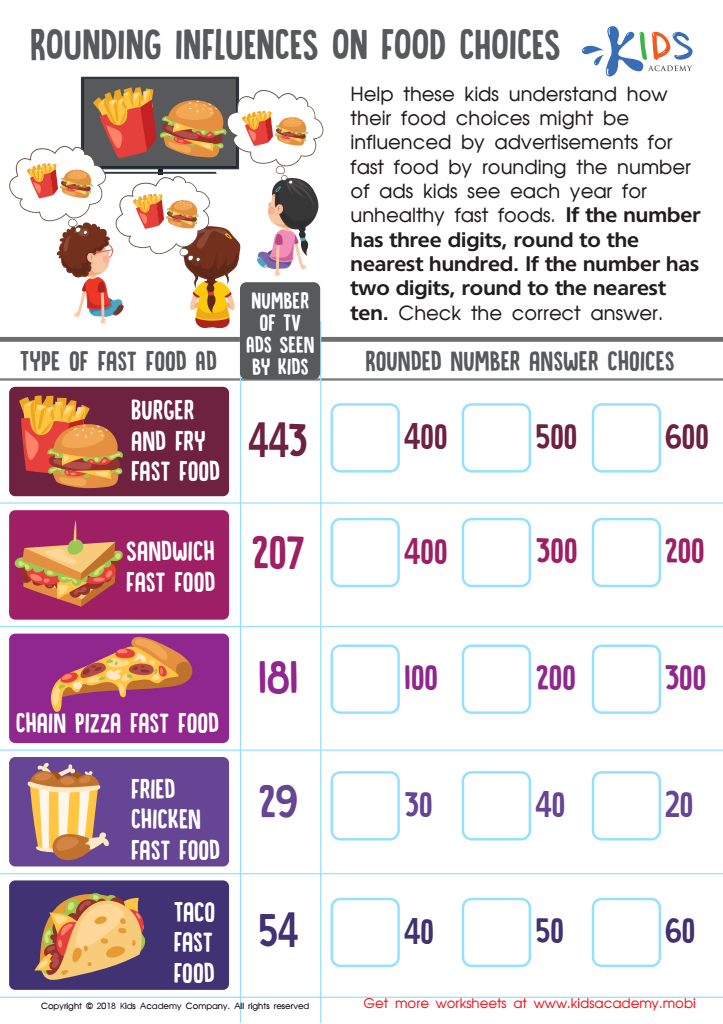
Rounding Influences Food Choices Worksheet
 Assign to My Students
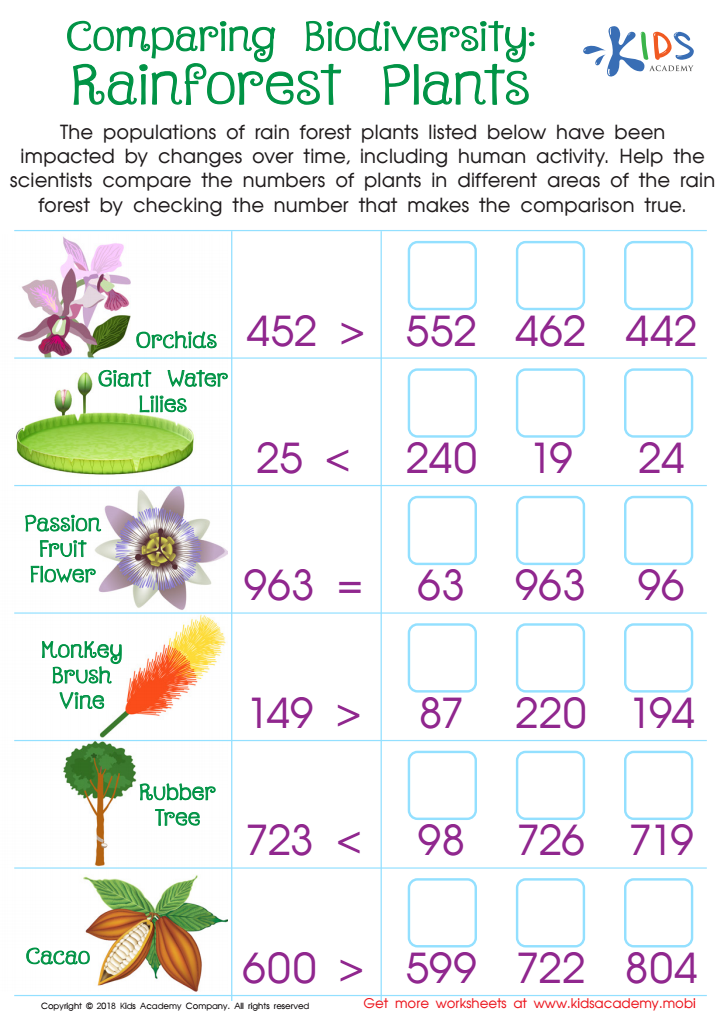
Comparing Biodiversity: Rainforest Plants Worksheet
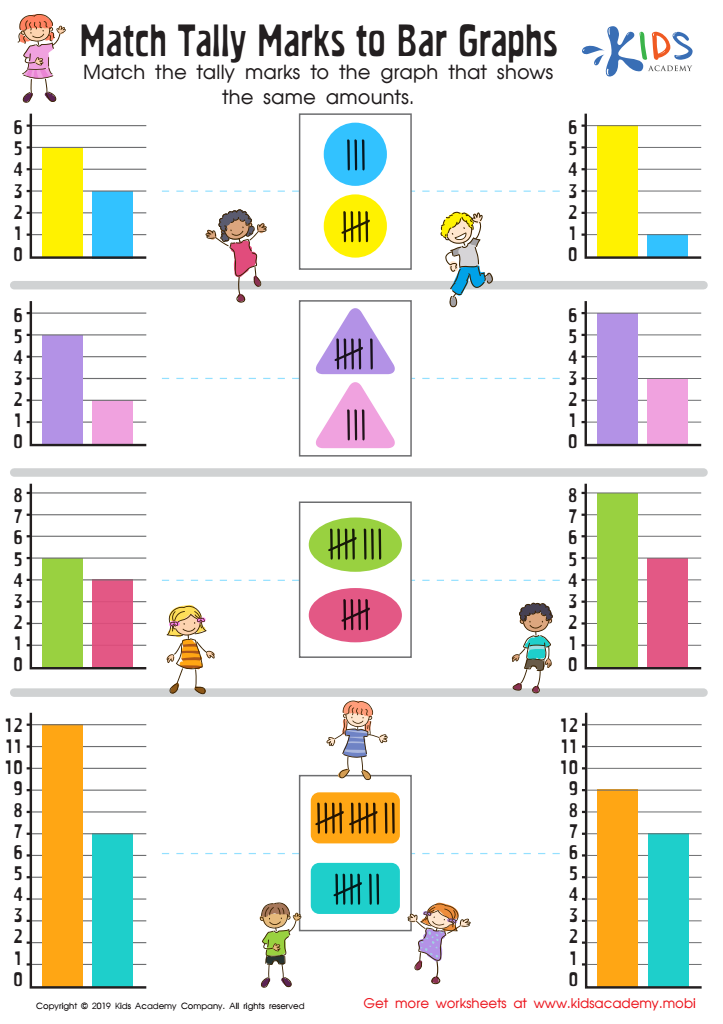
Match Tally Marks to Bar Graphs Worksheet
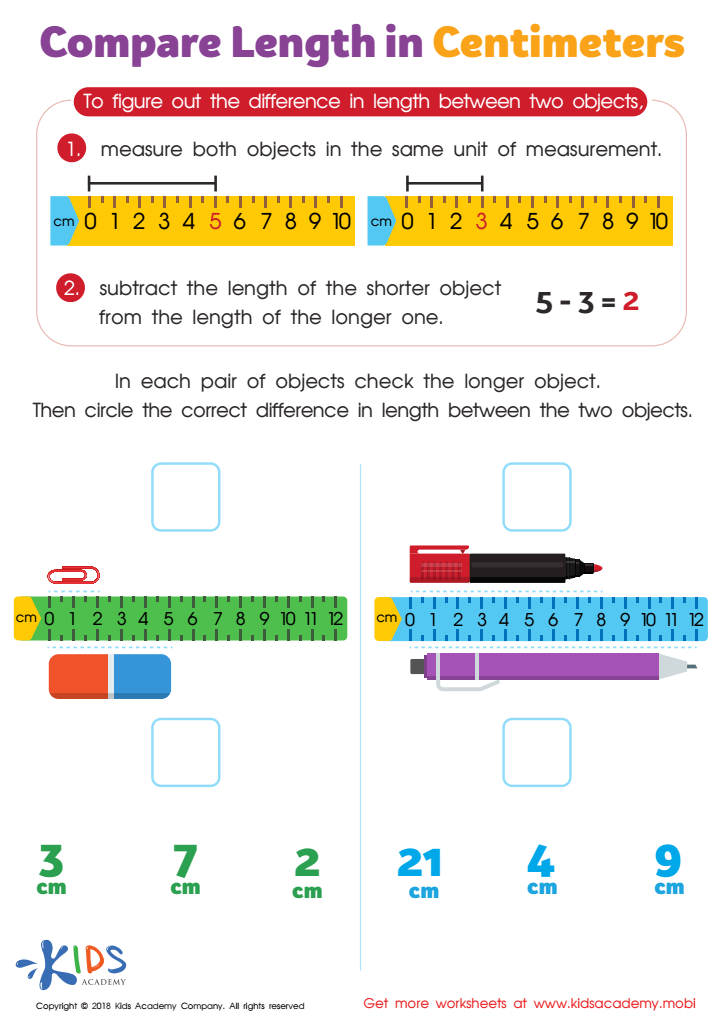
Compare Length in Centimeters Worksheet








Interpreting data is crucial for parents and teachers of children aged 3-8 because it provides valuable insights into a child's development, learning progress, and individual needs. At such a formative age, understanding numerical data—whether it's from assessments, observations, or surveys—can illuminate a child's strengths and areas that require extra support.
Firstly, data interpretation aids in tailoring educational approaches to meet each child's unique learning style. For instance, identifying patterns in a child's progress helps educators adapt their teaching strategies, ensuring a more effective learning experience. Secondly, correlated data assists in recognizing developmental milestones, guiding, and tracking early interventions if necessary.
Moreover, collaboration between parents and teachers, supported by data, fosters a unified approach to the child’s education. Parents can better understand the educational landscape and advocate for their child's needs when armed with data insights.
Finally, interpreting data encourages transparency and accountability in education. It empowers educators and parents to make informed decisions, allocating resources wisely and focusing efforts on areas that benefit the children the most. In essence, understanding and utilizing data can significantly enhance the educational experience for young learners, setting a strong foundation for their future.








