Money recognition Numbers Worksheets for Ages 3-8
3 filtered results
-
From - To
Explore our engaging "Money Recognition Numbers Worksheets" tailored for ages 3-8! Designed to make learning about money fun and interactive, these worksheets help young learners identify and understand different denominations. Our colorful activities not only promote number recognition but also enhance counting skills, laying a strong foundation for financial literacy. Whether at home or in the classroom, these resources are perfect for curious minds eager to explore the world of money. Download and print our worksheets today to empower your child with essential math skills through enjoyable exercises. Get ready for a hands-on learning adventure in money recognition!
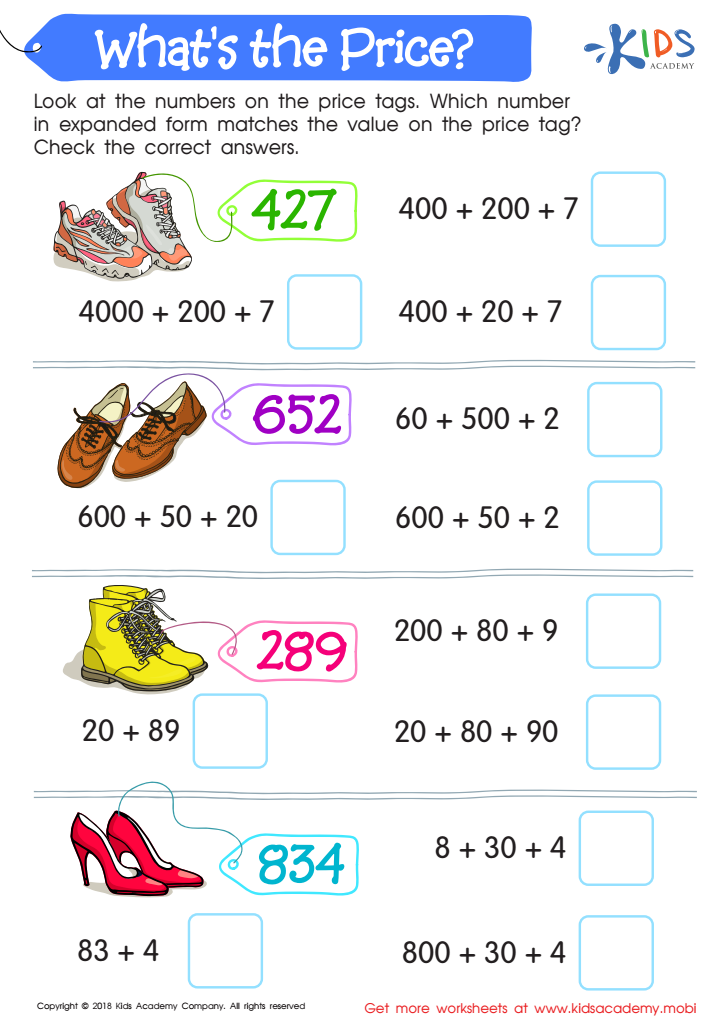
What's the Price? Worksheet
 Assign to My Students
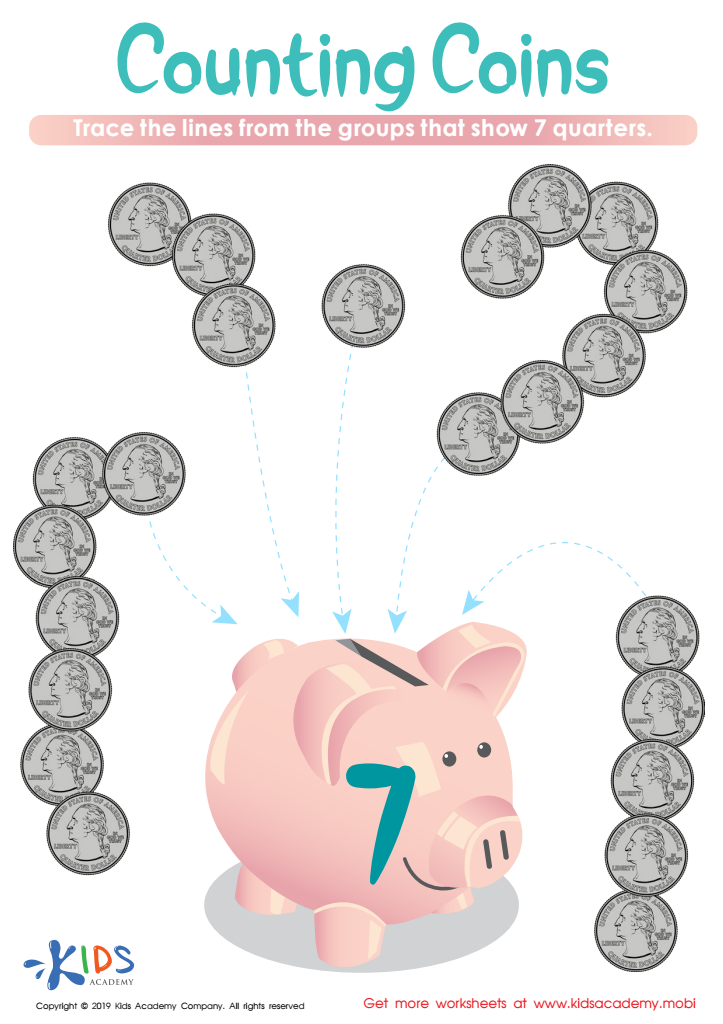
Counting Coins Worksheet
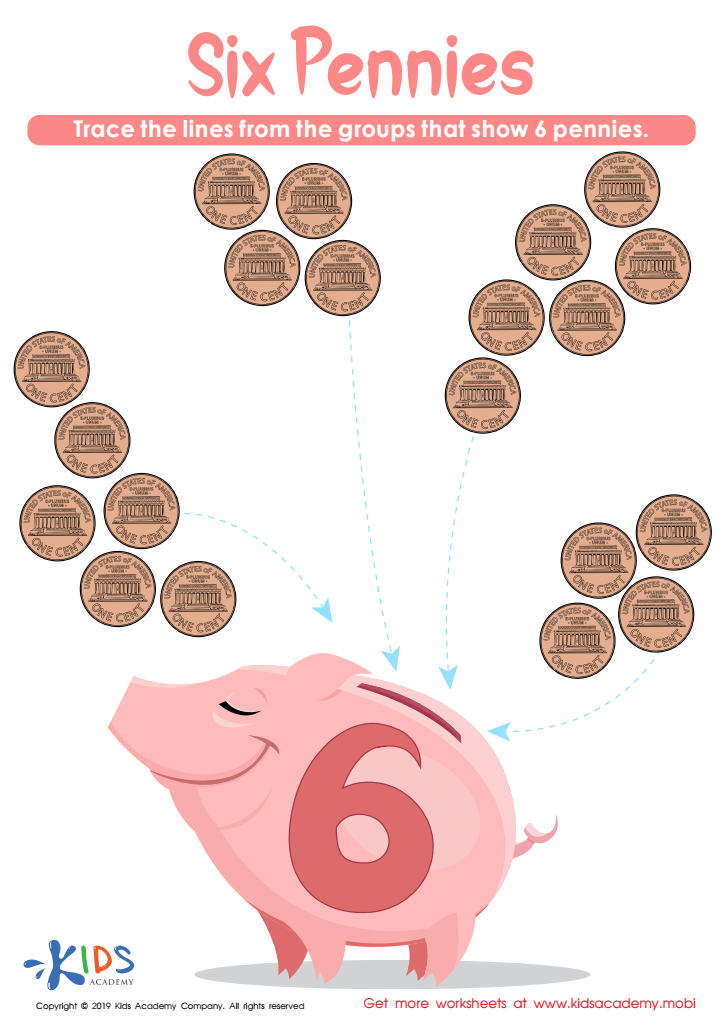
Six Pennies Worksheet








Money recognition is a crucial skill for children aged 3-8 as it lays the foundation for financial literacy. During these formative years, children are naturally curious about the world around them, including the concept of money. Teaching them to recognize coins and bills fosters an understanding of value, helping them grasp essential math concepts like counting, addition, and subtraction.
Understanding money also promotes decision-making skills. As children learn to identify different denominations, they begin to appreciate the importance of saving, spending wisely, and budgeting. This skill can be integrated into everyday activities, such as setting up a mock store at home or allowing them to assist with small transactions while grocery shopping.
Moreover, early money recognition can boost children's confidence and independence. As they master these skills, they become more capable of managing their own small finances, which prepares them for more complex financial decisions later in life. Ultimately, prioritizing money recognition not only equips children with practical skills but also instills values of responsibility and resourcefulness. Both parents and teachers play a vital role in this process, helping children develop a healthy relationship with money from a young age.








