Understanding quantity Numbers Worksheets for Ages 3-8
4 filtered results
-
From - To
"Understanding Quantity Numbers Worksheets for Ages 3-8" are meticulously designed to help young learners grasp the fundamental concepts of numerical quantities. These engaging and educational worksheets focus on counting, recognizing numbers, and understanding their values. Through colorful illustrations and interactive activities, children can improve their number recognition and counting skills, build a solid math foundation, and develop confidence in their abilities. Perfect for preschool and early elementary grades, these worksheets cater to multiple learning styles, making math fun and accessible for every student. Visit Kids Academy to explore our wide range of expertly crafted worksheets and watch your child thrive in math!
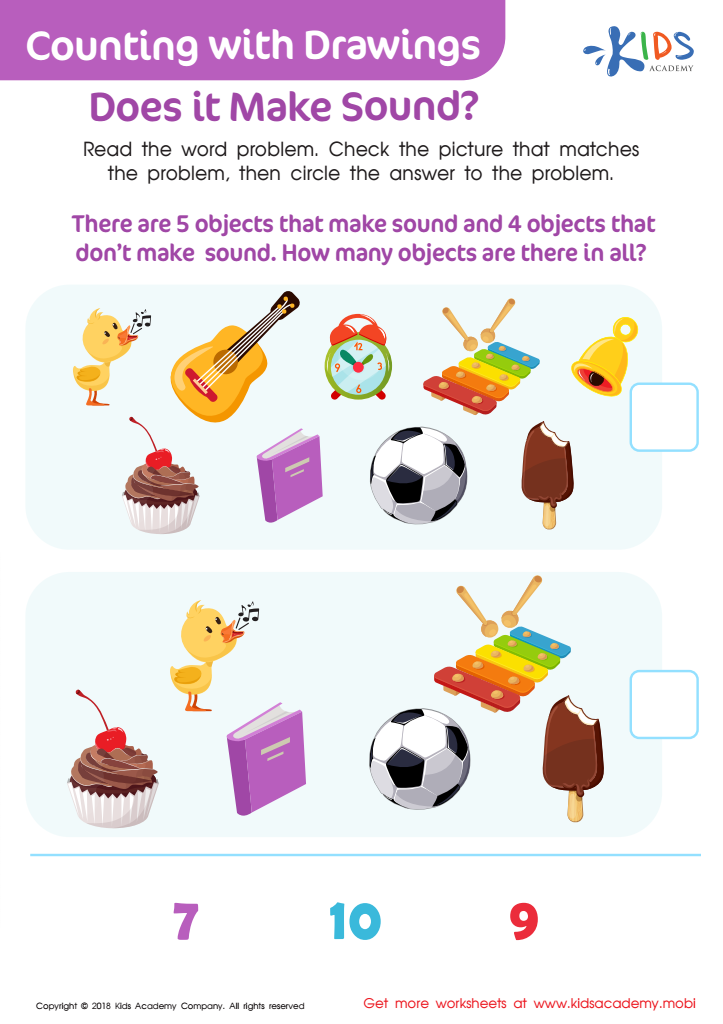
Counting With Drawings. Does It Make Sound? Worksheet
 Assign to My Students
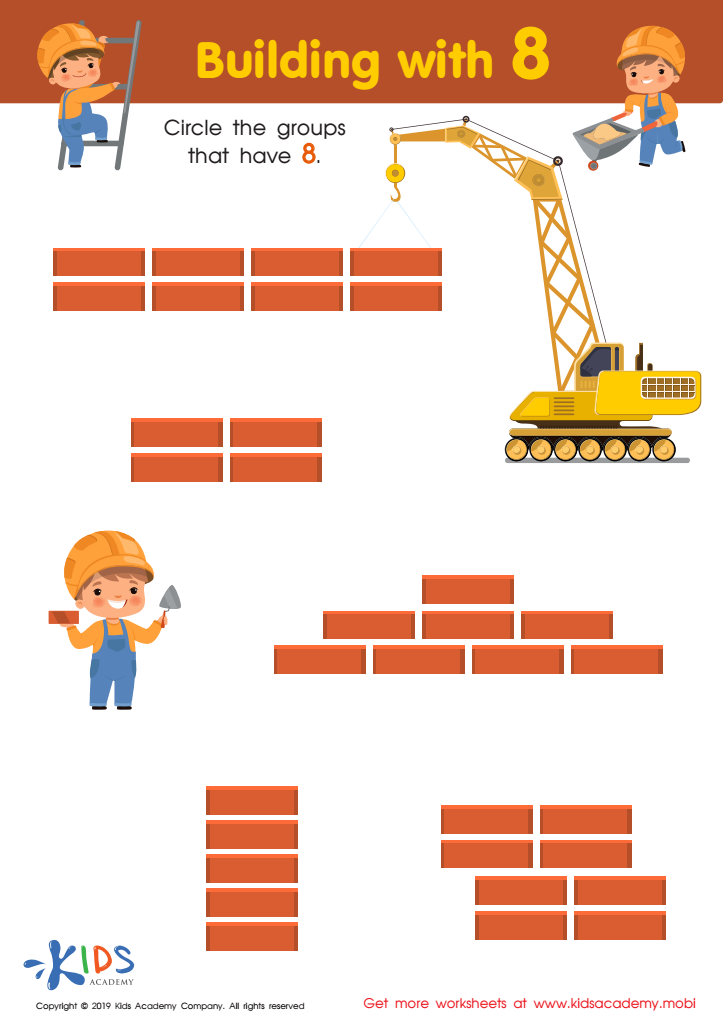
Building with 8 Worksheet
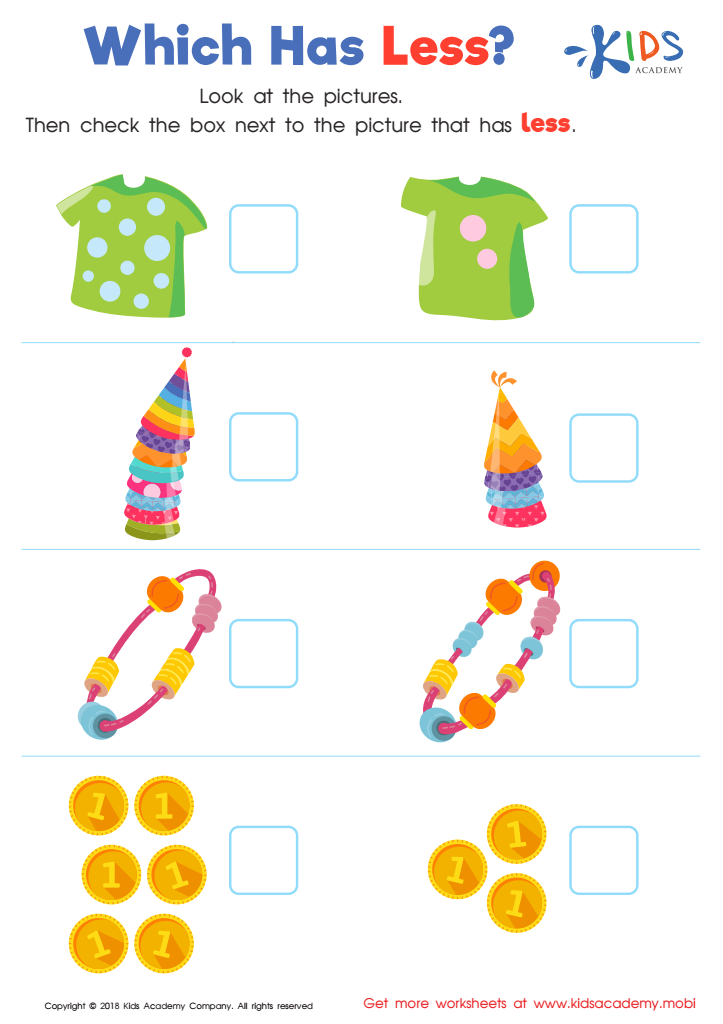
Which Has Less? Worksheet
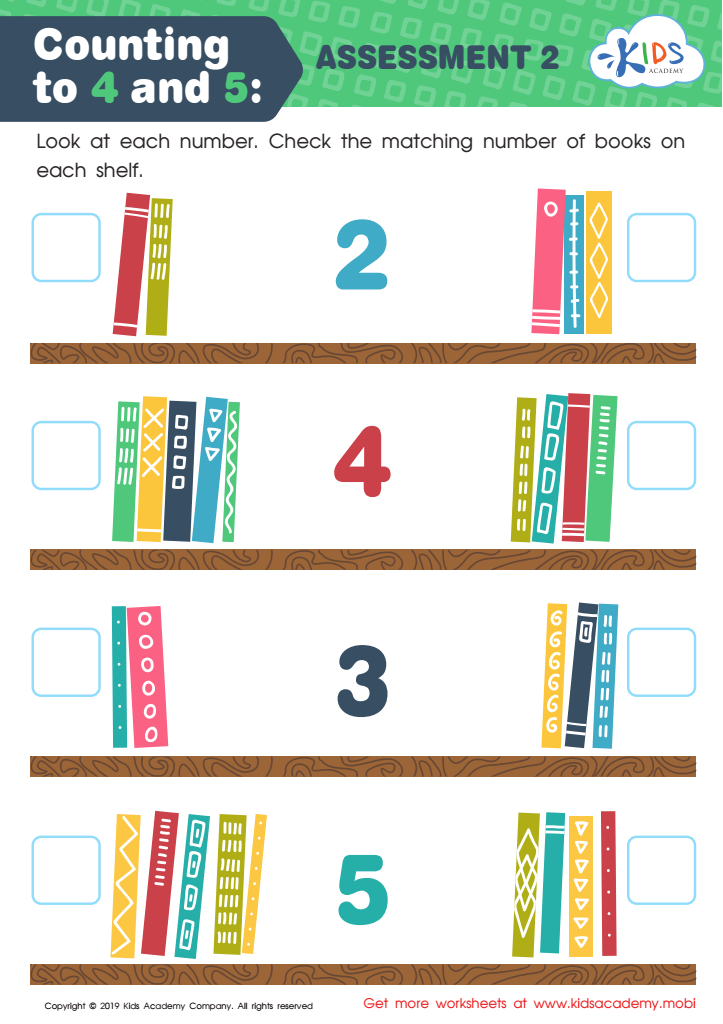
Counting to 4 and 5: Assessment 2 Worksheet








Understanding quantity numbers during the ages of 3-8 is crucial because it lays the foundation for future mathematical learning and everyday problem-solving abilities. At this developmental stage, children are rapidly expanding their cognitive skills, and grasping the concept of quantity helps them make sense of the world around them. For example, knowing how many apples they have allows them to understand sharing or comparing amounts.
When parents and teachers emphasize understanding quantities, they strengthen a child's number sense, which is the ability to recognize, relate, and mediate numerical concepts in almost every aspect of life. Research indicates that early numeracy skills are strong predictors of future academic success, not just in mathematics but in other subjects too. Kids who efficiently grasp quantity concepts can transition more seamlessly into complex mathematical operations as they progress in their education.
Moreover, knowing quantities imbues children with confidence in their problem-solving skills, while fostering curiosity and an inquisitive mindset. Activities like counting games, measuring different objects, and engaging in simple addition/subtraction in daily routines can make learning enjoyable and intuitive.
Overall, understanding quantity is not just about numbers. It equips children with essential tools to think logically, make informed decisions, and interact more meaningfully with the environment and people around them. Therefore, parents and teachers should prioritize this aspect of early childhood education.








