Understanding sequencing Numbers Worksheets for Ages 3-8
4 filtered results
-
From - To
Understanding sequencing numbers is a vital skill for early learners aged 3-8, helping them grasp the order of numbers and develop essential math foundations. Our engaging worksheets are designed to simplify this concept through interactive and colorful activities tailored to young minds. Children will explore various sequencing exercises that promote critical thinking and problem-solving. From filling in the blanks to arranging numbers in order, these worksheets foster a love for learning while building the confidence necessary for future math success. Dive into our resources, and watch your child thrive as they master sequencing numbers, setting the stage for enduring academic achievement!
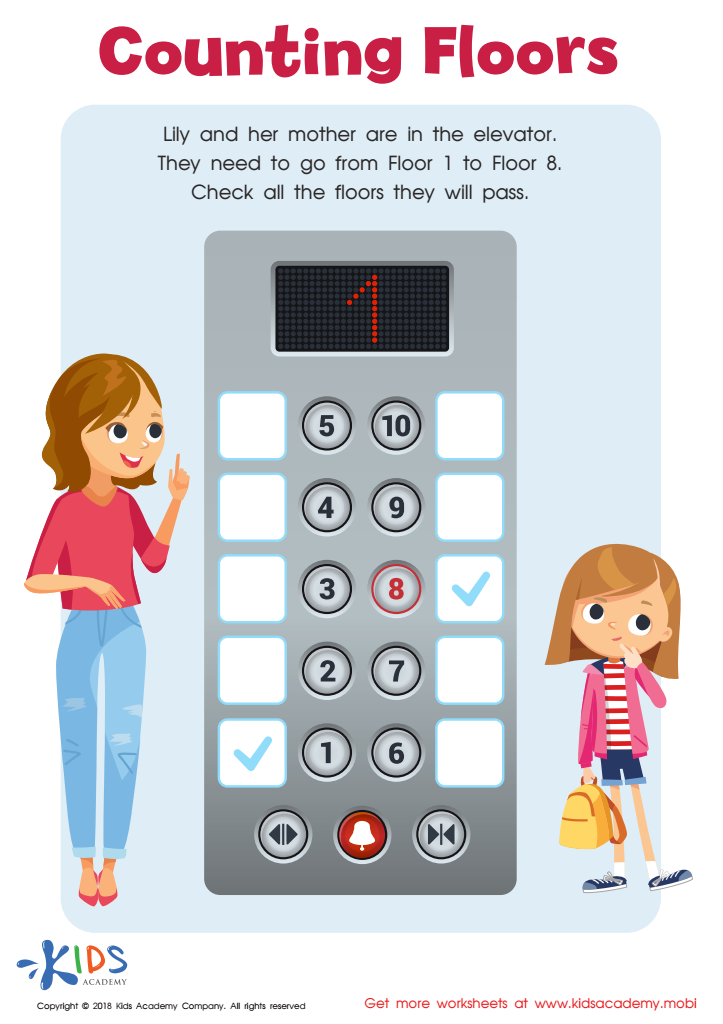
Counting Floors Worksheet
 Assign to My Students
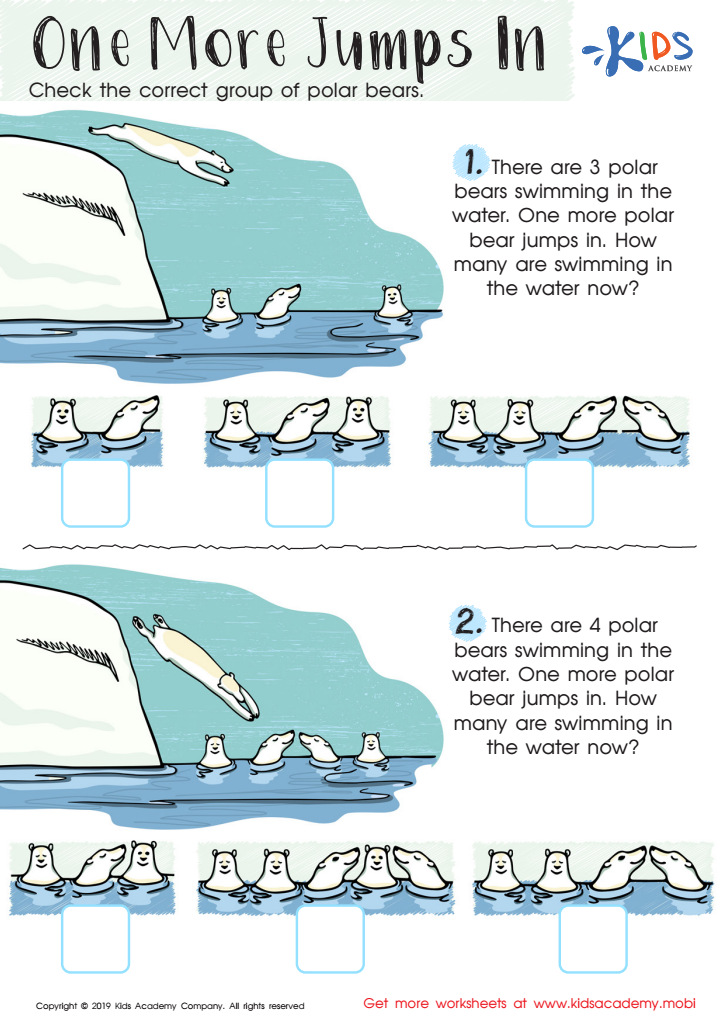
One More Jumps In Worksheet
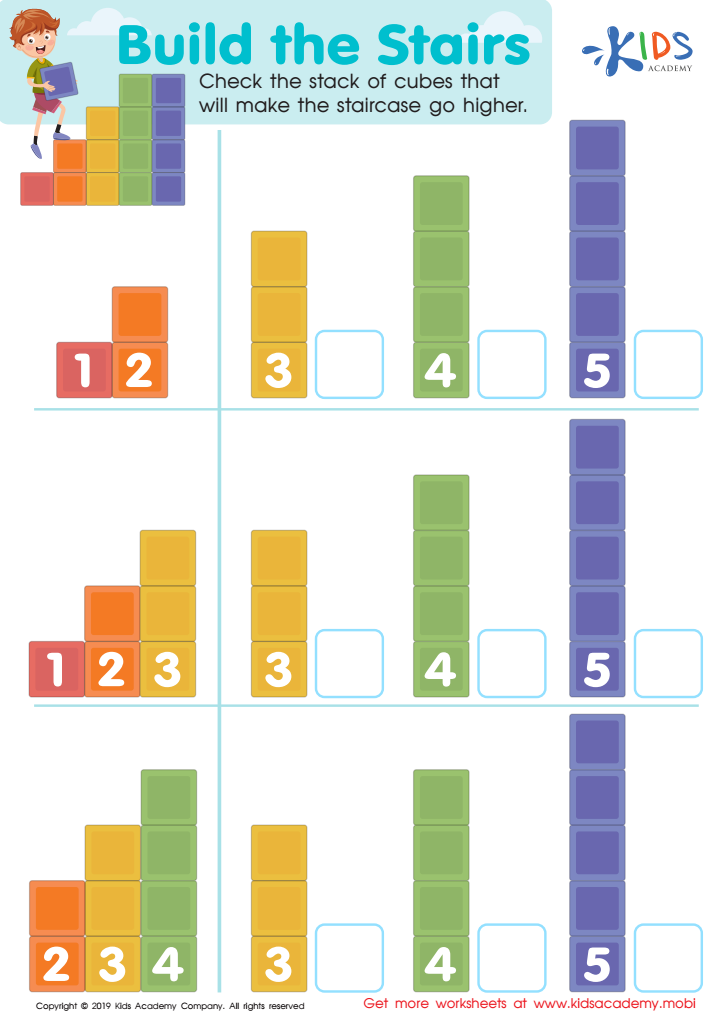
Build the Stairs Worksheet
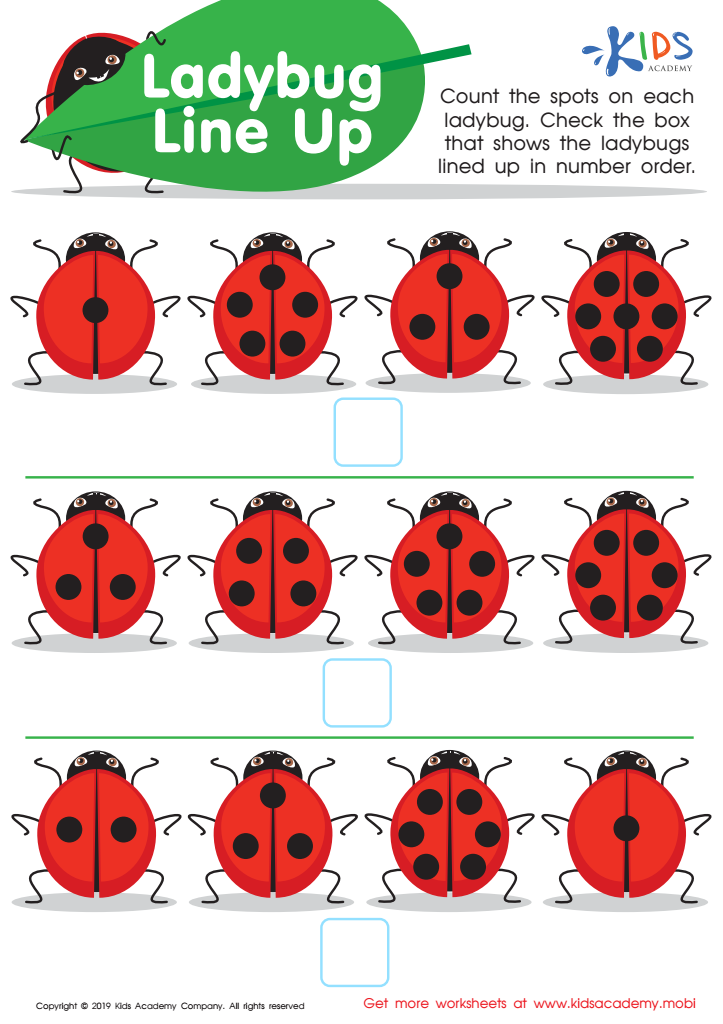
Ladybug Line Up Worksheet








Understanding sequencing numbers is essential for children aged 3-8, and both parents and teachers should prioritize this foundational skill. Sequencing involves recognizing and organizing numbers in a specific order, which lays the groundwork for essential math concepts. Children who grasp sequencing are better equipped to engage with basic arithmetic, patterns, and problem-solving.
At a young age, children are naturally developing cognitive abilities. Introducing numbers through sequencing can enhance their critical thinking and reasoning skills. For instance, recognizing that 3 comes after 2 and before 4 helps children understand the continuity of numbers, setting the stage for addition, subtraction, and more complex mathematics later on.
Moreover, sequencing numbers aids in everyday life skills, such as telling time, understanding calendars, and managing sequences of actions or directions. By fostering this skill in young learners, parents and teachers support not just mathematical understanding but also overall cognitive development.
Creating opportunities for children to practice sequencing through engaging activities—like number games, songs, or visual aids—not only makes learning fun but also reinforces their confidence in working with numbers. Ultimately, fostering sequencing skills at an early age is a crucial investment in a child’s long-term academic success and literacy.








