Animal Classification Math Worksheets for Ages 3-8
4 filtered results
-
From - To
Discover engaging Animal Classification Math Worksheets for ages 3-8! These fun, educational worksheets from Kids Academy blend math skills like counting, addition, and subtraction with lessons on grouping and identifying animals. Young learners will love the interactive questions that help them recognize and sort animals by characteristics such as habitat, type, and size. Perfect for both homeschooling and classroom use, these worksheets foster critical thinking and a love for learning in a playful way. Enhance your child's math abilities while exploring the fascinating world of animals! Start your adventure in learning today with Kids Academy's printable resources.
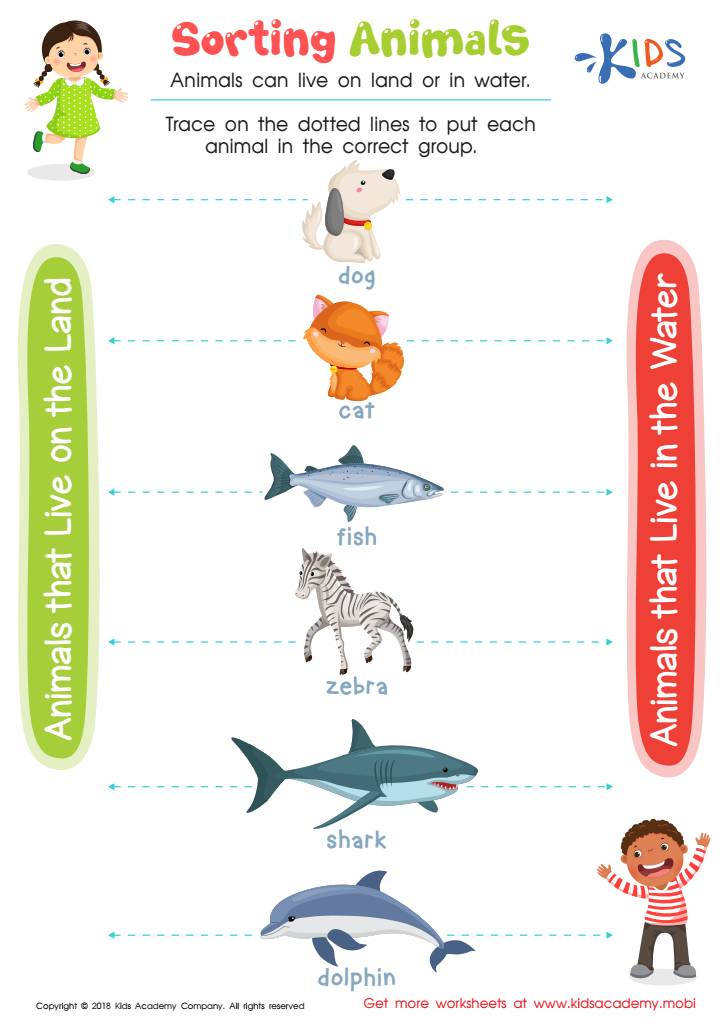
Sorting Animals Worksheet
 Assign to My Students
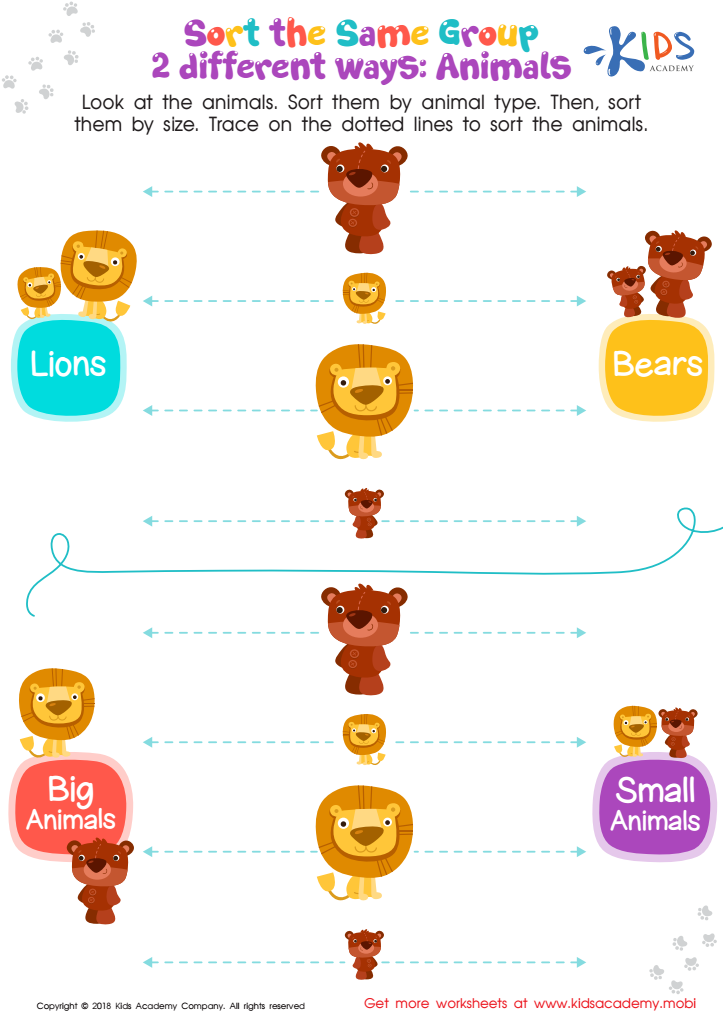
Sort the Same Group 2 Different Ways: Animals Worksheet
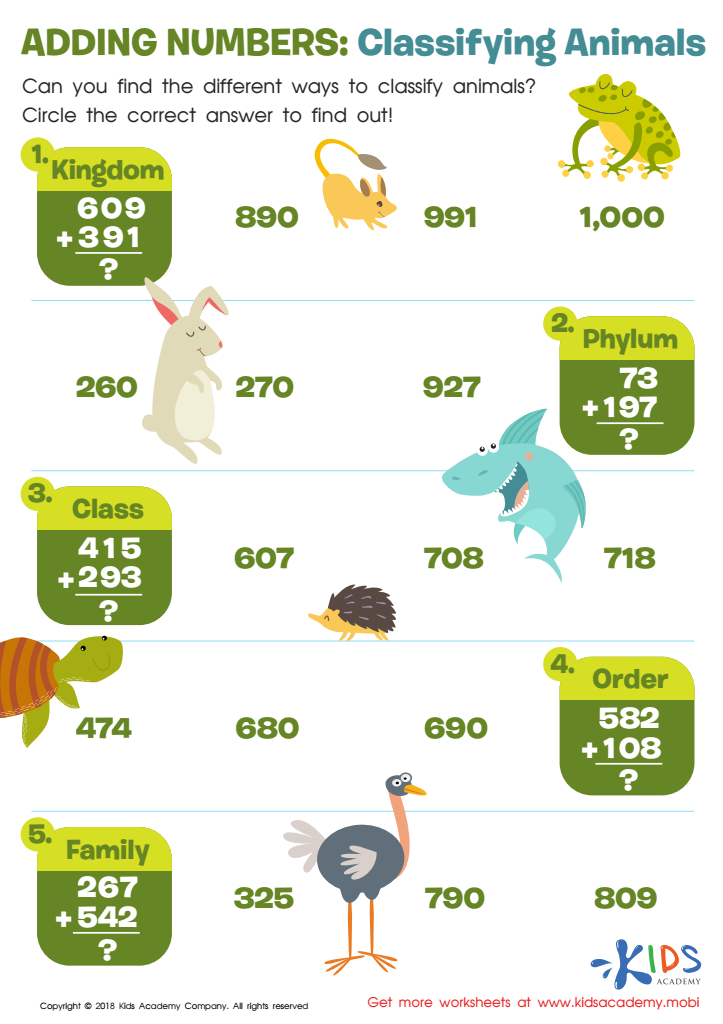
Adding Numbers: Classifying Animals Worksheet
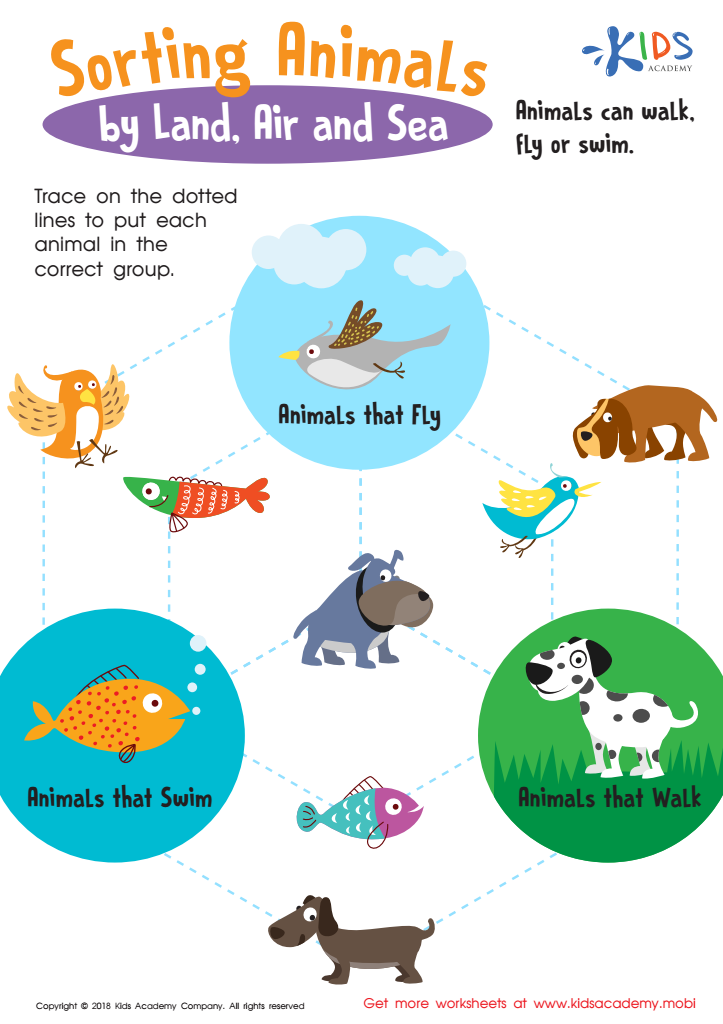
Sorting Animals by Land, Air and Sea Worksheet







Parents and teachers should care about Animal Classification Math for ages 3-8 because it offers a multifaceted approach to early childhood education that significantly enhances cognitive and developmental skills. At this crucial stage, children's brains are rapidly developing, and integrating learning activities that foster math, science, and critical thinking can have long-term benefits. By classifying animals, children learn about different species, habitats, and characteristics; this not only expands their vocabulary but also enhances their understanding of the natural world and builds a foundation for scientific literacy.
Additionally, incorporating mathematical elements such as counting, sorting, and pattern recognition into animal classification exercises strengthens essential numeracy skills. For example, children might count the number of legs different animals have, sort animals by size, or identify patterns in fur colors. These activities encourage analytical thinking and problem-solving, crucial skills in math and beyond.
Moreover, animal classification fosters engagement and curiosity. Many children naturally show interest in animals, making this a highly motivating learning context. By nurturing this curiosity, parents and teachers can instill a love for learning, setting a positive educational trajectory. Overall, blending animal classification with math activities creates a dynamic and enriching educational experience, laying essential groundwork for academic and personal growth.








