Animal recognition Math Worksheets for Ages 3-8
111 filtered results
-
From - To
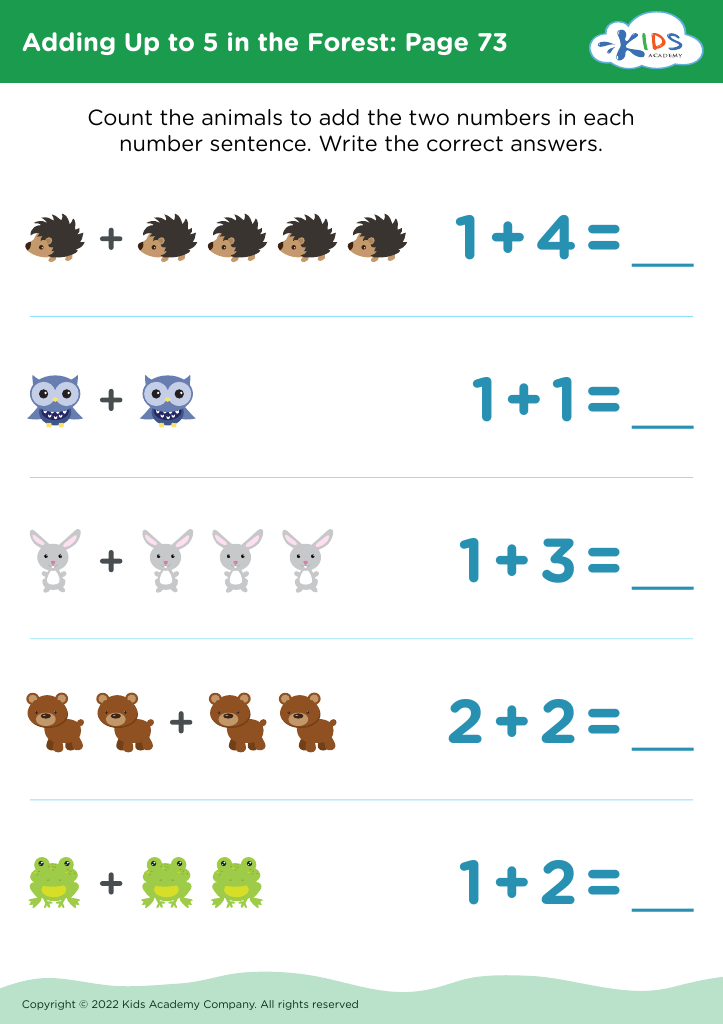
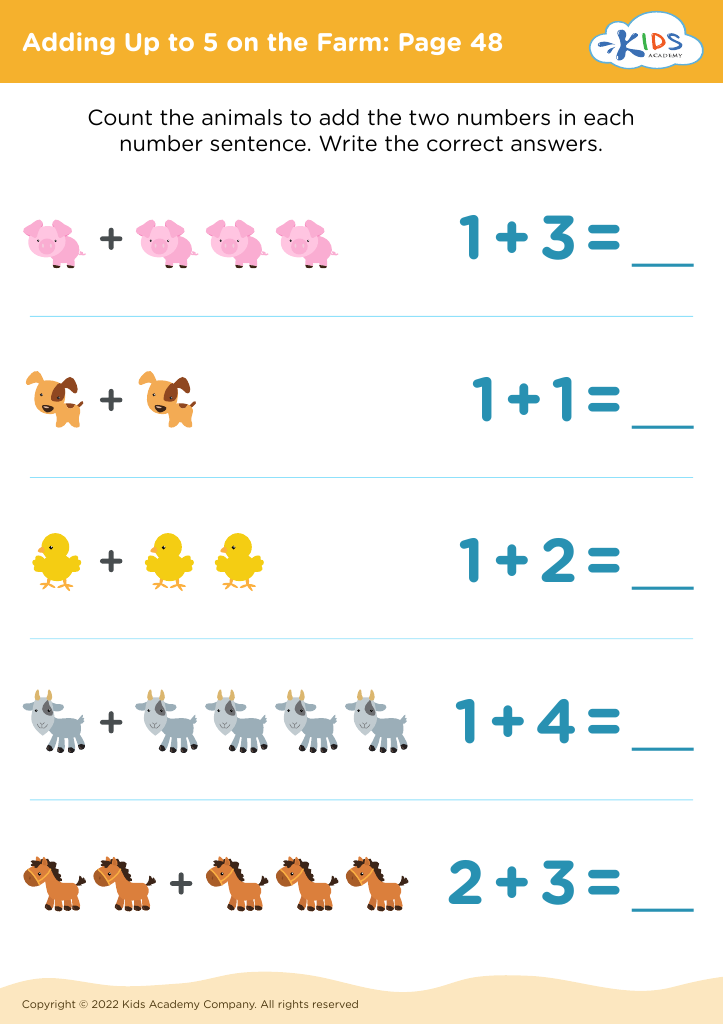
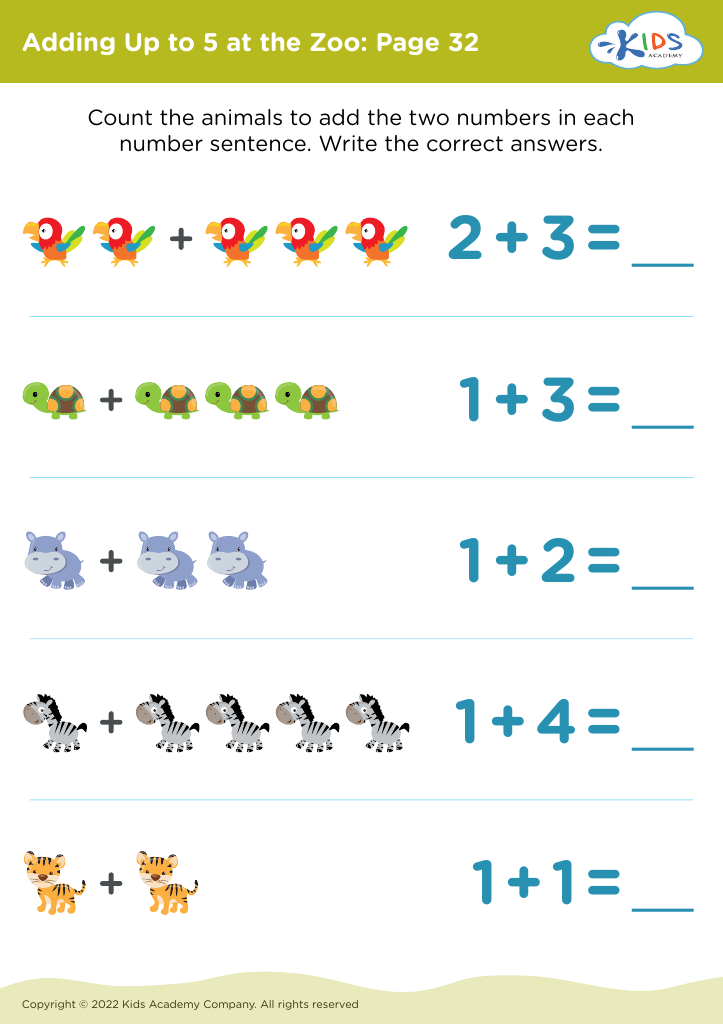
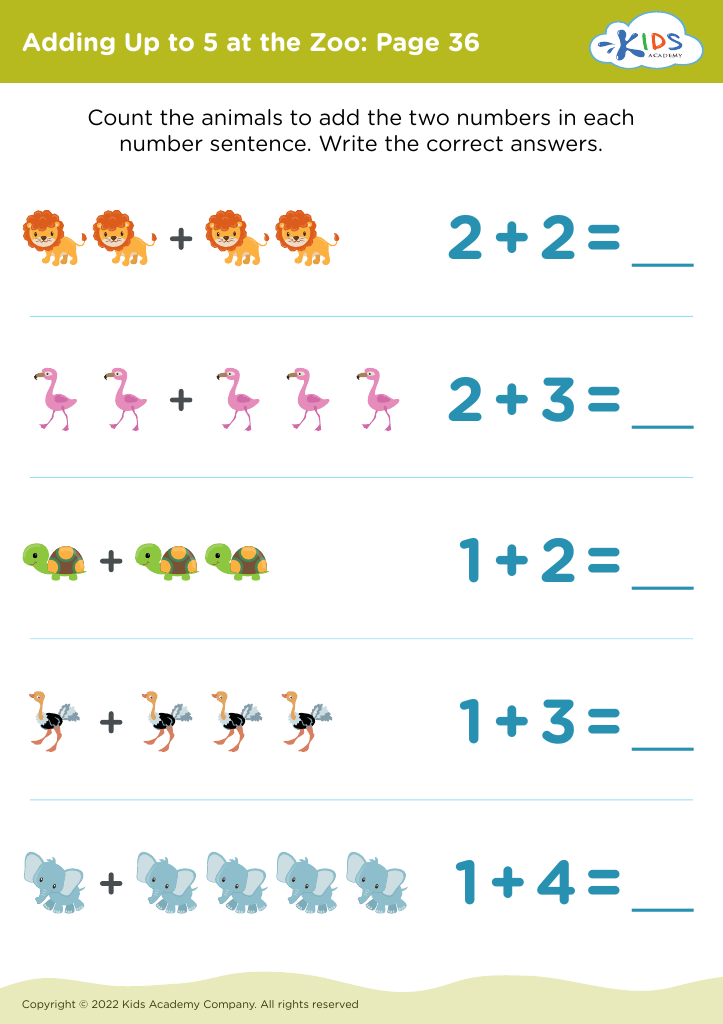
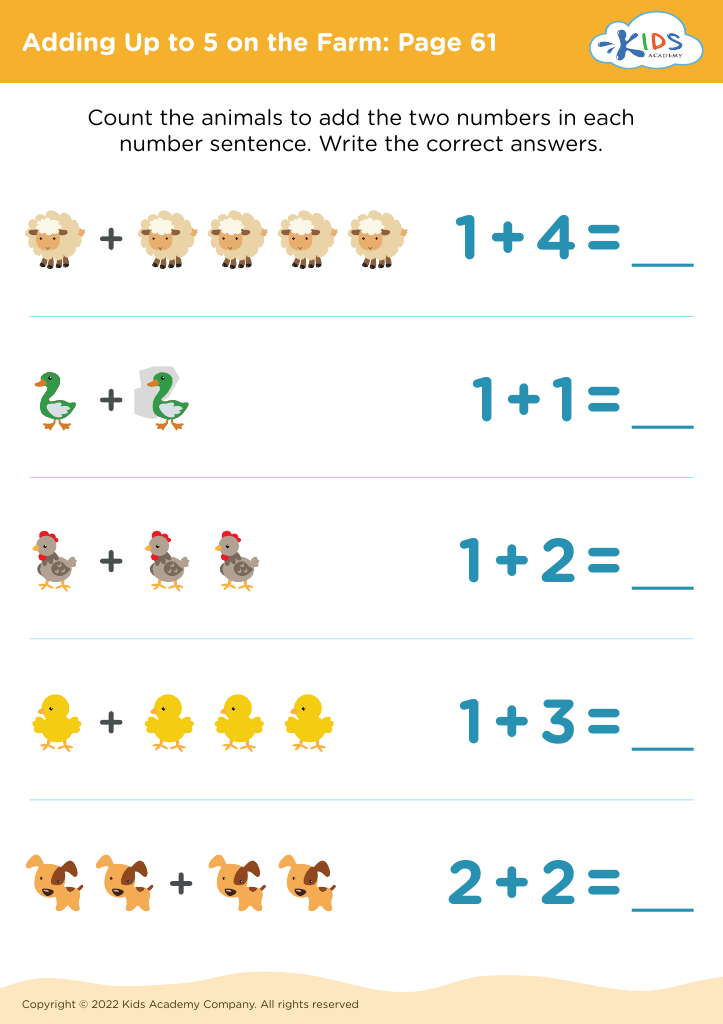
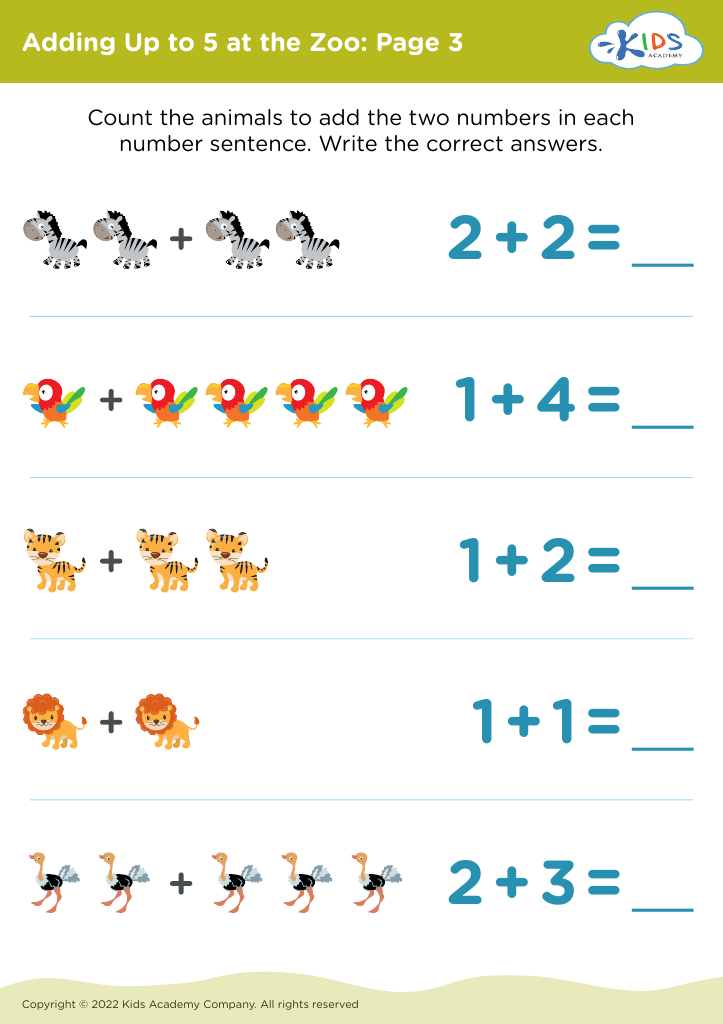
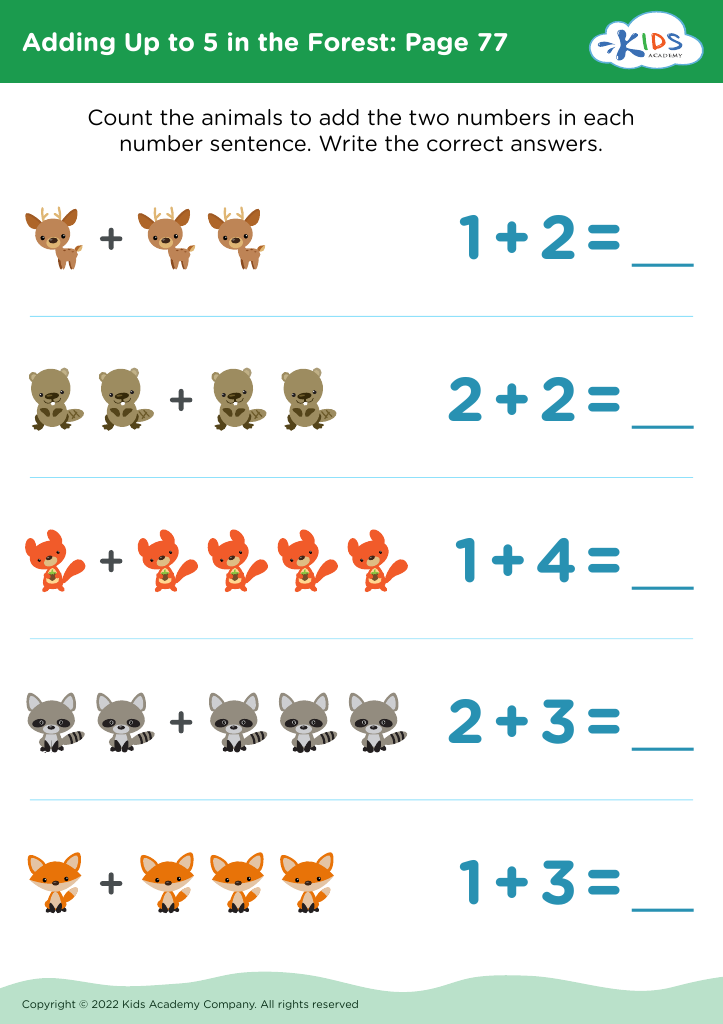
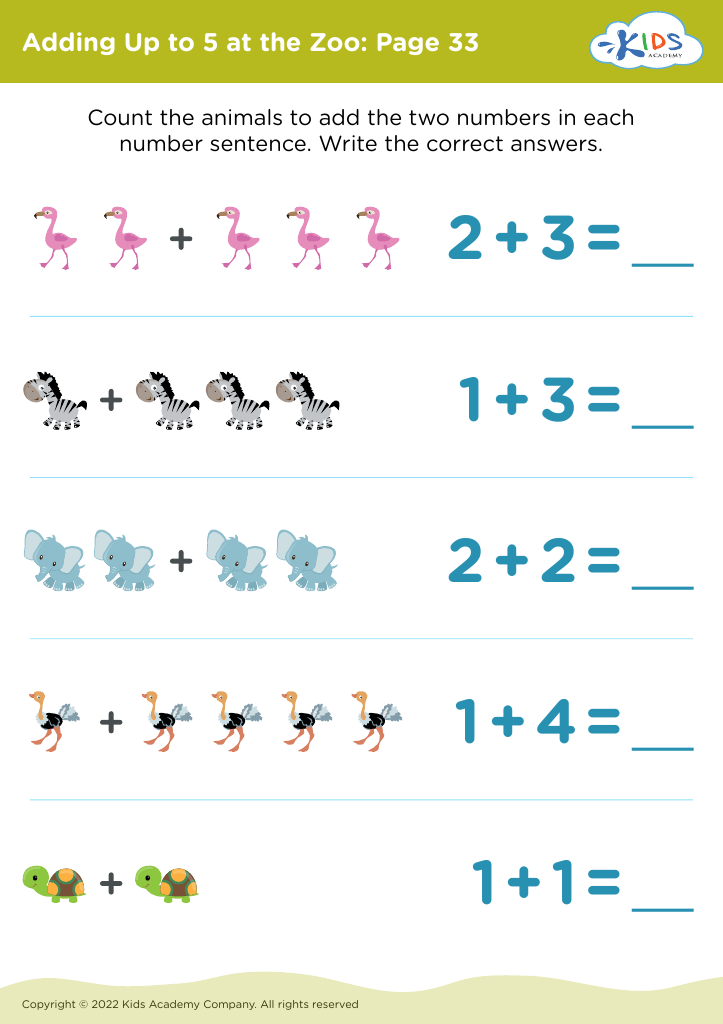
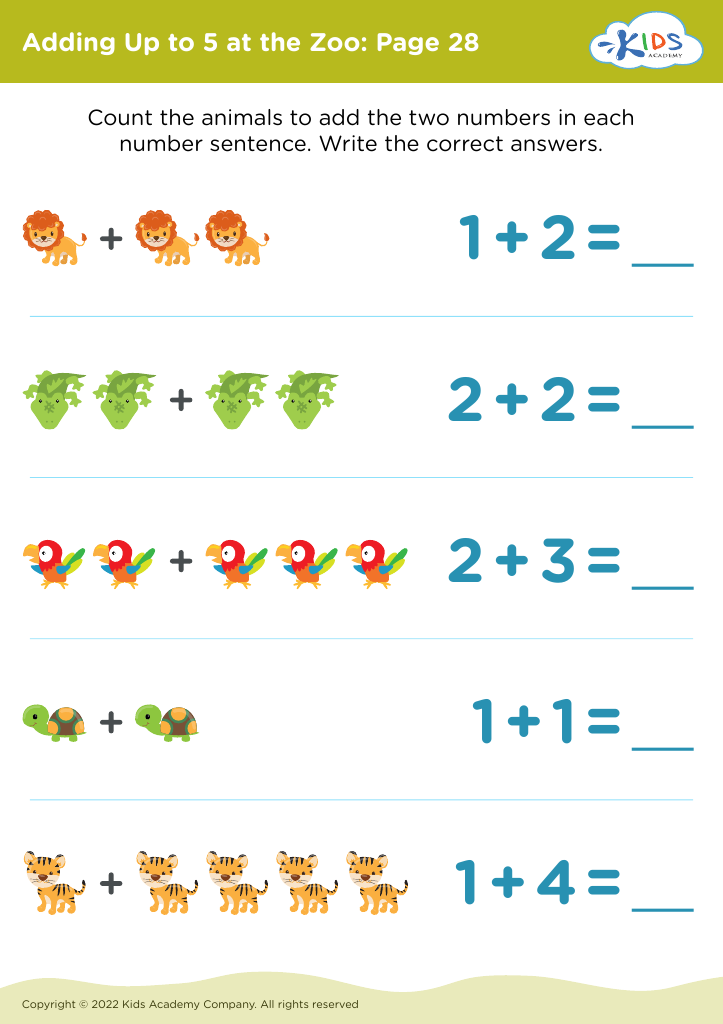
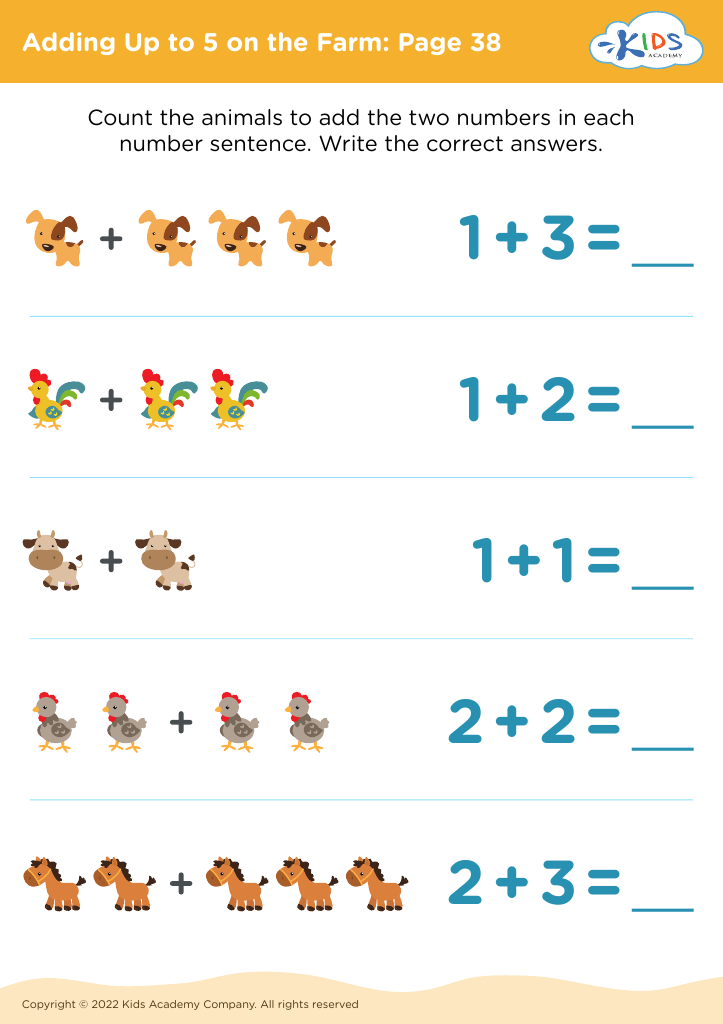
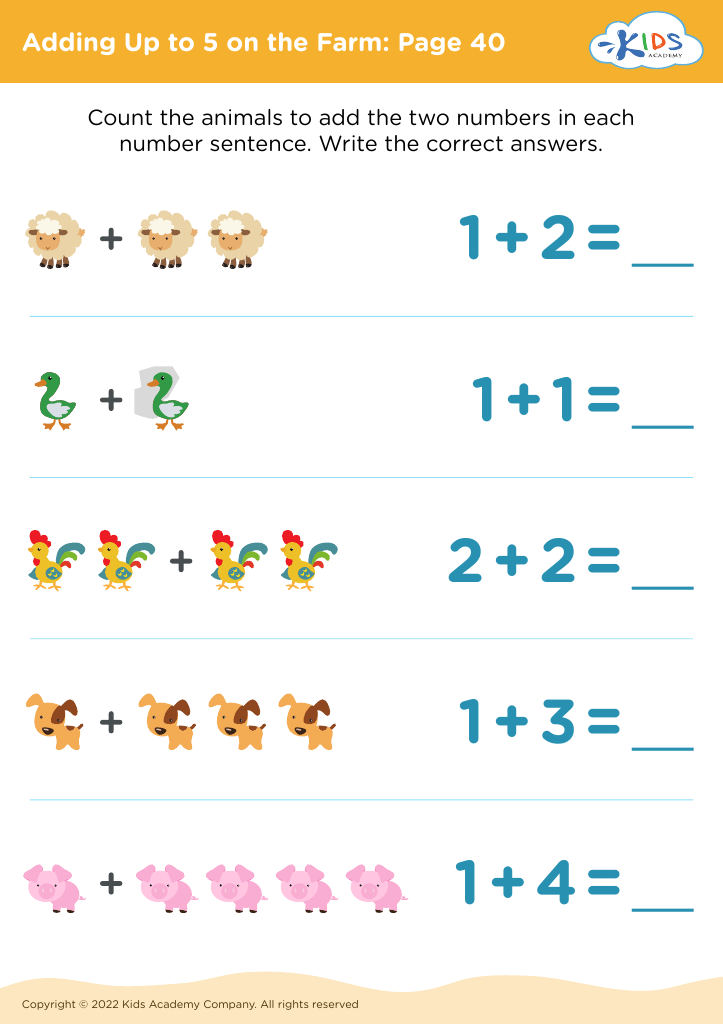
Discover exciting animal recognition math worksheets tailored for ages 3-8! Our engaging, printable sheets combine fun animal themes to teach foundational math skills. Ideal for young learners, these activities enhance counting, addition, subtraction, and pattern recognition through vibrant illustrations and interactive exercises. Each worksheet seamlessly blends education and entertainment, promoting cognitive development and mathematical abilities. Perfect for teachers and parents seeking to inspire a love for math from an early age, our animal recognition math worksheets build confidence and foster a dynamic learning environment. Unlock your child’s potential today with these delightful educational resources!
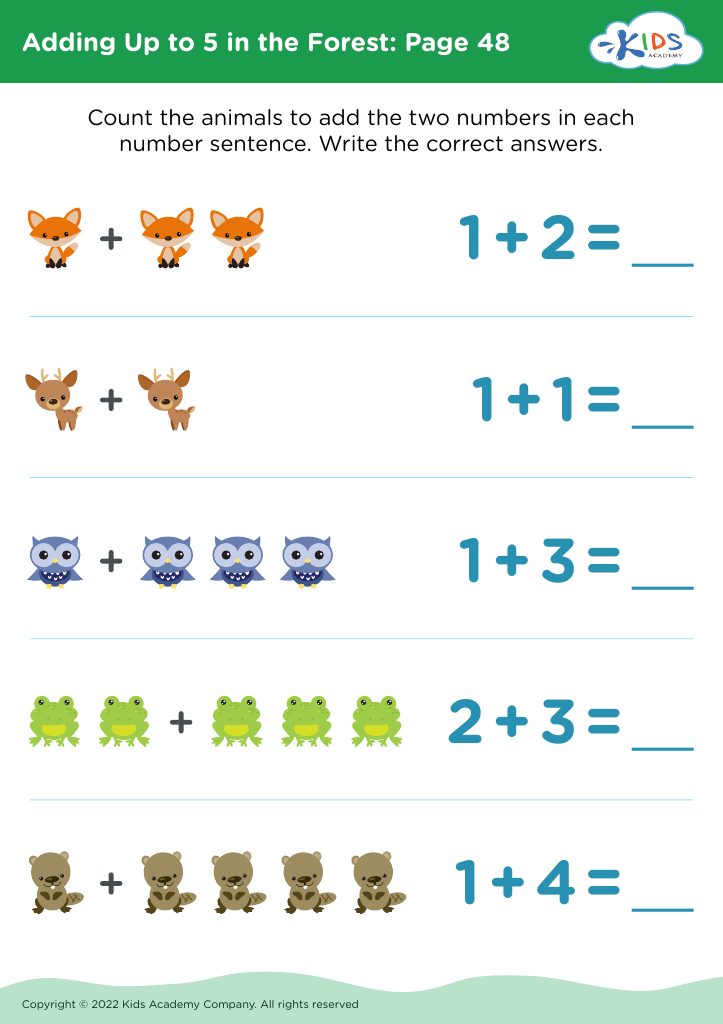
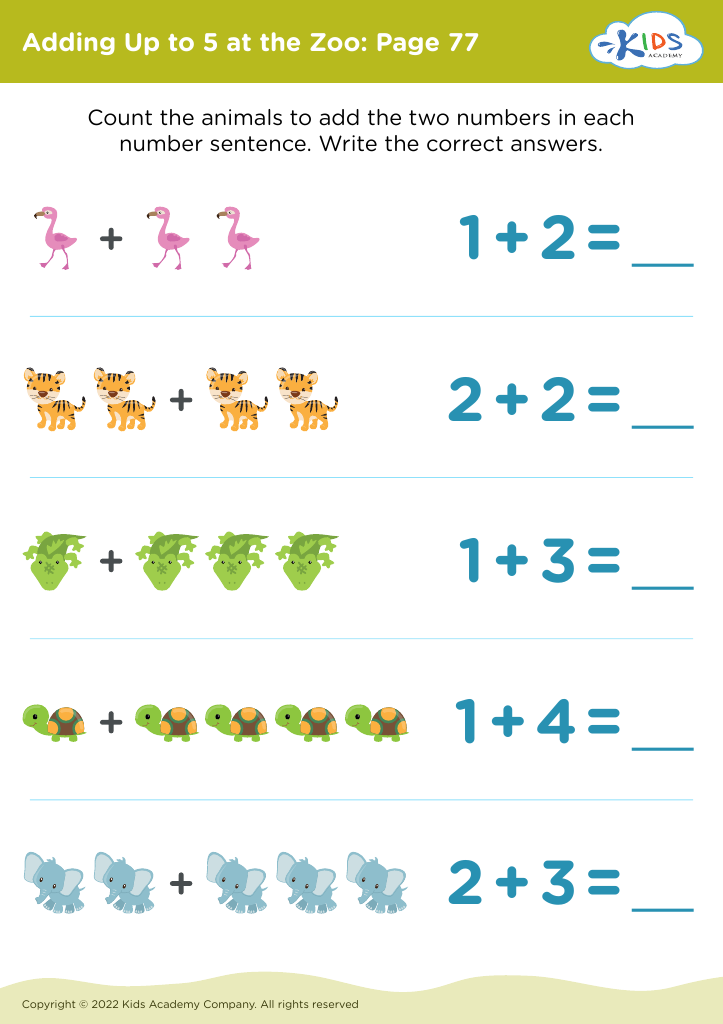
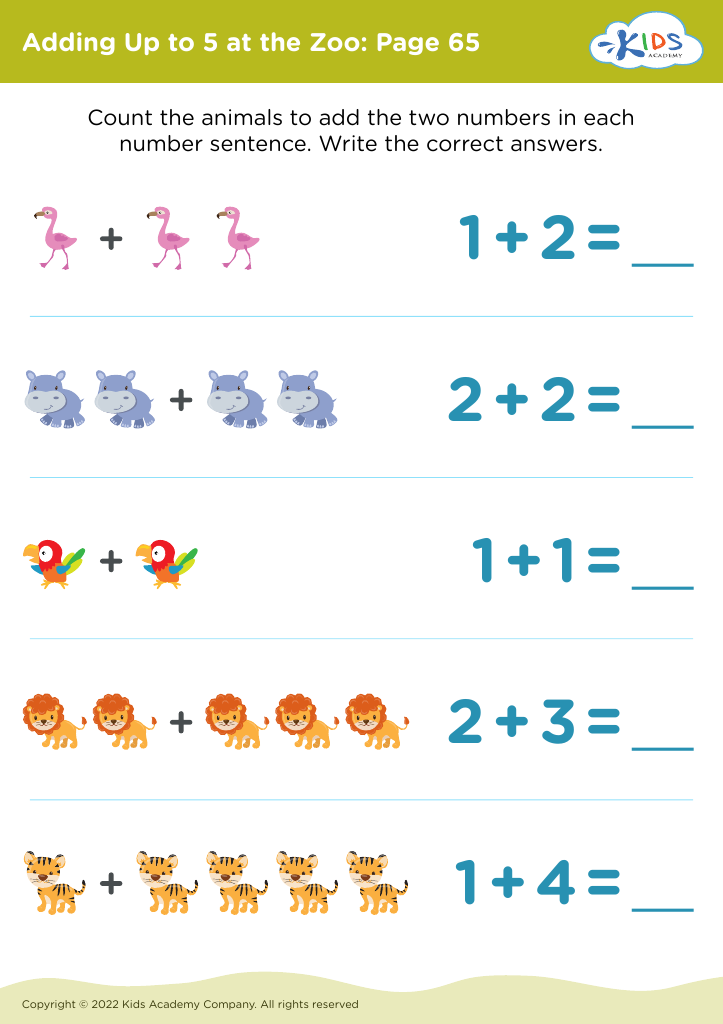
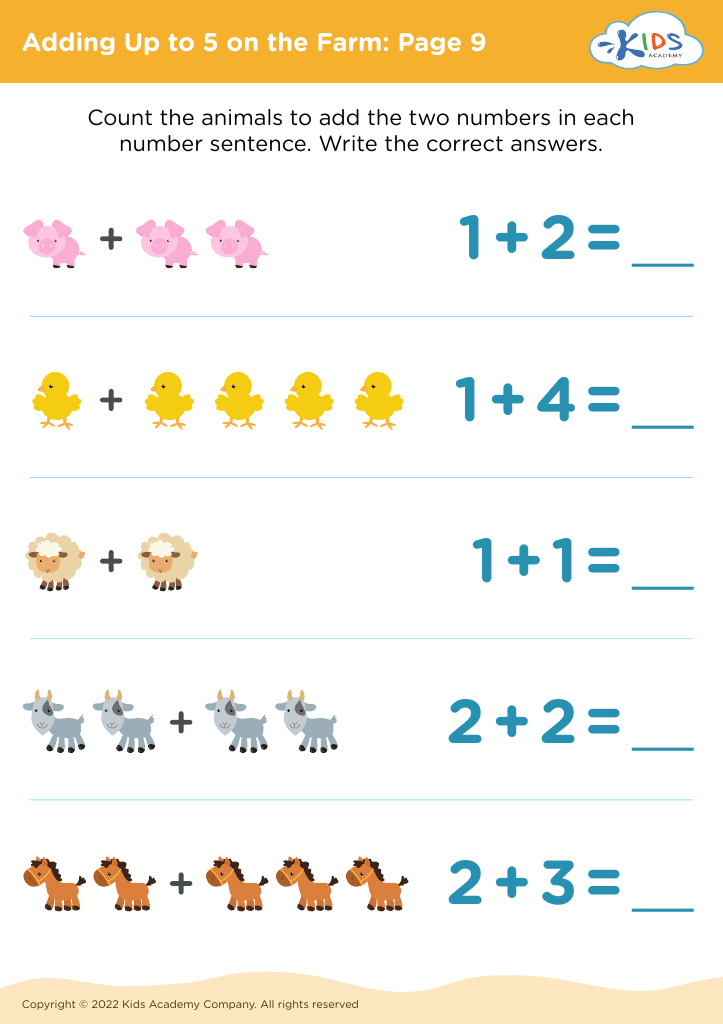
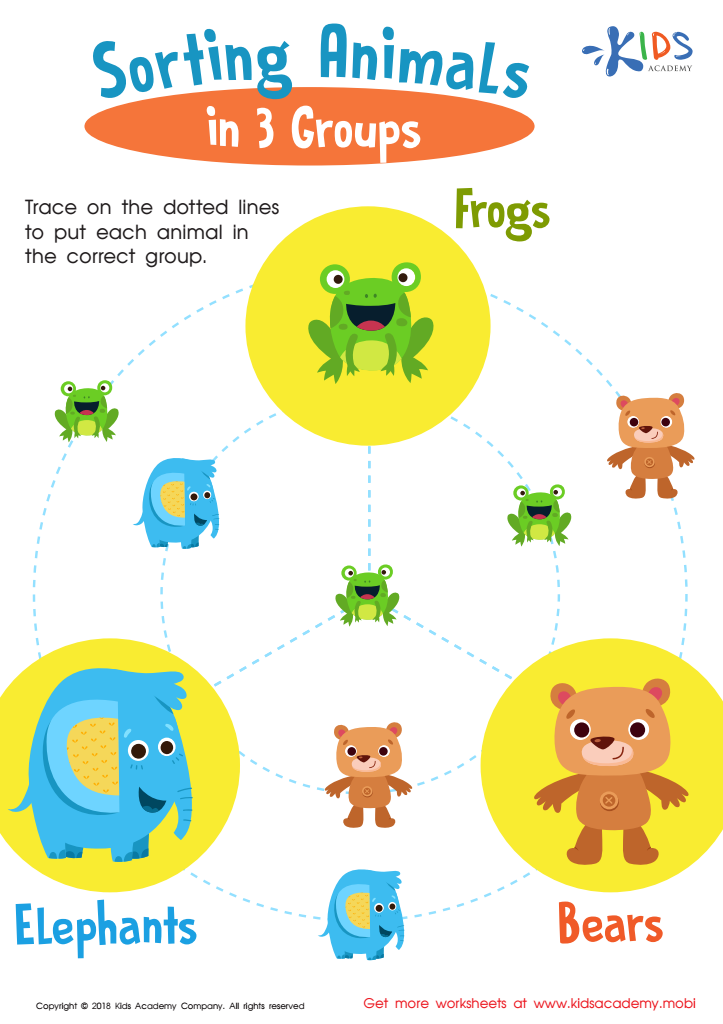
Sorting Animals in 3 Groups Worksheet
 Assign to My Students
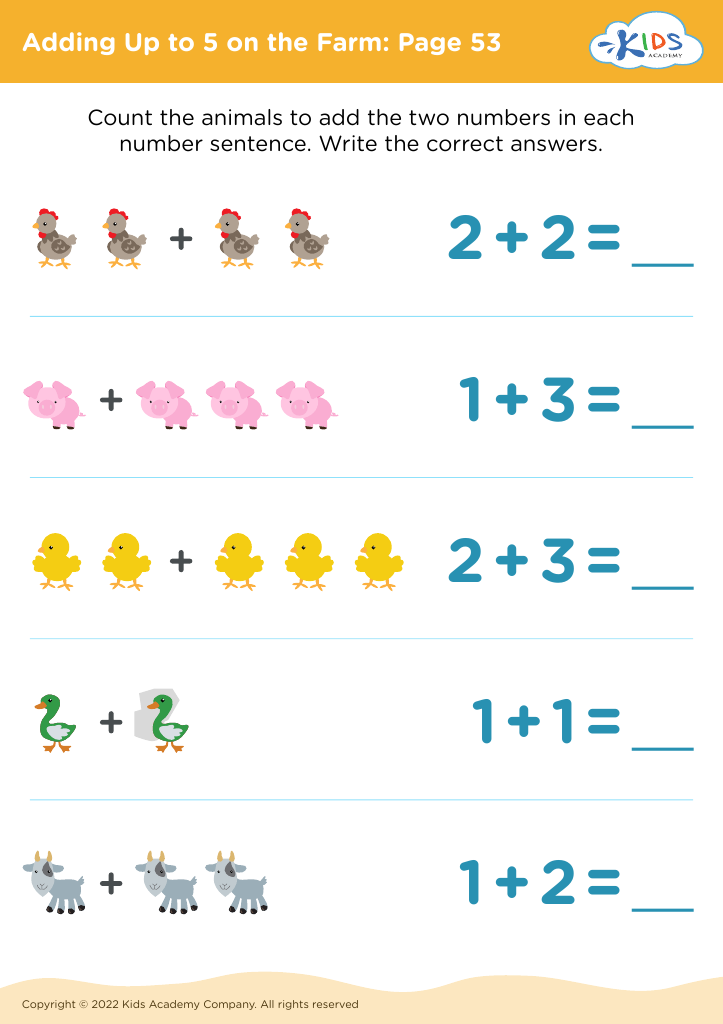
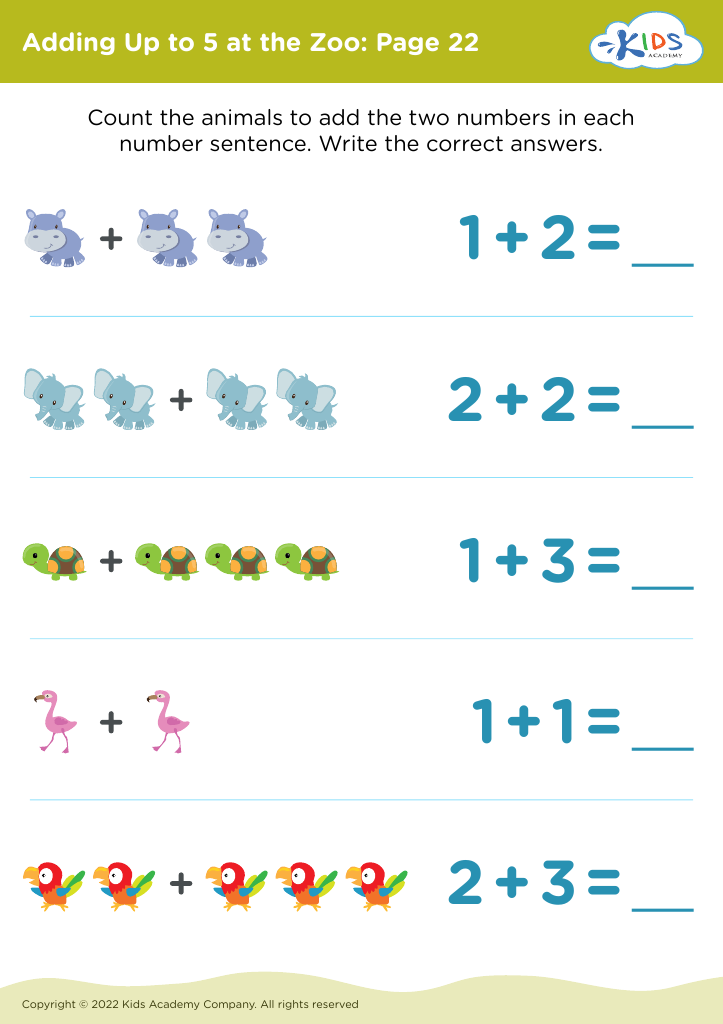
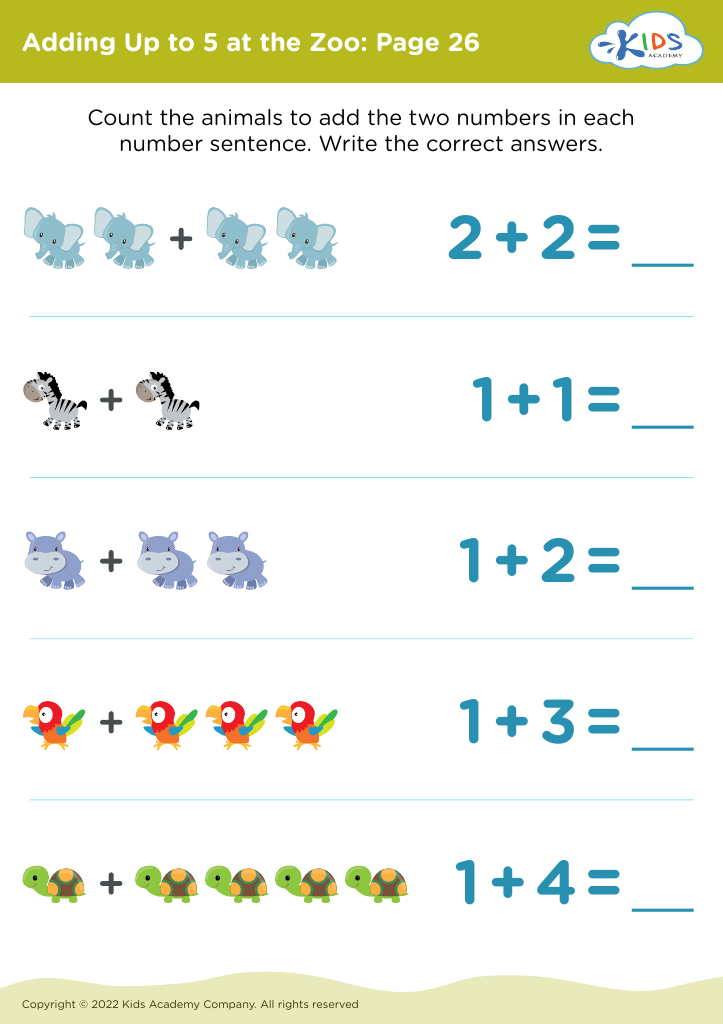
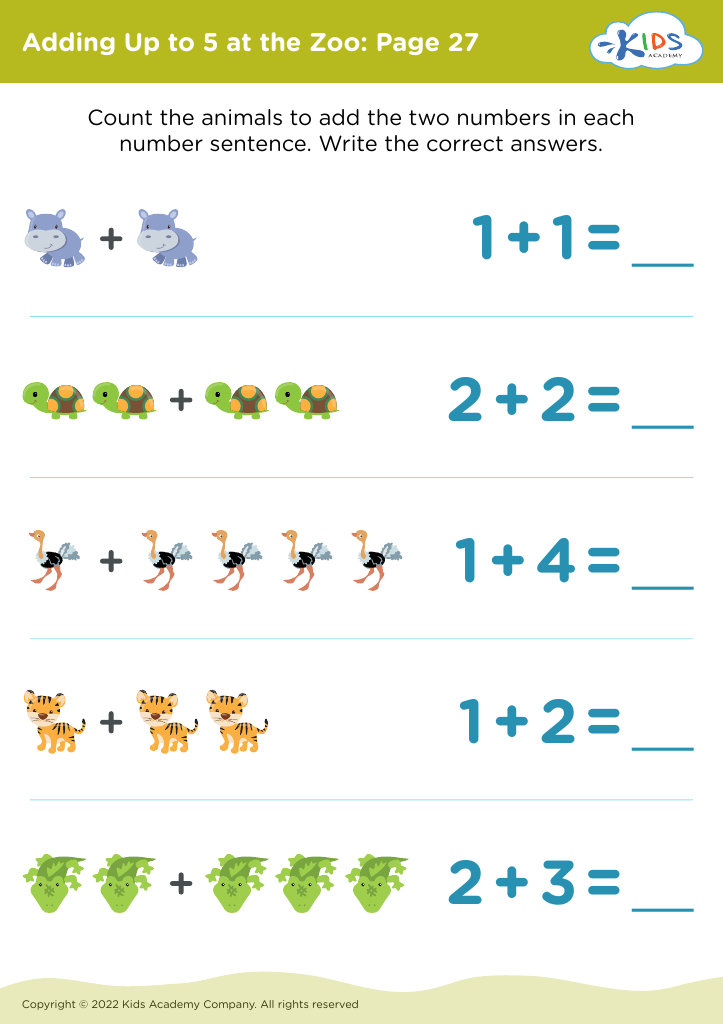
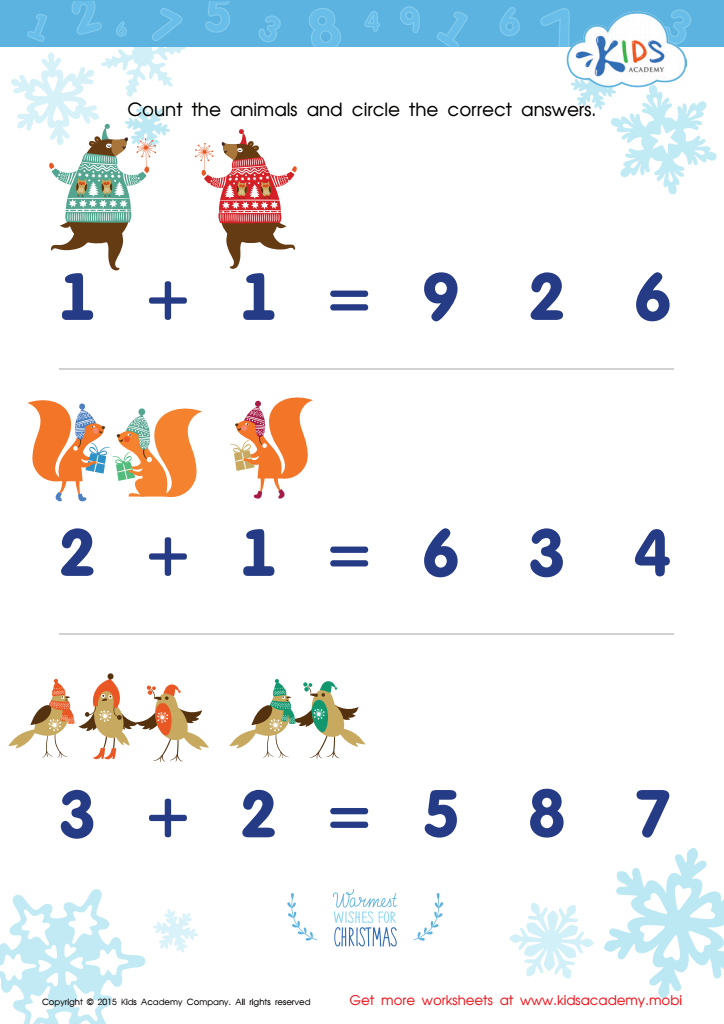
Count Funny Animals Worksheet
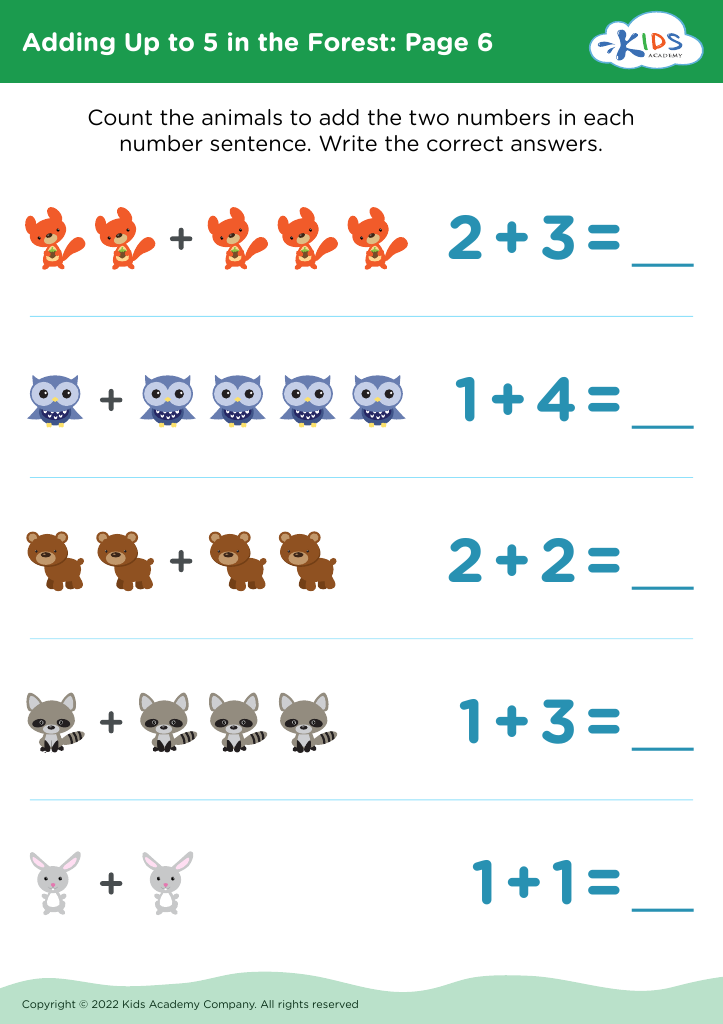
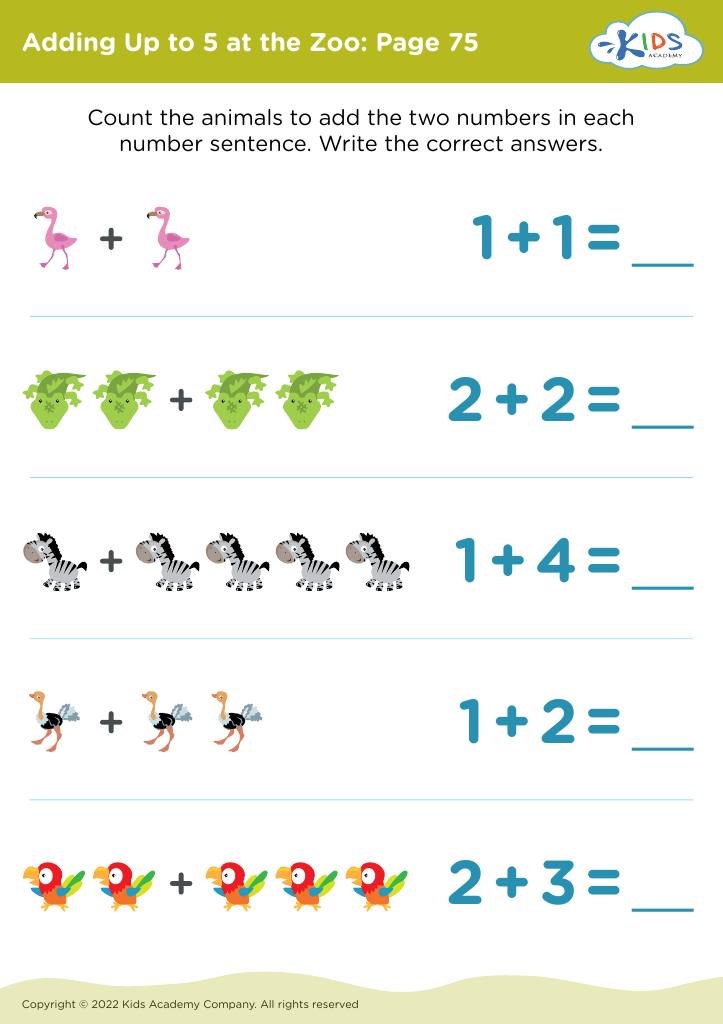
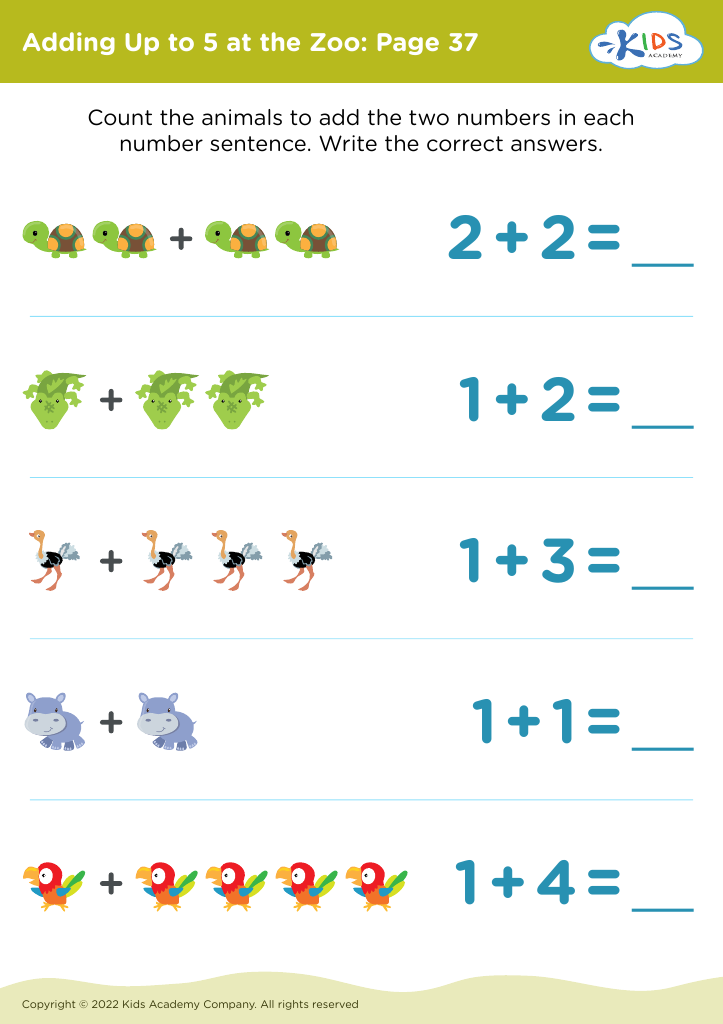






Animal recognition math for children ages 3 to 8 is a powerful educational tool that combines cognitive and emotional development. Preschoolers and early elementary students learn best through engaging, hands-on activities. Introducing them to mathematics through interacting with animals they know and love ensures the learning process is both fun and memorable.
First, using animal imagery fosters children’s interest and motivation. Animals captivate young kids, promoting focused attention and better retention of mathematical concepts like counting, sorting, patterns, and basic arithmetic. This strong engagement improves overall learning outcomes.
Additionally, animal recognition aids cognitive development by enhancing memory and observation skills. Children sharpen their abilities to distinguish and categorize, foundational to mathematical thinking. Recognizing differences in shape, size, and color among animals can translate to an understanding of numerical relationships and geometric concepts.
Moreover, these activities create an emotional connection to learning. When children feel positive emotions, such as joy or excitement from discussing their favorite animals, they are more likely to embrace and sustain interest in academic subjects like math.
Lastly, parents and teachers can tap into natural curiosity. For instance, activities involving grouping animals by number or type teach math skills while satisfying a child's innate desire to explore. In sum, animal recognition math isn't just about numbers; it's about fostering a lifelong love for learning through meaningful, engaging experiences.








