Basic math application Math Worksheets for Ages 3-8
5 filtered results
-
From - To
Discover engaging and educational Basic Math Worksheets tailored for children aged 3-8 on our website! These worksheets provide a fun and interactive way for young learners to grasp essential math concepts, including addition, subtraction, and number recognition. Each worksheet is designed to enhance critical thinking and problem-solving skills while building a solid foundation in math. With colorful designs and age-appropriate challenges, children will enjoy learning at their own pace. Parents and teachers can easily access and print these resources to support their kids’ educational journey. Foster a love for math in early learners today with our comprehensive collection of worksheets!
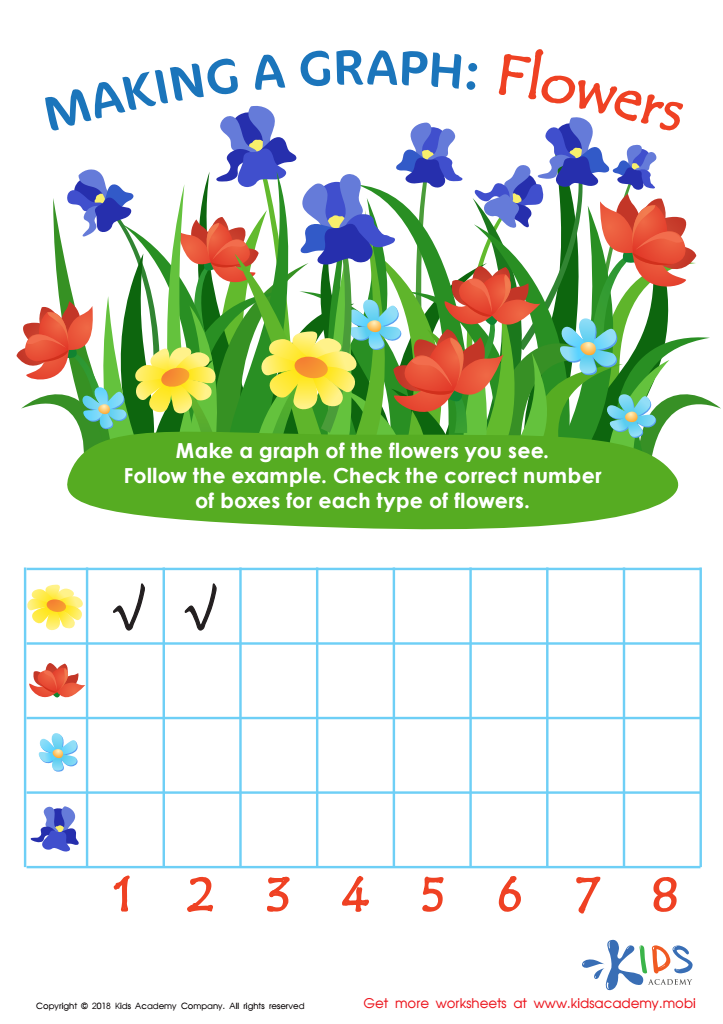
Making a Graph: Flowers Worksheet
 Assign to My Students
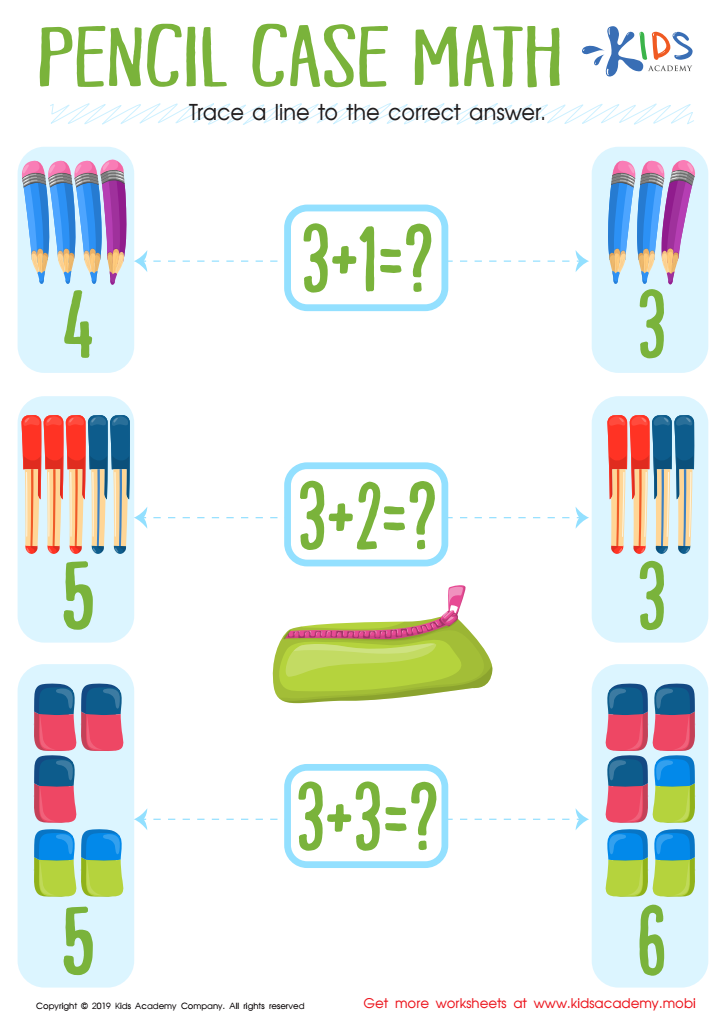
Pencil Case Math Worksheet
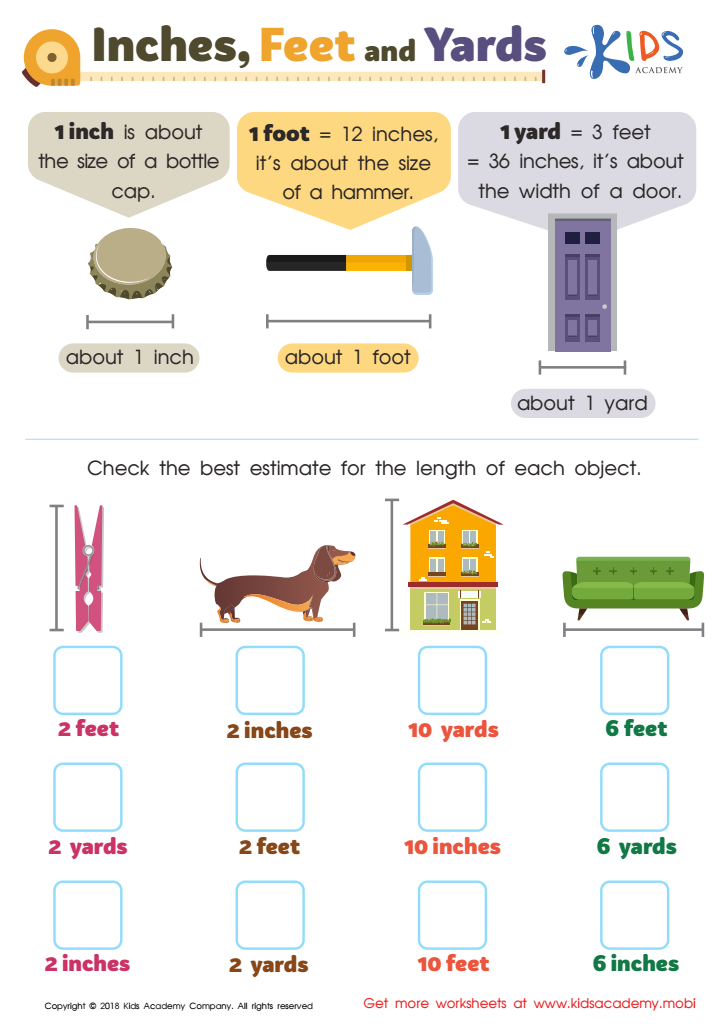
Inches, Feet and Yards Worksheet
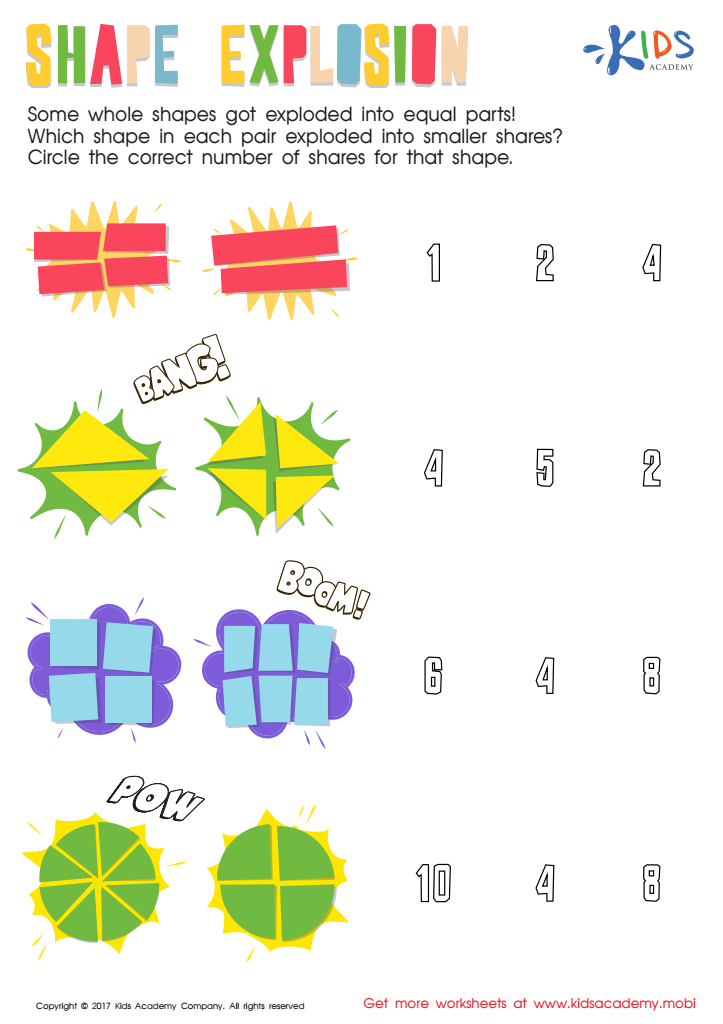
Shape Explosion Worksheet
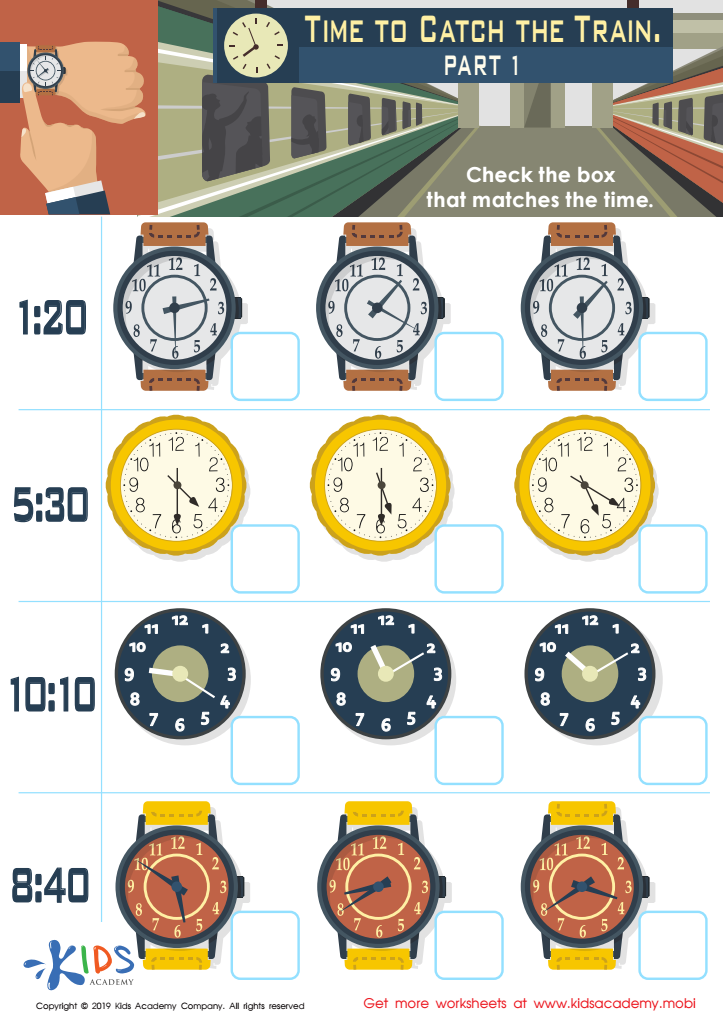
Time to Catch the Train Part 1 Worksheet




.jpg)



Parents and teachers should prioritize basic math application for children ages 3-8 as it lays the foundation for critical thinking, problem-solving, and analytical skills. At this developmental stage, children are naturally curious and eager to explore their environment, making it the perfect time to introduce core mathematical concepts through engaging activities. By connecting math to real-life situations—such as counting toys, measuring ingredients for a snack, or sorting objects—children can understand the relevance of math in their everyday lives.
Moreover, early math education fosters a positive relationship with numbers, reducing anxiety that can develop later in a child's academic journey. Simple concepts such as addition, subtraction, shapes, and patterns can be taught through play, which enhances cognitive development while keeping children motivated and interested. This also promotes social skills as they collaborate and communicate their ideas during these activities.
Additionally, research indicates that early math proficiency correlates strongly with future academic success in various subjects, not just math. By nurturing these skills from a young age, parents and teachers can help children build confidence and a strong foundation for lifelong learning. Overall, an emphasis on early math can significantly impact a child's future educational trajectory and self-esteem.








