
Comparing heights Math Worksheets for Ages 3-8
3 filtered results
Difficulty Level
Grade
Age
-
From - To
Subject
Activity
Standards
Boost your child's understanding of measurement with our engaging "Comparing Heights" math worksheets for ages 3-8! These interactive resources help young learners grasp the concept of height through fun activities and colorful visuals. Designed to develop foundational math skills, our worksheets encourage kids to compare, measure, and differentiate between objects of varying heights. Ideal for both parents and teachers, these printable activities cater to all learning styles and set the stage for confident math explorers. Whether at home or in the classroom, our materials make learning about comparisons a joyful experience. Dive in today and watch your child's math skills soar!
Favorites
With answer key
Interactive
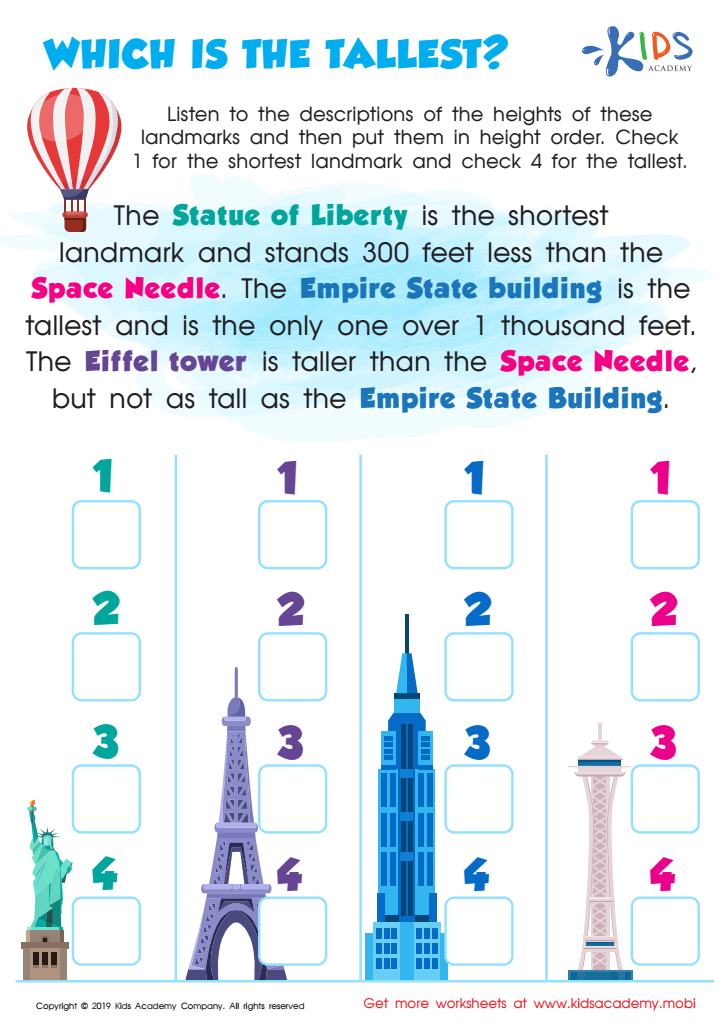
Which is the Tallest? Worksheet
Help your kids arrange the buildings in order of height: highest (4) to lowest (1). Ask them if they can think of other ways things can be measured. Read the texts describing the buildings and check 4 for the tallest and 1 for the shortest.
 Assign to My Students
Which is the Tallest? Worksheet
Worksheet
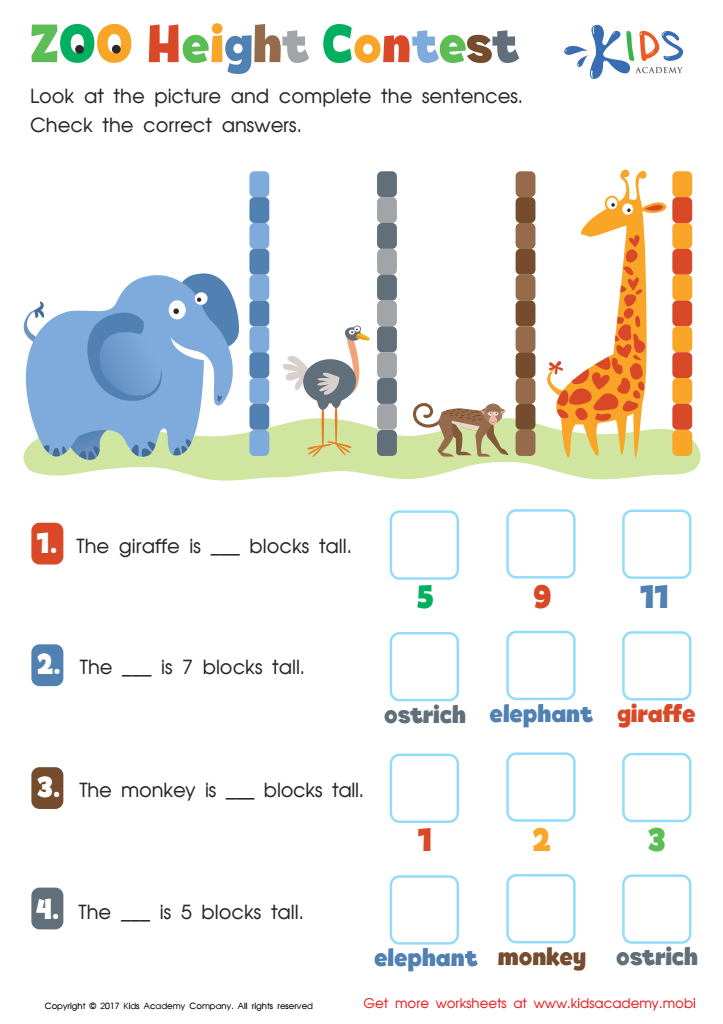
Zoo Height Contest Worksheet
Let's head to the zoo and use colorful blocks to measure your child's favorite animals! With this Kids Academy worksheet, help them practice and prepare for learning measurement. Guide them in looking at the zoo animals and counting blocks to find the height. Then, read the questions and check the box next to the correct answer.
Zoo Height Contest Worksheet
Worksheet
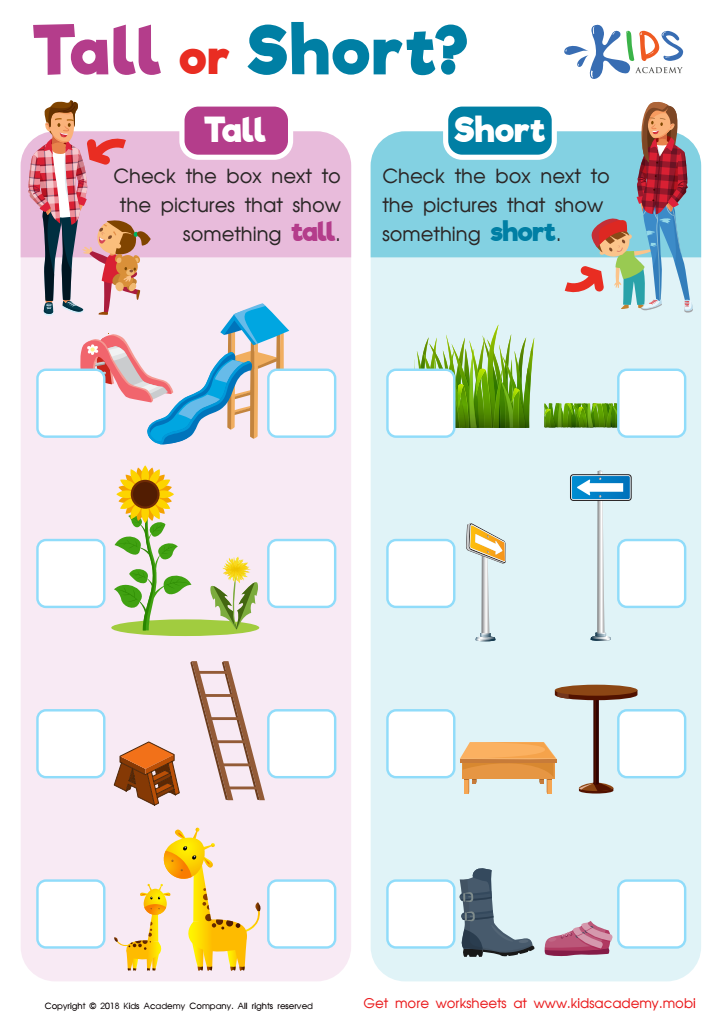
Tall or Short? Worksheet
Comparing tall and short objects is an early math skill. Our free worksheet uses fun colors and pictures to help kids practice. This will give them a head start for higher-level measurement skills, and they'll remember tangible objects for comparison.
Tall or Short? Worksheet
Worksheet
Join Kids Academy for Free
Who is primarily going to use this learning content?






Comparing heights through math activities for children aged 3-8 is essential for several reasons. First, it directly engages young learners in measuring and quantifying their world, fostering early mathematical skills such as counting, comparing, and understanding measurements. When children compare heights, they are not just learning mathematical concepts but are also developing critical thinking and problem-solving skills necessary for overall cognitive development.
Moreover, engaging in height comparison activities encourages collaboration and social interaction among peers, as children often work together to measure and compare their heights. This situational learning promotes communication skills and helps them build relationships through shared experiences.
Additionally, incorporating height comparisons into educational activities can spark interest in science and exploration, helping children understand physical differences and diversity. It can inspire discussions about growth, health, and body awareness, which are vital aspects of their social-emotional development.
Lastly, measuring and comparing heights is a tangible way to reinforce foundational math skills, laying the groundwork for more complex mathematical concepts later on. As such, parents and teachers should prioritize these engaging activities as they help develop children's mathematical understanding while also enriching their social and emotional skills.








