Enhance your child's mathematical abilities with our engaging Comparison Skills Math Worksheets, specially designed for ages 3-8. These worksheets provide a fun and interactive way for children to develop essential comparison skills, such as identifying greater than and less than, sorting by size or quantity, and understanding basic concepts of comparative relationships. Our resources are visually appealing, with colorful illustrations to motivate young learners. By practicing these vital skills, children build a strong foundation for early math success. Perfect for home or classroom use, these printable worksheets make learning enjoyable and effective. Start your child's journey to math confidence today!

Check out this FREE Trial Lesson on Math for age 3-8!

Match Exactly the Same But..

Favorites
With answer key
Interactive
  • 3-8
  • Comparison Skills
  • Math
Which one is different worksheet for preschool

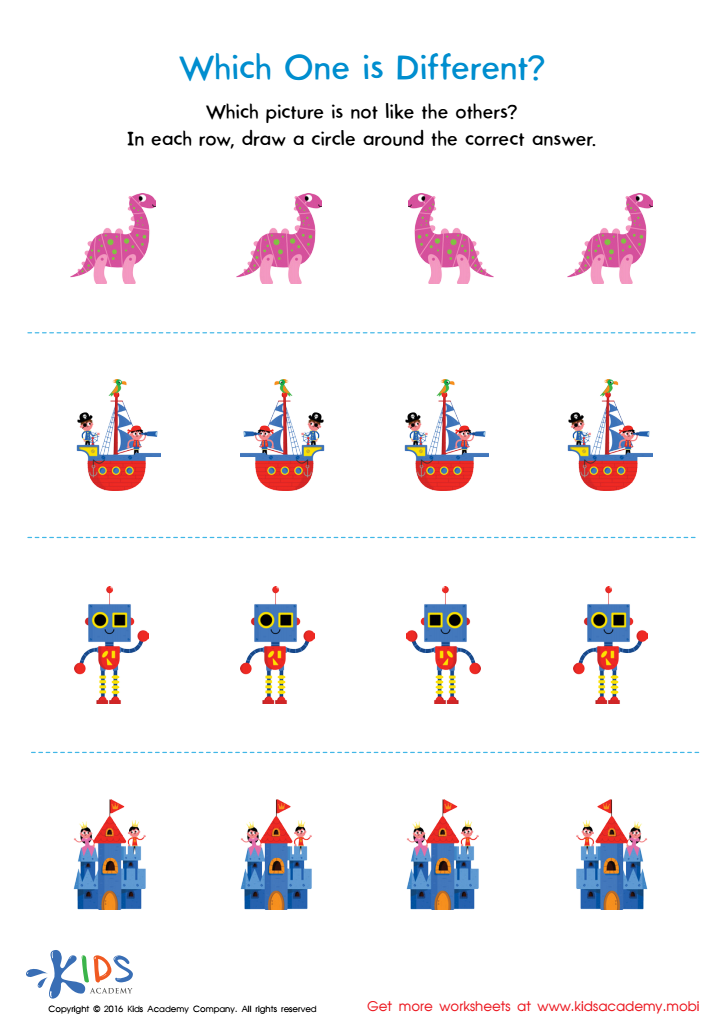
Which One Is Different Worksheet

Preschoolers can hone logical reasoning and critical analysis skills with this "Which one is Different?" worksheet. Kids must look closely and pick out unique attributes of objects and images. It's a skill that can serve them throughout their lifetime.
Which One Is Different Worksheet
Worksheet
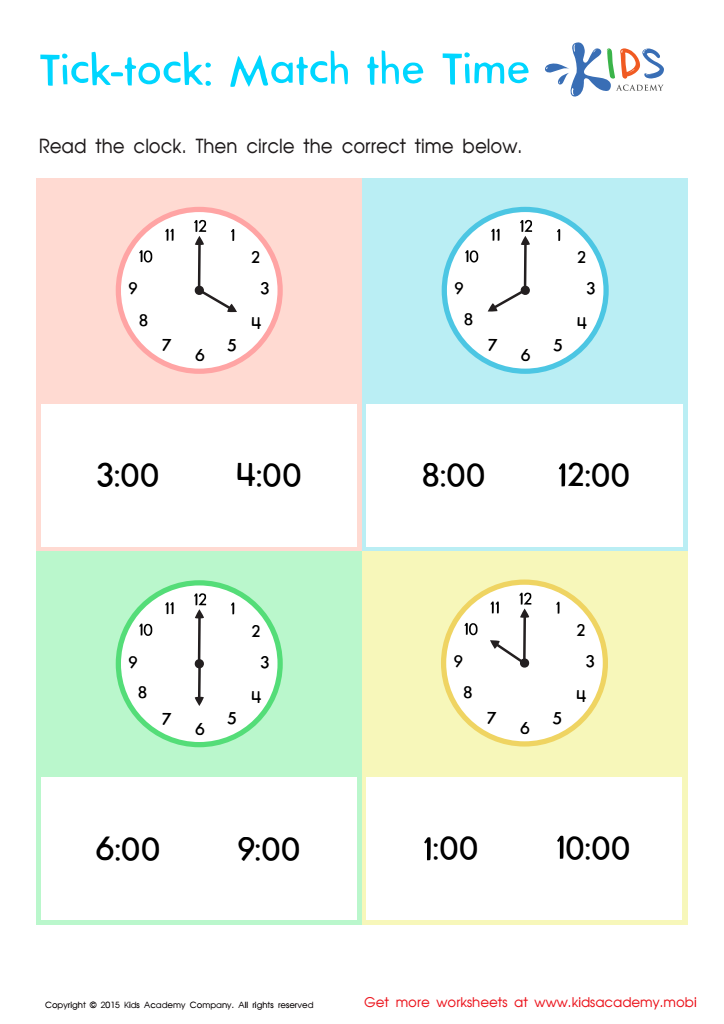
Telling The Time PDF Worksheets, Part 4

Telling The Time Worksheet: Part 4
Test your skills in telling the time! Circle the right time on 4 analog clock faces.
Telling The Time Worksheet: Part 4
Worksheet
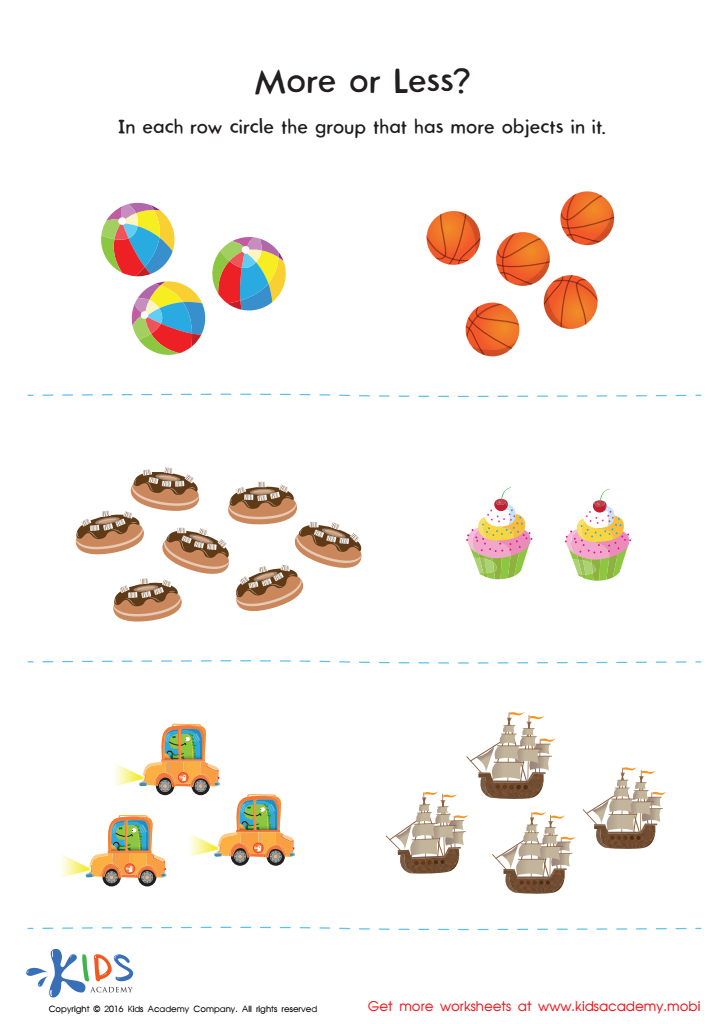
More or Less PDF Printable Worksheet

More or Less Size Worksheet

Try this "More or Less" PDF printable worksheet to help them out!
More or Less Size Worksheet
Worksheet
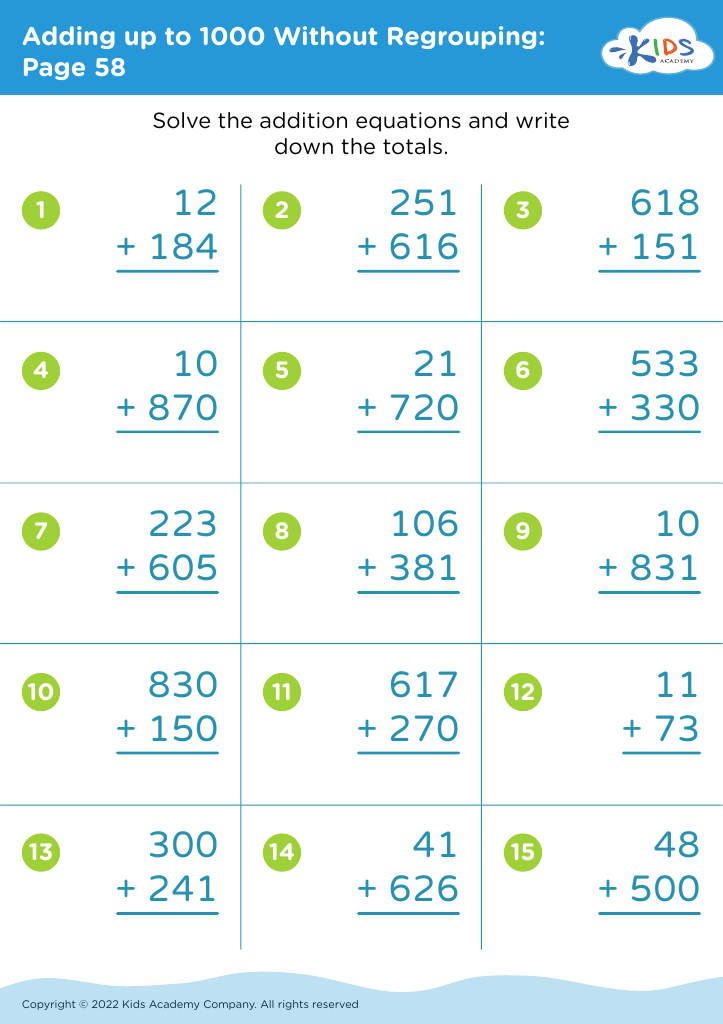
Adding up to 1000 Without Regrouping: Page 58
Worksheet
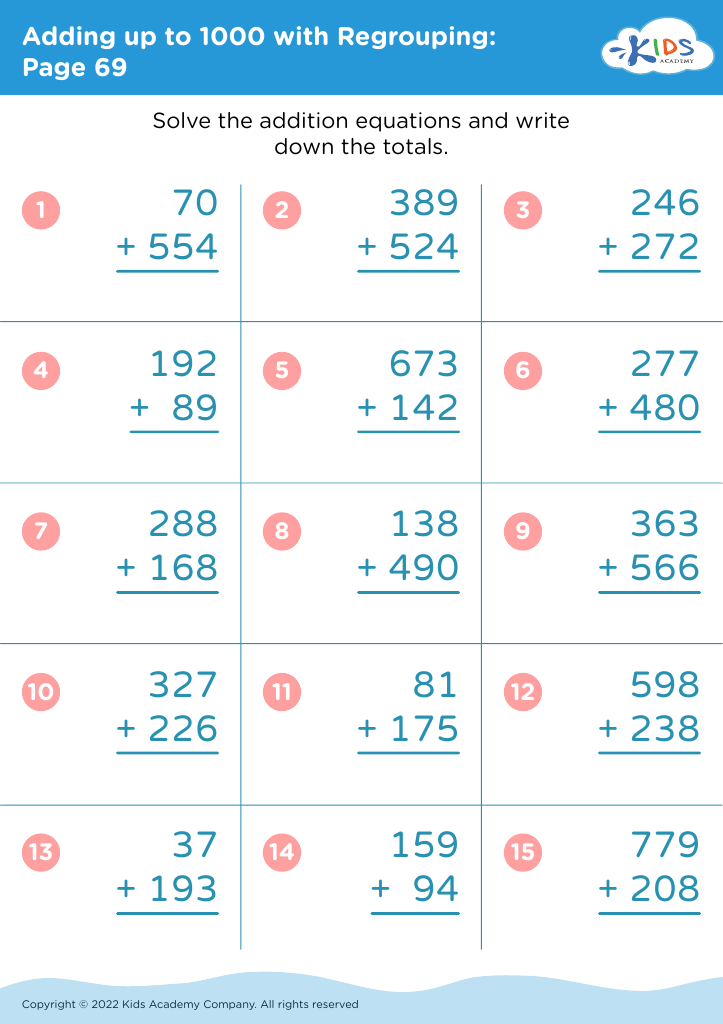
Adding up to 1000 with Regrouping: Page 69
Worksheet
How Many More to Add Worksheet

How Many More to Add Worksheet

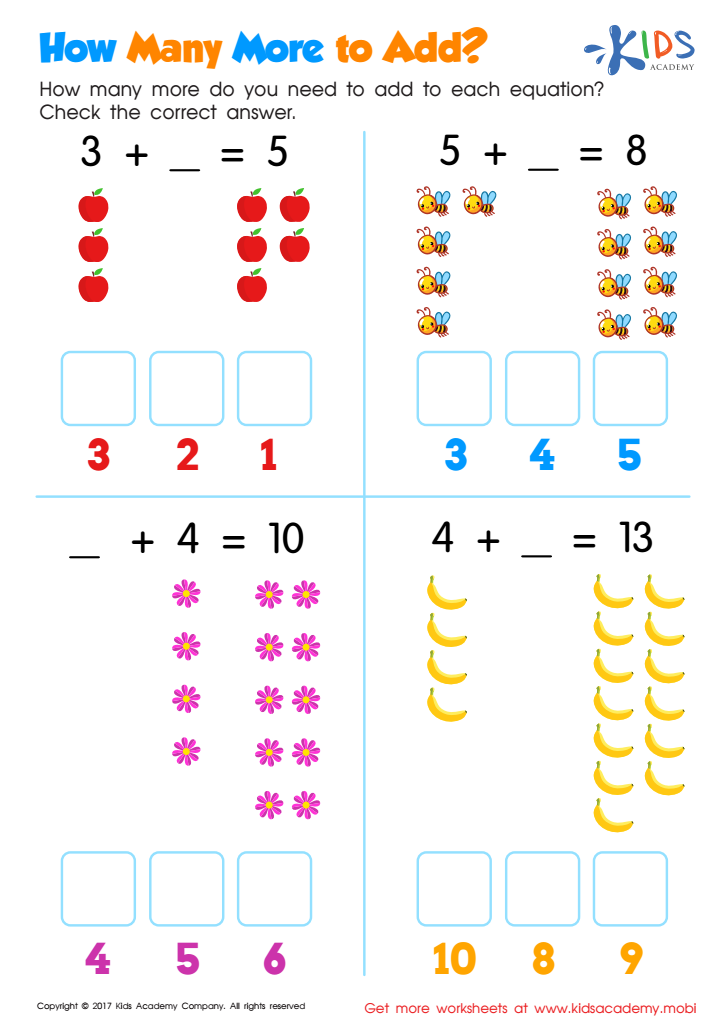
Sharpen your child's math skills with this pdf worksheet. Help them figure out how many apples, bees, flowers and bananas are needed to reach the answer given. The possible answers are provided at the bottom of the boxes. Have some fun doing some addition and subtraction magic together and get those math skills sharpened!
How Many More to Add Worksheet
Worksheet
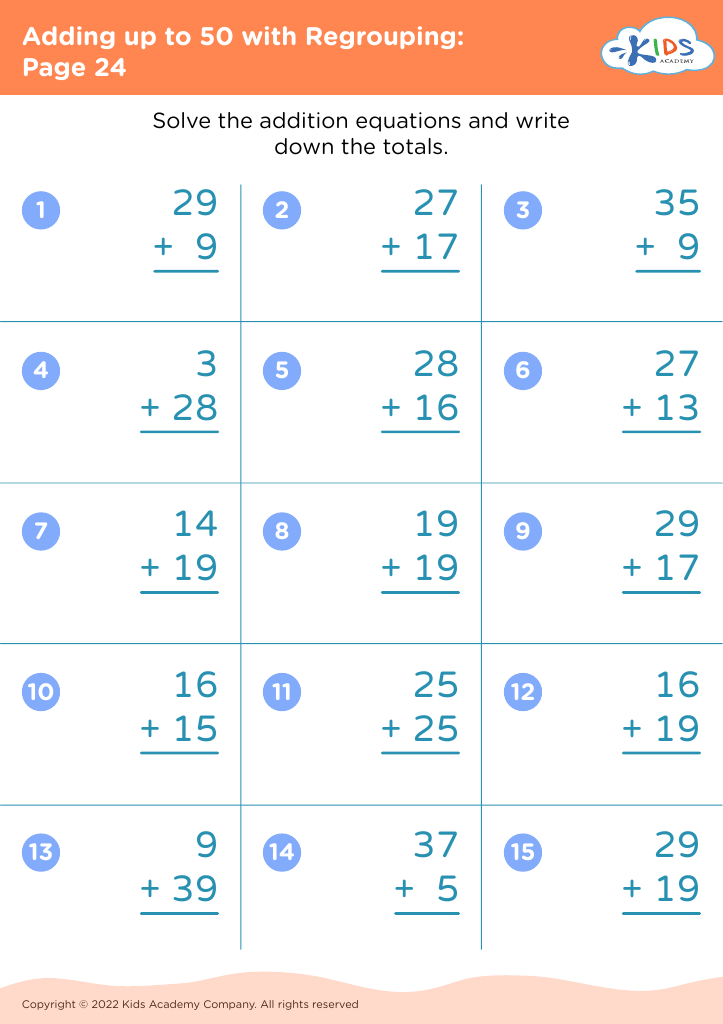
Adding up to 50 with Regrouping: Page 24
Worksheet
Who Has 1 More? Worksheet

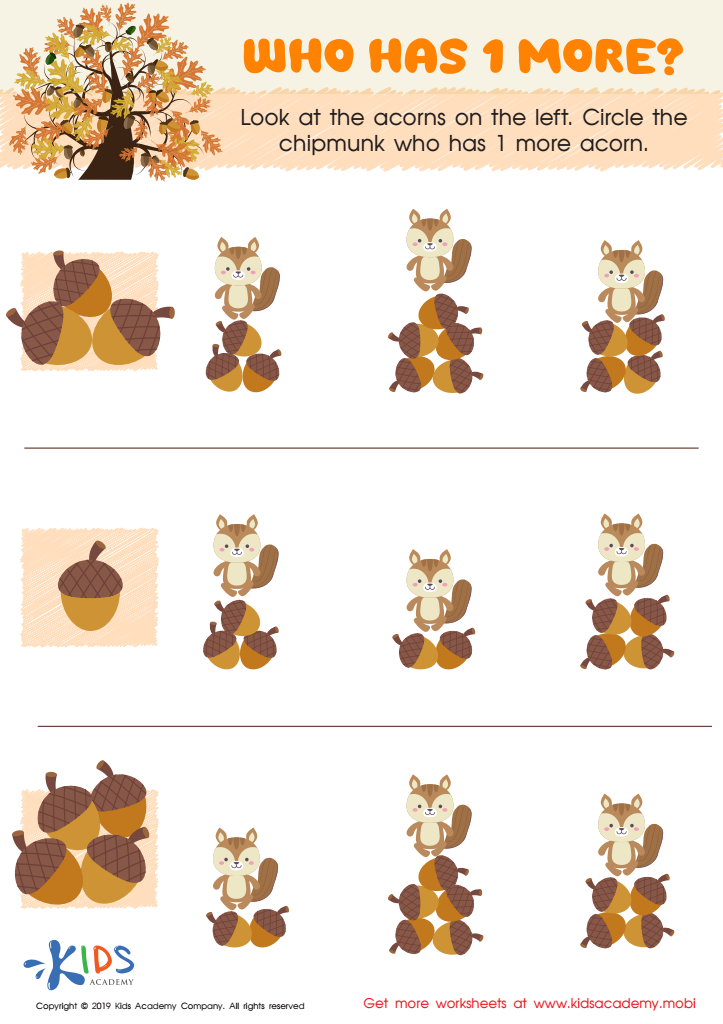
Who Has 1 More? Worksheet

Do your kids know what chipmunks are? They eat acorns, store them for bad weather, and live in trees or on the ground. Count and circle the chipmunk with one more acorn than the others on the printout.
Who Has 1 More? Worksheet
Worksheet
Aircraft Carrier Picture Graphs Worksheet

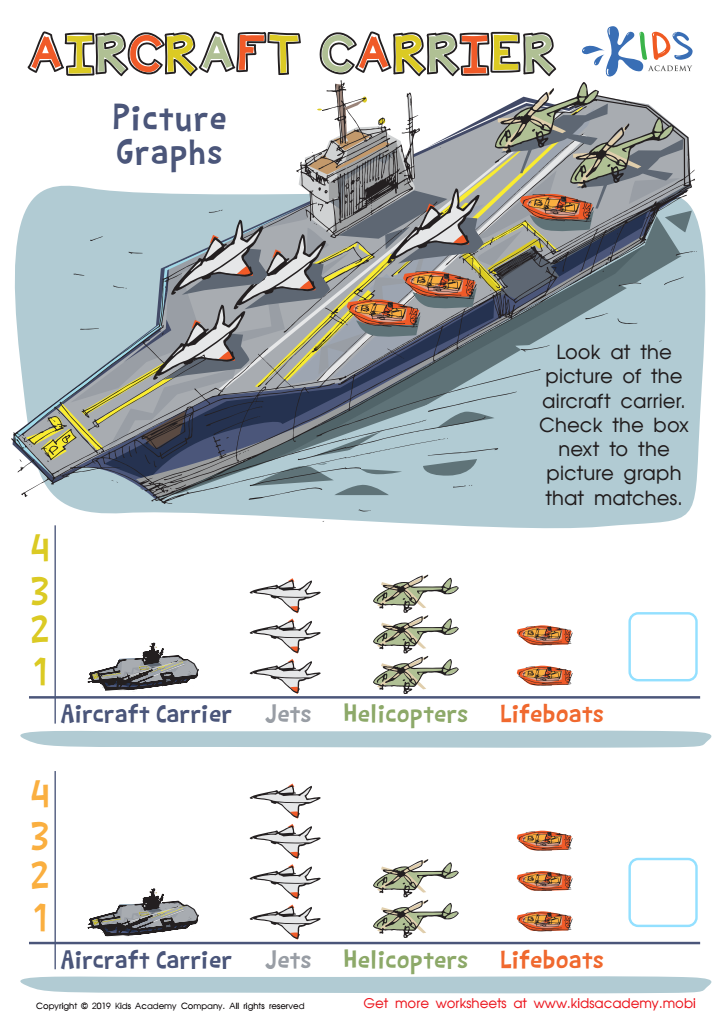
Aircraft Carrier Picture Graphs Worksheet

Kids love learning about jets and boats with this awesome worksheet! It's a great way to engage them as they work on picture graphs. Representing numerical values with pictures, this free PDF requires them to choose which picture graph and representation best match the carrier in the picture. It's also great practice for visual discrimination!
Aircraft Carrier Picture Graphs Worksheet
Worksheet
Sorting: Tallest to Shortest Worksheet


Sorting: Tallest to Shortest Worksheet

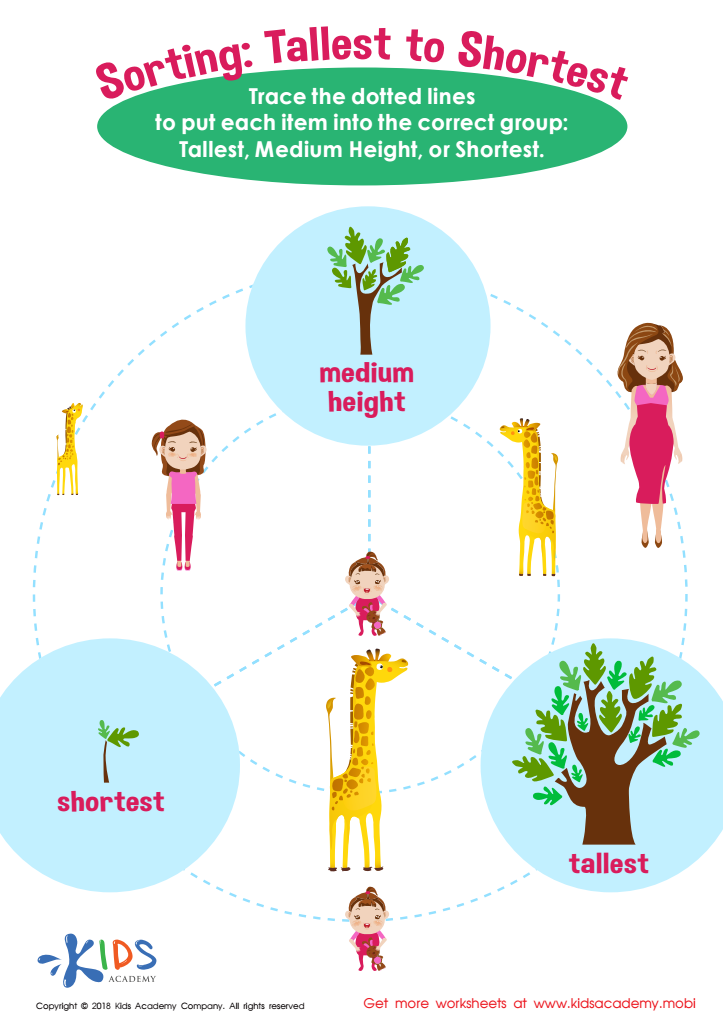
This worksheet is great for preschoolers to practice foundational measurement skills. Traceable lines help them sort pictures into Tallest, Shortest and Medium categories, giving them concrete examples to compare. Fine motor skills and understanding of relationships between sizes are also developed - perfect for preparing them for larger measurement concepts.
Sorting: Tallest to Shortest Worksheet

Worksheet


Comparison skills in math are crucial for children aged 3-8 as they lay the foundation for future mathematical understanding and critical thinking. Early exposure to these skills enables young learners to distinguish quantities, sizes, and values, helping them to understand the world around them. For parents and teachers, fostering these skills can enhance children’s cognitive development, promote problem-solving abilities, and nurture logical reasoning.

Through comparison activities—such as comparing sizes of objects, counting groups, and identifying more or less—children cultivate essential early math concepts that will support their progression to more complex mathematical operations. For instance, recognizing patterns of greater than or less than is linked to addition and subtraction readiness.

Moreover, comparison skills encourage children to communicate their thoughts and reasoning, developing their language and social skills as they explain their comparisons. This ability also boosts self-confidence, as children learn to articulate their understanding. Engaging in comparison activities, both at school and home, provides a fun and interactive way for children to apply their learning practically, making math relatable and enjoyable. Ultimately, prioritizing comparison skills ensures a strong mathematical foundation for young learners, preparing them for future academic success.