
Developing observational skills Math Worksheets for Ages 3-8
4 filtered results
Difficulty Level
Grade
Age
-
From - To
Subject
Activity
Standards
Enhance your child’s learning journey with our "Developing Observational Skills Math Worksheets" for ages 3-8! These engaging worksheets are designed to sharpen your child's ability to observe, compare, and analyze various mathematical concepts. With fun and interactive activities, our resources encourage critical thinking and problem-solving skills while making math enjoyable. Perfect for both classroom and home environments, these worksheets cater to various learning styles and ability levels, ensuring every child can thrive. Foster a solid foundation in math by helping your child observe the world around them and apply their skills effectively. Explore our collection and watch your young learner excel!
Favorites
With answer key
Interactive
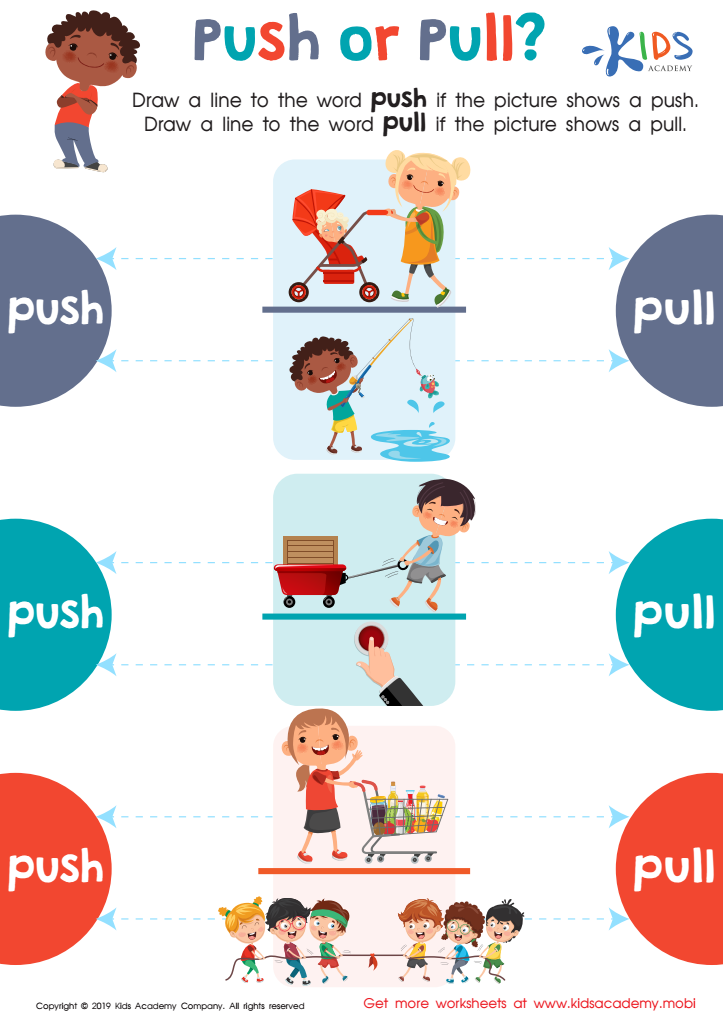
Push or Pull? Worksheet
Young kids may struggle to differentiate push and pull. When they start writing, they may use them interchangeably and wrongly. This worksheet clarifies the concepts: pushing means moving something away, pulling means bringing something closer. It provides pictures and traceable lines for kids to connect each image to the correct word. This helps them understand and remember the difference for future writing and reading.
 Assign to My Students
Push or Pull? Worksheet
Worksheet
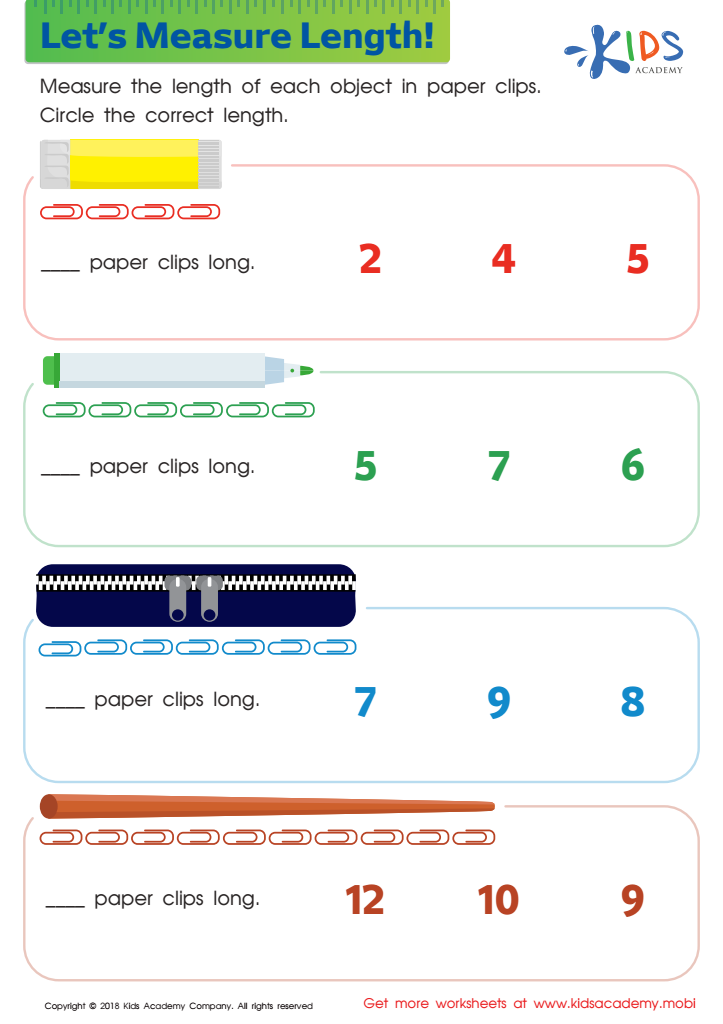
Lets Measure Length Worksheet
It's time to help your child take their measuring skills up a notch! This colorful PDF sheet from Kids Academy introduces kids to measuring with paperclips. Guide them through the page, showing them how to count the clips to measure each image. Then, circle the correct length for each to complete the sheet!
Lets Measure Length Worksheet
Worksheet
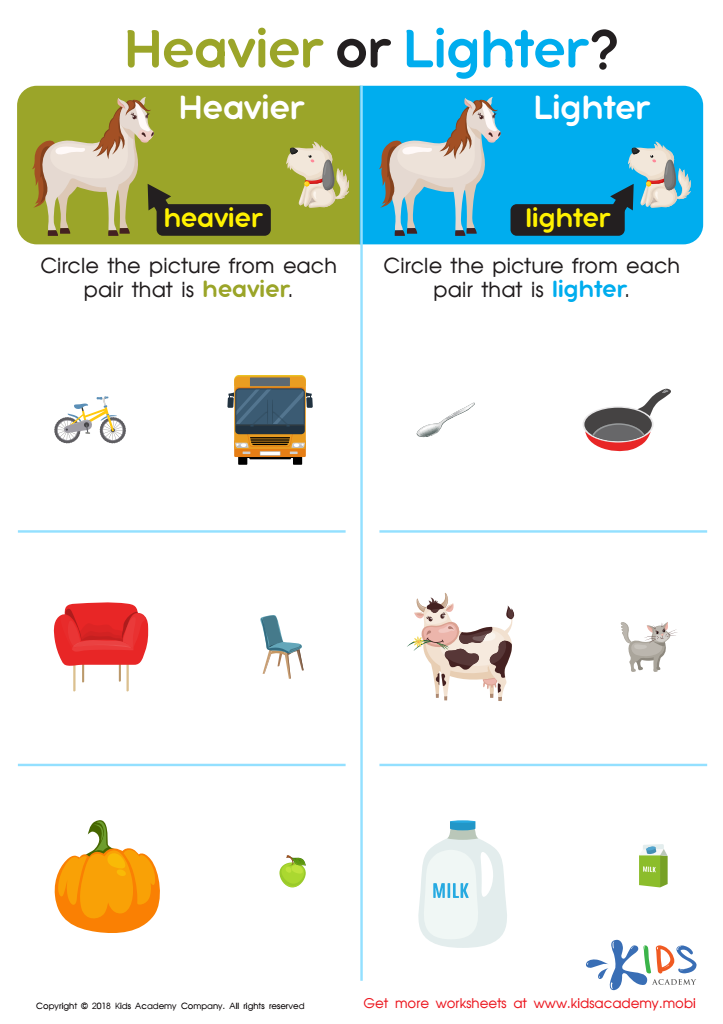
Heavier or Lighter? Worksheet
This PDF provides children an opportunity to practice concepts of heavier and lighter with familiar pictures. They must use fine-motor skills to circle the heavier or lighter item in each pair. Picture clues help build a foundation for future, harder concepts. Kids will love this fun worksheet!
Heavier or Lighter? Worksheet
Worksheet
Join Kids Academy for Free
Who is primarily going to use this learning content?








Developing observational skills in young learners is crucial for building a strong mathematical foundation from ages 3 to 8. These skills empower children to notice, describe, and interpret the world around them, fostering critical thinking and problem-solving abilities necessary for mathematical understanding. By honing their observational skills, children can recognize patterns, classify objects, and understand spatial relationships, all fundamental concepts in math.
Moreover, observational skills encourage active participation in learning and promote curiosity. When children learn to observe closely, they begin to ask questions and seek answers, which deepens their engagement with math concepts. For parents and teachers, nurturing these skills means creating a supportive environment where children feel confident in expressing their thoughts and ideas.
Incorporating observational activities in daily routines can be fun—whether through counting steps on a walk, comparing sizes of objects, or sorting toys by color. Such interactions not only strengthen mathematical skills but also enhance language development and social skills, as children share observations with peers and adults. Ultimately, fostering observational skills in early learners sets the stage for academic success, encouraging a lifelong interest in math and building a foundation for future learning.








