
Developing spatial awareness Math Worksheets for Ages 3-8
3 filtered results
Difficulty Level
Grade
Age
-
From - To
Subject
Activity
Standards
Our "Developing Spatial Awareness Math Worksheets for Ages 3-8" are expertly designed to boost your child's understanding of shapes, sizes, positions, directions, and movements. These engaging, fun activities help young learners build critical thinking and problem-solving skills through interactive exercises that lay a solid foundation for future math success. Featuring colorful visuals and age-appropriate challenges, our worksheets make learning enjoyable and accessible. Ideal for preschool to early elementary children, our resources support both classroom and at-home learning, promoting cognitive growth and spatial intelligence. Foster your child’s development and build essential math skills with these thoughtfully crafted worksheets.
Favorites
With answer key
Interactive
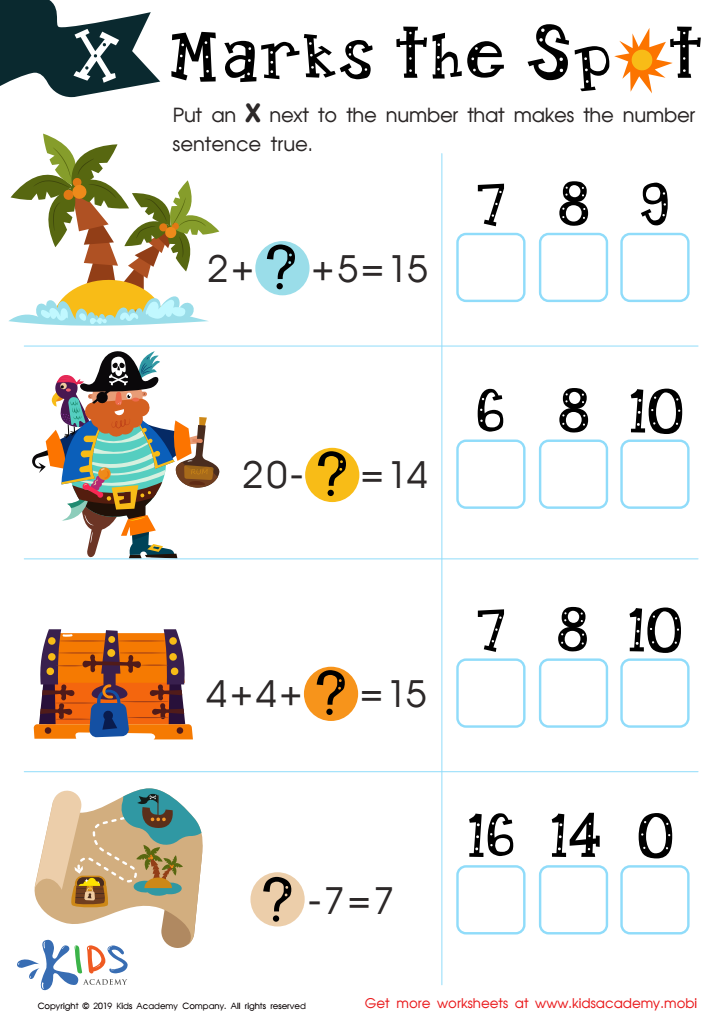
X Marks the Spot Worksheet
Let your kids explore the world of pirates! Ask them what they know about them, what they do and the phrases they like. Download the printout and point at the images, asking them to tell you what they see. Help them tick the box for the number that makes the sentence true. Let them have fun learning about pirates! (80 words)
 Assign to My Students
X Marks the Spot Worksheet
Worksheet
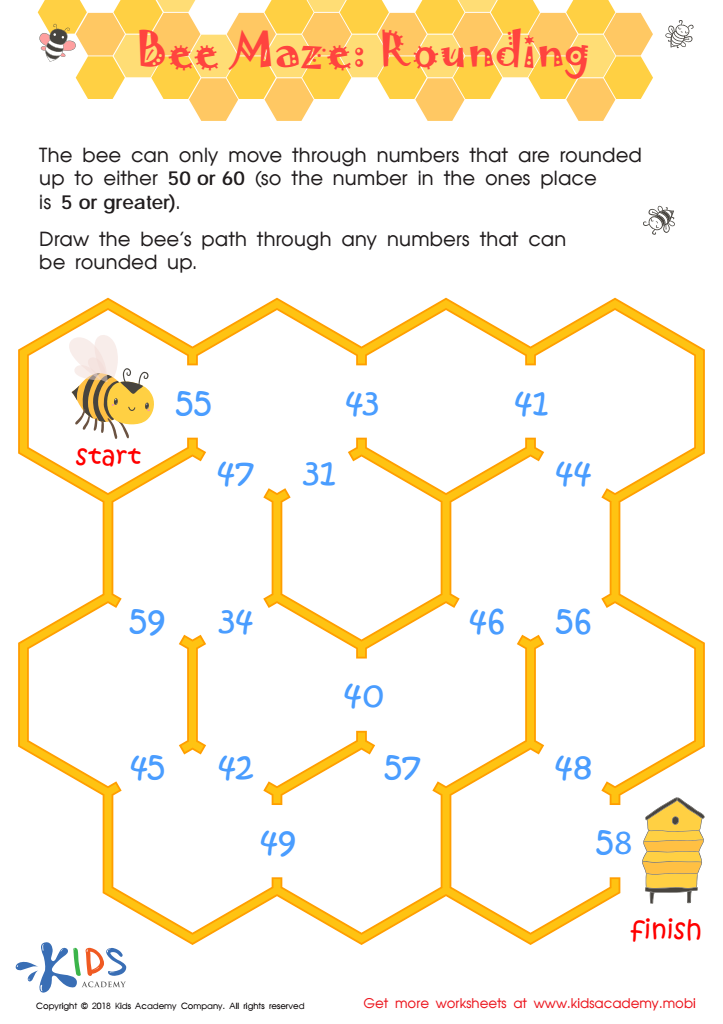
Bee Maze Rounding Worksheet
Round up the bee! Your child will practice rounding with this fun maze worksheet. Kids round up to 50 or 60, evaluating each number and guiding the bee to his home. Get ready for some thought-stretching fun!
Bee Maze Rounding Worksheet
Worksheet
Join Kids Academy for Free
Who is primarily going to use this learning content?







Spatial awareness in early childhood is fundamental for overall cognitive development and lays the groundwork for numerous academic skills. Parents and teachers should prioritize developing spatial awareness in children aged 3-8 for several vital reasons.
First, it directly supports mathematical understanding—key concepts such as geometry, measurement, and number sense rely on a child's ability to navigate and interpret space. For instance, recognizing shapes, sizing, and orienting objects are all-pervading elements of math learning.
Second, spatial awareness fosters problem-solving and critical thinking. When children learn to manipulate and interact with objects in different configurations, they’re better equipped to comprehend complex patterns and relationships. This not only boosts their math skills but also benefits reading comprehension, as understanding the orientation and interaction of letters and words can lead to better literacy.
Thirdly, strong spatial skills contribute to everyday practical abilities like navigating environments, personal organization, and motor control—crucial for sports and physical activities.
Finally, developing spatial awareness encourages creativity and the arts: it is critical in drawing, building, and understanding how objects fit and move in space.
For these reasons, fostering spatial awareness in young children is essential. Through playful activities such as puzzles, block-building, and drawing, parents and teachers can significantly advance children’s spatial intelligence and overall academic growth.








