
Graph interpretation Math Worksheets for Ages 3-8
4 filtered results
Difficulty Level
Grade
Age
-
From - To
Subject
Activity
Standards
Discover our engaging Graph Interpretation Math Worksheets designed specifically for children aged 3 to 8! These worksheets provide a fun and interactive way to help young learners understand and interpret various types of graphs. With colorful visuals and age-appropriate activities, kids will develop essential skills in analyzing data, making comparisons, and drawing conclusions. Our worksheets promote critical thinking and foster an early love for mathematics, preparing them for future learning success. Perfect for use at home or in the classroom, these resources are tailored to create a solid foundation in graph literacy while encouraging curiosity and exploration in young minds.
Favorites
With answer key
Interactive
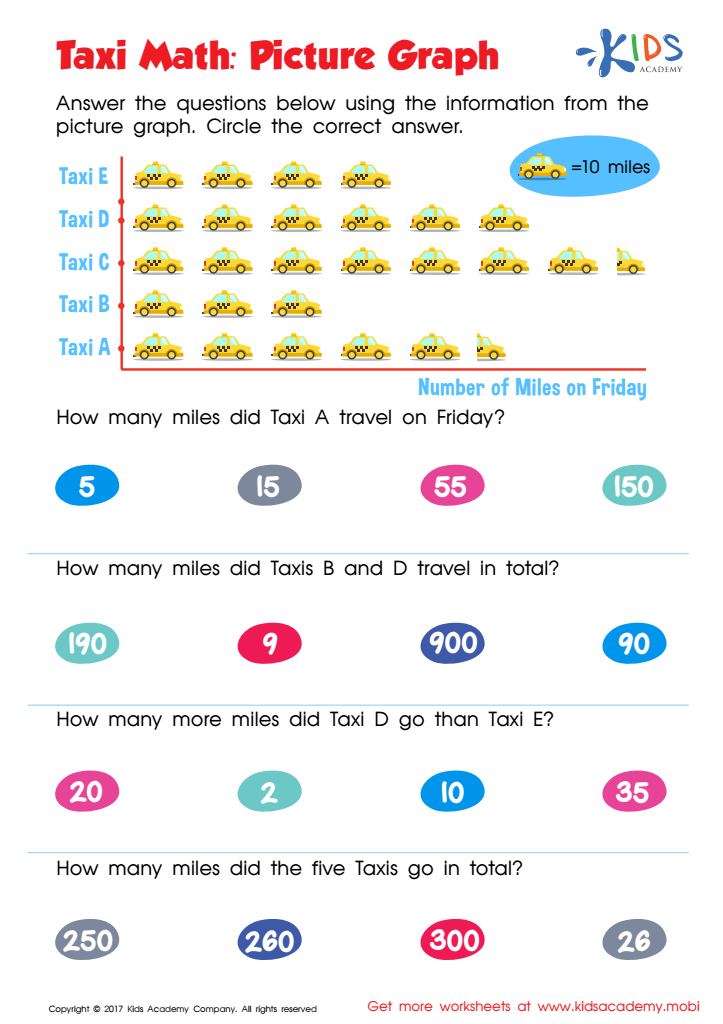
Taxi Math Worksheet
This 3rd grade worksheet helps kids learn data viz with fun taxis and colors to make the graph come alive. Picture graphs are an engaging way to teach data analysis, and this worksheet is the perfect tool!
Kids love picture graphs! This 3rd grade worksheet uses colorful taxis to help them learn to read graphs better. Each image represents a number, teaching data analysis with visuals and fun. An engaging way to learn data viz, this worksheet is perfect for young learners.
 Assign to My Students
Taxi Math Worksheet
Worksheet
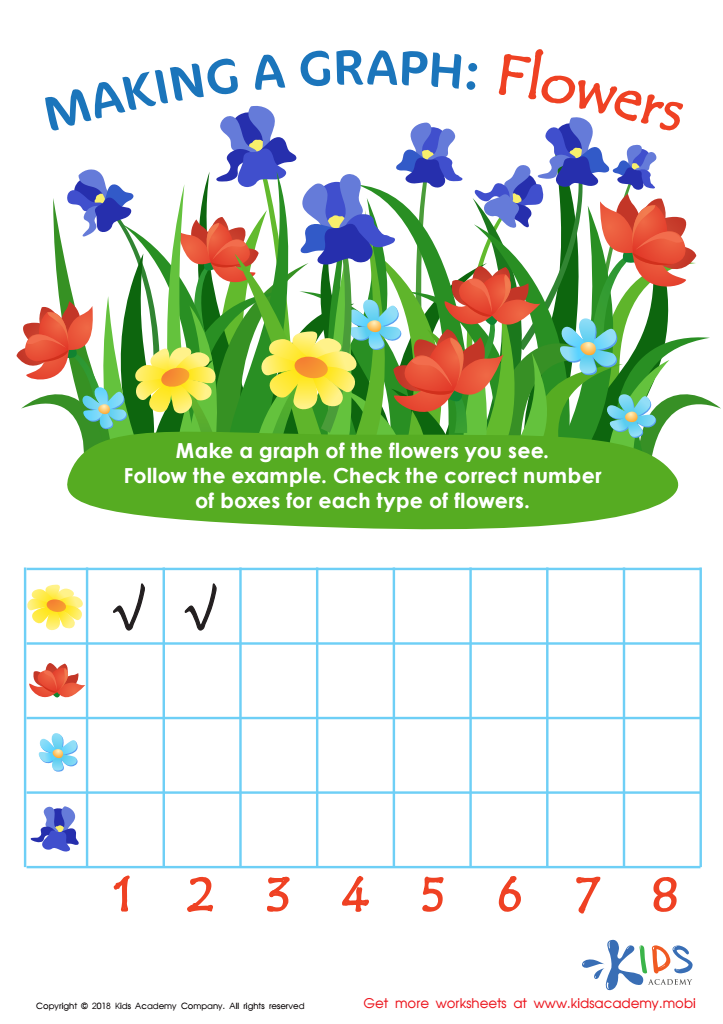
Making a Graph: Flowers Worksheet
Kids will love this engaging PDF graph. They'll count flowers and use checkmarks to represent the number on the graph, tangibly seeing the differences in an organized way they contributed to. All while developing their number representation and concrete number sense skills without even realizing it!
Making a Graph: Flowers Worksheet
Worksheet
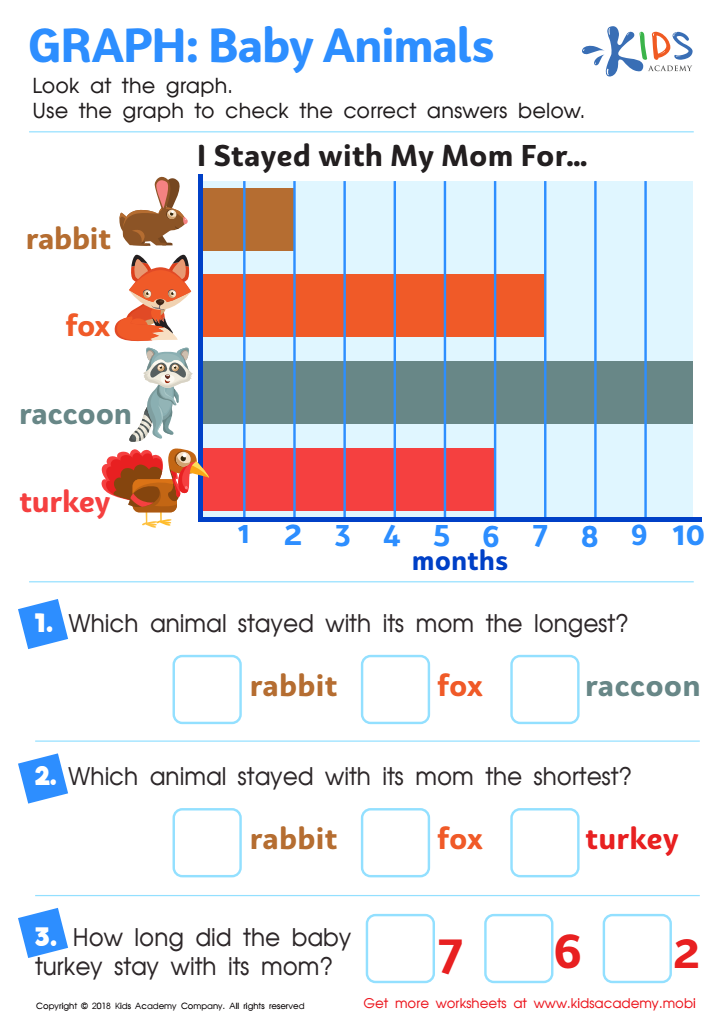
Graph: Baby Animals Worksheet
Graphs are essential for learning in math, science and ELA. This worksheet featuring baby animals is a fun way to practice reading graphs. Look at the graph and answer the questions below it. Check the boxes for the right answers based on the data.
Graph: Baby Animals Worksheet
Worksheet
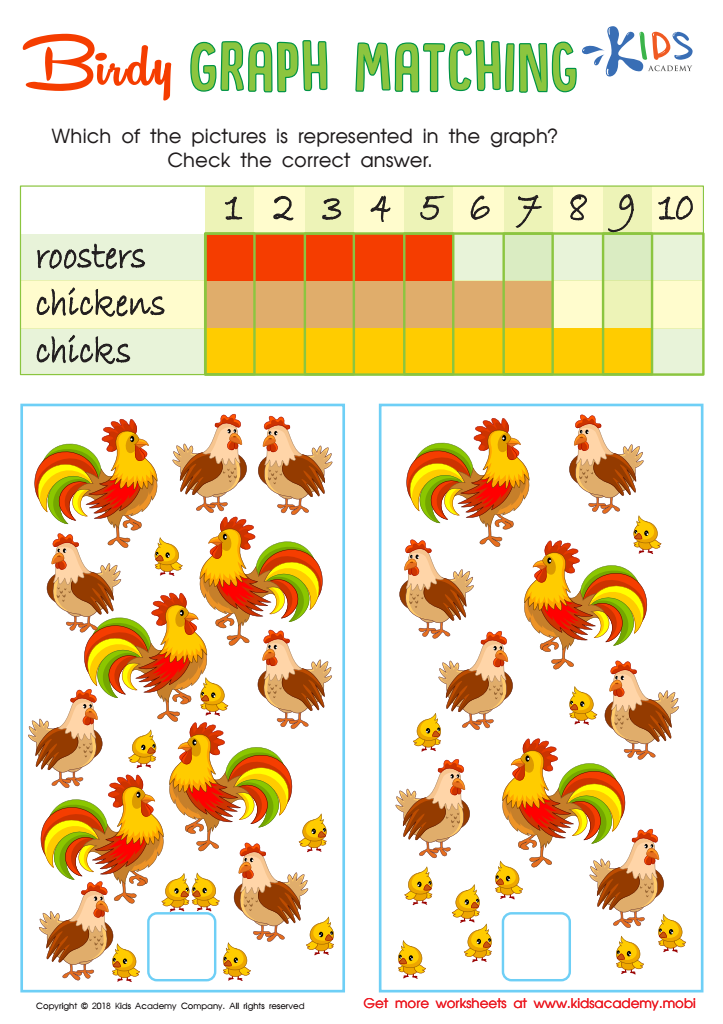
Birdy Graph Matching Worksheet
Treat your little one to a fun worksheet to practice visual discrimination, counting, graphing and tallying! They will sort the birds, count and assign values and use graph reading to answer the questions. They'll be so busy enjoying the counting that they won't even realize they are honing their skills!
Birdy Graph Matching Worksheet
Worksheet
Join Kids Academy for Free
Who is primarily going to use this learning content?








Graph interpretation is a fundamental skill for children aged 3-8 that lays the groundwork for critical thinking and analytical abilities. Understanding graphs helps young learners visualize data and strengthens their mathematical reasoning. When children engage with graphs, they learn to identify patterns, compare quantities, and draw conclusions—skills essential not only in math but across various subjects and real-life situations.
For parents and teachers, fostering graph interpretation skills at this early age cultivates curiosity and enhances comprehension. Engaging children in activities that involve simple bar graphs, pictograms, or line plots encourages dialogue and inquiry, allowing them to express their thoughts and reasoning. This interaction not only builds a foundation in mathematics but also promotes verbal and social skills.
Moreover, graph interpretation connects mathematical concepts to everyday experiences. For instance, children can plot their favorite fruits or daily weather, making learning relatable and fun. As they explore data representation, they become more empowered decision-makers in their environments, fostering a sense of agency.
In essence, nurturing graph interpretation skills in young children equips them with essential tools for future academic success and enhances their problem-solving capabilities throughout life. Investing in these critical skills today pays off significantly for tomorrow's learners.








