Recognizing numbers Math Worksheets for Ages 3-8
8 filtered results
-
From - To
Explore our "Recognizing Numbers" Math Worksheets designed for children aged 3-8! These engaging and interactive worksheets help young learners develop crucial number recognition skills through fun activities tailored to their developmental level. From tracing and coloring to counting exercises, each worksheet promotes numerical understanding in an enjoyable way. Ideal for use at home or in the classroom, these resources enhance cognitive skills while sparking a love for learning in early math. Perfect for preschoolers and kindergarteners, our worksheets make it easy for parents and educators to support children's growth and build a strong mathematical foundation. Download yours today and inspire young minds!
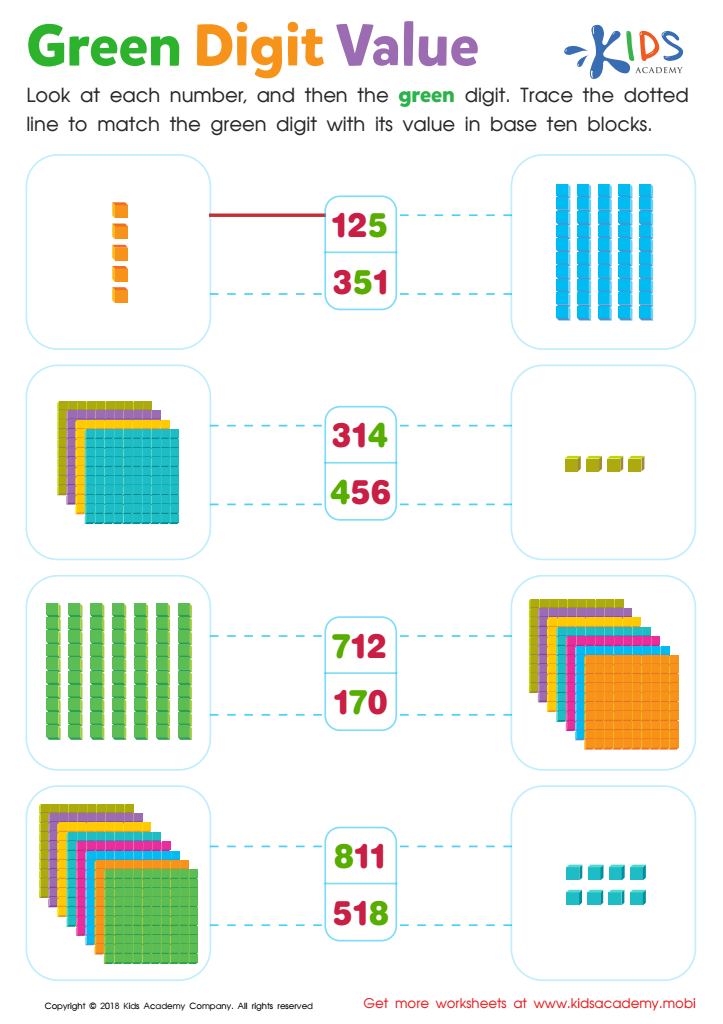
Green Digit Value Worksheet
 Assign to My Students
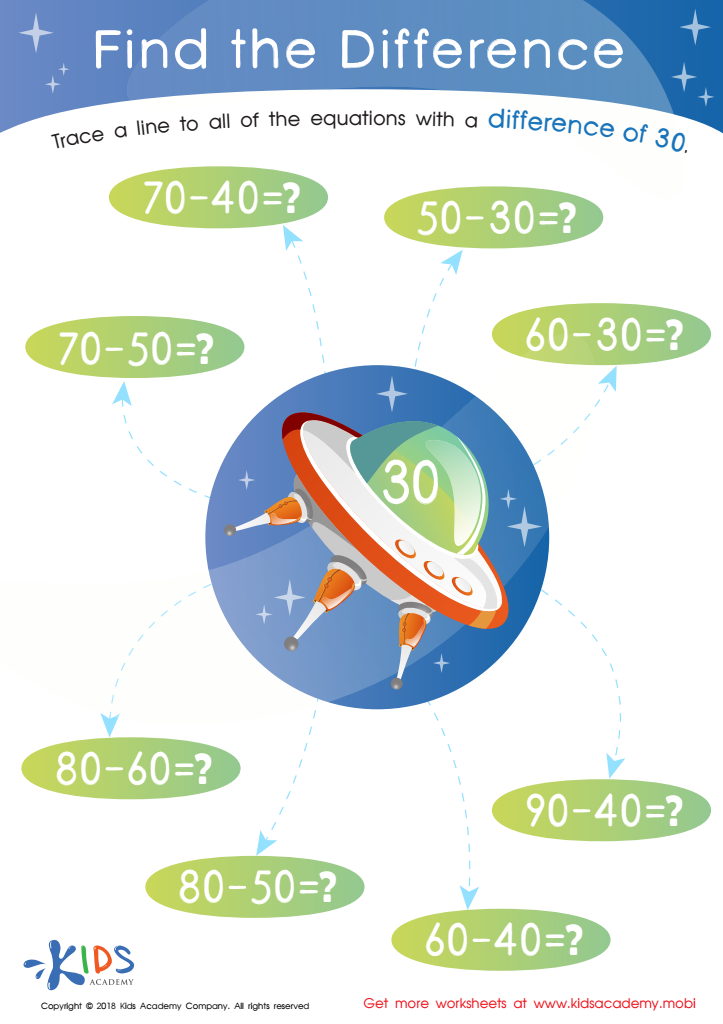
Find The Difference Worksheet
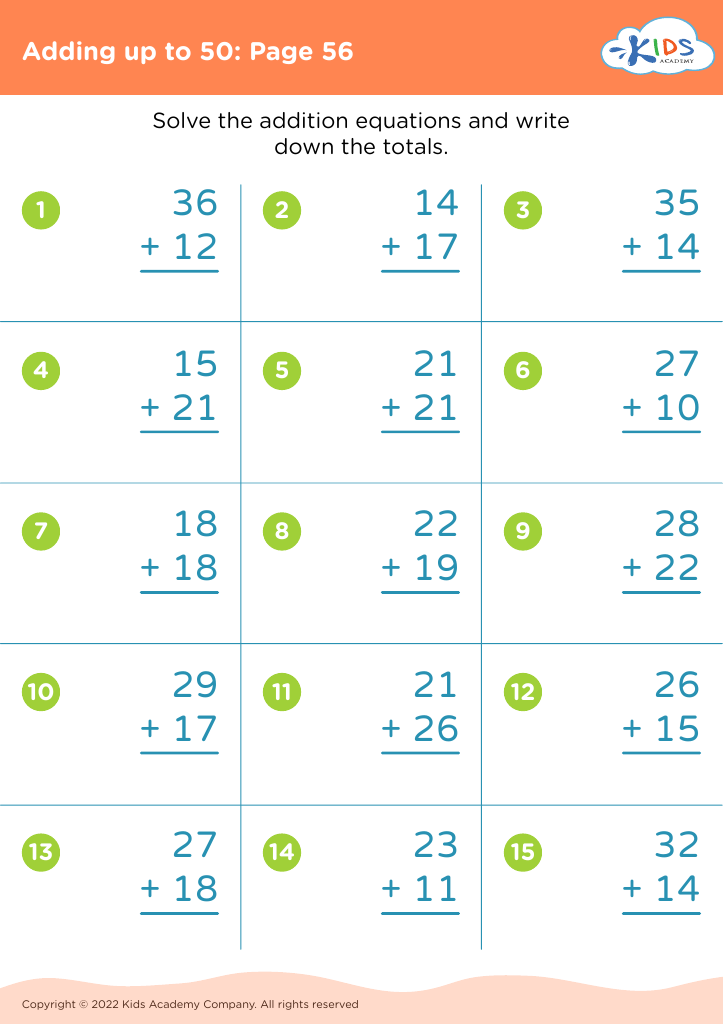
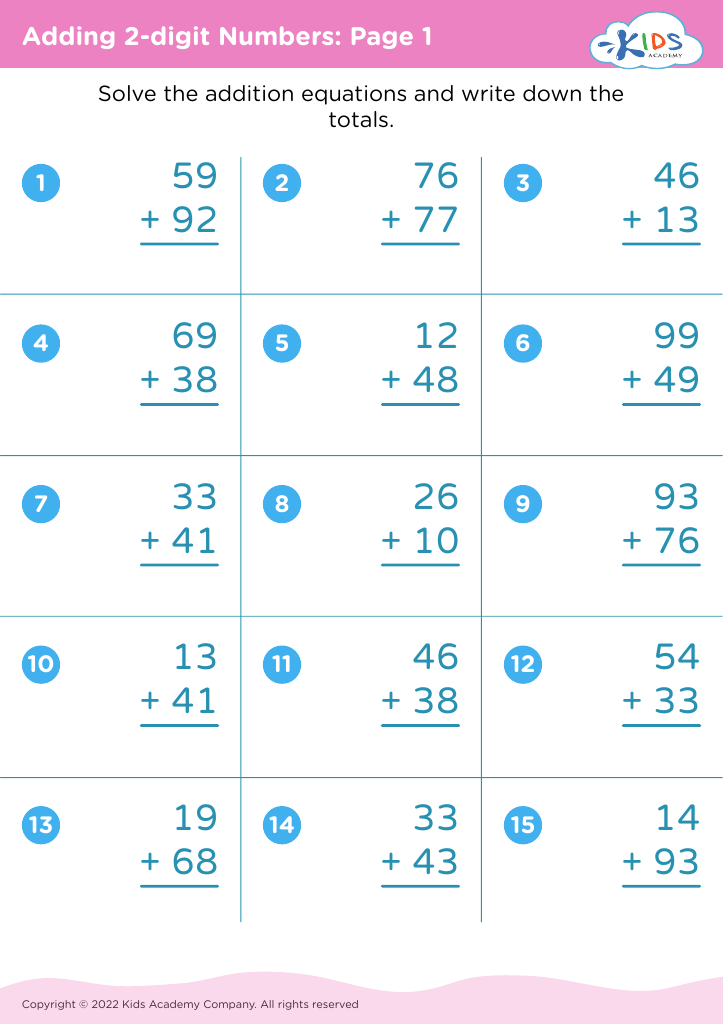
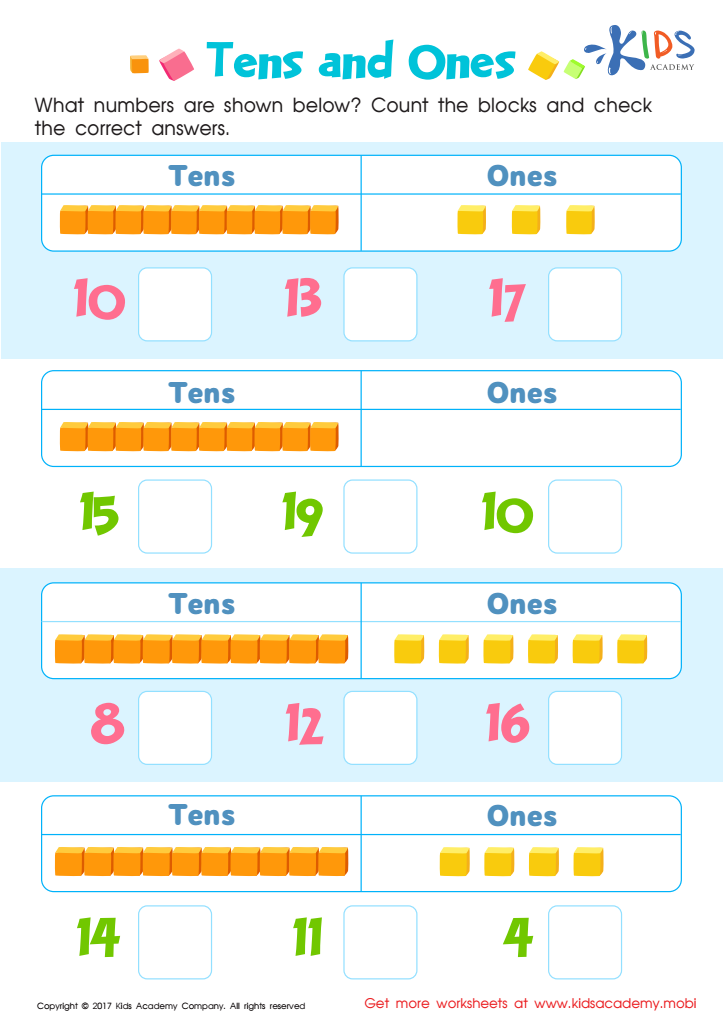
Tens and Ones Worksheet
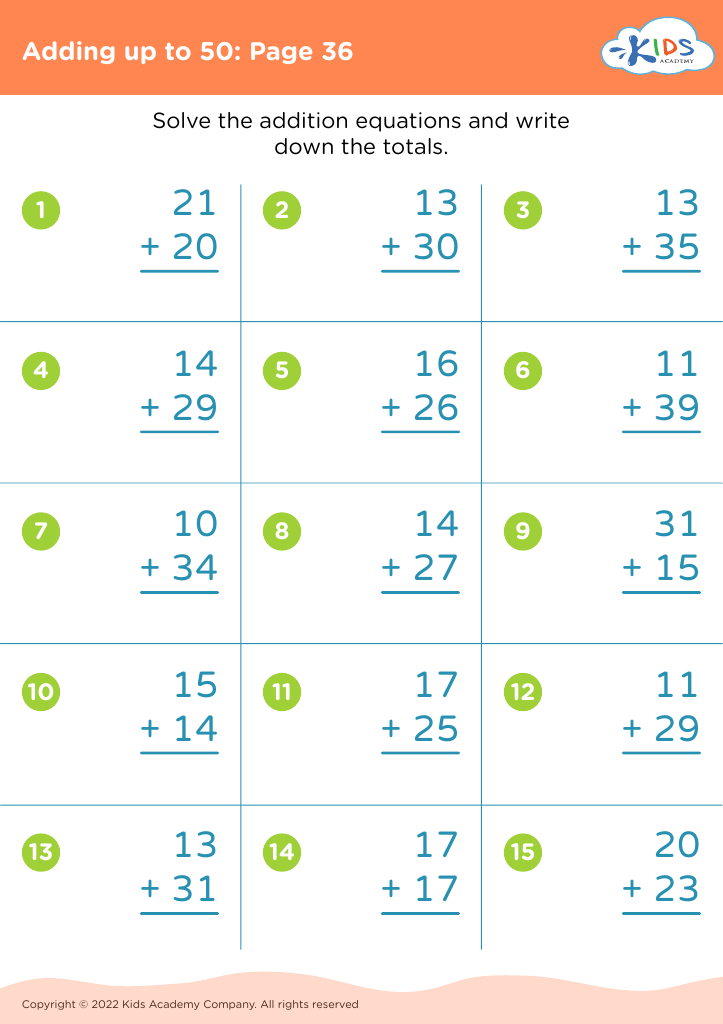
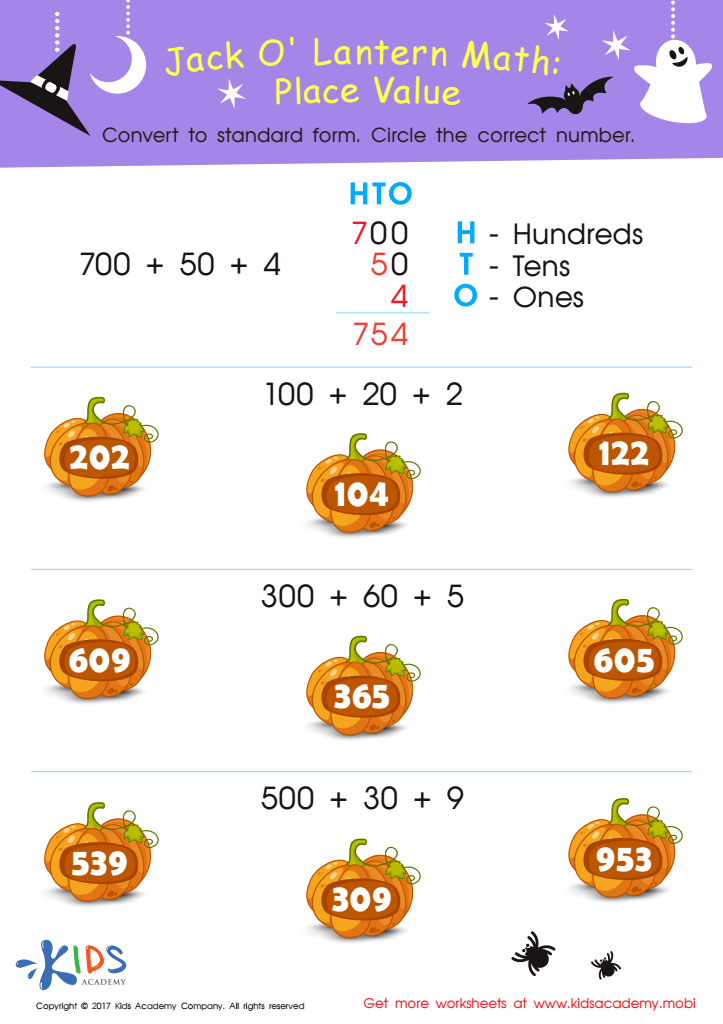
Free Place Value Worksheet
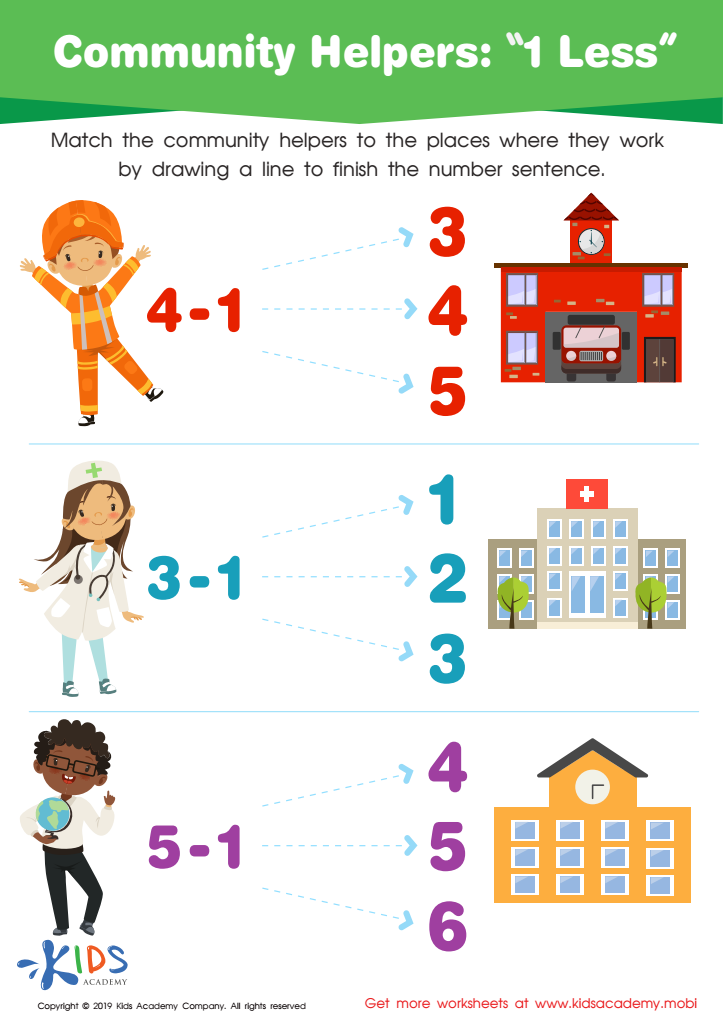
Community Helpers: 1 less Worksheet


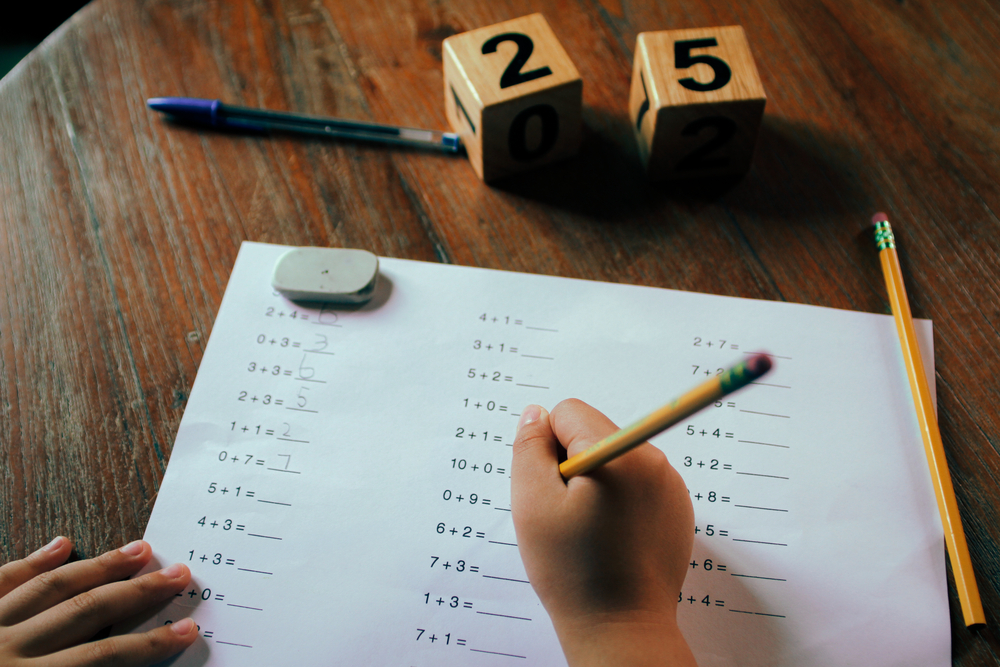



Recognizing numbers is foundational for young learners aged 3 to 8, making it crucial for both parents and teachers. This skill forms the groundwork for later mathematical concepts, including addition, subtraction, and problem-solving. Early recognition of numbers helps children understand quantitative relationships and aids in developing critical thinking skills.
Furthermore, recognizing numbers is integral to daily life, enabling children to read clocks, understand money, and grasp the concept of time, all essential skills as they grow. Parents and teachers can enhance number recognition through engaging activities, such as counting games, interactive storytelling, and practical applications like shopping or playing board games.
Additionally, fostering number familiarity supports confidence in a child's abilities, reducing math anxiety as they progress in school. Collaborative efforts between parents and educators create a consistent learning environment, reinforcing concepts at home and school. This holistic approach not only enhances number recognition but promotes a positive attitude toward mathematics.
Ultimately, prioritizing number recognition sets the stage for lifelong mathematical understanding and success, highlighting the importance of parents and educators working together to nurture this essential skill from an early age.








