Understanding instructions Math Worksheets for Ages 3-8
5 filtered results
-
From - To
Welcome to our "Understanding Instructions Math Worksheets" designed specifically for children aged 3-8! These engaging worksheets help young learners develop essential skills in following directions and comprehending mathematical instructions. Each activity is tailored to promote critical thinking and problem-solving abilities, allowing children to build confidence in their math skills. With colorful visuals and age-appropriate challenges, our printable resources inspire curiosity and make learning fun. Perfect for classrooms or home practice, these worksheets ensure that your little ones grasp foundational concepts while enjoying the learning process. Explore our collection and empower your child's educational journey today!
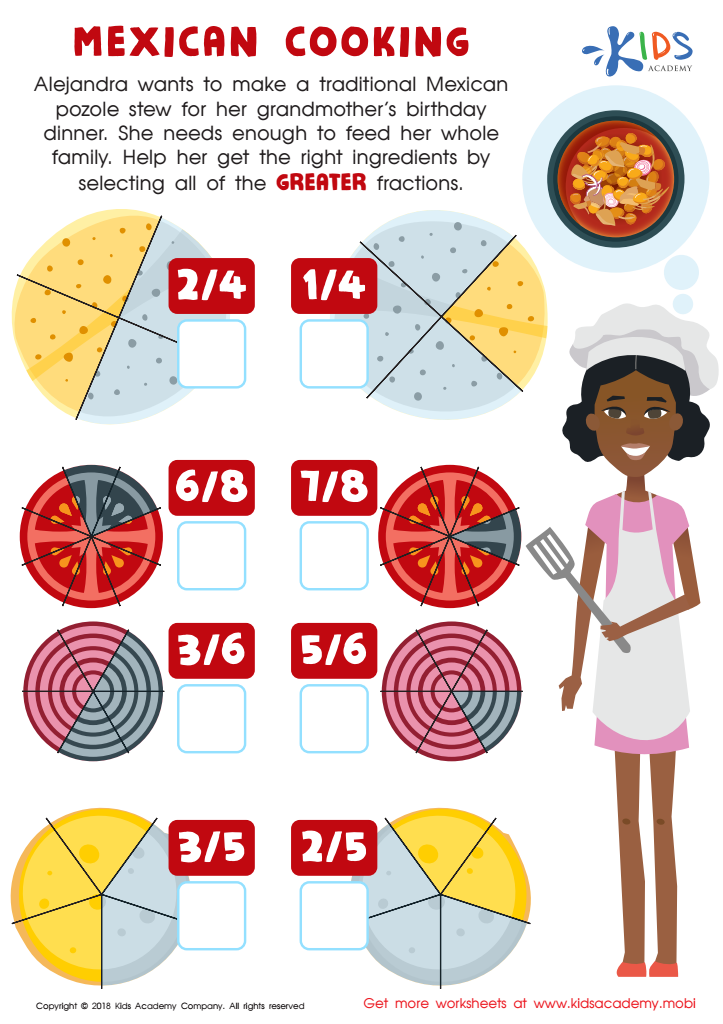
Mexican Cooking Worksheet
 Assign to My Students
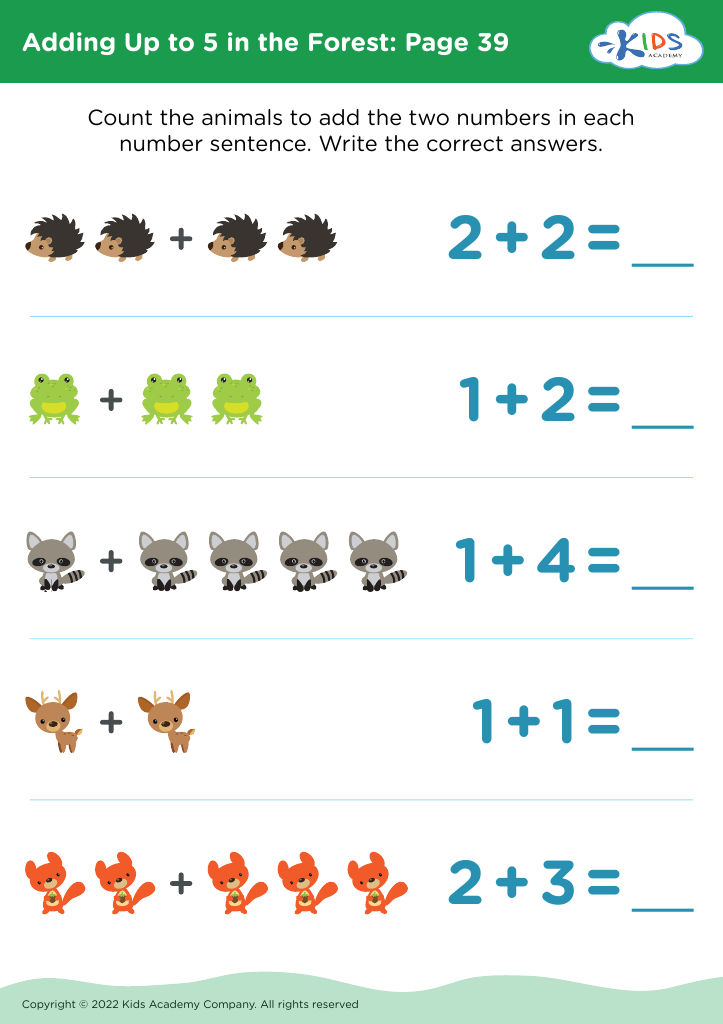
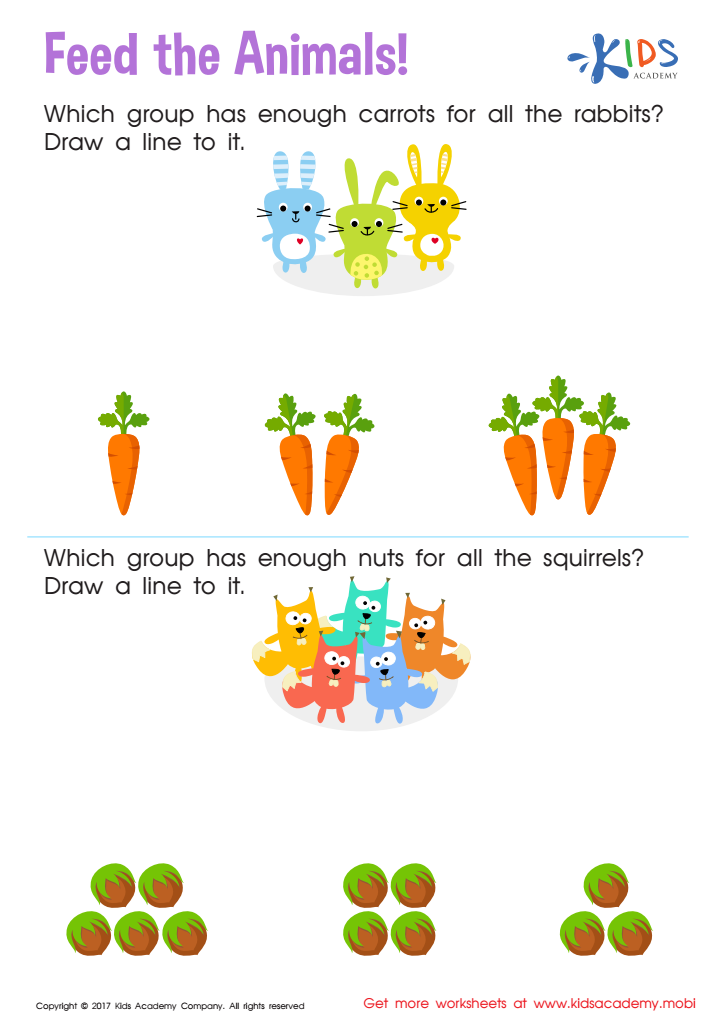
Count and Match: Feed the Animals Worksheet







Understanding instructions in math for children aged 3-8 is crucial for their overall development and learning. At this age, children are forming the foundational skills that will support their future academic endeavors. Clear and effective instructions help them grasp essential concepts such as counting, sorting, and recognizing patterns, laying the groundwork for problem-solving abilities and critical thinking.
Parents and teachers play a pivotal role in this phase of learning, providing guidance and support through engaging, interactive activities. When children understand mathematical instructions, they build confidence, logic, and the ability to follow complex steps, skills that are equally important in other subjects and life experiences. Additionally, strong early math skills are linked to success later in school, making this aspect of learning a priority.
Moreover, understanding math instructions fosters communication skills. It opens up opportunities for discussions between children, parents, and educators about problem-solving strategies and different thinking approaches. This collaborative learning process enhances relationships and creates a supportive environment. Ultimately, nurturing a child's ability to comprehend and follow math instructions not only enriches their academic journey but also prepares them for lifelong learning. Therefore, parents and teachers should prioritize this vital aspect of early education.








