Understanding number patterns Math Worksheets for Ages 3-8
6 filtered results
-
From - To
Discover the joy of learning with our "Understanding Number Patterns" math worksheets designed specifically for children aged 3-8. These engaging worksheets introduce young learners to the foundational concepts of number patterns using fun visuals and interactive activities. Tailored to accommodate various skill levels, they foster critical thinking while enhancing counting and sequencing abilities. Parents and educators can easily access a variety of exercises that encourage recognition of patterns through colors, shapes, and numbers. Cultivate your child's mathematical skills with our thoughtfully crafted resources, ensuring a solid foundation that will inspire confidence and curiosity in mathematics. Get started today!
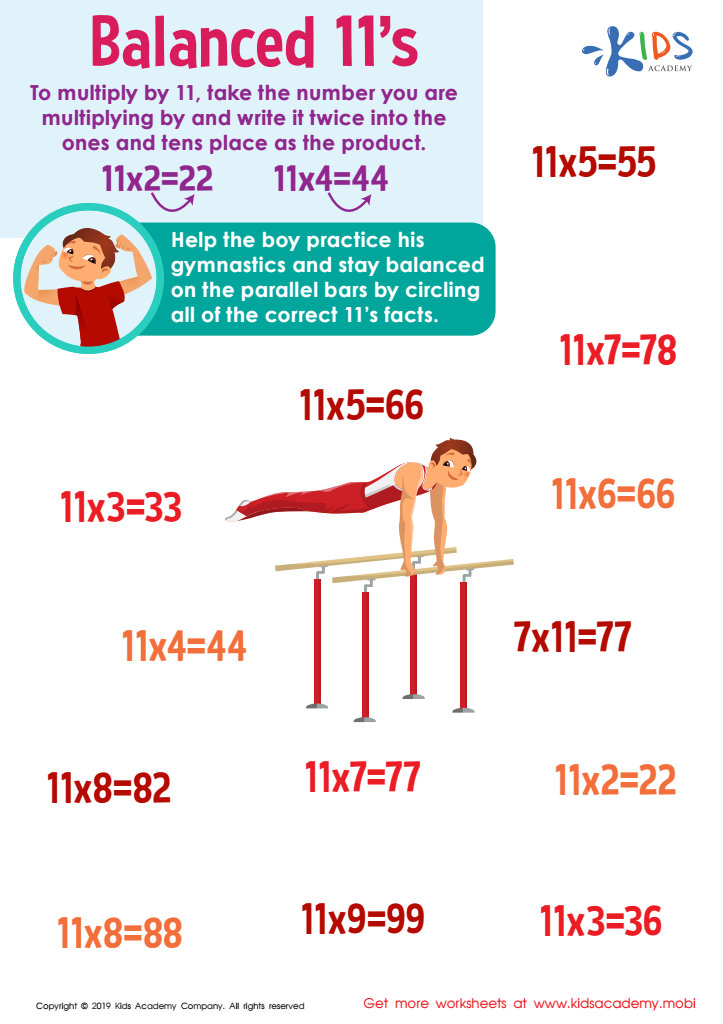
Balanced 11s Worksheet
 Assign to My Students
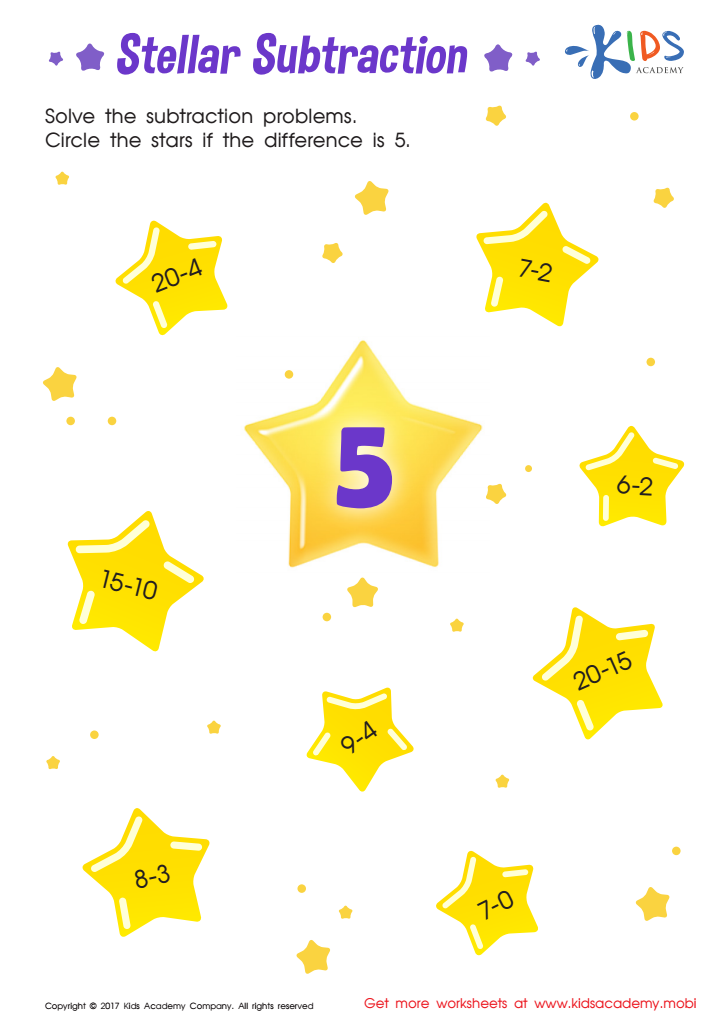
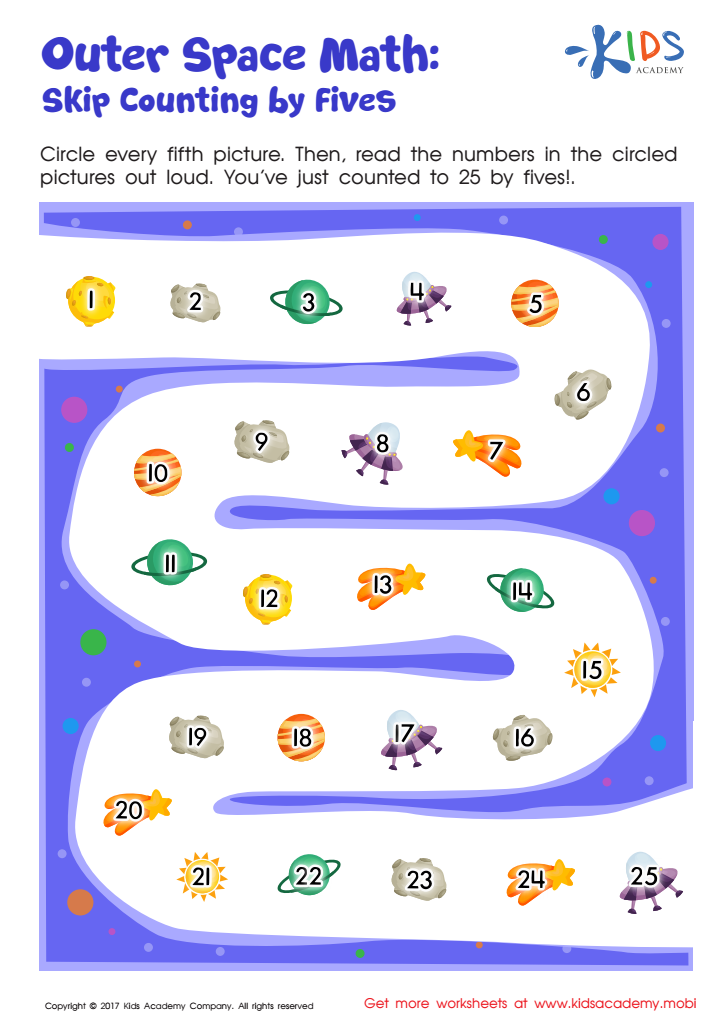
Skip Counting by 5s: Outer Space Math Printable
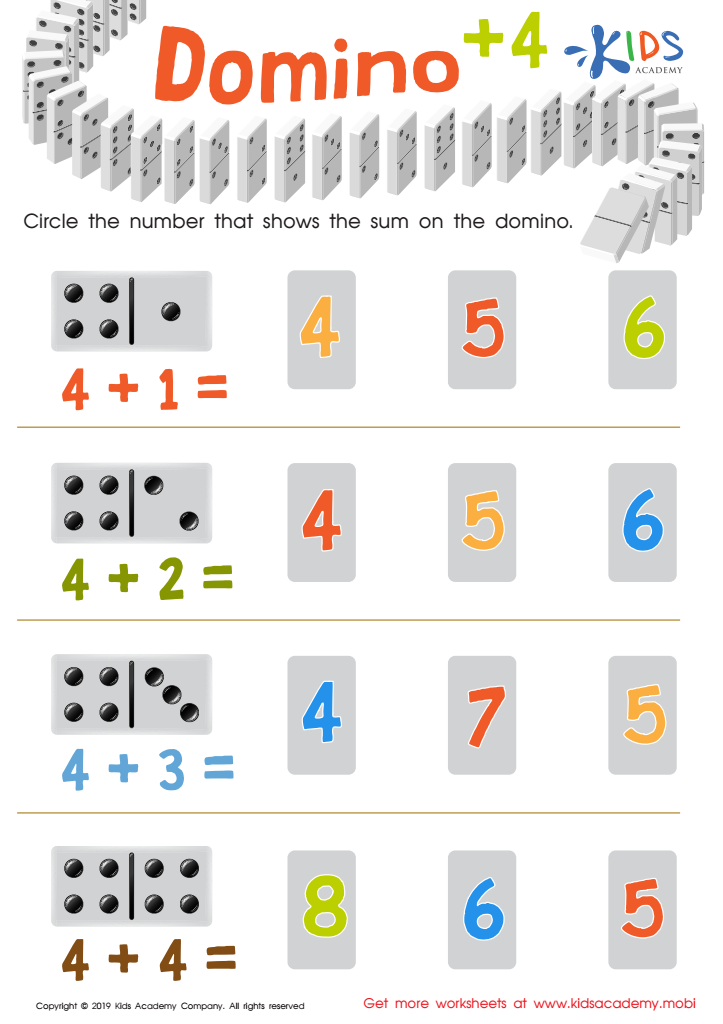
Domino +4 Worksheet
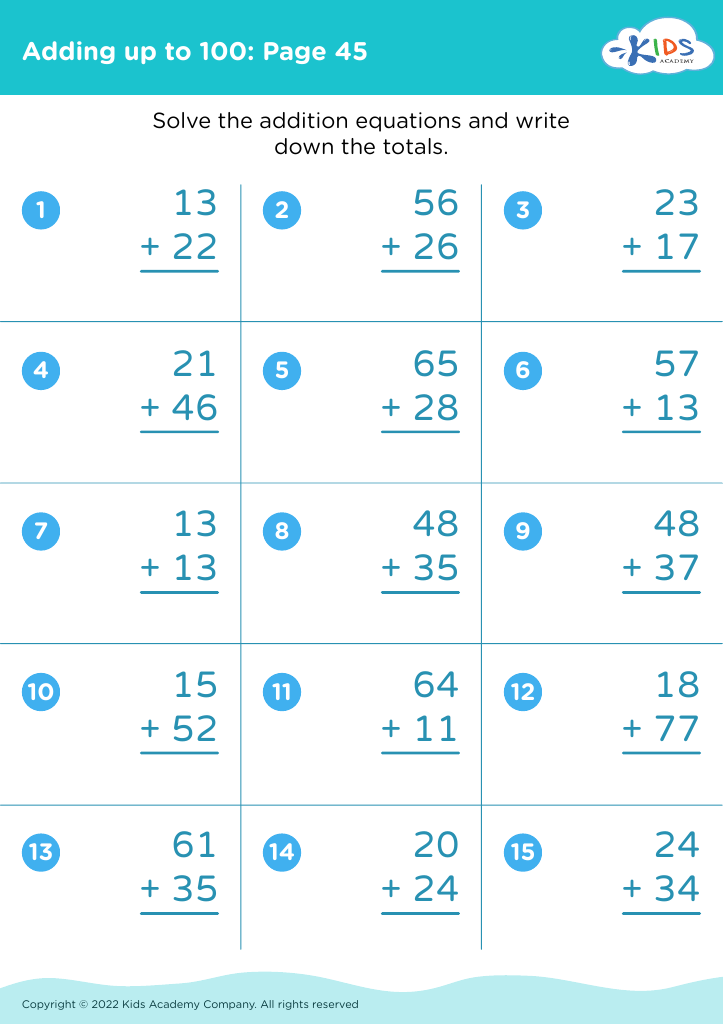
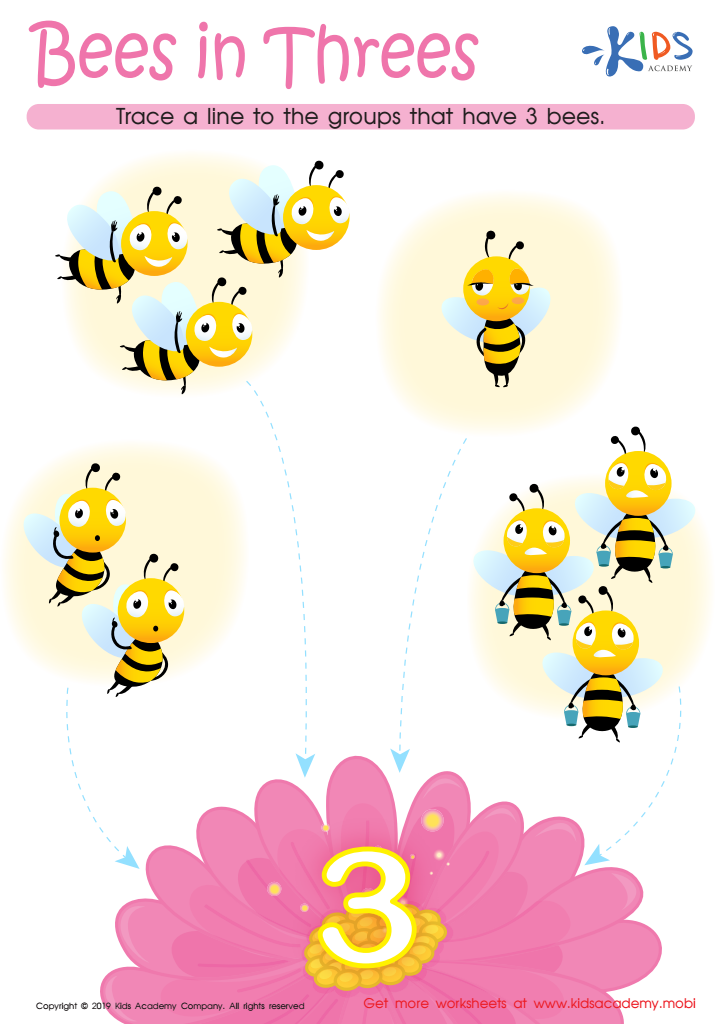
Bees in Threes Worksheet








Understanding number patterns is crucial for young learners aged 3-8, as it provides a foundation for mathematical reasoning and problem-solving skills that are essential for lifelong learning. For parents and teachers, nurturing this understanding helps children develop critical analytical skills and enhances their ability to recognize relationships between numbers, which is vital for tackling more complex mathematical concepts later on.
Engaging with number patterns fosters children's ability to predict, analyze, and communicate about numbers, making math more intuitive and less intimidating. Activities involving patterns, such as counting, sorting, and sequence recognition, promote cognitive development, encourage logical thinking, and improve memory skills. This kind of engagement also makes learning fun and interactive, reassuring children that math can be enjoyable.
Moreover, recognizing number patterns nurtures confidence in mathematical abilities, reducing anxiety around the subject. The skills learned through identifying and creating patterns not only support early numeracy but also translate into everyday situations, promoting a deeper understanding of the world around them. Thus, prioritizing number patterns in early education leads to stronger mathematical skills, better preparation for future learning, and a more positive attitude toward mathematics for both children and their families.








