Understanding patterns Math Worksheets for Ages 3-8 - Page 3
52 filtered results
-
From - To
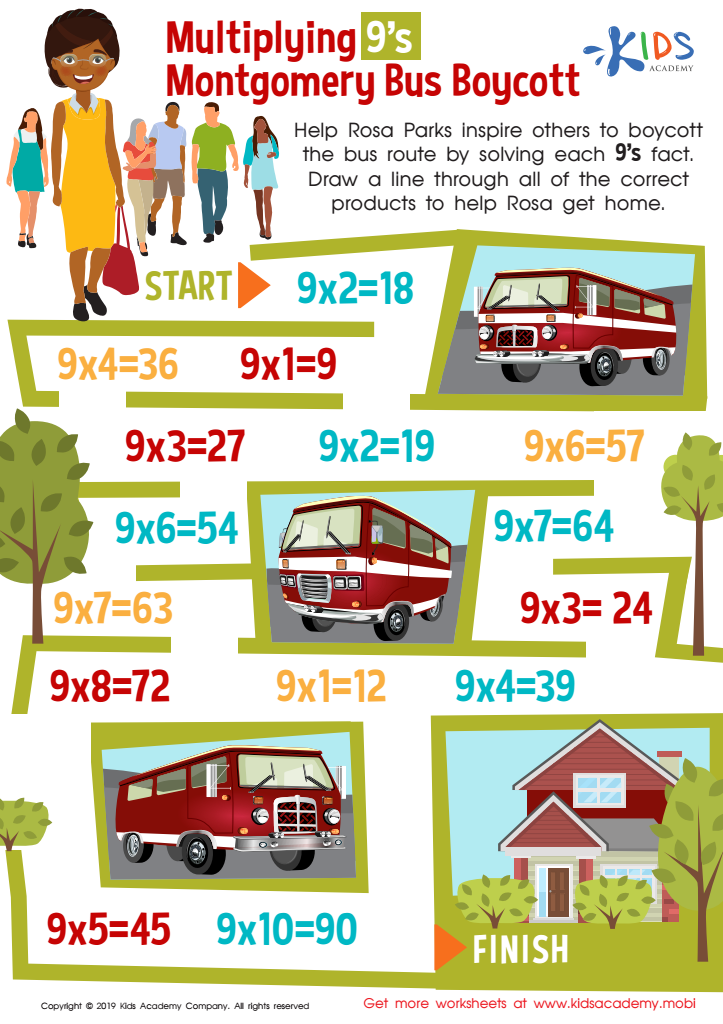
Multiplying 9’s Montgomery Bus Boycott Worksheet
 Assign to My Students
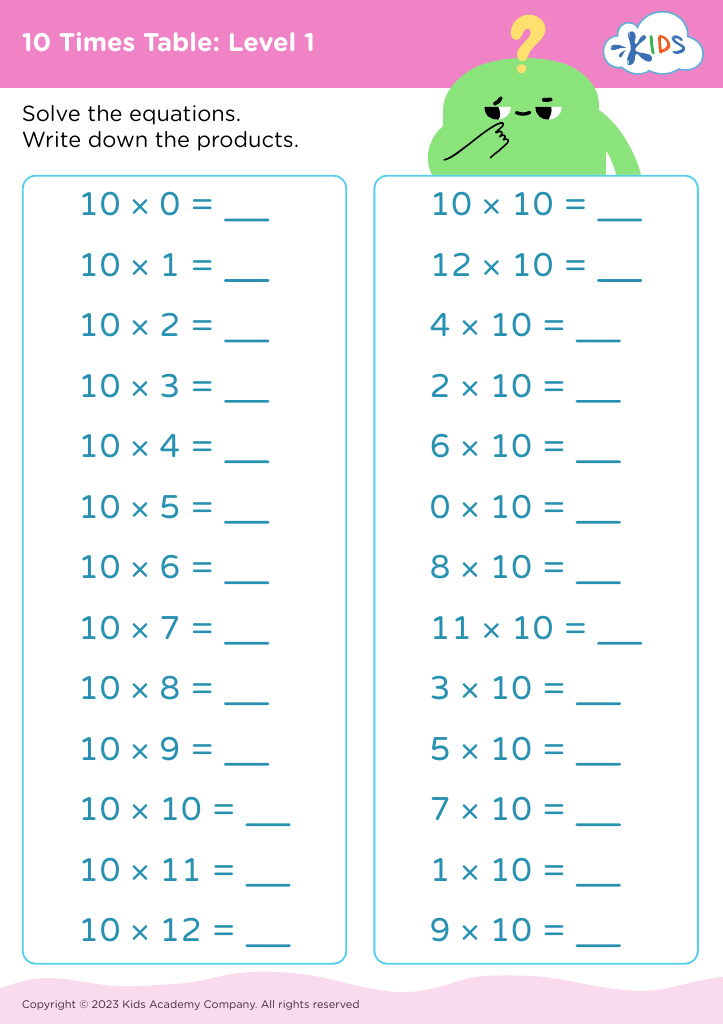
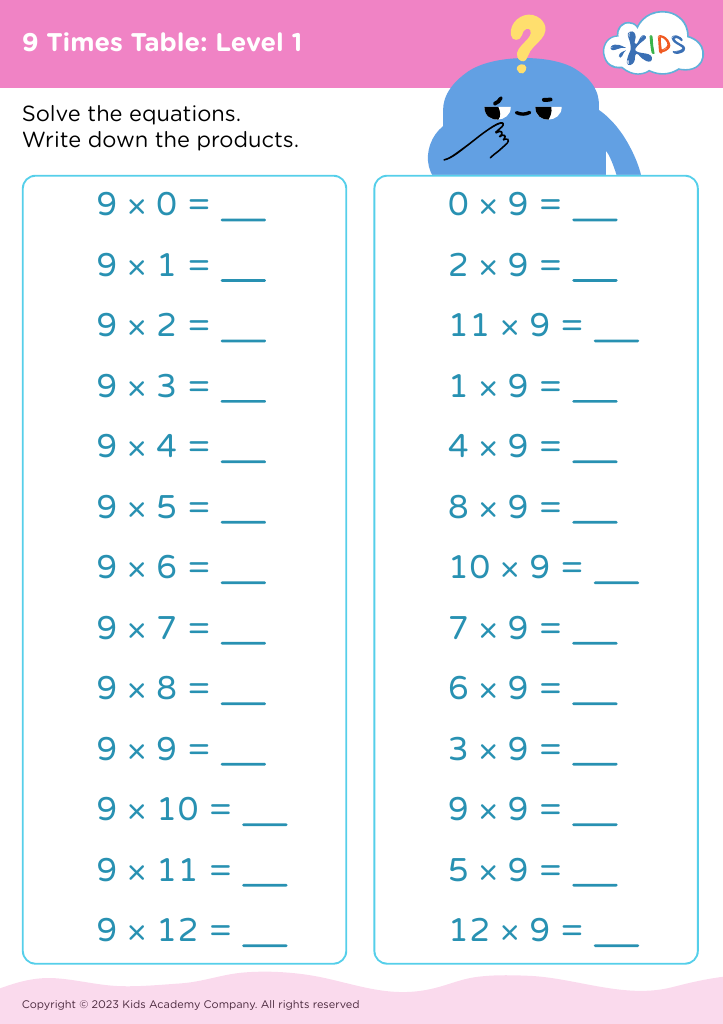
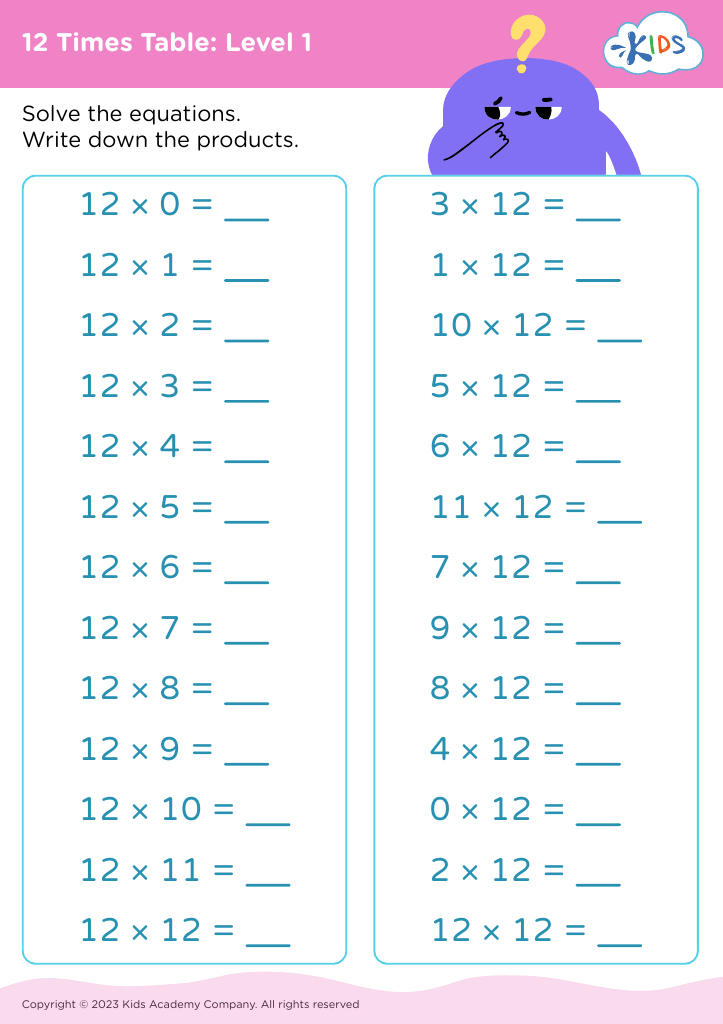







Understanding patterns is a foundational concept in mathematics, particularly crucial for children aged 3-8. At this early stage of development, children are naturally curious, and learning to identify and create patterns helps to channel that curiosity into mathematical thinking.
Patterns are everywhere, from daily routines and nature to art and music, making them relatable and essential for understanding the world around us. When parents and teachers help children recognize patterns, they are essentially teaching them to make connections, a key cognitive skill that enhances problem-solving abilities. These early experiences with patterns can lead to more complex mathematical concepts in later years, such as algebra and number theory.
Additionally, recognizing patterns enhances critical thinking and observational skills. It fosters a sense of order and predictability, which is comforting to young learners. Moreover, engaging with patterns can be fun and interactive, using songs, games, and hands-on activities, making math enjoyable and lowering the anxiety often associated with the subject.
Incorporating pattern recognition into learning curricula also supports diverse learning styles, ensuring that children with various strengths can engage with math meaningfully. Therefore, fostering an understanding of patterns in young children is vital for their cognitive, emotional, and academic growth.








