Color recognition Matching Worksheets for Ages 3-8
3 filtered results
-
From - To
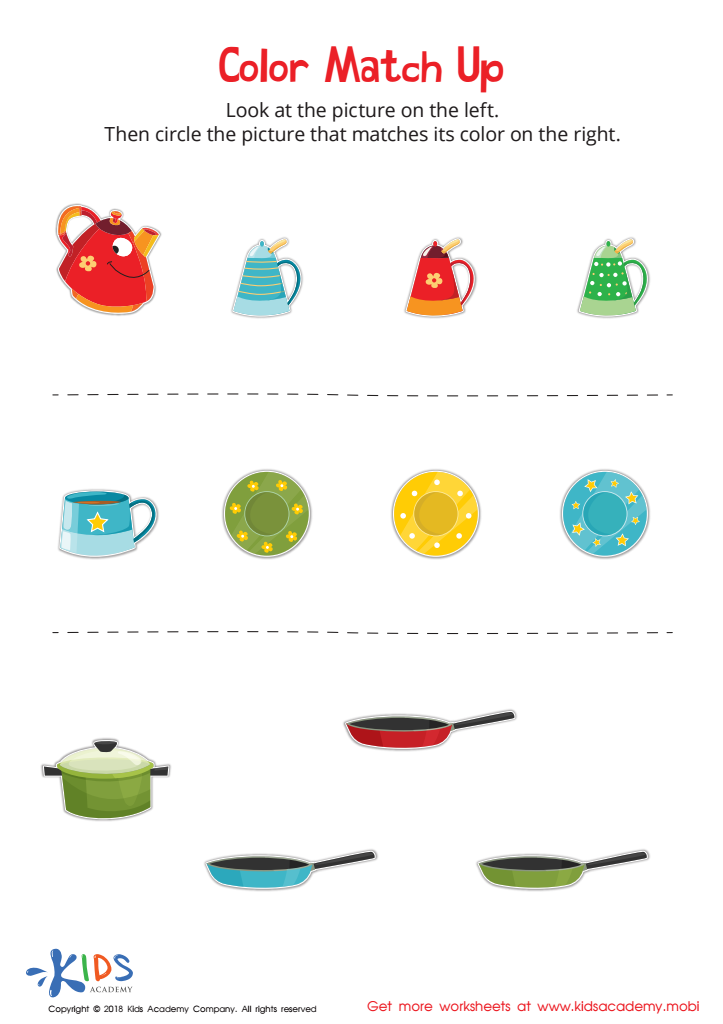
Boost your child's learning with our Color Recognition Matching Worksheets designed for ages 3-8. These engaging and brightly illustrated worksheets help young learners identify and match colors, enhancing their visual discrimination and fine motor skills. Featuring a variety of fun activities like color-by-number, matching objects, and coloring exercises, these worksheets make learning enjoyable and effective. Ideal for both classroom and home use, our collection supports early cognitive development and boosts kids' confidence in recognizing and using colors. Invest in your child's educational journey with our expertly crafted color recognition resources.
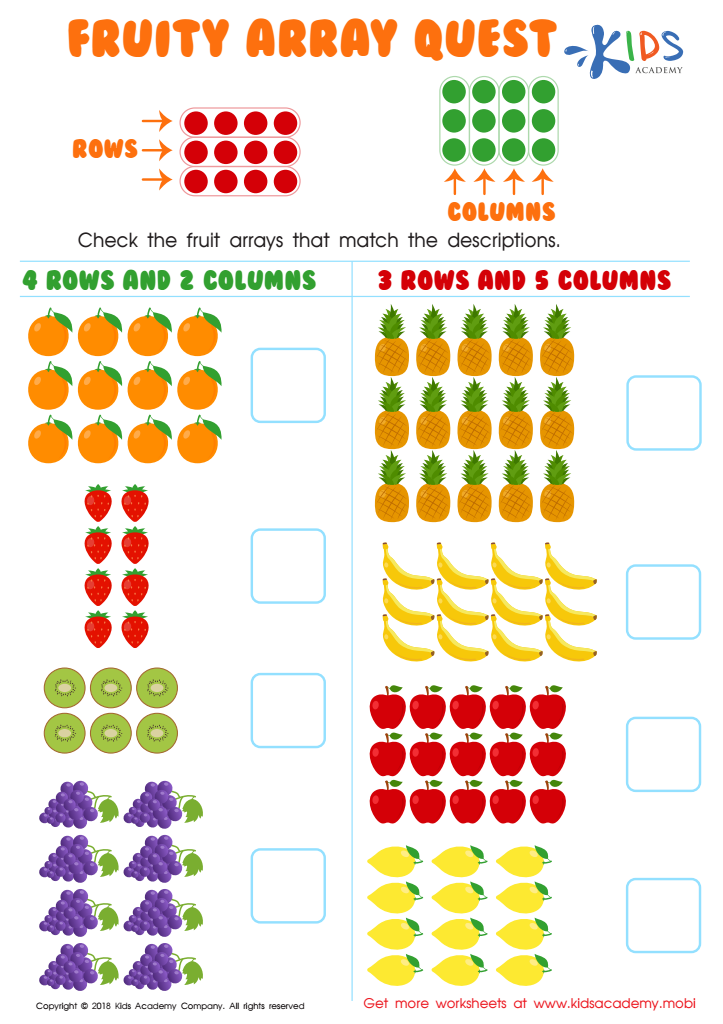
Fruity Array Quest Worksheet
 Assign to My Students
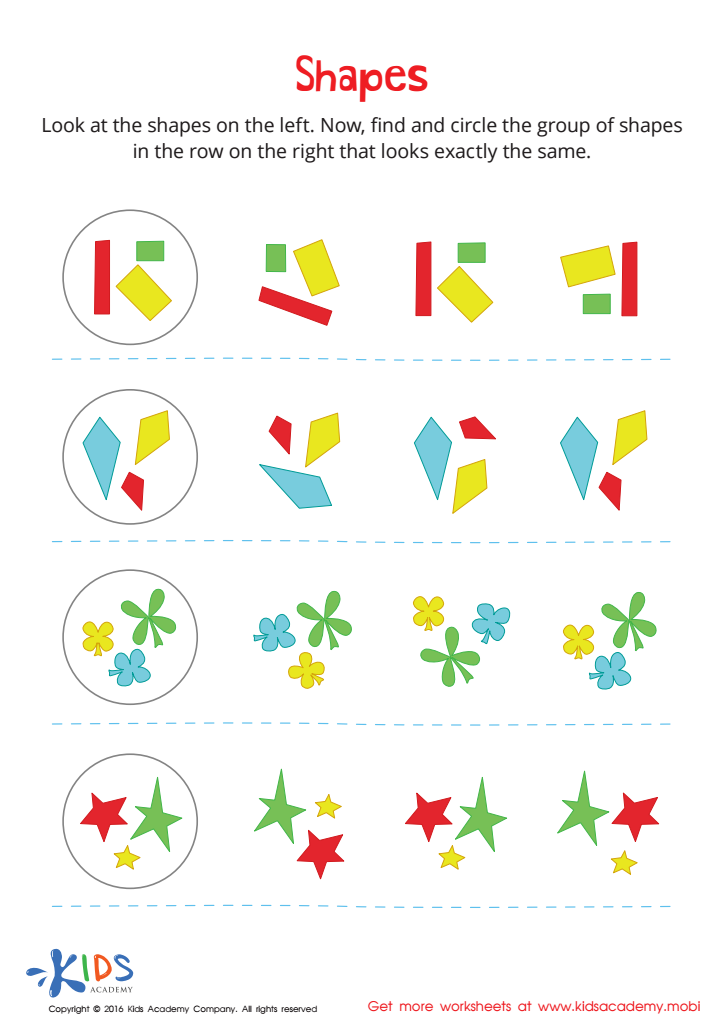
Shapes Worksheet








Color recognition and matching activities are more vital for the development of children ages 3-8 than one might initially believe. Firstly, it enhances cognitive skills. Being able to distinguish and associate colors sharpens children's observation and differentiation abilities, which are foundational skills for reading and math. For example, learning that the sky is blue and the grass is green helps children understand nuances and drawn connections in their immediate environment.
Secondly, it boosts memory and focus. Tasks that require children to match colors encourage attention to details and necessitate memorizing various color shades, strengthening their working memory. These are critical building blocks for more advanced educational pursuits and daily life functionalities.
Thirdly, fine motor skills are honed through color activities. Tasking children with sorting colorful objects or drawing and coloring within lines helps them master hand-eye coordination, precision, and control, all crucial skills for writing.
Lastly, color activities foster emotional and social development. Colors are often tied to self-expression and communication. By expressing preferences and learning to discuss differences and similarities, children bolster both verbal skills and interpersonal interactions.
Parents and teachers should prioritize color recognition and matching tasks, seamlessly integrating them into fun and educational activities that captivate and teach children holistically.








