Comparing object weights Measurement Worksheets for Ages 3-8
3 filtered results
-
From - To
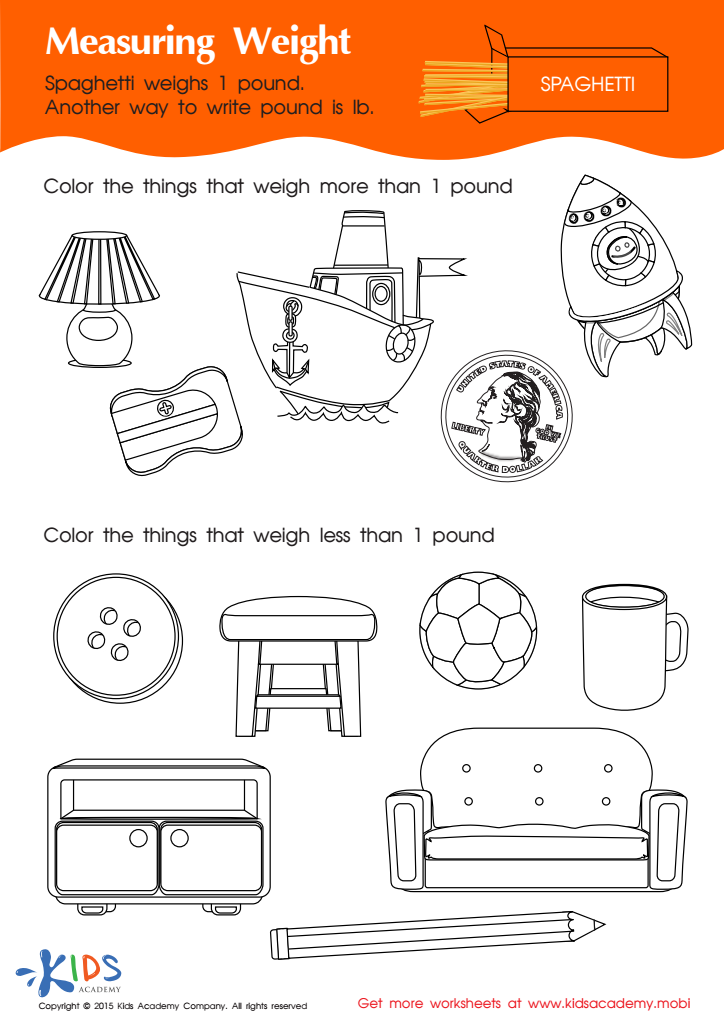
Discover our engaging "Comparing Object Weights Measurement Worksheets" designed for children aged 3-8! These worksheets provide a fun and interactive way for young learners to explore the concept of weight through hands-on activities. Kids will develop essential measurement skills as they compare the weights of various objects, enhancing their critical thinking and problem-solving abilities. With colorful illustrations and age-appropriate challenges, our worksheets make learning enjoyable and effective. Whether at home or in the classroom, these resources encourage curiosity while laying a solid foundation in math concepts. Ignite your child's love for learning with our delightful weight comparison activities today!
 Assign to My Students
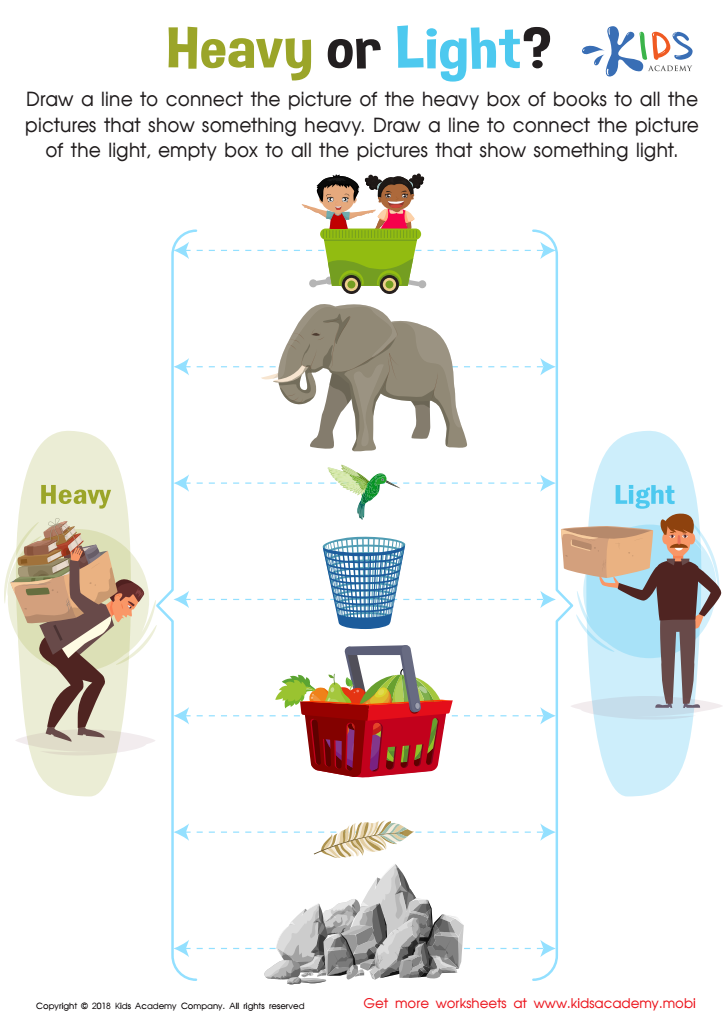
Heavy or Light? Worksheet
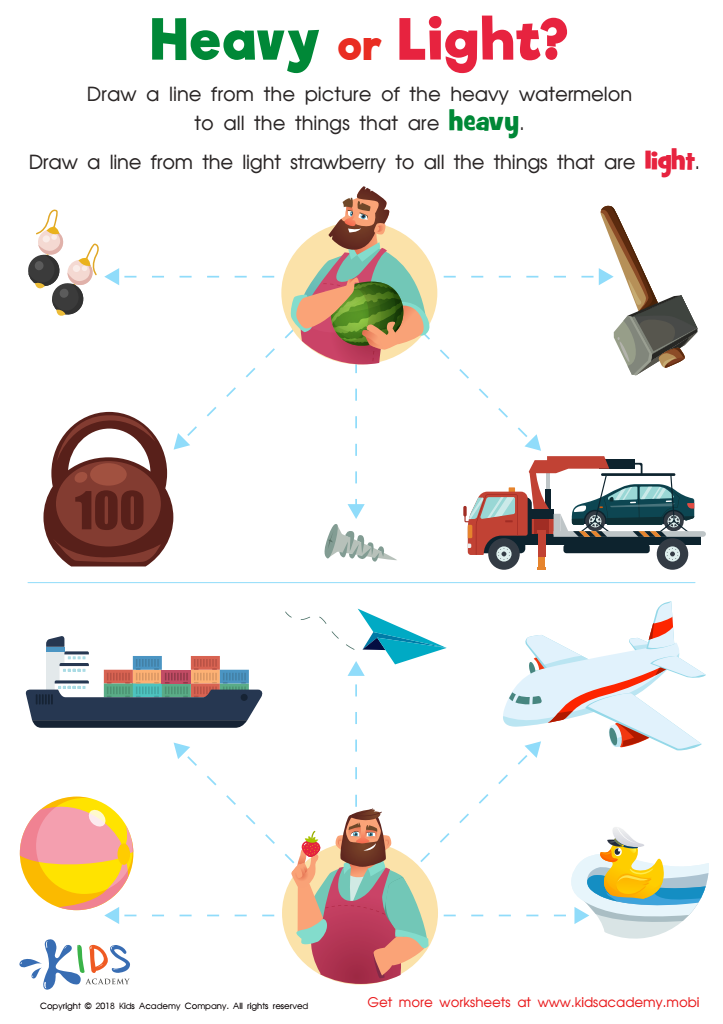
Heavy or Light? Worksheet








Comparing object weights is crucial for children aged 3-8 as it lays the foundation for essential math and science skills. During this developmental stage, children are naturally curious and eager to explore the world around them. Engaging in weight comparison activities helps them understand concepts such as heavier, lighter, and balance. This hands-on learning approach enhances their critical thinking and problem-solving abilities.
Additionally, learning about weight introduces children to the principles of measurement, laying groundwork for later academic success in subjects like mathematics and physics. Through these activities, children develop their understanding of the concept of weight, which is vital in everyday life tasks, from cooking to making decisions based on preferences and necessities.
Furthermore, comparing weights encourages sensory exploration, enabling children to experiment with different objects, engage in cooperative play, and develop fine motor skills. As parents and teachers guide children through these comparisons, they foster essential communication skills, as explaining their findings nurtures language development. Overall, comparing object weights is not just an academic exercise; it's an engaging way to promote curiosity, critical thinking, and real-life applications of essential measurement concepts, making it a valuable focus in early childhood education.








