Vocabulary enhancement Word Problems Worksheets for Ages 3-8
3 filtered results
-
From - To
Boost your child's vocabulary and critical thinking skills with our engaging Vocabulary Enhancement Word Problems Worksheets designed for children aged 3-8. These printable worksheets focus on seamlessly integrating language development into math learning through fun, relatable word problems. As children age, they encounter increasingly complex vocabulary, making these worksheets ideal for reinforcing their understanding in a meaningful context. Each activity encourages young learners to decode words and understand concepts, all while practicing basic math operations. Encourage curiosity and expand your child's lexicon with our carefully curated resources, fostering both language skills and numerical proficiency in a fun, interactive way!
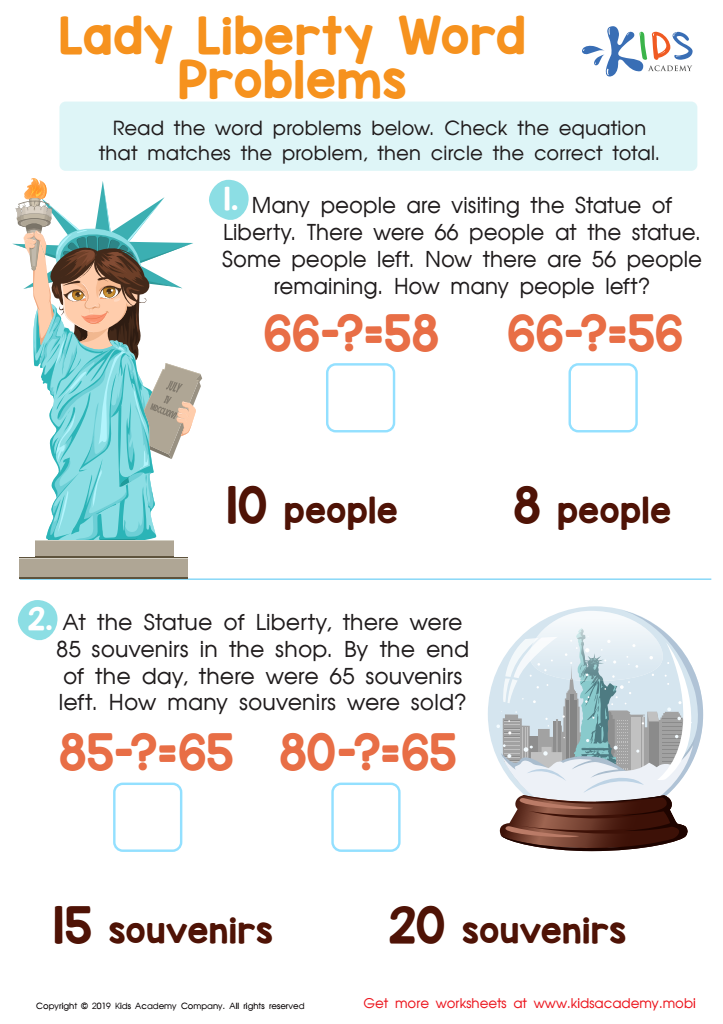
Lady Liberty Worksheet
 Assign to My Students
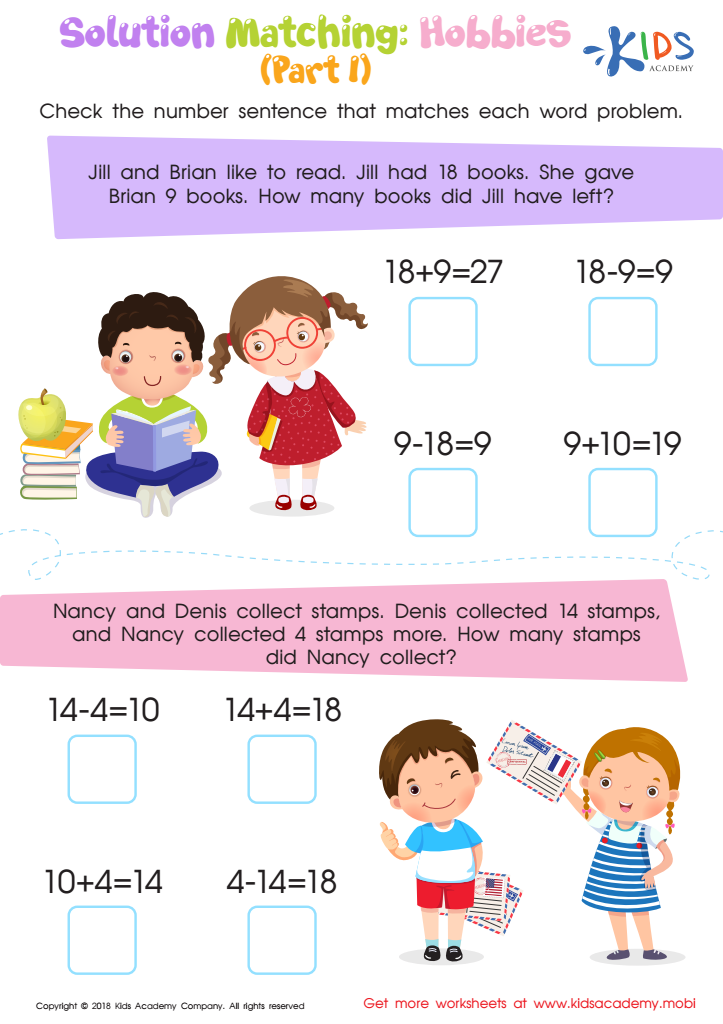
Solution Matching: Hobbies. Part 1 Worksheet
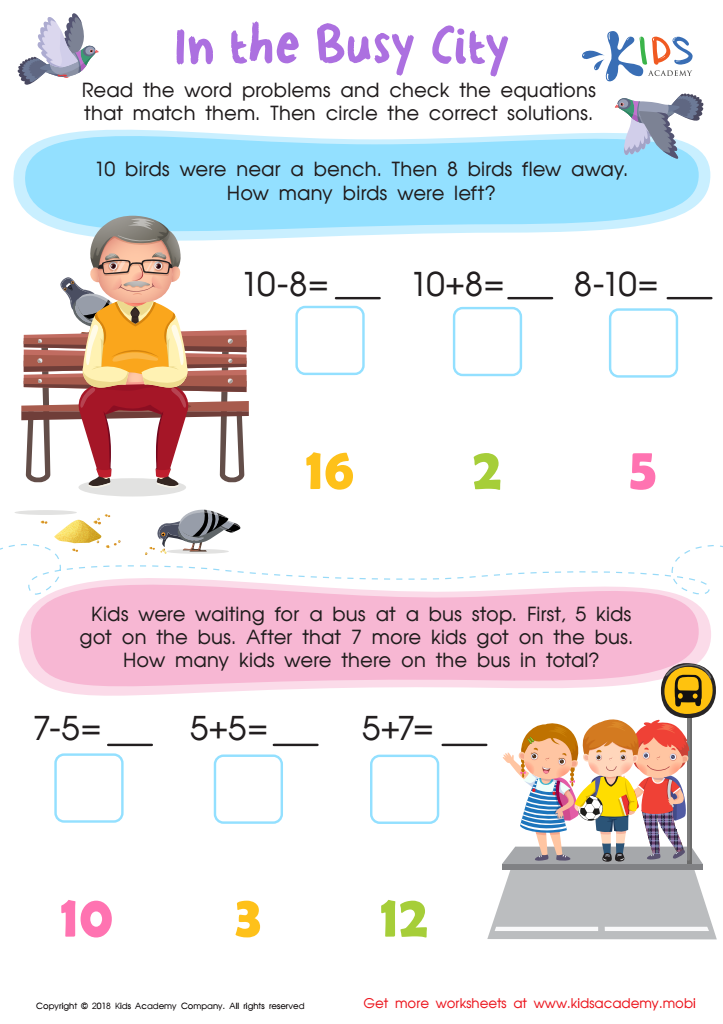
In the Busy City Word Problems Worksheet





.jpg)


Vocabulary enhancement word problems are crucial for children aged 3-8 as they form the foundation for effective communication, critical thinking, and academic success. During early development, children are like sponges, absorbing language and concepts. Engaging them with word problems not only enriches their vocabulary, but also promotes cognitive skills essential for problem-solving and logical reasoning.
When parents and teachers incorporate vocabulary-rich word problems into learning, they expose children to diverse language structures and contexts. This engagement stimulates their curiosity and encourages them to practice articulation of thoughts and ideas. Additionally, mastering vocabulary through problem-solving helps children understand the nuances of words, which is vital for reading comprehension and fluency.
Moreover, strong vocabulary skills are linked to better outcomes in literacy and overall academic performance as children progress into later grades. As children learn to dissect word problems, they develop perseverance and resilience towards challenges – valuable life skills that extend beyond the classroom. Ultimately, focusing on vocabulary enhancement through word problems benefits not just language skills, but fosters a love for learning and exploration, setting the stage for lifelong intellectual curiosity. This investment during formative years can significantly impact a child's future learning trajectory.








