Matching skills Reading Worksheets for Ages 3-8
3 filtered results
-
From - To
Discover our engaging "Matching Skills Reading Worksheets" tailored for children aged 3 to 8! These interactive worksheets enhance reading comprehension and vocabulary development through fun matching activities. Designed to captivate young minds, our resources introduce essential early literacy concepts in an enjoyable way. Children will explore letter and word recognition while honing their matching abilities, paving the way for a solid reading foundation. Ideal for parents and educators, these printable worksheets make learning exciting and accessible. Encourage your child's love for reading and boost their learning journey with our carefully crafted matching skills worksheets today! Visit our site for a wealth of educational resources.
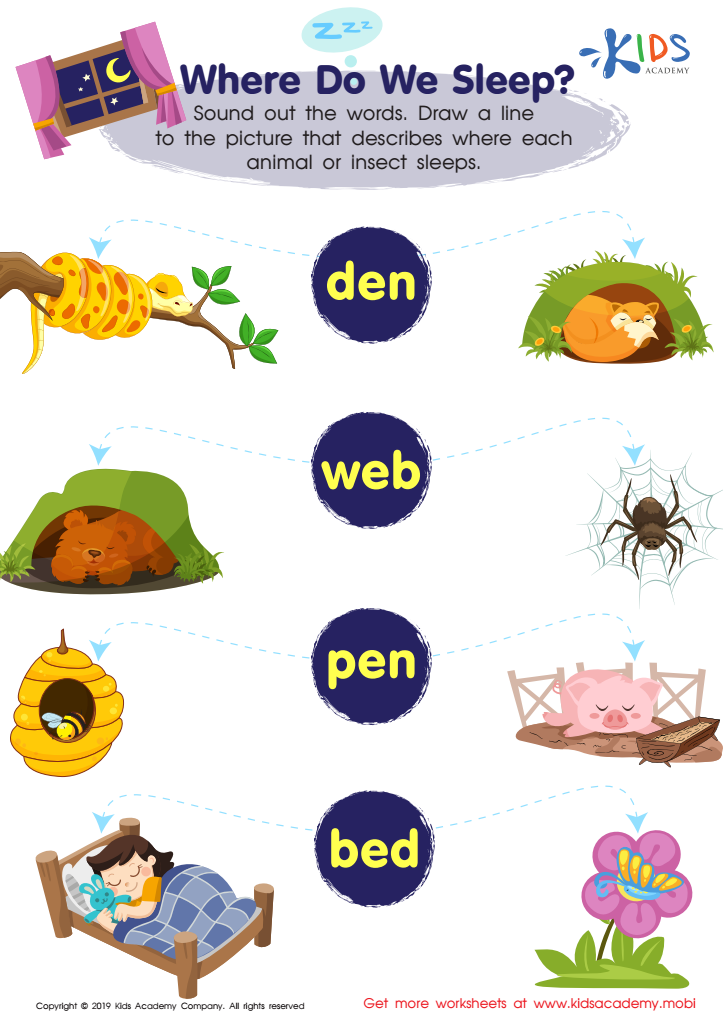
Where Do We Sleep Worksheet
 Assign to My Students
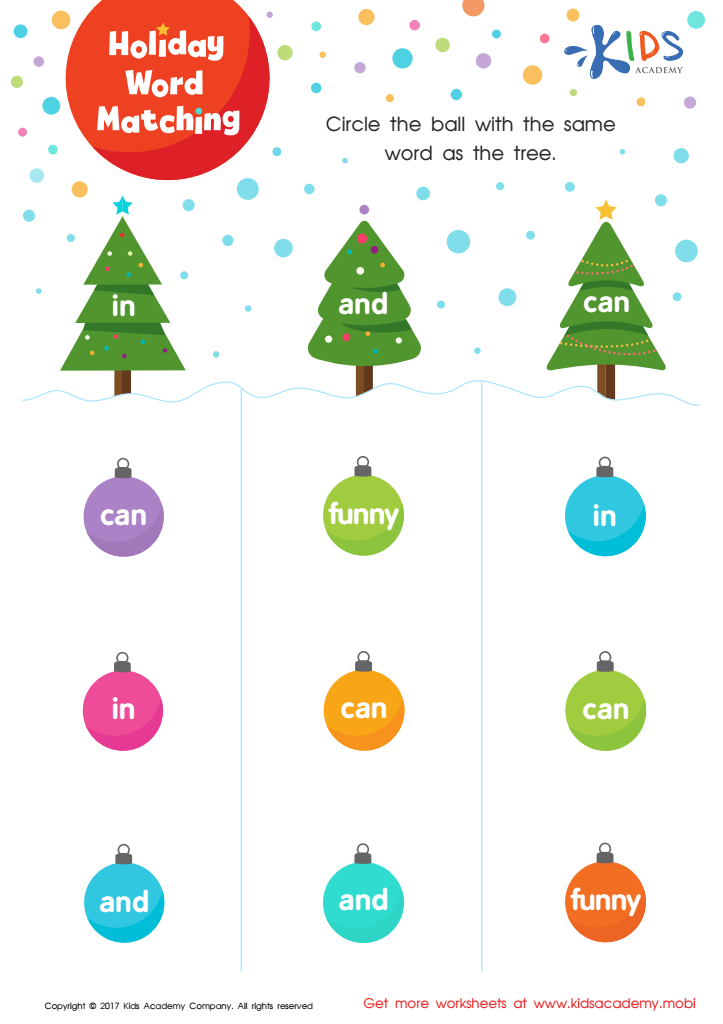
Holiday Word Matching Worksheet
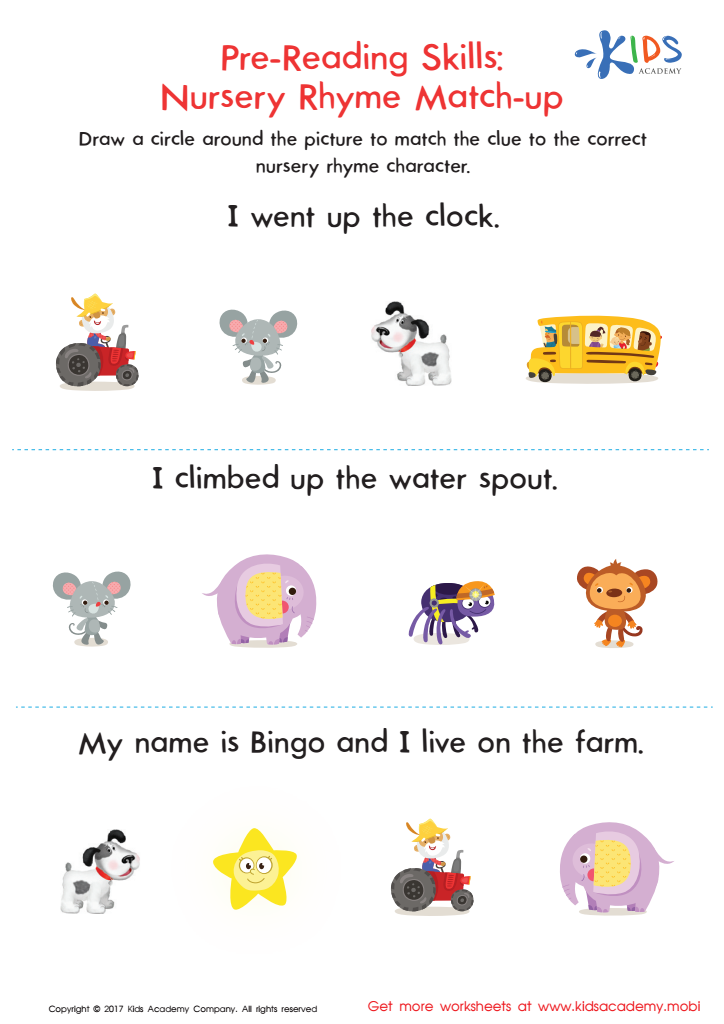
Nursery Rhyme Match–Up Worksheet








Parents and teachers should be deeply concerned about matching skills in reading for children aged 3 to 8 because these foundational abilities play a critical role in a child’s overall literacy development. Matching skills, which include recognizing letters, sounds, and patterns, form the building blocks for reading comprehension and fluency. At this young age, children's brains are highly adaptive, making it the ideal time to develop these skills, paving the way for future academic success.
Strong matching skills enhance vocabulary acquisition and help children make connections between spoken and written language. When parents and teachers foster an environment that emphasizes the development of these skills, they not only support reading readiness but also boost children's confidence and motivation to learn. Engaging with deliberately selected books and interactive activities helps children recognize that reading can be enjoyable, which can instill a love for literature early on.
Moreover, early mastery of matching skills reduces the risk of long-term reading difficulties, contributing to better performance in school and aiding in social-emotional growth. It empowers children to be active participants in their learning journey, making it essential for caregivers and educators to prioritize these skills during formative years.








