Pattern recognition Reading Worksheets for Ages 3-8
4 filtered results
-
From - To
Discover the perfect educational resource with our Pattern Recognition Reading Worksheets for Ages 3-8! These engaging, printable worksheets from Kids Academy are designed to boost early reading skills through fun and interactive activities. Children will hone their ability to identify, understand, and predict patterns, essential for mindful reading and cognitive development. Our worksheets cater to various learning stages, ensuring a tailored approach to help young learners thrive. Nurture your child’s curiosity and build a solid foundation for future reading success with our expert-crafted materials. Explore the joy of learning through patterns with Kids Academy today!
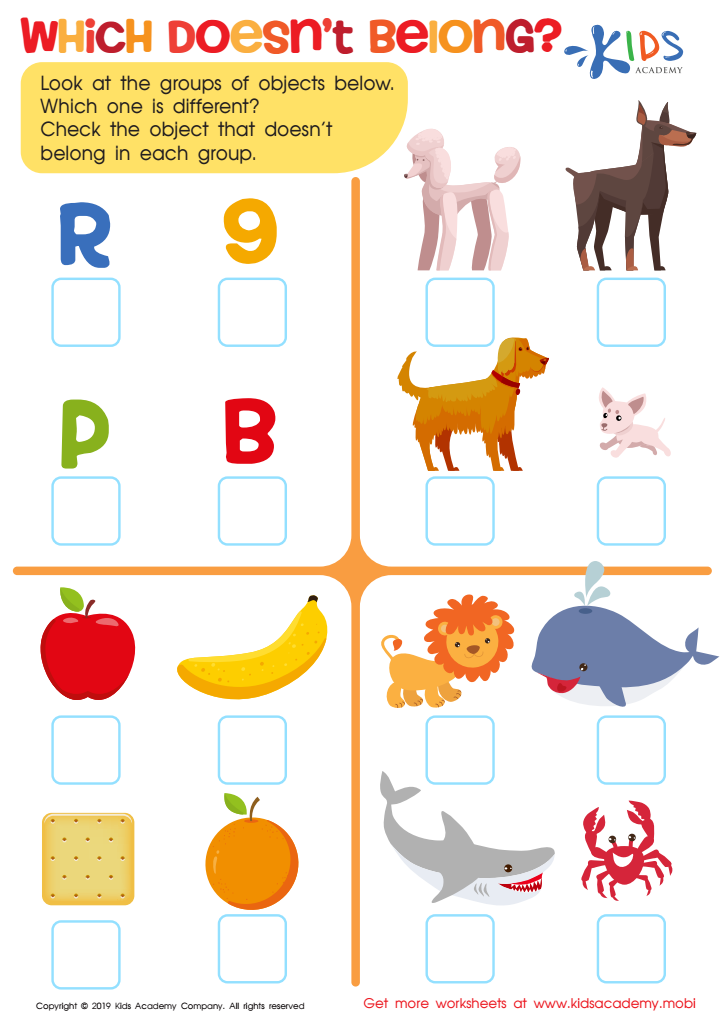
Which Doesn't Belong? Worksheet
 Assign to My Students
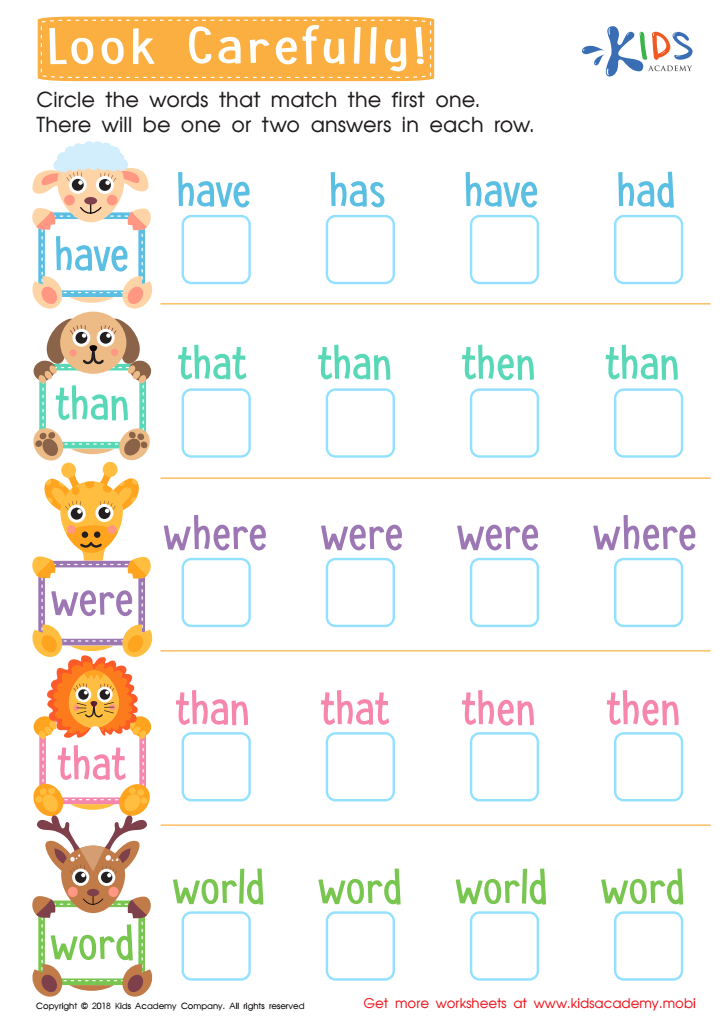
Look Carefully Worksheet
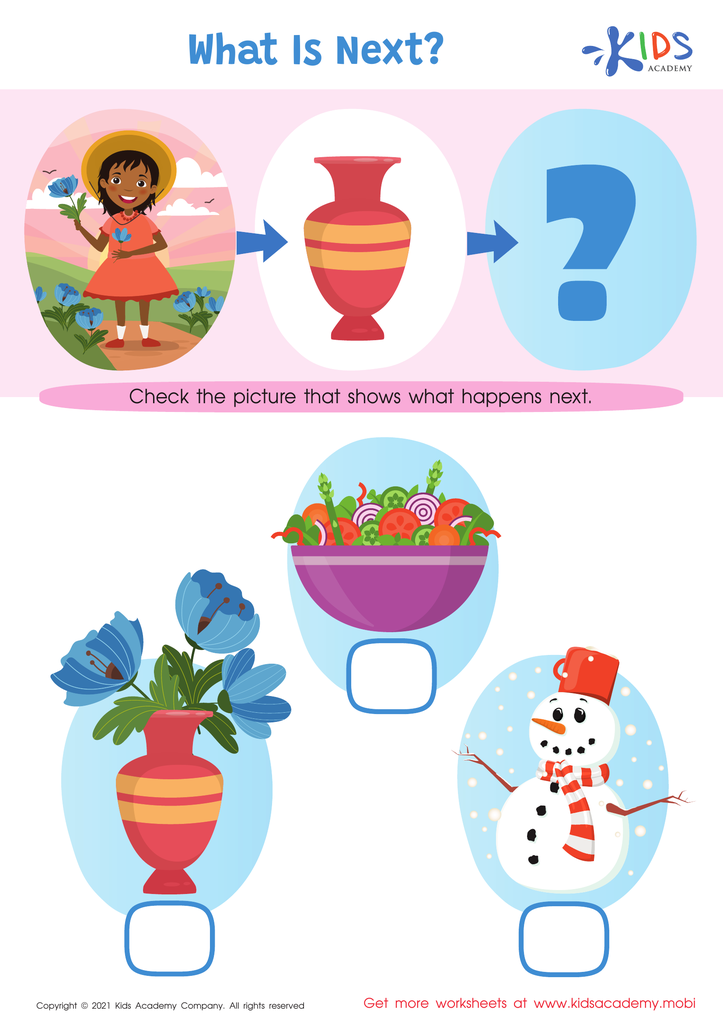
What is Next? Worksheet
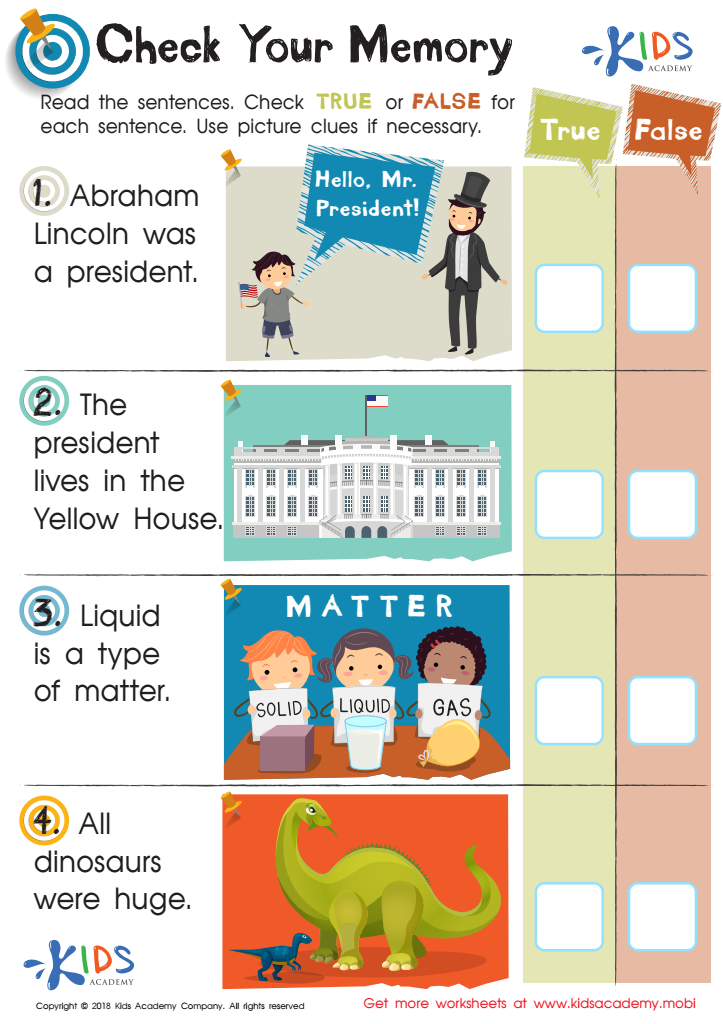
Check Memory Worksheet








Pattern recognition reading is a foundational skill that serves as the cornerstone for future academic success in children aged 3-8. Parents and teachers should care deeply about fostering this skill for several compelling reasons.
Firstly, pattern recognition helps children understand the consistency and predictability of language. For example, recognizing the pattern in “cat,” “bat,” and “rat” helps children intuit the ending sound "-at," aiding in vocabulary development and phonetic awareness. This early phonemic proficiency is crucial as it facilitates reading fluency and effective comprehension.
Moreover, recognizing patterns in stories—like repeated phrases or sequences—enhances memory and retention, important cognitive abilities for all learning domains. Such skills also bolster problem-solving abilities as children learn to predict outcomes based on patterns they’ve identified, thereby making educated guesses and approximations more accurate.
From a developmental perspective, fostering pattern recognition can make reading an enjoyable and rewarding experience, boosting a child's confidence and encouraging a lifelong love of learning. Engaged, confident readers are more likely to excel academically, which can have positive long-term effects on their educational journey.
Thus, integrating pattern recognition activities—such as rhythmic songs, repetitive stories, and patterned text—in reading practices is essential. It builds a robust foundation for literacy and nurtures the cognitive, social, and emotional development of young learners.








