Rhyme recognition Reading Worksheets for Ages 3-8
5 filtered results
-
From - To
Enhance your child's literacy skills with our Rhyme Recognition Reading Worksheets, specifically designed for ages 3-8. These engaging and colorful worksheets help young learners develop phonemic awareness through fun activities that encourage them to identify and produce rhyming words. Perfect for both home and classroom use, our easy-to-follow worksheets promote interactive learning that boosts confidence and fosters a love for reading. Whether sounding out words aloud or completing creative exercises, your child will enjoy exploring the rhythmic patterns of language. Discover the joy of rhyme recognition today and set a solid foundation for your child's reading journey!
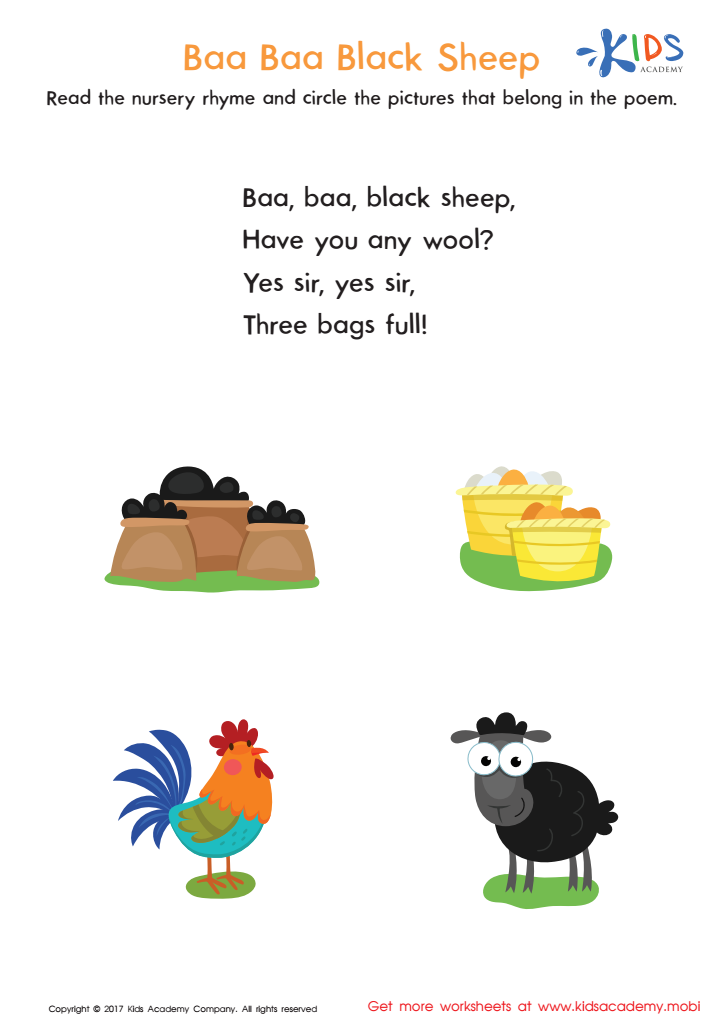
Baa Baa Black Sheep Printable
 Assign to My Students
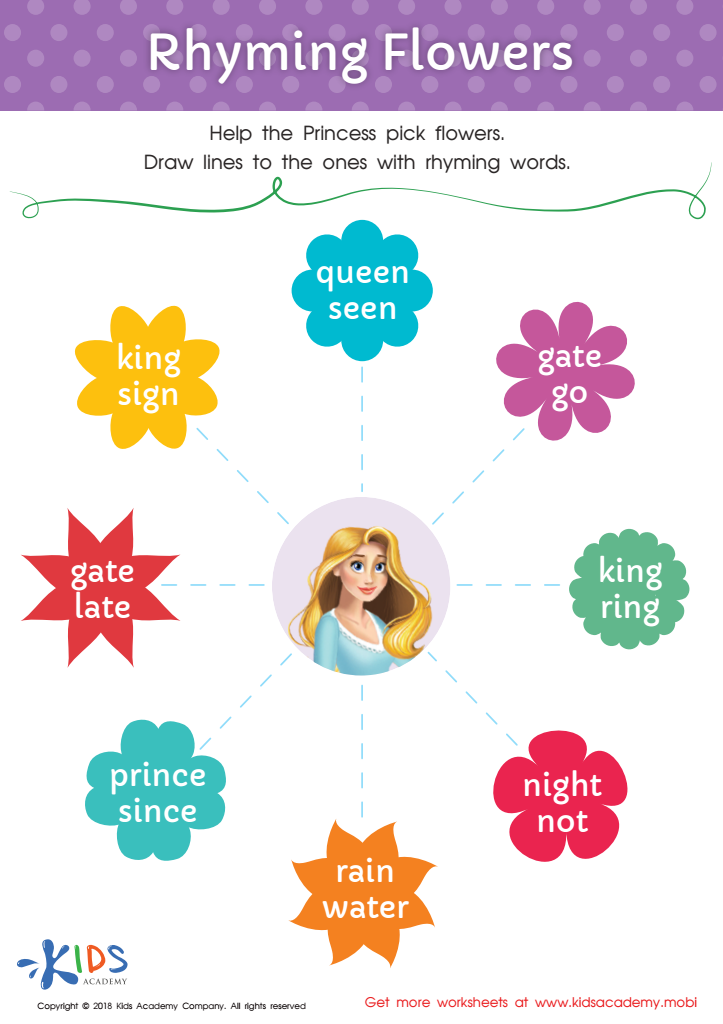
Rhyming Flowers Worksheet
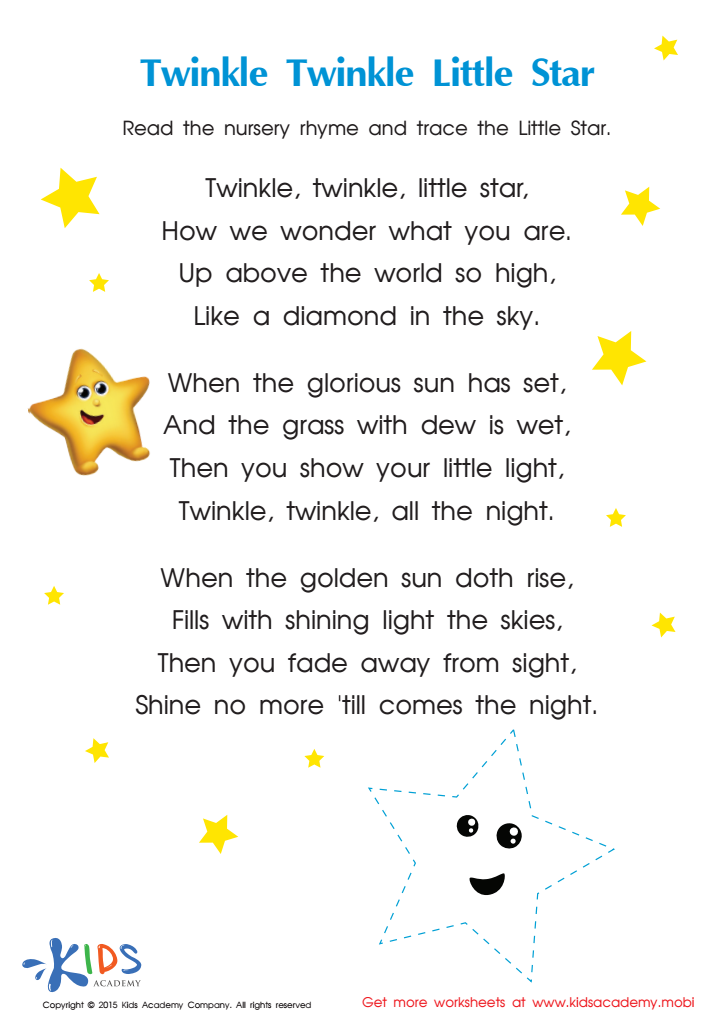
Nursery Rhymes: Twinkle Little Star Worksheet
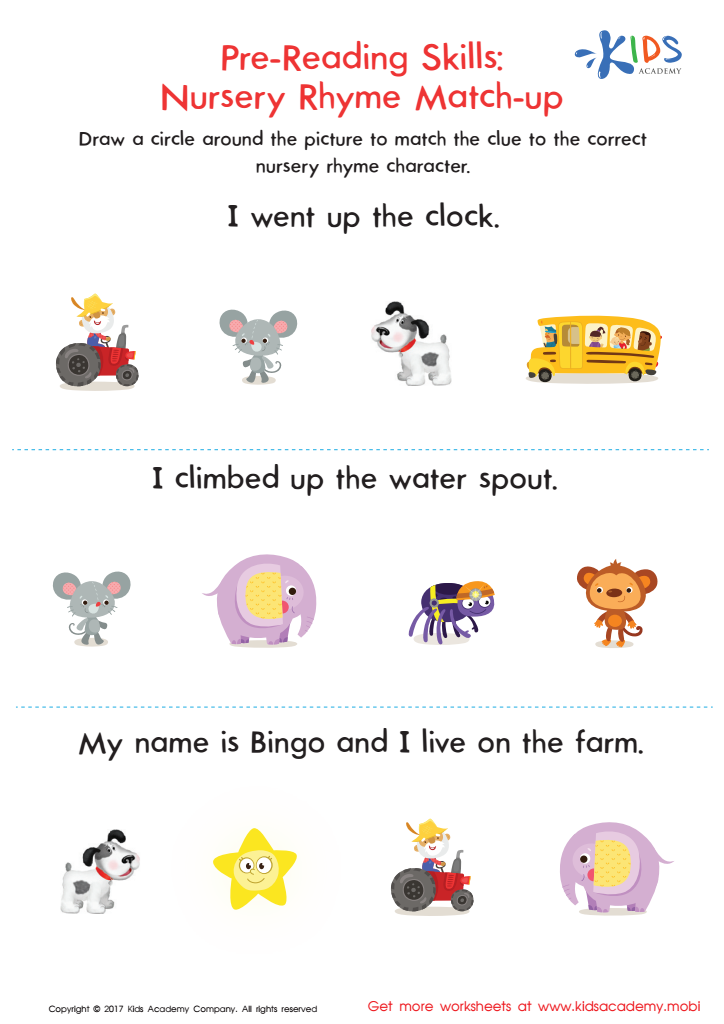
Nursery Rhyme Match–Up Worksheet
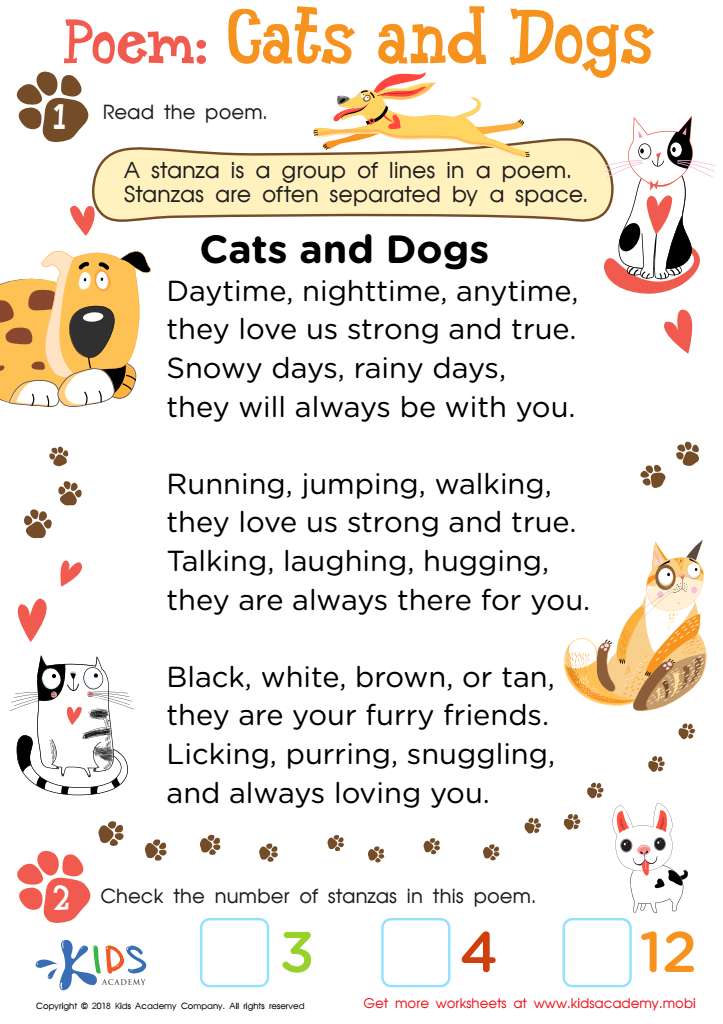
Poem: Cats and Dogs Worksheet






Rhyme recognition is a critical component of early literacy development for children aged 3-8. It plays a vital role in phonemic awareness, the ability to hear and manipulate the sounds in words. When children engage with rhymes, they learn to identify phonetic patterns, which helps them predict word sounds and improve their decoding skills when learning to read.
Parents and teachers should care about rhyme recognition because it enhances vocabulary development and comprehension. Rhymes introduce children to new language structures and a richer lexicon in a fun, engaging way. As children recite and listen to rhymes, they also develop auditory discrimination skills, enabling them to distinguish between similar sounds, which is foundational for spelling and writing.
Additionally, engaging with rhyming books and songs fosters a love for reading. The rhythmic and musical nature of rhymes captures children’s attention and encourages participation, making reading an enjoyable experience that builds motivation. Ultimately, nurturing rhyme recognition supports overall literacy, laying the groundwork for confident readers and successful communicators in the future, making it a vital focus for parents and educators alike.








