Subtraction practice Reading Worksheets for Ages 3-8
5 filtered results
-
From - To
Enhance your child's early math skills with our engaging Subtraction Practice Reading Worksheets, designed for ages 3-8! These interactive worksheets combine fun stories and illustrations to make subtraction a playful learning experience. Tailored to various learning levels, they ignite curiosity while reinforcing essential reading and math concepts. Kids will enjoy solving subtraction problems within captivating contexts, encouraging critical thinking and problem-solving. Perfect for home or classroom use, our worksheets promote independent learning and make math practice enjoyable. Start your child’s journey towards math proficiency today with these creative resources that blend literacy with foundational numeracy. Discover the joy of learning together!
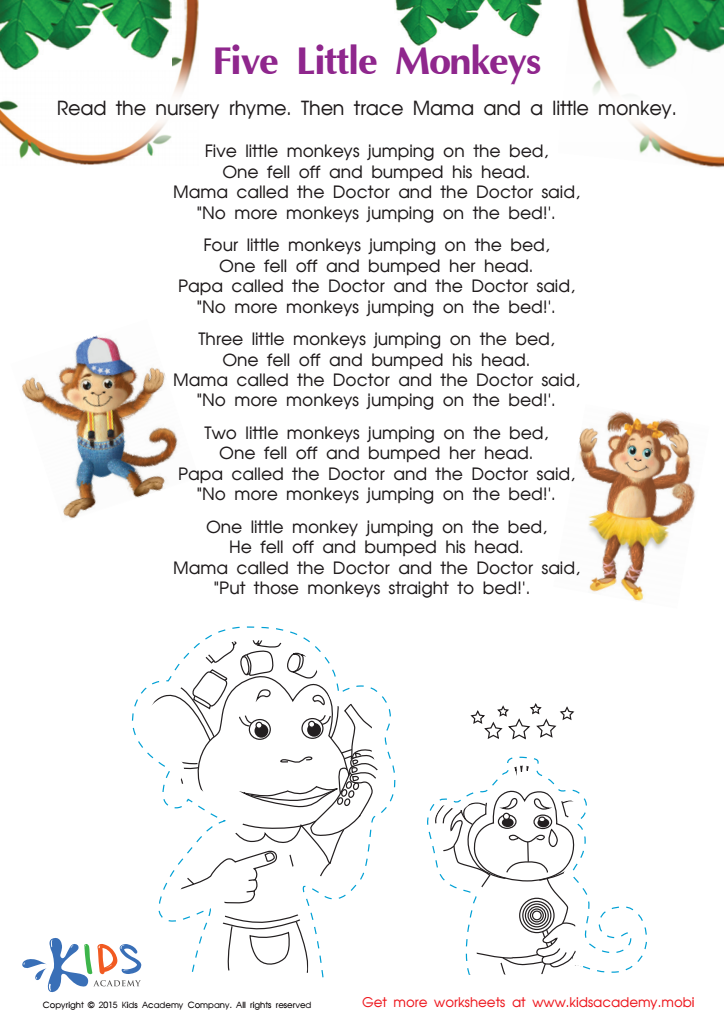
The Five Little Monkeys Nursery Rhyme Worksheet
 Assign to My Students







Subtraction practice is vital for children aged 3-8 because it lays the groundwork for their mathematical understanding and promotes cognitive development. This early mastery of subtraction enhances critical thinking and problem-solving skills, enabling students to navigate more complex mathematical concepts in later years. Engaging in subtraction helps children comprehend the relationship between numbers, fostering analytical skills that are applicable across subjects.
Additionally, frequent practice of subtraction reinforces numerical literacy, helping children gain confidence in their abilities. Parents and teachers should care about integrating subtraction practice into daily routines or classroom activities, as it encourages a positive attitude toward math, reducing anxiety and prohibiting negative stereotypes about math struggles.
Moreover, mastering subtraction early on aids in real-world applications such as sharing, understanding quantities, and managing resources. Through interactive subtraction activities, children develop resilience and perseverance, learning that mistakes are a fundamental part of the learning process.
Ultimately, supporting subtraction practice not only prepares young learners for future academic success but also equips them with essential life skills. With parental and educator involvement, children can thrive, cultivating a strong foundation for confident learners, problem-solvers, and critical thinkers.








