
Understanding habitats Reading Worksheets for Ages 3-8
3 filtered results
Difficulty Level
Grade
Age
-
From - To
Subject
Activity
Standards
Explore our engaging "Understanding Habitats Reading Worksheets" designed specifically for children ages 3 to 8! These worksheets provide a fun, interactive way for young learners to discover different habitats, such as forests, oceans, and deserts, while enhancing their reading skills. Each worksheet features colorful illustrations and simple, age-appropriate texts that encourage comprehension and creativity. As children complete the activities, they'll not only improve their vocabulary but also develop a deeper appreciation for the environment. Perfect for home or classroom use, these worksheets are an excellent resource to nurture curiosity about nature and inspire a love for reading. Start your learning adventure today!
Favorites
With answer key
Interactive
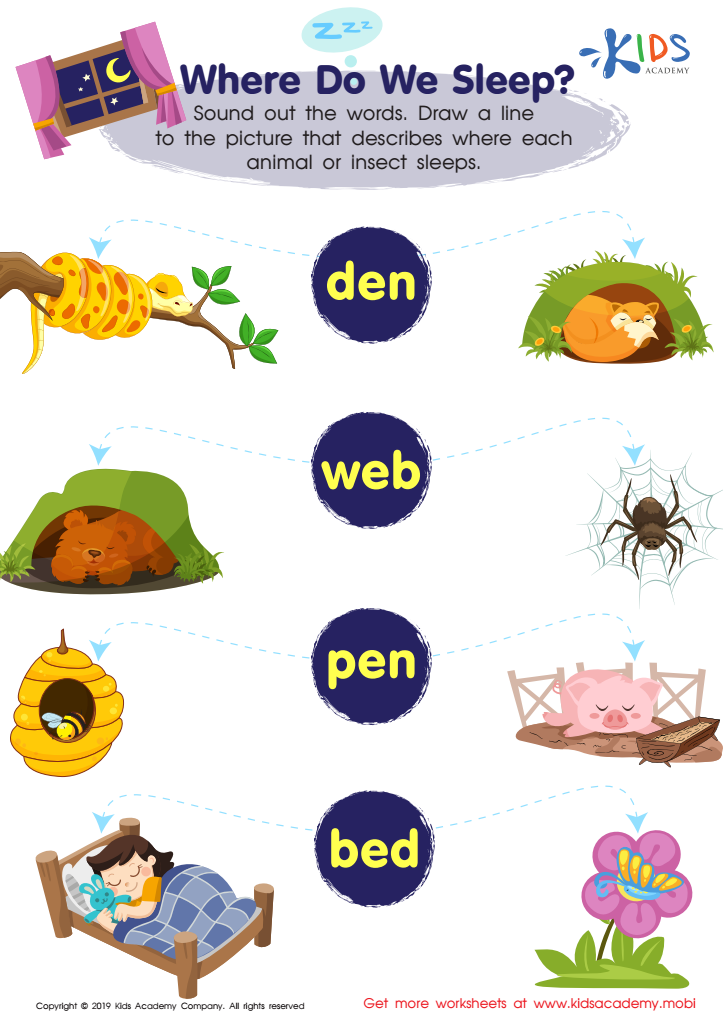
Where Do We Sleep Worksheet
Help your kids understand the importance of a safe space with this activity: Ask them to draw a line connecting the different animals and insects to the words that describe where they sleep. Remind them that everyone needs a sanctuary to rest – like the animals and insects in this printout.
 Assign to My Students
Where Do We Sleep Worksheet
Worksheet
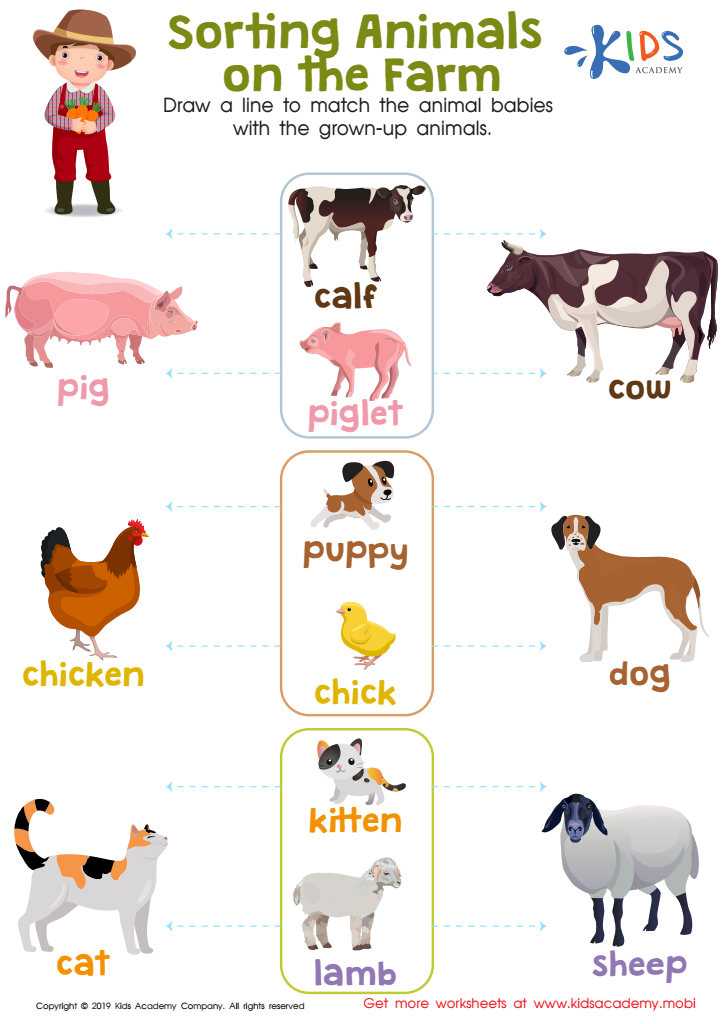
Sorting Animals on the Farm Worksheet
This PDF worksheet engages preschoolers in a fun activity to match Mama farm animals with their babies, strengthening their sorting and patterning skills. They'll learn to recognize rules and relationships, while gaining familiarity with animal-related words.
Sorting Animals on the Farm Worksheet
Worksheet
Join Kids Academy for Free
Who is primarily going to use this learning content?








Understanding habitats is crucial for young readers, particularly those aged 3-8, as it lays the foundation for their appreciation of the environment and the interconnectedness of life. Engaging with habitat-themed reading encourages curiosity and fosters a love for nature, which is essential for holistic development. At this age, children are naturally inquisitive, and literature that explores different environments—such as forests, oceans, and deserts—serves to expand their understanding of the world around them.
For parents and teachers, facilitating this exploration promotes literacy while enhancing critical thinking skills. As children encounter various flora and fauna, they learn important concepts related to ecosystems, biodiversity, and conservation. Additionally, storytelling can spark an emotional connection to nature, inspiring young readers to take an interest in protecting their environments.
Moreover, integrating habitat understanding into reading helps children to develop empathy for animals and their habitats, cultivating responsible citizens of the future. It also provides a platform for meaningful discussions about climate change, sustainability and the importance of preserving different ecosystems. Thus, habitat-themed reading is not just an educational tool; it's an opportunity for growth, awareness, and action in our youngest learners.








