Understanding perspectives Reading Worksheets for Ages 3-8
3 filtered results
-
From - To
Discover our "Understanding Perspectives Reading Worksheets for Ages 3-8" designed to enhance empathy and critical thinking in young learners. These engaging activities help children recognize different points of view, fostering improved communication and social skills. By exploring various characters and scenarios, students will deepen their comprehension and learn to appreciate diverse opinions. Perfect for classroom or home use, our printable worksheets are tailored to captivate young minds while supporting key educational milestones. Visit Kids Academy now to empower your child with the skills needed for lifelong learning through our expertly curated resources!
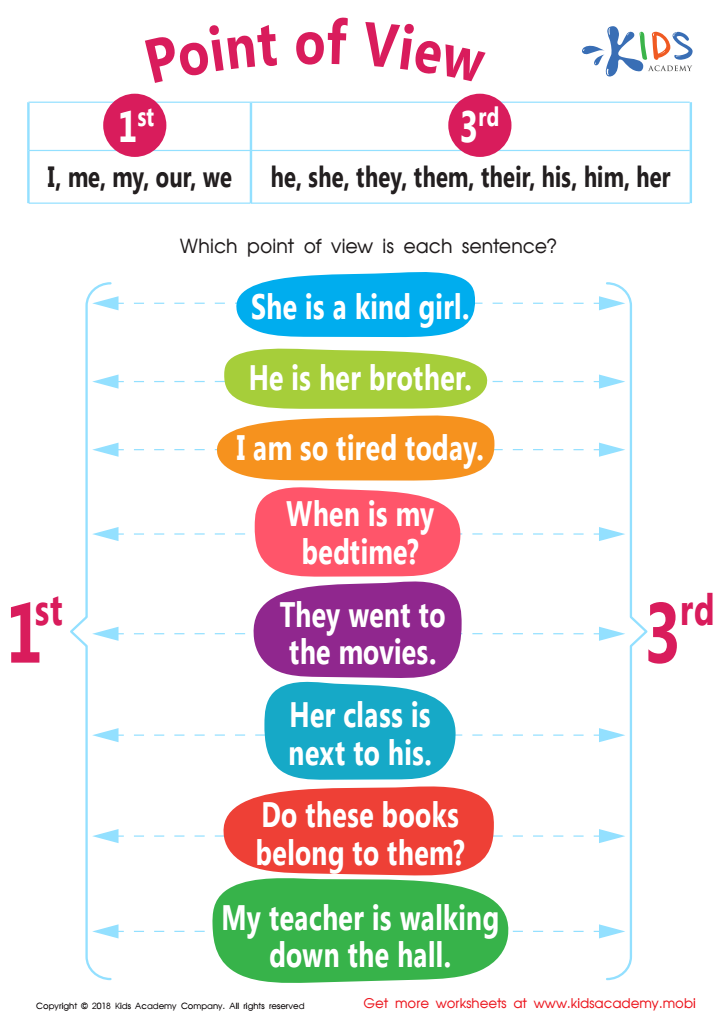
Point of View Worksheet
 Assign to My Students
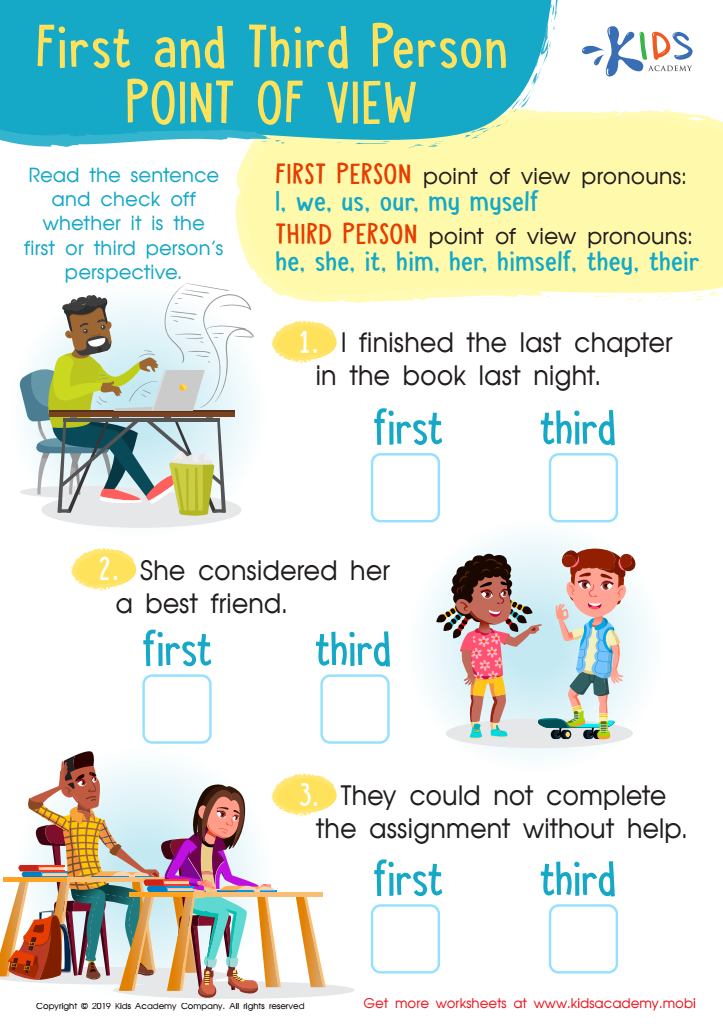
First and Third Person Point of View Worksheet
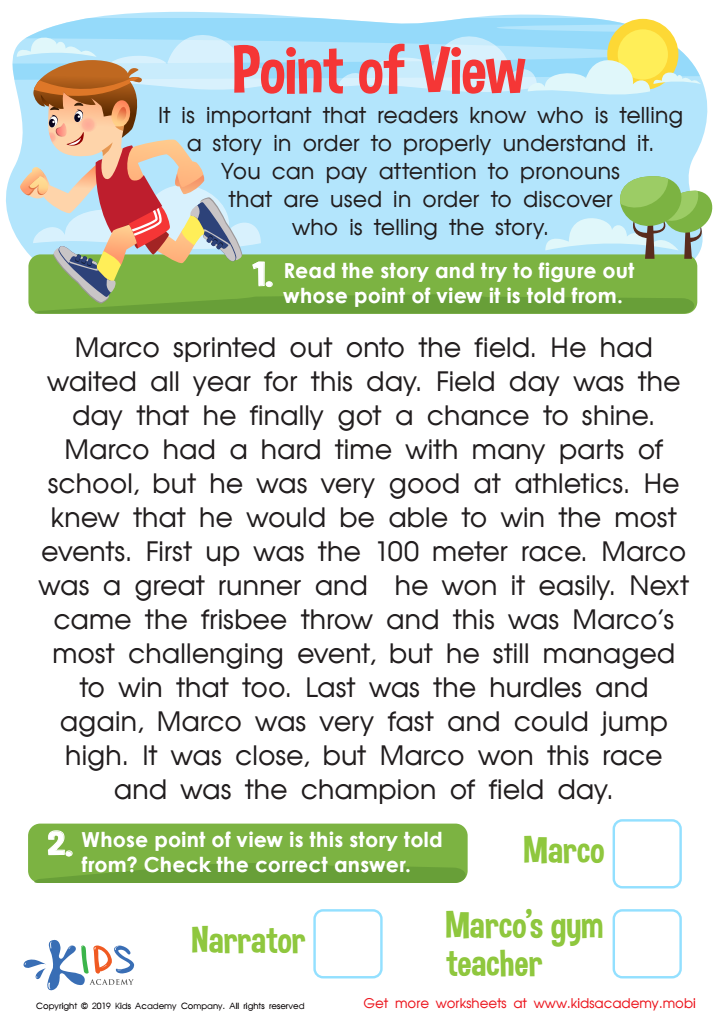
Point of View Worksheet







Understanding perspectives goes beyond simple empathy; it helps build cognitive and emotional skills foundational to a child’s overall development. For ages 3-8, this understanding is crucial for several reasons.
First, recognizing different perspectives nurtures social-emotional growth. When children understand that others may think and feel differently, they become better communicators and collaborators. This skill is vital for forming friendships, resolving conflicts, and developing a sense of community.
Second, perspective-taking enhances cognitive development. Distinguishing varying viewpoints encourages critical thinking and problem-solving. Children learn to see situations from multiple angles, fostering creativity and adaptability. These cognitive skills are essential for academic success across subjects.
Furthermore, understanding perspectives builds empathy and compassion. Children who practice putting themselves in others' shoes are more likely to act kindly and considerately. This emotional intelligence benefits both the child and society as they grow into empathetic, understanding adults.
Finally, early exposure to varied perspectives celebrates diversity and inclusivity. It helps children appreciate differences in cultures, opinions, and experiences, promoting a positive, respectful worldview. By caring about and fostering this understanding, parents and teachers help children develop into well-rounded, capable, and kind individuals.
In summary, understanding perspectives lays a multifaceted foundation that impacts social, cognitive, and emotional development—integral to a child’s success and well-being.








