Understanding Rhymes Reading Worksheets for Ages 3-8
3 filtered results
-
From - To
Unlock the joy of learning with our "Understanding Rhymes" reading worksheets, specially designed for children ages 3-8. These engaging activities help young learners recognize and appreciate rhyming words, an essential skill in developing phonemic awareness and early literacy. Each worksheet features playful illustrations and age-appropriate exercises that make the learning process fun and interactive. As kids explore various rhymes, they'll boost their vocabulary, enhance their reading comprehension, and foster a lifelong love for language. Perfect for home or classroom use, our worksheets cater to diverse learning styles, ensuring every child thrives. Start your child's rhyme journey today!
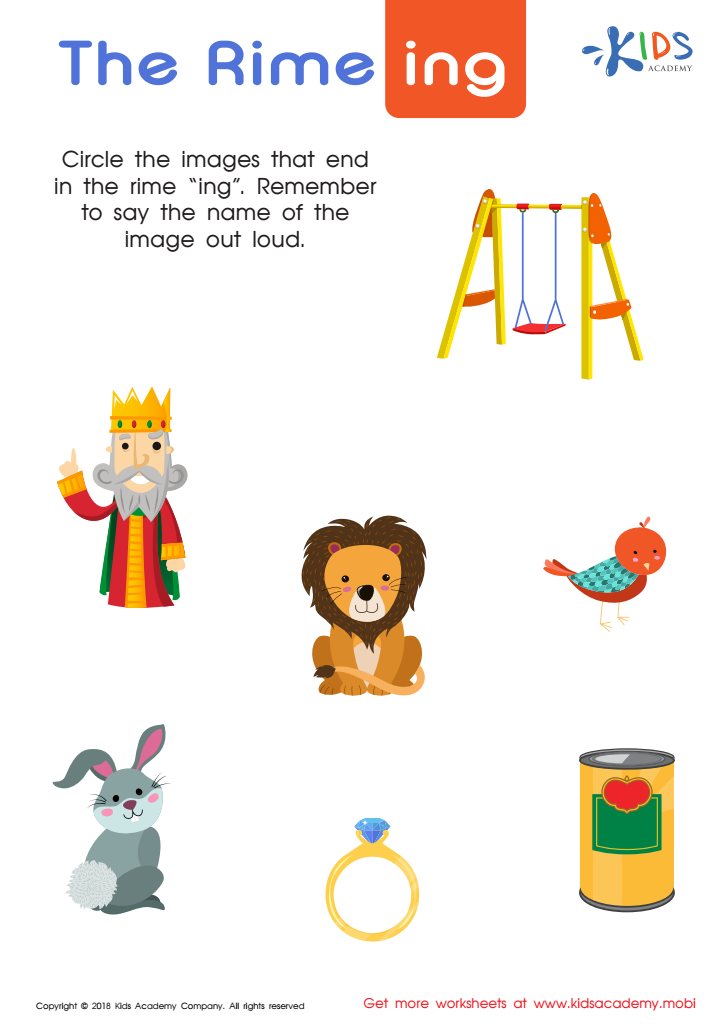
The Rime "ing" Worksheet
 Assign to My Students
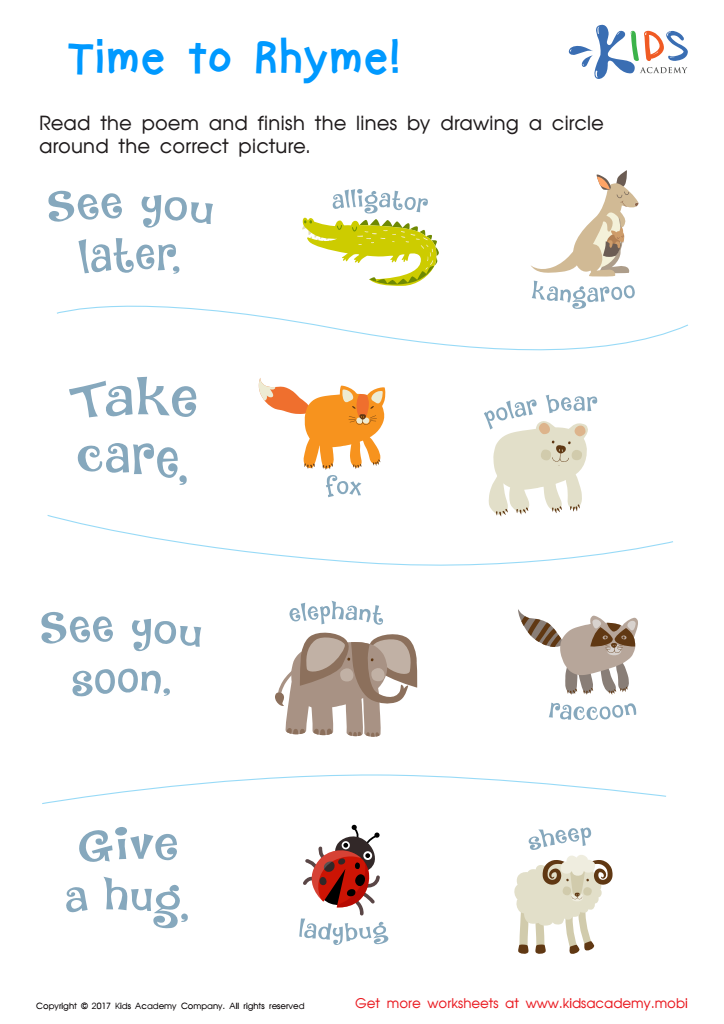
Time to Rhyme Rhyming Worksheet
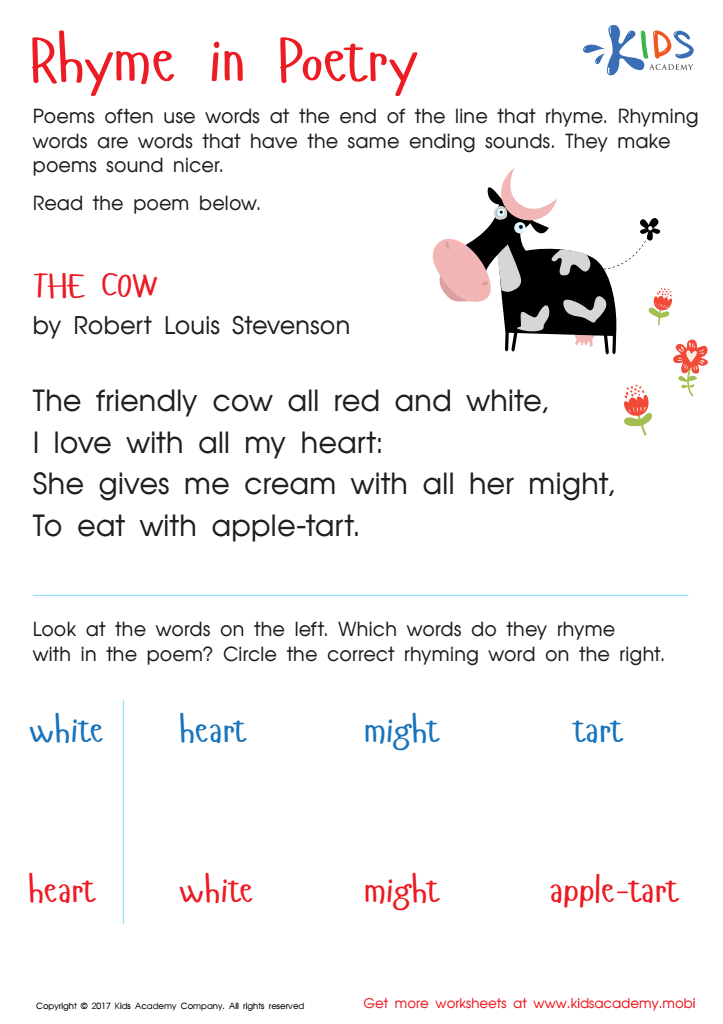
Rhyme In Poetry Worksheet







Understanding rhymes is a vital component of early literacy, especially for children aged 3-8. Today's parents and teachers play a crucial role in fostering this skill because it lays the foundation for language development.
Rhyming supports phonemic awareness, helping children recognize the sounds in words, which is essential for decoding and encoding. When children hear and practice rhymes, they become more attuned to sounds, preparing them for reading. Additionally, rhyming boosts vocabulary acquisition, as children are exposed to new words and phrases in a fun and engaging way.
Incorporating rhymes into daily activities cultivates a love for reading. Fun sing-song verses encourage children to participate and interact with stories, making learning enjoyable. Rhymes also improve memory skills, as catchy patterns make words easier to remember. This facilitates overall cognitive development, enhancing critical thinking and problem-solving skills.
Moreover, engaging with rhymes fosters social interactions, encouraging children to share in activities with their peers and family. For parents and teachers alike, nurturing rhyming skills is not just about phonics; it's about igniting a lifelong passion for language and literacy. Emphasizing rhymes in the early years creates confident readers and effective communicators, setting children up for future academic success.








