
Understanding vowel sounds Reading Worksheets for Ages 3-8
3 filtered results
Difficulty Level
Grade
Age
-
From - To
Subject
Activity
Standards
Ignite a passion for reading with our "Understanding Vowel Sounds" Worksheets designed specifically for kids ages 3-8. Each engaging activity focuses on recognizing and mastering the distinct sounds of vowels in a fun, interactive way. Perfect for young learners, these worksheets bolster phonemic awareness, enhance vocabulary, and pave the path to fluent reading. With colorful graphics and captivating exercises, kids will stay motivated while developing essential literacy skills. Whether at home or in classrooms, our tailored resources make learning vowel sounds an enjoyable journey, ensuring a strong foundation in reading essentials for your child.
Favorites
With answer key
Interactive
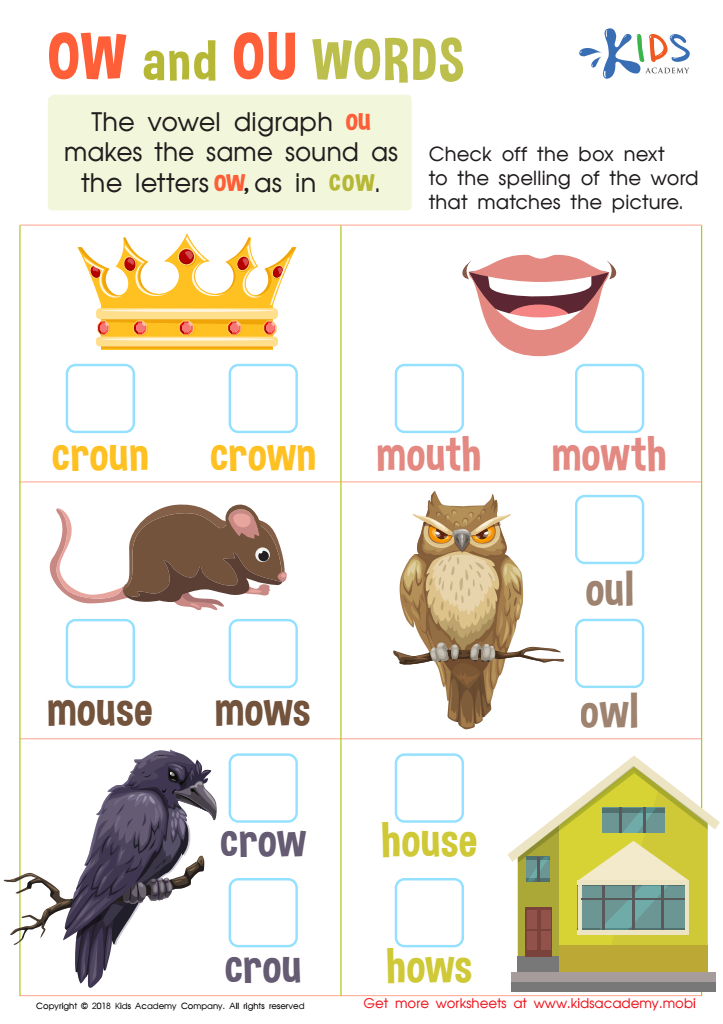
Reading: OW and OU Words Worksheet
Help your kids learn phonetics! Explain the different sounds and long/short variations. Emphasize that some vowel sounds are the same, e.g. ou = ow in cow. For practice, have them read aloud the words in the worksheet and check the box next to the spelling that matches the picture.
Reading: OW and OU Words Worksheet
Worksheet
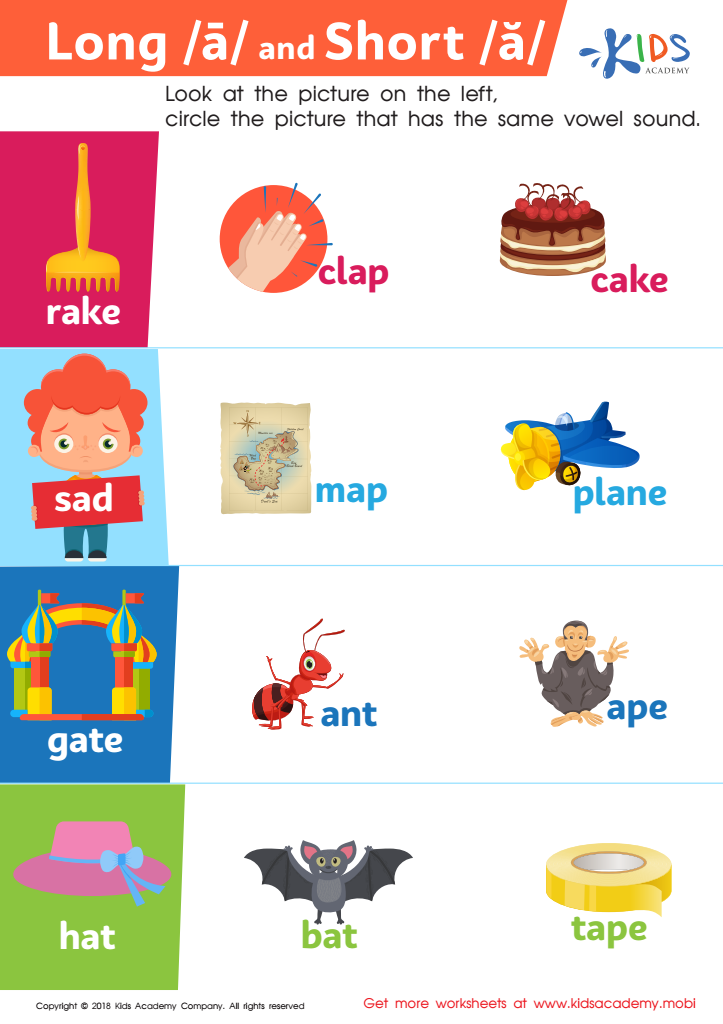
Reading: Long a and Short a Worksheet
This printable helps students practice distinguishing the long and short A sound. Pictures provide clues to read each word and students identify if it has a short or long sound. By completing this worksheet, children gain mastery of the phonics skill.
Reading: Long a and Short a Worksheet
Worksheet
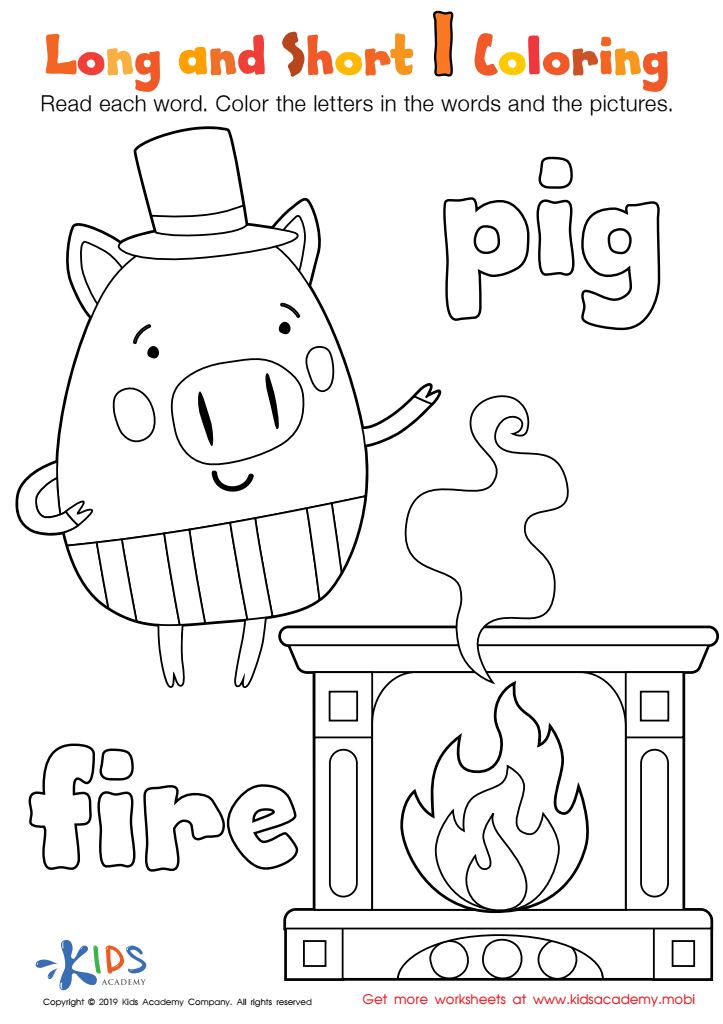
Long and Short I Worksheet
Print the worksheet and have the students read "pig" and "fire". Check for understanding the difference between long and short vowels. Color in words and pictures to make learning phonics fun! This exercise is perfect for introducing the topic to your students.
Download (PDF)
 Assign to My Students
Assign to My Students
Long and Short I Worksheet
Worksheet
Join Kids Academy for Free
Who is primarily going to use this learning content?







Understanding vowel sounds is a foundational skill in early childhood literacy. For ages 3-8, grasping the different vowel sounds is vital for several reasons. Firstly, vowels are the heart of words. Teaching children to recognize and pronounce short and long vowel sounds enhances their ability to decode new words, which is a crucial step in learning to read.
When children understand vowel sounds, it directly impacts their phonemic awareness, which is the ability to hear and manipulate individual sounds in words. This skill is a significant predictor of future reading success. Effective phonics instruction, which includes the study of vowel sounds, enables children to read more fluently. Fluent readers can then make sense of what they are reading with increased efficiency.
Furthermore, comprehending vowel sounds aids in spelling and writing. As children become familiar with the sounds that vowels make, they can better predict how words are spelled, enhancing their overall literacy skills.
Engaging with vowel sounds also instills confidence. Children who can decode and analyze words independently feel more empowered in their learning journey, fostering a positive attitude towards reading and education overall. Thus, parents and teachers should prioritize vowel sound education to build a strong linguistic foundation for their children.








