
Identifying story elements Reading Comprehension Worksheets for Ages 3-8
4 filtered results
Difficulty Level
Grade
Age
-
From - To
Subject
Activity
Standards
Spark young minds' love for reading with our engaging "Identifying Story Elements Reading Comprehension Worksheets" tailored for ages 3-8. These fun, educational worksheets help children explore characters, settings, and plot details, boosting their critical-thinking and comprehension skills. With cheerful illustrations and simple activities, kids eagerly dive into stories, recognizing core elements and developing a deeper understanding of narrative structure. Perfect for early learners, our worksheets lay the foundation for strong reading habits, making literacy a joyful journey. Enhance classroom or home learning with our expertly designed printable resources that captivate young readers’ imaginations and support educational growth.
Favorites
With answer key
Interactive
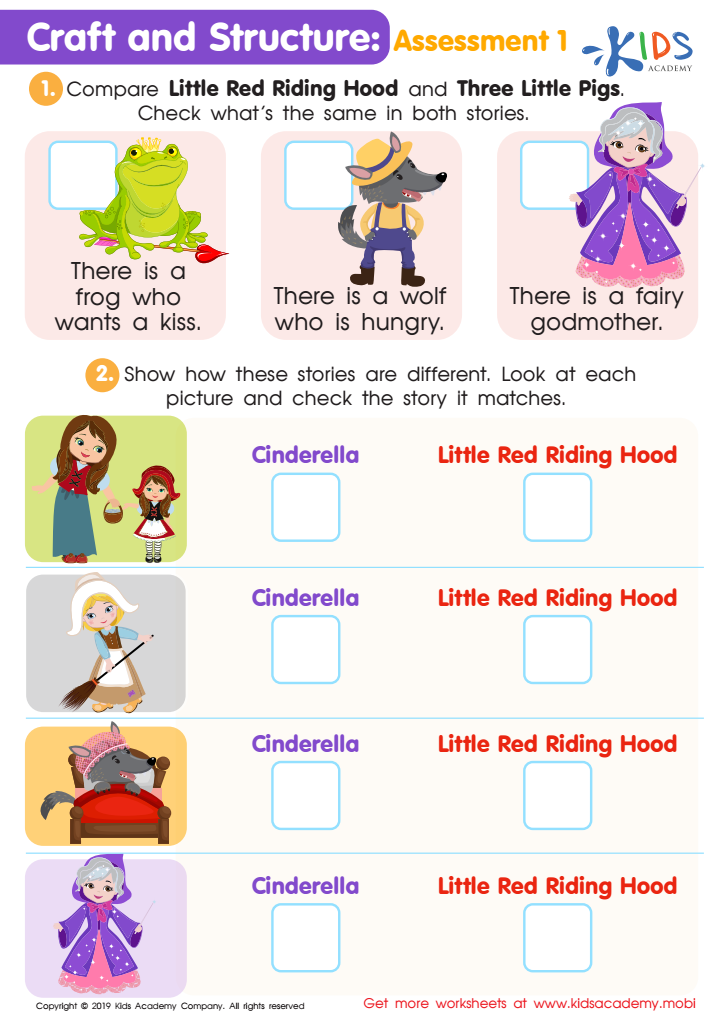
Craft and Structure: Assessment 1 Worksheet
Fairytales are a great way to bond with your kids while teaching them. Popular stories include Little Red Riding Hood and Three Little Pigs. Test how well they understood these two with this assessment worksheet. Ask them to compare the two stories and check what is the same. Doing this will help kids learn new words and sentence construction, as well as teaching them life lessons.
 Assign to My Students
Craft and Structure: Assessment 1 Worksheet
Worksheet
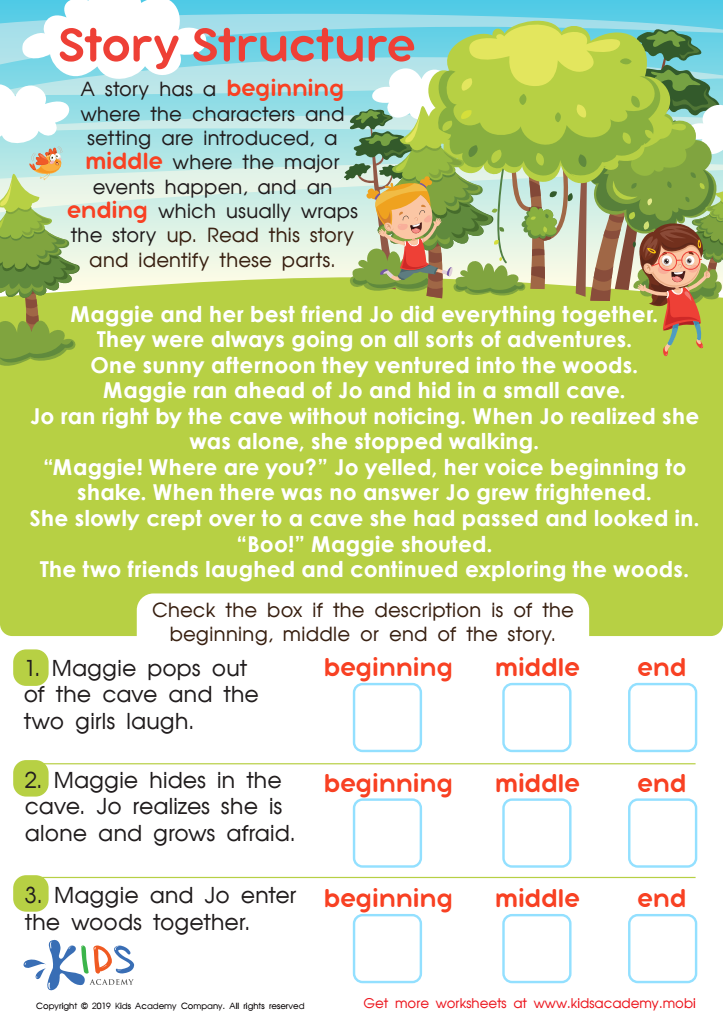
Story Structure Worksheet
Help your students read and identify the parts of the story in this worksheet: the beginning (characters and setting), middle (major events), and ending (events are resolved). Show them how to structure a story for clarity.
Story Structure Worksheet
Worksheet
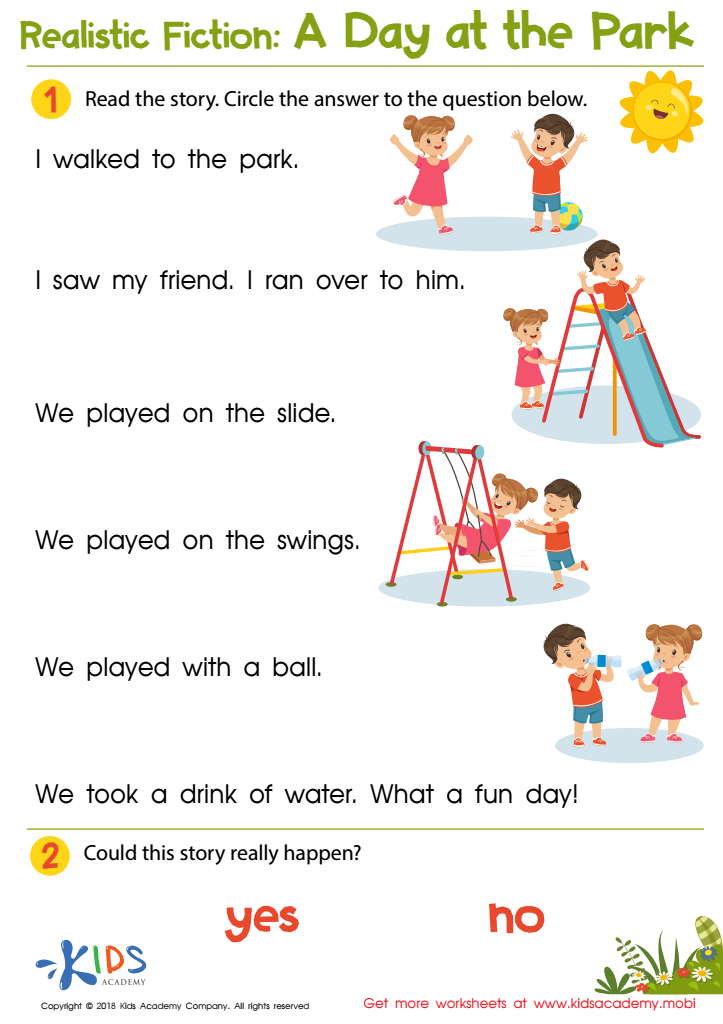
A Day at the Park Worksheet
Kids as young as preschool-age can be taught to evaluate stories! Use this fun worksheet about a day at the park. Read each sentence aloud, looking at the pictures. Ask your child if the events in the story could happen in real life - if yes, circle yes, otherwise circle no. When finished, discuss with them the genre, realistic fiction.
A Day at the Park Worksheet
Worksheet
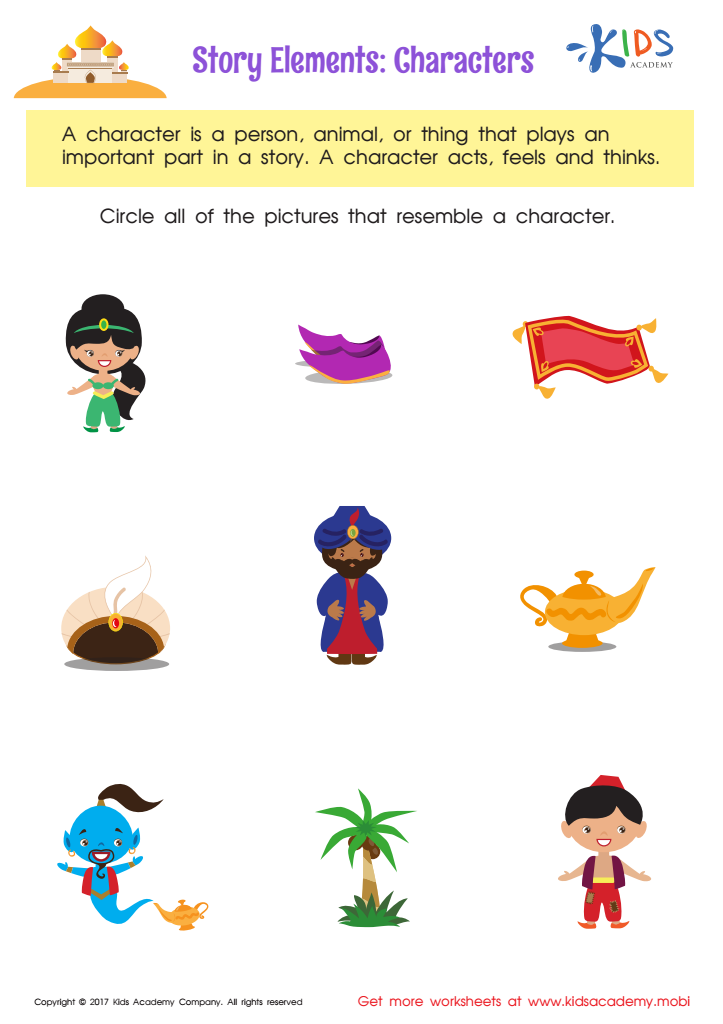
Story Elements Printable
Read the text and review the characters, settings and plot in a guided discussion.
Take your child on a journey to the Middle East and review the characters, settings and plot of their favorite childhood stories with this Aladdin-themed worksheet! It'll help them master early analysis skills and learn about characterization. Enjoy a fun, guided discussion with your child as you review important story elements.
Story Elements Printable
Worksheet
Join Kids Academy for Free
Who is primarily going to use this learning content?







Identifying story elements such as characters, setting, plot, problem, and solution is crucial for reading comprehension in young children aged 3-8. For parents and teachers, fostering this understanding helps kids develop essential cognitive and language skills. When children recognize and discuss these elements, they improve their memory, sequencing abilities, and critical thinking.
Understanding story elements also enhances vocabulary and communication skills. Children learn to describe characters, articulate problems and solutions, and summarize stories, which promotes richer language use. These skills are foundational for not just reading comprehension, but for overall academic achievement.
For educators, recognizing how well students grasp these elements provides valuable insights into their developmental stages and guides instruction. Tailored activities can be created to target weaker areas, ensuring a well-rounded approach to development. For parents, involving children in discussions about stories fosters a love for reading and sharpens focus. It also offers quality interaction that nurtures emotional and social skills through shared experiences.
By emphasizing story elements, educators and parents help children build a toolkit that initiates a lifelong engagement with reading and learning, cultivating not just good students, but also creative and thoughtful individuals.








