
Sentence construction Reading Fiction Worksheets for Ages 3-8
6 filtered results
Difficulty Level
Grade
Age
-
From - To
Subject
Activity
Standards
Discover our engaging Sentence Construction Reading Fiction Worksheets designed for ages 3-8 at Kids Academy! Our resources focus on building essential reading skills in young learners through fun fictional stories. Each worksheet helps children practice constructing sentences, enhancing their understanding of grammar, vocabulary, and story structure. Our colorful and interactive activities are tailored to different learning levels, ensuring every child can advance at their own pace. Encourage a love of reading and writing today with our expertly curated worksheets that make learning enjoyable and effective. Perfect for both classroom and at-home use!
Favorites
With answer key
Interactive
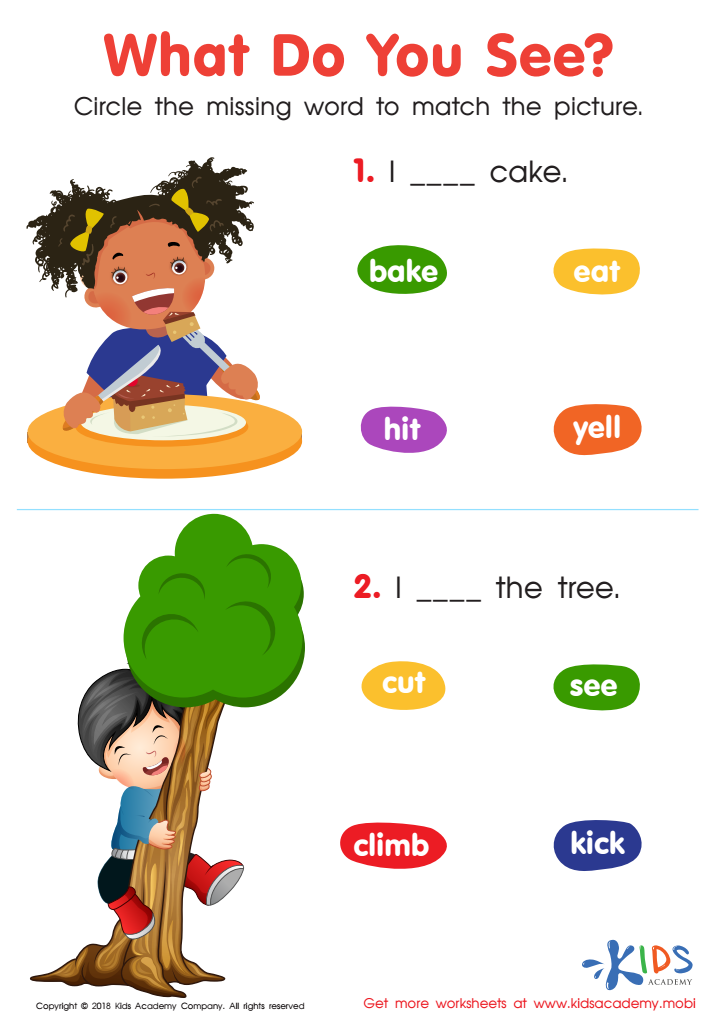
What Do You See? Reading Worksheet
New readers can use the attractive pictures and high-frequency words on this worksheet to practice expressive language skills and decode as they fill in the blanks. As they circle the correct words, they'll feel like reading superstars!
 Assign to My Students
What Do You See? Reading Worksheet
Worksheet
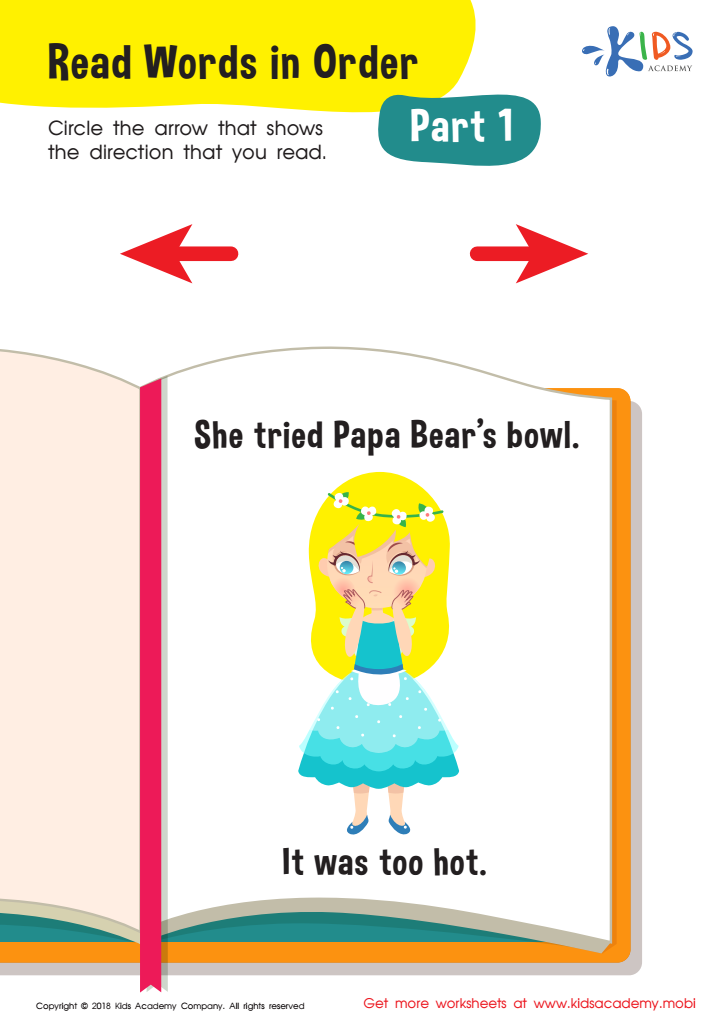
Read Words Order Part 1 Worksheet
Is your child just starting out with reading or having trouble? This worksheet is perfect! It'll help them learn the right way to read. Ask them to circle the arrow that shows the right direction to read. With this exercise, your child can overcome some of their reading challenges.
Read Words Order Part 1 Worksheet
Worksheet
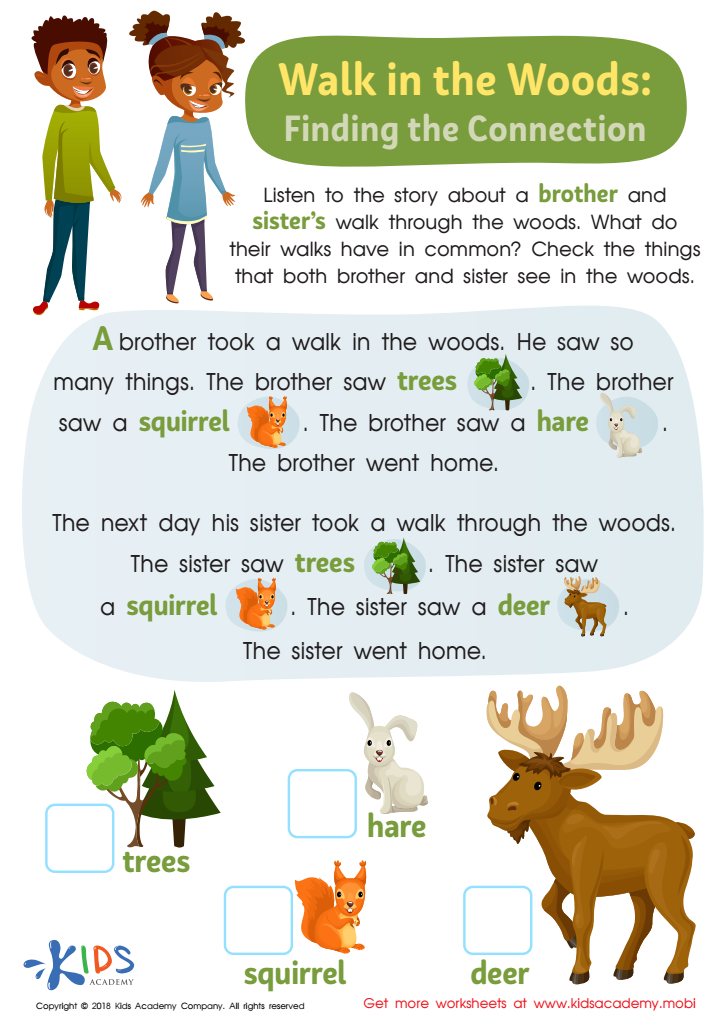
Walk In the Woods: Finding Connections Worksheet
Brother and sister took a walk in the woods to connect with nature and get some exercise. As they went, they noted different things like birds and plants, which they share in this story. Read it to your little ones, and help them check off the items the two saw. It's a great way to learn about nature and enjoy the outdoors.
Walk In the Woods: Finding Connections Worksheet
Worksheet
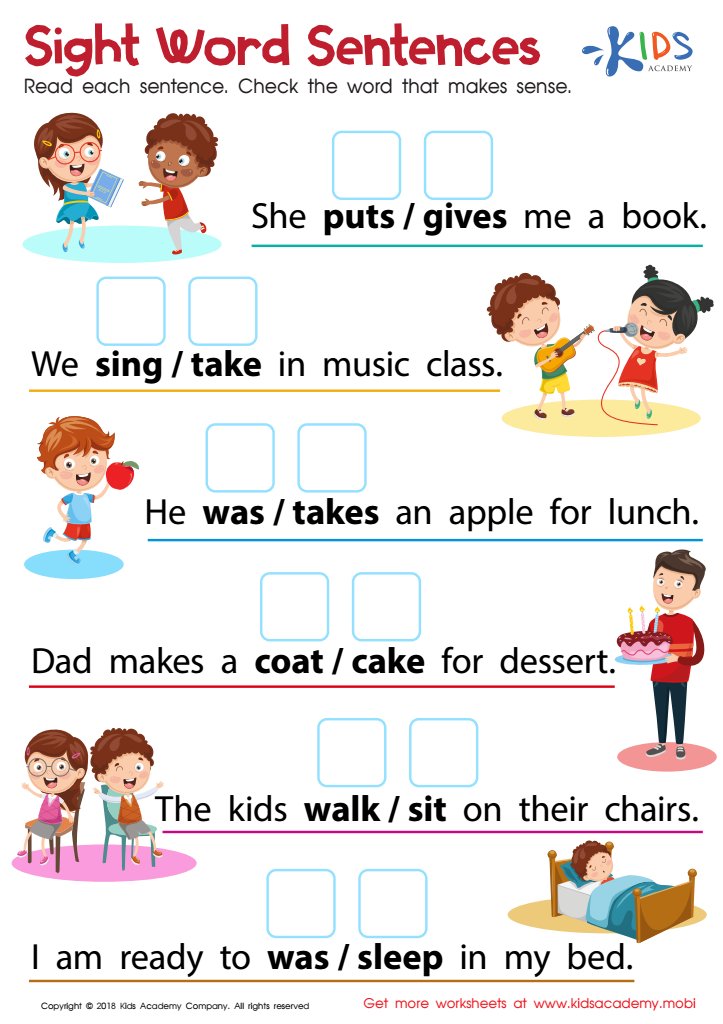
Sight Words Sentences Worksheet
It's important for kids to practice recognizing sight words in print. This PDF provides fun practice with sentences and engaging picture clues. As they work with sight words, they'll become more familiar and automatic. Help your kids build literacy skills!
Sight Words Sentences Worksheet
Worksheet
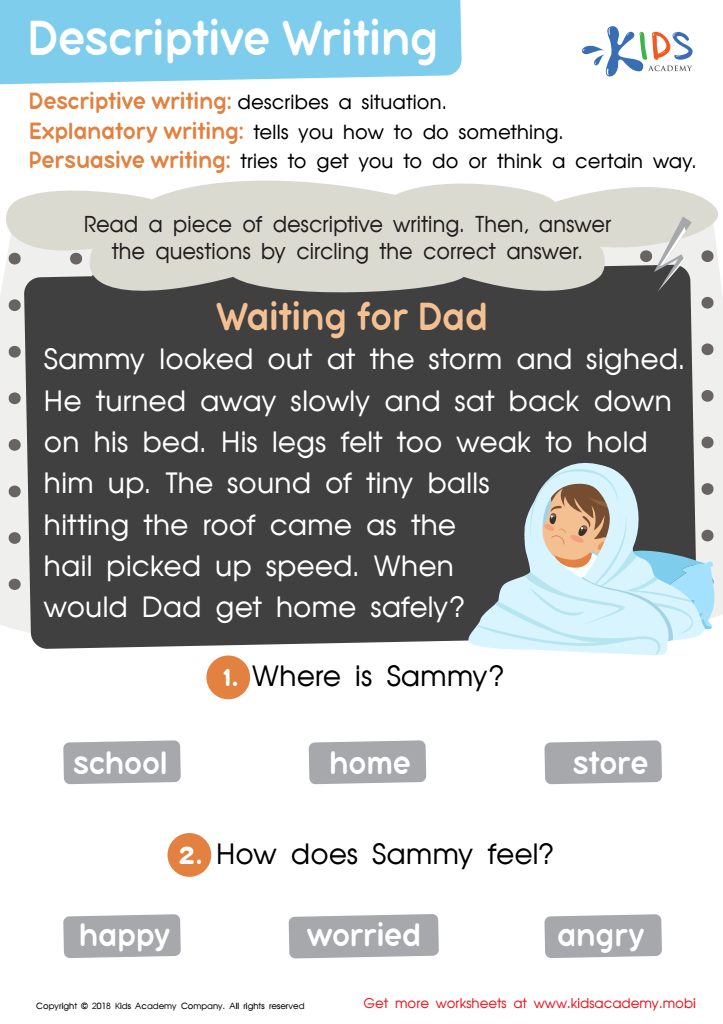
Descriptive Writing Worksheet: Part 2
In this worksheet, your kids will explore writing styles like descriptive, explanatory and persuasive. Read them the descriptive text, then have them answer the questions. Writing is an art – it's a way to express emotions, tell stories and share information.
Descriptive Writing Worksheet: Part 2
Worksheet
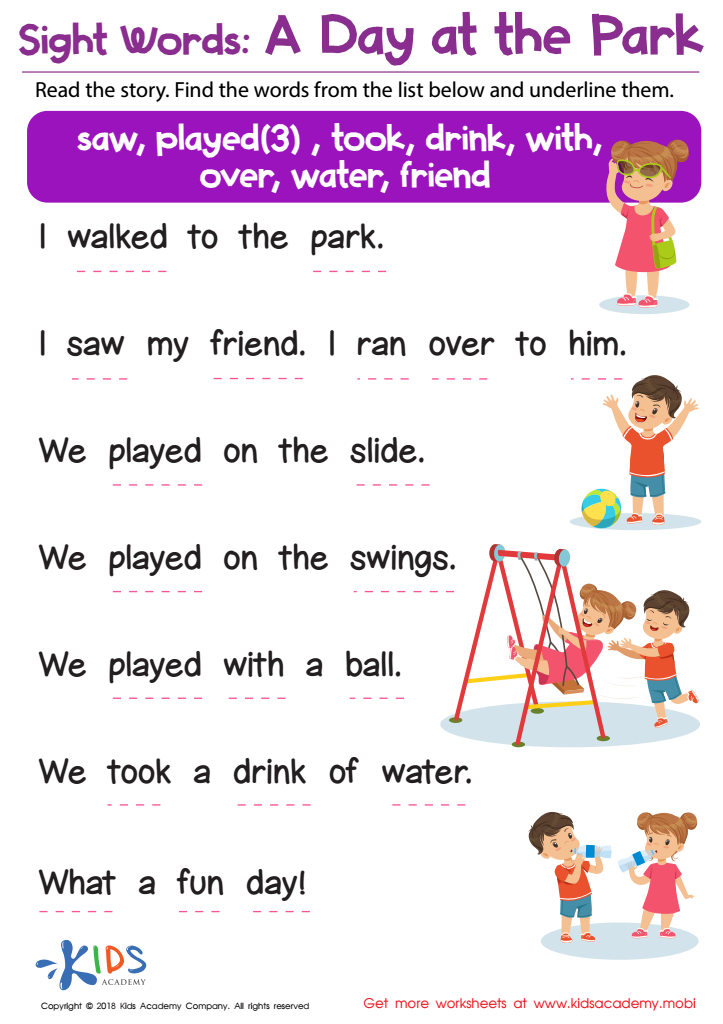
Sight Words: A Day at the Park Worksheet
This worksheet offers kids practice reading sight words in a story. With picture clues and repetitive wording, they'll work with words that can't be sounded out to reinforce their learning. This is an important step in the reading process that helps kids become more confident readers.
Sight Words: A Day at the Park Worksheet
Worksheet
Join Kids Academy for Free
Who is primarily going to use this learning content?








Early sentence construction and exposure to fiction for children aged 3-8 are invaluable for multiple facets of their development. Firstly, this practice fosters language and literacy skills, which are foundational for all future learning. By constructing sentences, young learners begin understanding grammar, vocabulary, and syntax, enhancing their ability to express thoughts more clearly and effectively.
Reading fiction at an early age also encourages imaginative thinking and creativity. Stories stimulate children’s imagination, helping them visualize worlds, characters, and scenarios that are different from their everyday experiences. This cognitive flexibility aids problem-solving and creativity, skills that are critical throughout life.
Additionally, fiction often contains relatable characters and plots, helping children develop empathy and emotional intelligence. By stepping into the shoes of various characters, children understand diverse perspectives and emotions, promoting social skills and compassion.
Engaging with fiction can also provide key lessons in morality, perseverance, and resilience. Many stories offer gentle guidance on distinguishing right from wrong, coping with difficult emotions, or overcoming obstacles.
Moreover, the shared activity of reading fiction with parents or teachers strengthens bonds, making children feel loved and secure. Overall, prioritizing sentence construction and reading fiction creates a holistic foundation for a child’s emotional, social, and intellectual growth.








