Cognitive Development Animals Worksheets for Ages 3-8
5 filtered results
Difficulty Level
Grade
Age
-
From - To
Subject
Activity
Standards
Discover our engaging "Cognitive Development Animals Worksheets" designed for children ages 3-8! These interactive worksheets help young learners explore the fascinating world of animals while enhancing essential cognitive skills. Each activity encourages critical thinking, matching, and reasoning, making learning both fun and effective. From identifying different habitats to understanding animal behaviors, our worksheets cater to various learning styles and promote curiosity about nature. Perfect for classroom use or at-home study, these resources are not only educational but also foster a love for wildlife. Kickstart your child's cognitive journey through the animal kingdom today! Explore more on our website!
Favorites
With answer key
Interactive
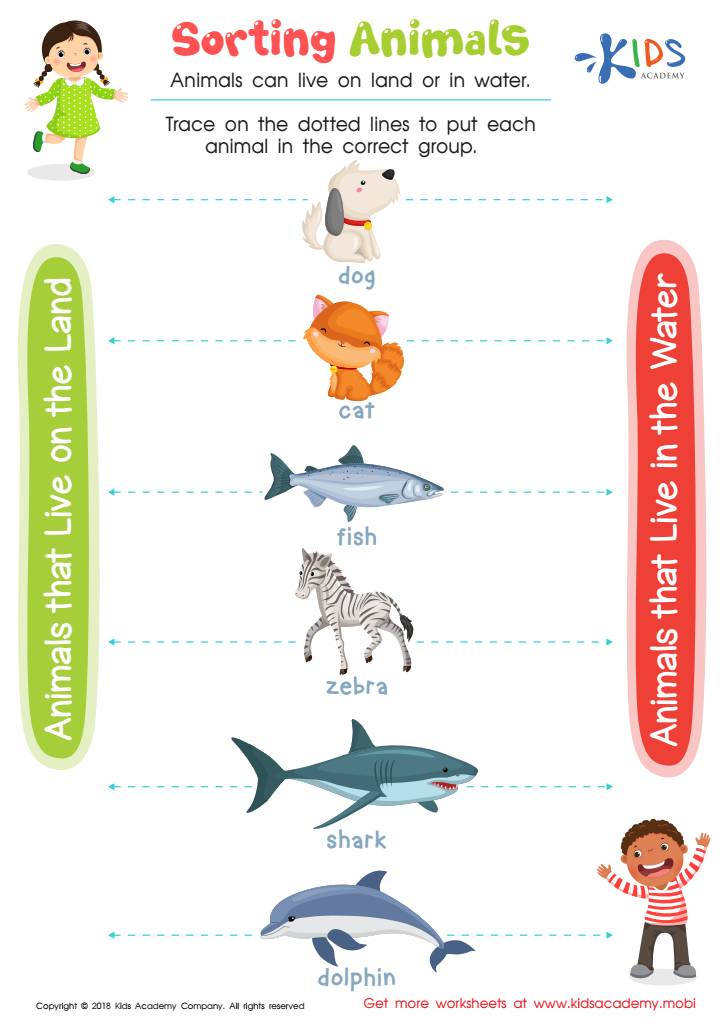
Sorting Animals Worksheet
Your kids will love this free, interactive worksheet! With image clues, they can read and trace the animal names, and then sort them into groups of land or water animals. It's an enjoyable way to boost their critical thinking, fine motor and prior knowledge skills.
 Assign to My Students
Sorting Animals Worksheet
Worksheet
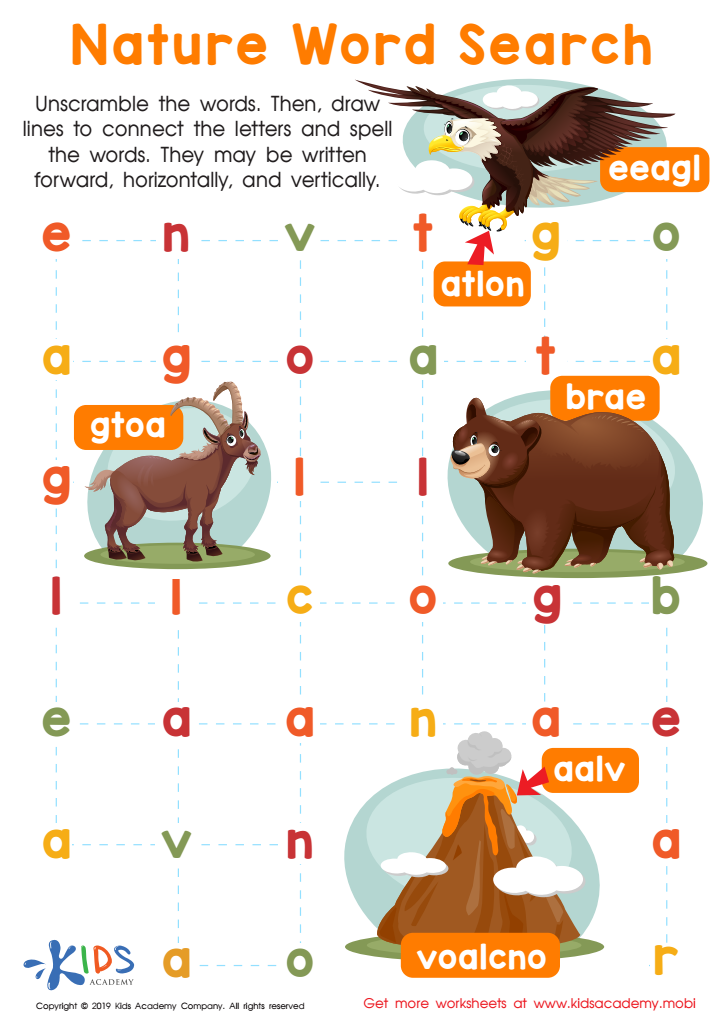
Nature Word Search Worksheet
Unscramble science vocabulary words and find them in this fun worksheet! Use the pictures as clues if you get stumped; you can also write down the words for reference. Solve the puzzle when you're done to finish!
Nature Word Search Worksheet
Worksheet
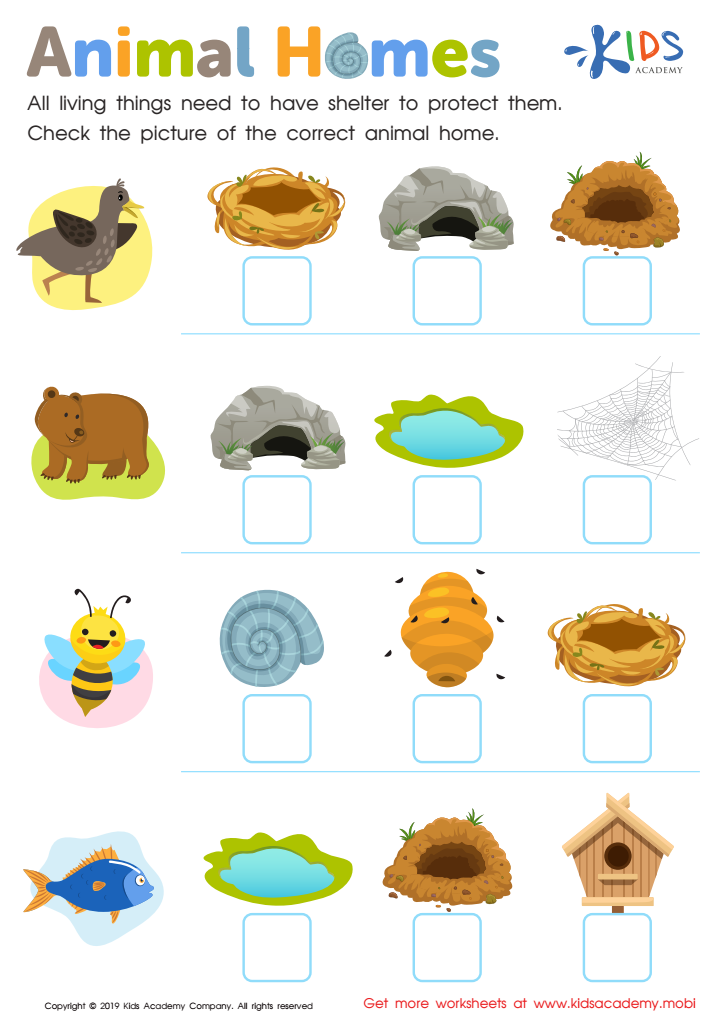
Animal Homes Worksheet
Students have homes where they can do things they love, sleep and stay safe from bad weather. Check the worksheet for animals and their shelters. Ask your kids to identify each and match the animal home to the picture. (80 words)
Animal Homes Worksheet
Worksheet
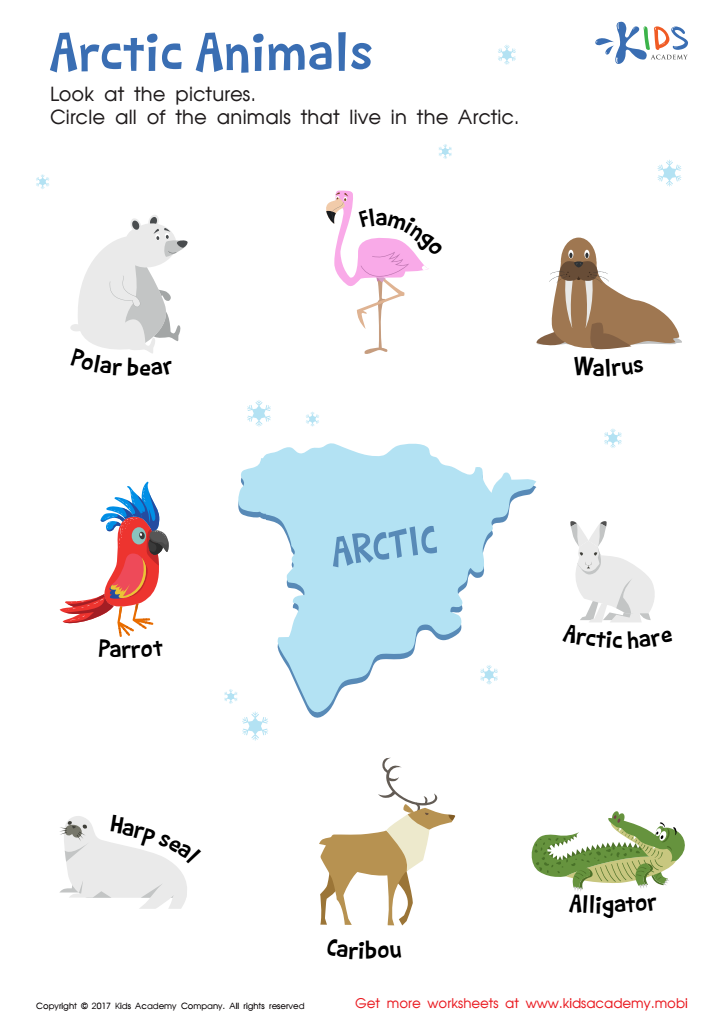
Arctic Animals Worksheet
Kids love animals and this worksheet is a great way to teach them where they live. It reinforces classification skills and introduces new animals, like the Arctic hare. Use it to discuss the Arctic climate and how these animals live, then ask your child where other animals live to keep the conversation going.
Arctic Animals Worksheet
Worksheet
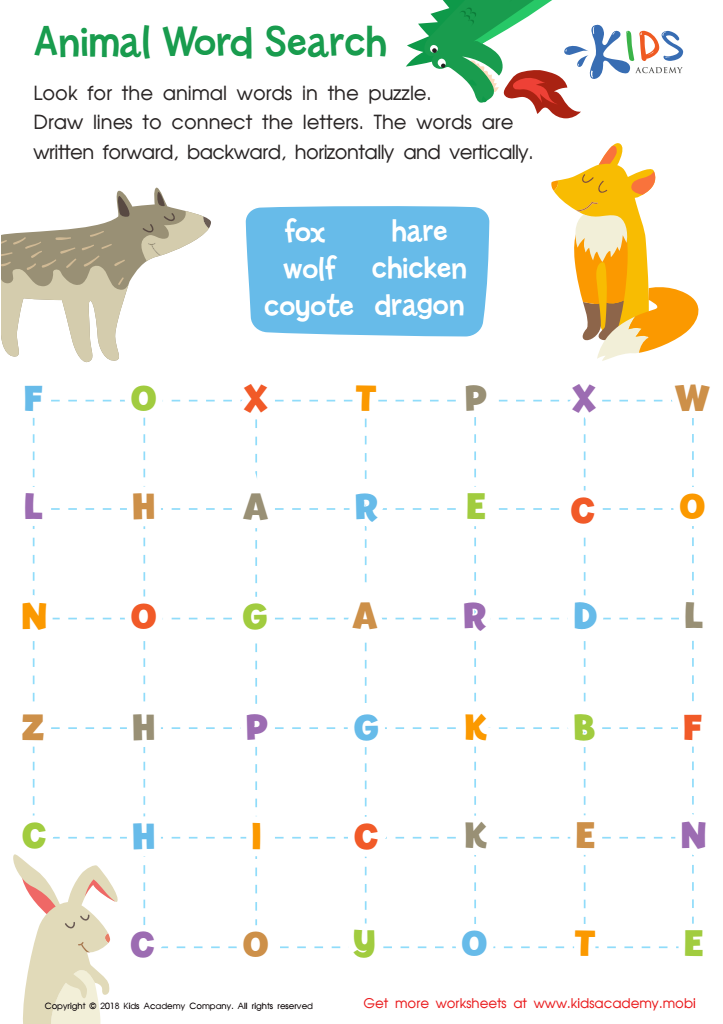
Animal Word Search Worksheet
Students can have fun and strengthen spelling and vocabulary skills with this word search worksheet. Search for animal words and circle the letters in the puzzle. Words can be found forwards, backwards, horizontally or vertically, providing a great challenge to foster critical thinking skills. An enriching activity for all ages!
Animal Word Search Worksheet
Worksheet
Join Kids Academy for Free
Who is primarily going to use this learning content?








Cognitive development in young children ages 3-8 is crucial for their overall growth, and incorporating animals into this process can be highly beneficial. Parents and teachers should care about this subject because exposure to animals sparks curiosity, enhances learning, and promotes problem-solving skills. Interacting with animals can foster empathy and compassion, helping children develop social-emotional skills that are essential at this young age.
Animals serve as engaging teaching tools, as children often respond positively to them, making it easier to introduce complex concepts such as habitats, ecosystems, and biology. For instance, discussions about animals' behaviors or needs can encourage critical thinking and questions, stimulating a child's inquisitive nature. Moreover, storytelling involving animals can aid language development, enhance creativity, and foster listening skills.
Furthermore, understanding animals and their environments promotes awareness of the natural world, fostering a sense of responsibility towards living beings and the environment. In a time when technology often monopolizes children’s attention, incorporating animals into learning can also encourage outdoor activities and physical play. Ultimately, engaging with animals can lead to a holistic approach to cognitive development, preparing children for future learning journeys while enriching their social and emotional landscapes. Thus, it’s vital for parents and teachers to prioritize this aspect of childhood development.