Animal recognition Science Worksheets for Ages 3-8
6 filtered results
-
From - To
Explore our engaging Animal Recognition Science Worksheets, specially designed for children ages 3-8! These worksheets promote early learning and cognitive development through fun and interactive activities. Designed to enhance observation skills, kids will love identifying animals while learning their names, characteristics, and habitats. Perfect for at-home learning or classroom use, our printable resources cater to various skill levels, ensuring every young learner can participate. Inspire curiosity about the animal kingdom and foster a love for science with these delightful worksheets. Download today and let the adventure in animal recognition begin! Ideal for educators and parents looking to enrich their child's learning experience.
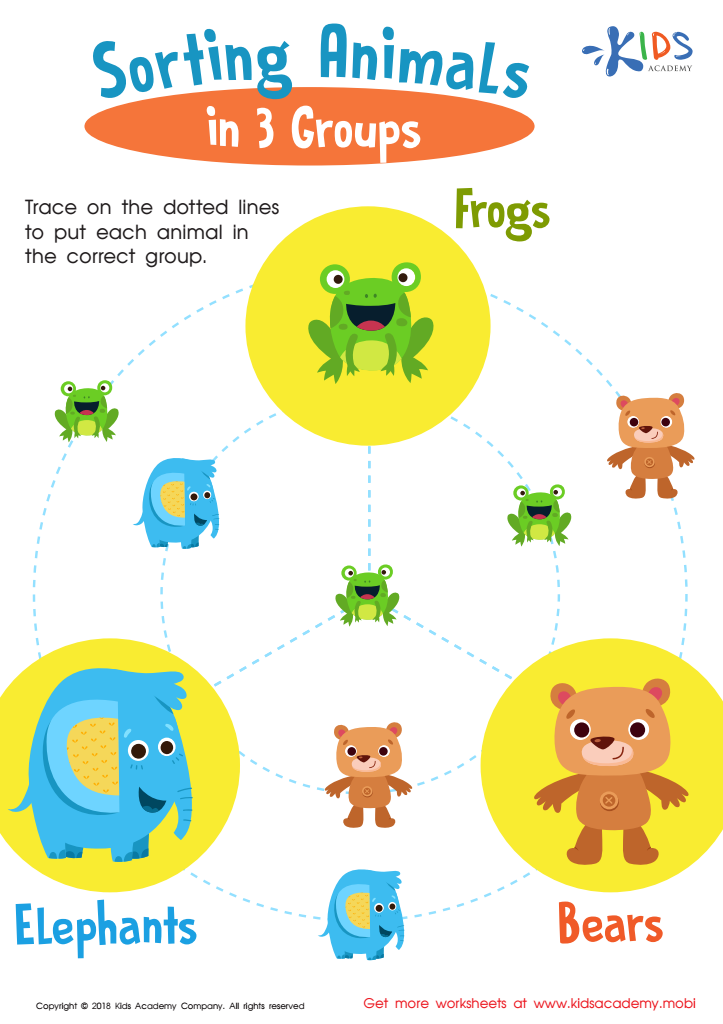
Sorting Animals in 3 Groups Worksheet
 Assign to My Students
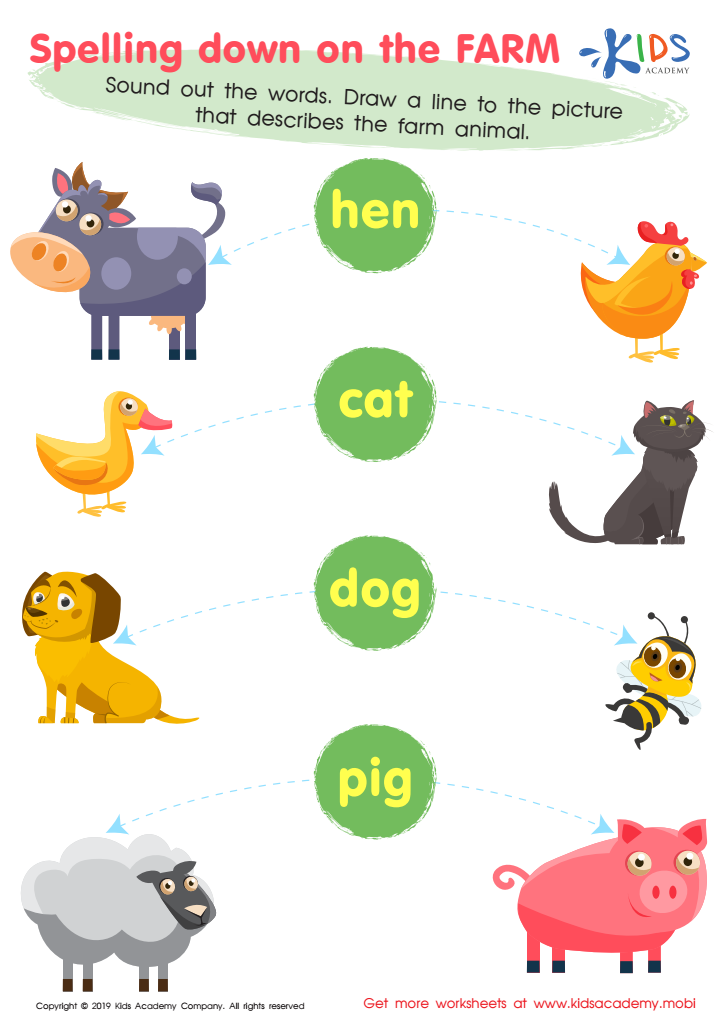
Spelling Down on the Farm Worksheet
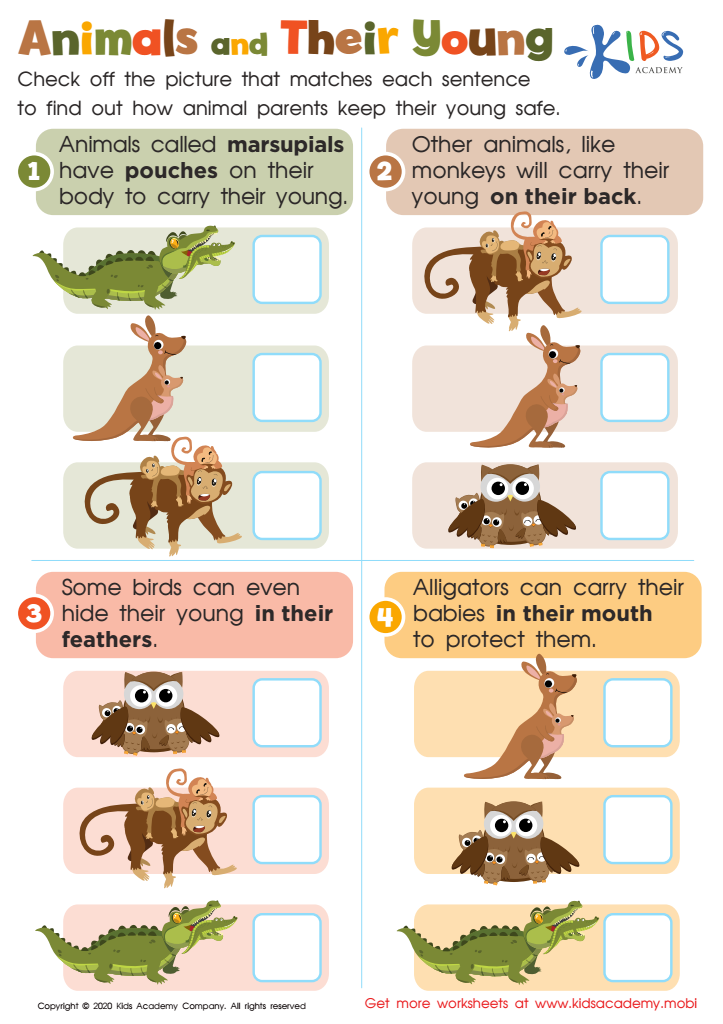
Animals and Their Young Worksheet
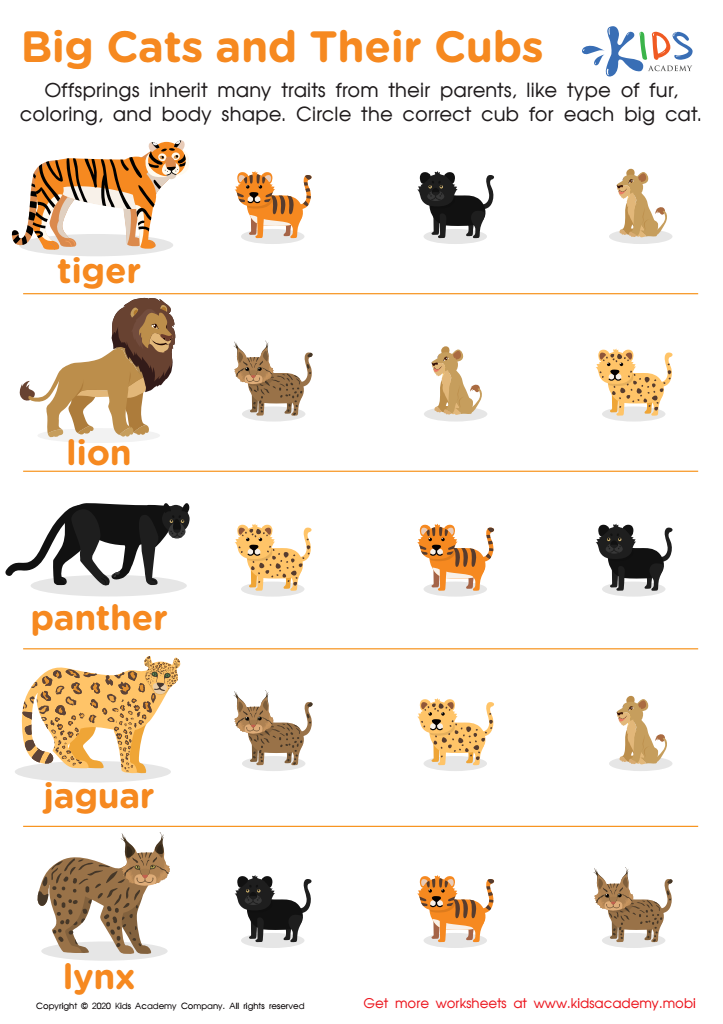
Big Cats and Their Cubs Worksheet
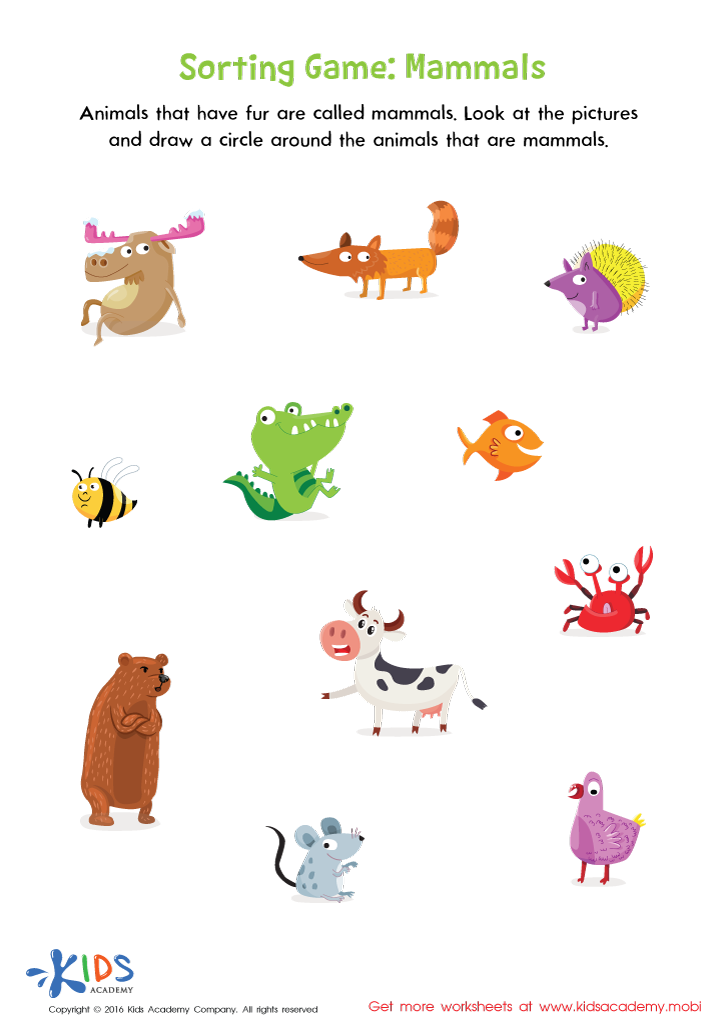
Mammals Sorting Worksheet
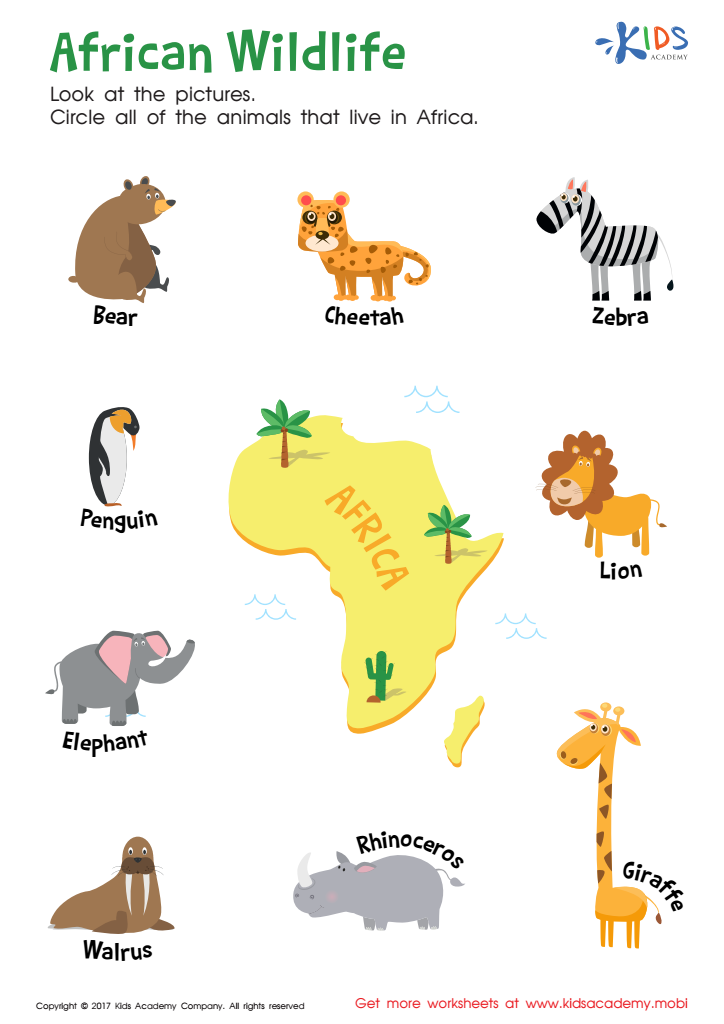







Animal recognition science is crucial for children aged 3-8 as it plays a significant role in their cognitive and emotional development. Understanding different animals fosters curiosity and engagement with the natural world, helping young learners build critical observational and classification skills. By recognizing various animals, children develop their ability to categorize, which is foundational for scientific reasoning and literacy.
Furthermore, learning about animals enhances empathy and emotional intelligence. As children explore the lives and habitats of different species, they gain insights into the behaviors and needs of living beings. This fosters compassion and encourages stewardship towards the environment, an essential perspective in today's world facing ecological challenges.
Moreover, animal recognition activities often incorporate language development through storytelling and vocabulary expansion. Interactive games and discussions surrounding animals can enrich language skills while promoting social interaction and cooperation among peers.
Incorporating animal recognition science in the early years not only aligns with educational standards but also supports holistic development—cognitive, social, emotional, and environmental—laying the groundwork for lifelong learning and responsible citizenship. Parents and teachers, therefore, should prioritize these experiences to cultivate an awareness and appreciation of the rich tapestry of life that surrounds us.







