Classification skills Science Worksheets for Ages 3-8
5 filtered results
-
From - To
Enhance your child's analytical prowess with our Classification Skills Science Worksheets for Ages 3-8. These engaging, printable worksheets from Kids Academy are designed to cultivate young learners' ability to discern, categorize, and organize information. They offer a fun and educational way to help children develop critical thinking and observational skills through sorting and classifying exercises. Tailored for preschool to early elementary grades, our activities cover a range of topics, from animals and plants to everyday objects. Empower your child with the foundations of scientific literacy while fostering a love of learning and exploration.
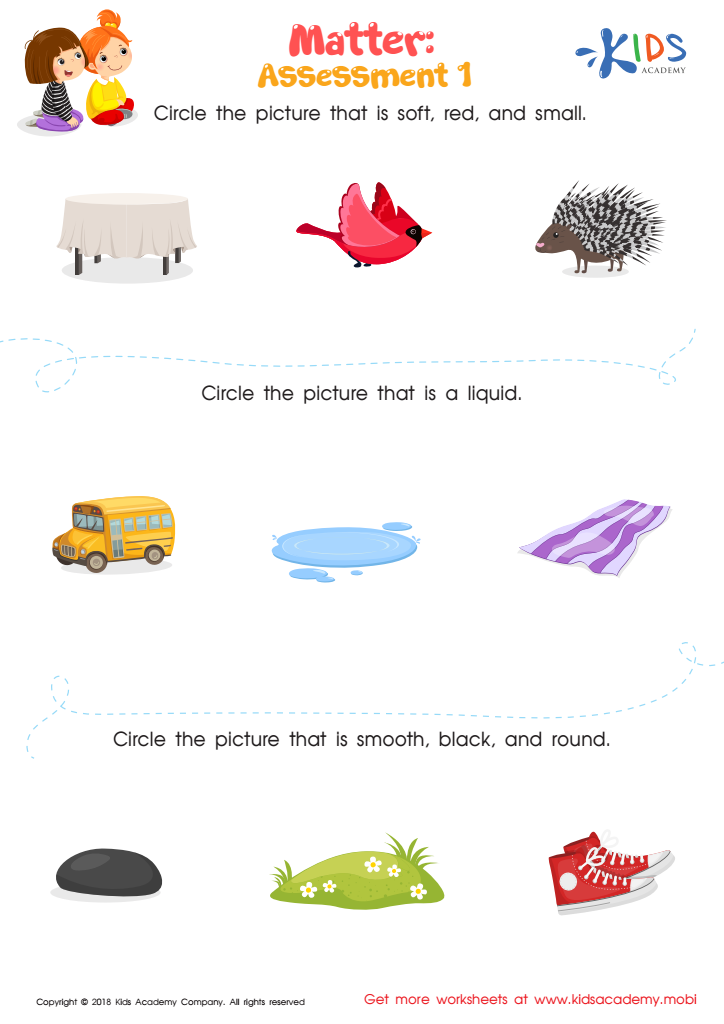
Matter: Assessment 1 Worksheet
 Assign to My Students
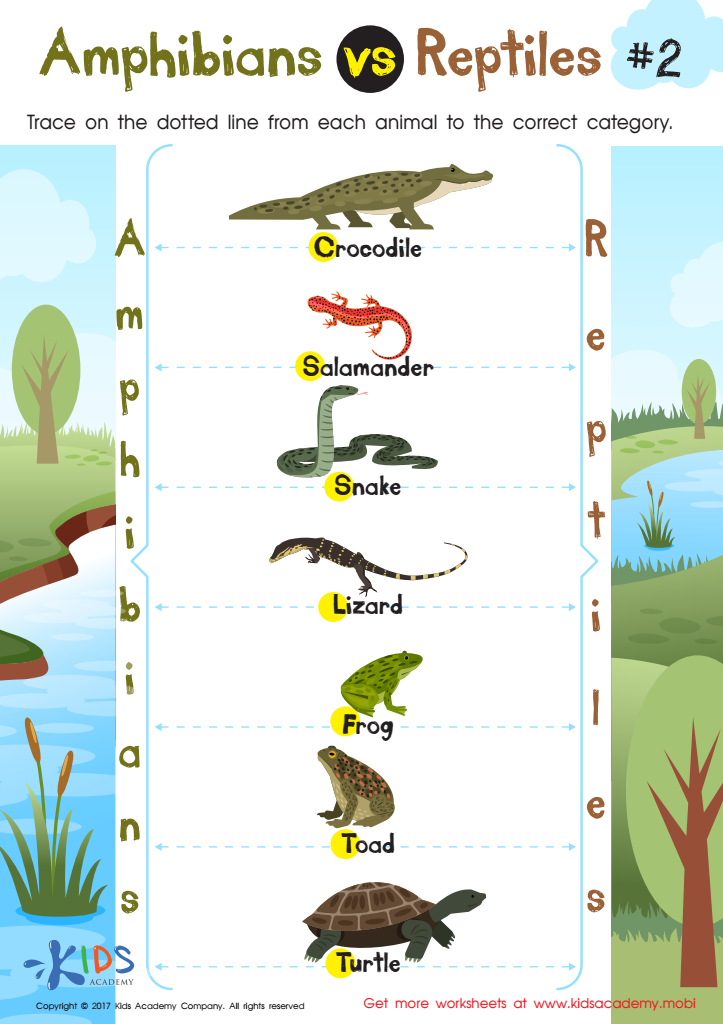
Amphibians vs Reptiles Worksheet for 3rd Grade
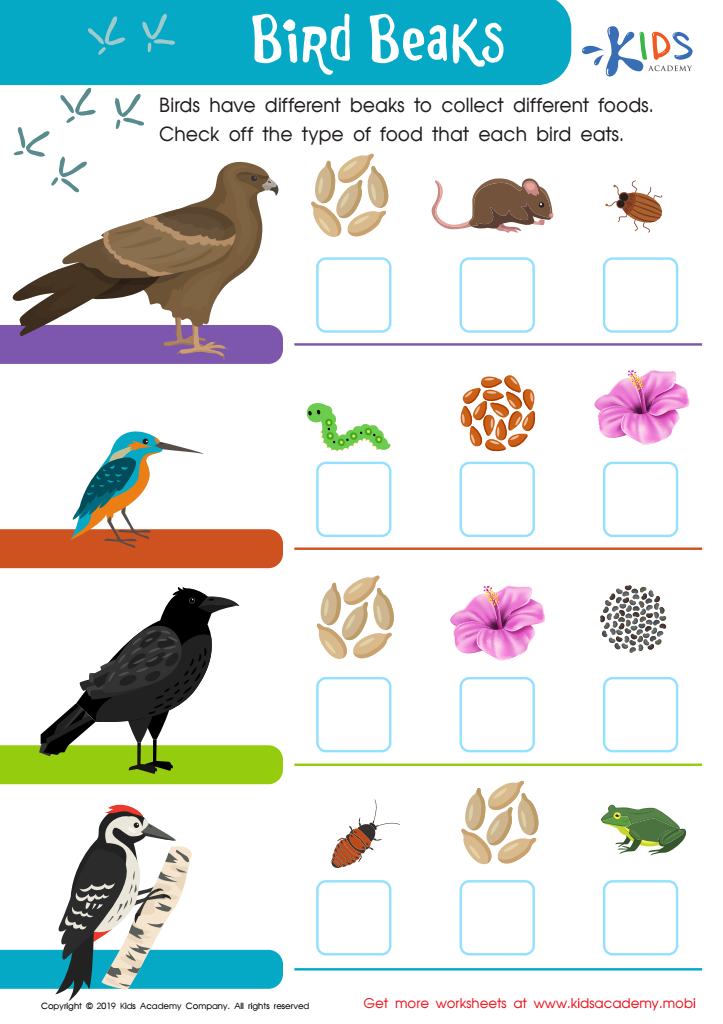
Bird Beaks Worksheet
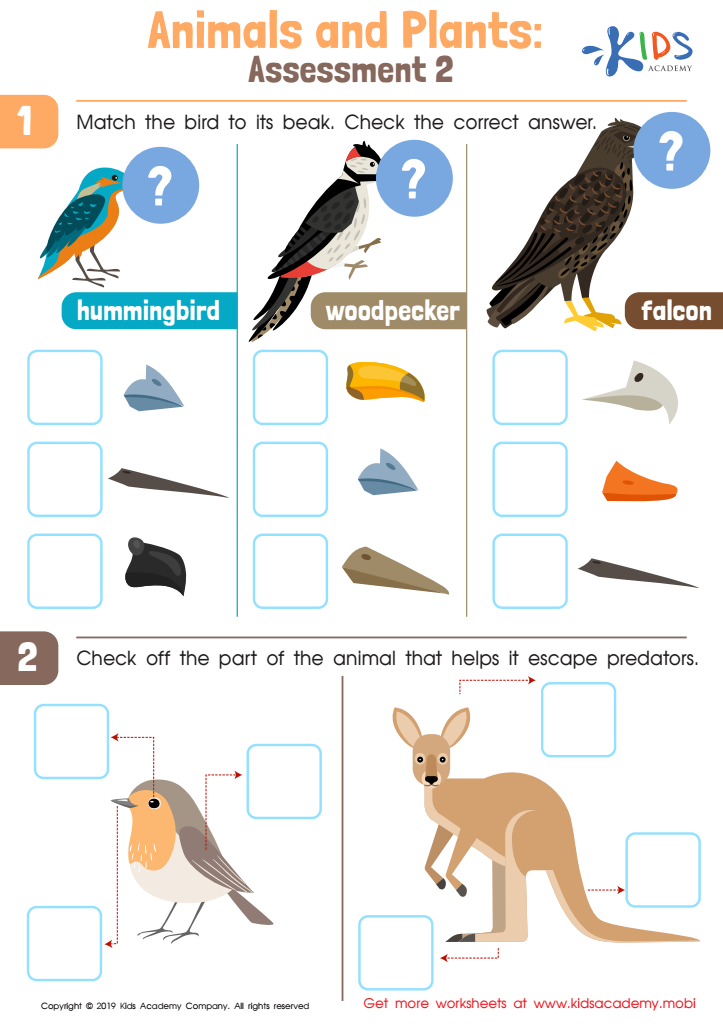
Animals and Plants: Assessment 2 Worksheet
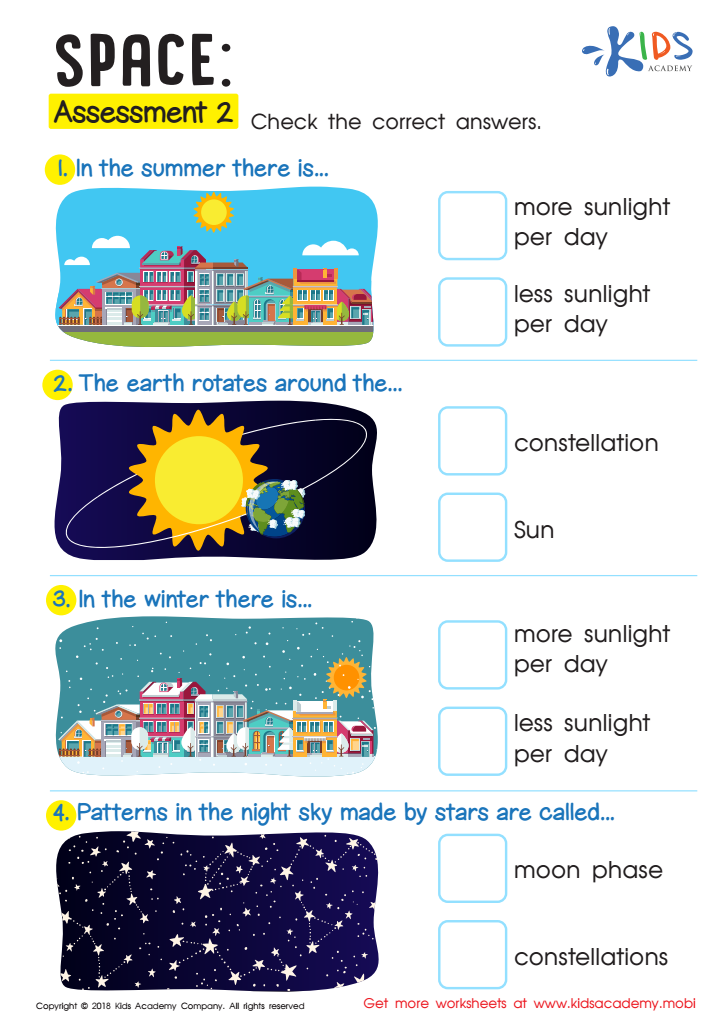
Space: Assessment 2 Worksheet







Classification skills are foundational to a child's cognitive development and are highly relevant for parents and teachers to nurture in children aged 3-8. These skills enable children to organize and categorize objects, concepts, and information based on shared characteristics. Early classification activities, such as sorting shapes, colors, and sizes, help young children develop logical thinking and problem-solving abilities. Understanding classifications lays the groundwork for more advanced scientific and mathematical skills.
Promoting classification skills engages children in observation and comparison, which are vital components of scientific inquiry. When children learn to observe differences and similarities, they build their vocabularies and ability to articulate their thoughts, enhancing language development. These skills are integral to subjects like mathematics, where they come into play in grouping numbers, and science, where children learn about different species, materials, and phenomena.
Parents and teachers who emphasize these skills help children develop critical thinking that supports academic success. Activities involving classification foster creativity and curiosity, encouraging children to explore and make sense of the world around them. Overall, nurturing classification skills in early childhood sets a solid foundation for lifelong learning and intellectual growth.







