Information retention Science Worksheets for Ages 3-8
3 filtered results
-
From - To
Discover exciting Information Retention Science Worksheets designed for children ages 3-8! At Kids Academy, we offer engaging activities that enhance critical thinking and memory skills while exploring fascinating science concepts. Our worksheets promote active learning through colorful illustrations and fun exercises that encourage children to recall, analyze, and apply information in meaningful ways. Whether your child is learning about the environment, the human body, or basic physical science, these worksheets will captivate young minds and foster a love for learning. Perfect for homeschooling, classrooms, or supplemental activities, our resources are tailored to support early development and curiosity in STEM fields!
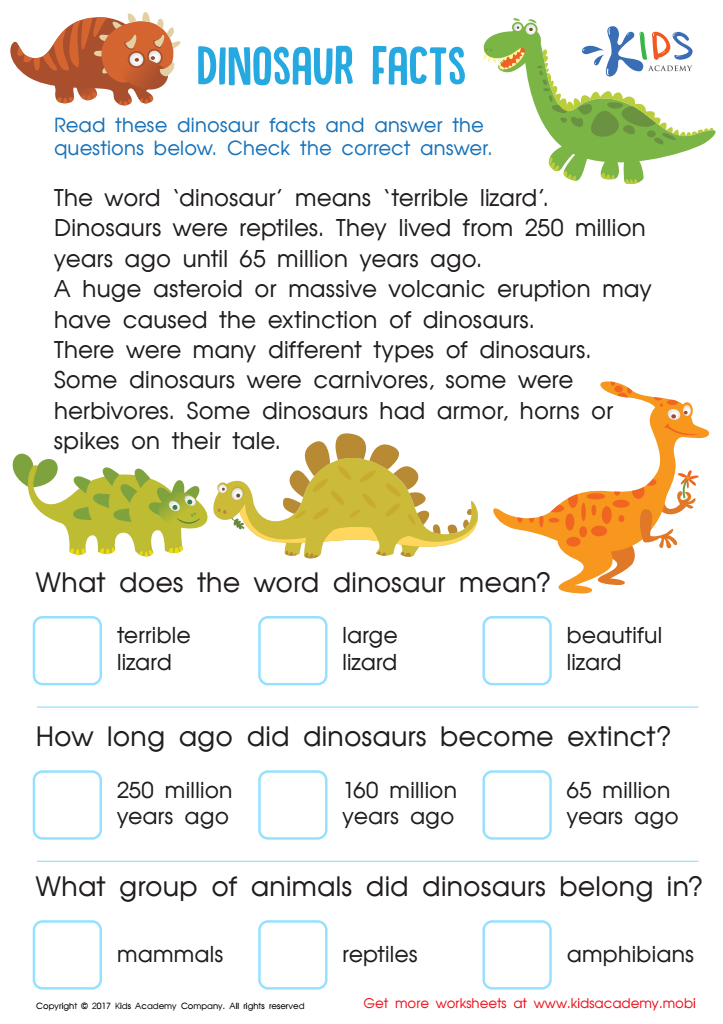
Dinosaur Facts Worksheet
 Assign to My Students
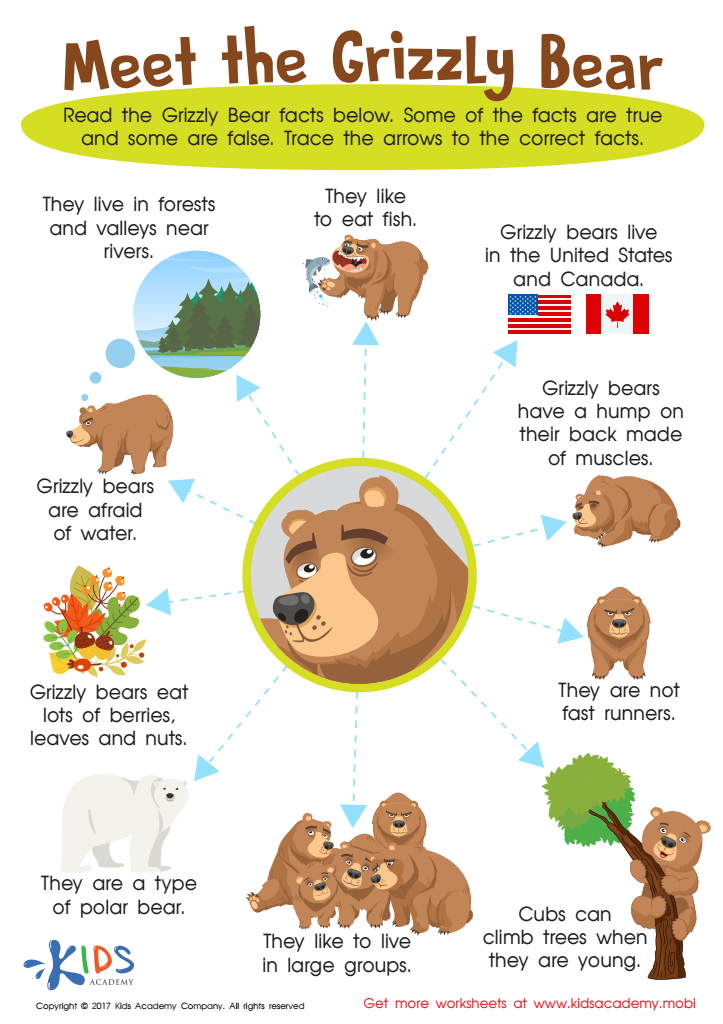
Grizzly Bear Facts Worksheet
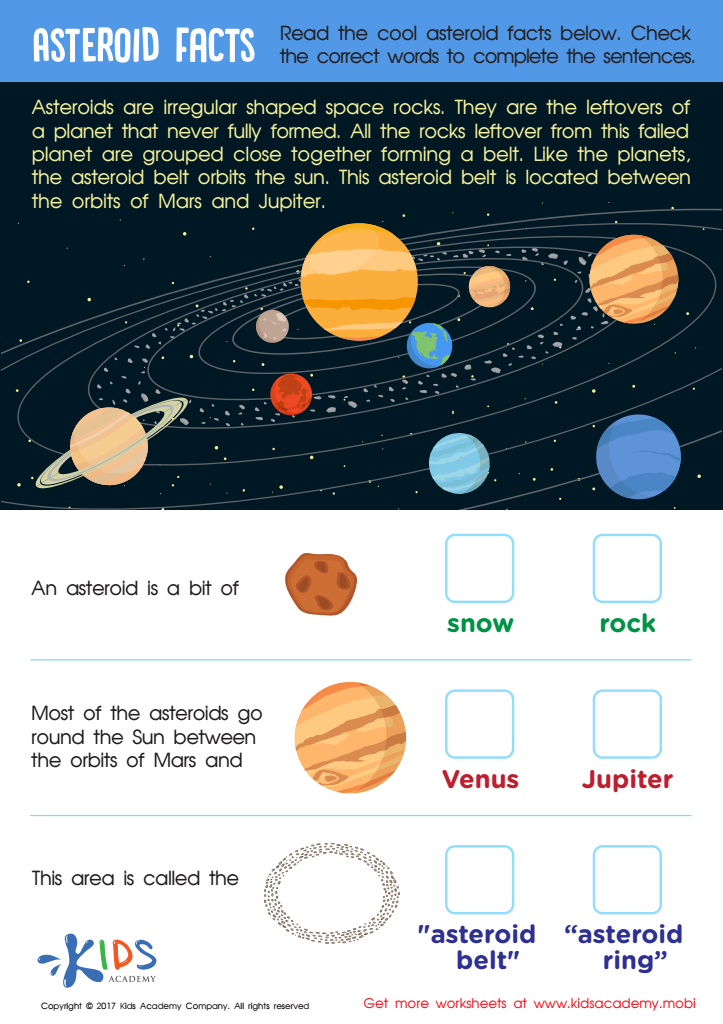
Asteroid Facts Worksheet







Understanding information retention science is crucial for parents and teachers of children aged 3 to 8, as this knowledge helps maximize the effectiveness of early learning experiences. Children in this critical developmental stage learn in unique ways, often through play, exploration, and repetition. By leveraging the principles of information retention, educators and caregivers can create tailored learning environments that foster long-term memory and understanding.
For instance, techniques such as spaced repetition, meaningful associations, and hands-on activities can significantly enhance a child's ability to retain information. Parents and teachers who are aware of these methods can implement strategies that align with young learners' cognitive and emotional needs, making learning both engaging and effective. This approach not only aids academic success but also nurtures a love for learning.
Moreover, understanding how children retain information allows for individualized support. It also benefits classroom dynamics, as educators can reflect on common challenges and adapt their practices accordingly. In summary, caring about information retention science equips parents and teachers with valuable tools to foster cognitive development, enhance educational outcomes, and support the holistic growth of children during these formative years.







