Reading thermometers Science Worksheets for Ages 3-8
3 filtered results
-
From - To
Discover engaging "Reading Thermometers Science Worksheets" designed for children ages 3-8 at Kids Academy! These fun and educational materials help young learners understand temperature concepts and practice reading different thermometer scales. Our worksheets use vibrant images and simple instructions to build your child’s confidence in grasping important scientific notions. Ideal for both classroom and home use, these printable worksheets foster critical thinking skills through interactive and hands-on activities. Elevate your child’s learning experience with Kids Academy’s expertly crafted resources, ensuring a strong foundation in science from an early age. Visit kidsacademy.mobi to download today!
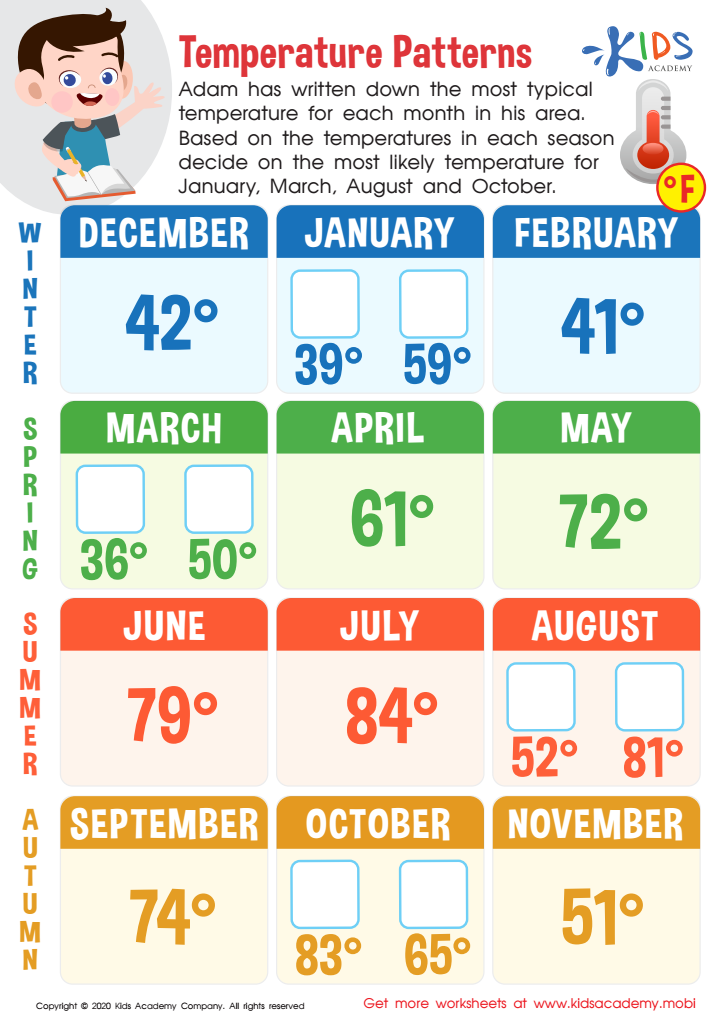
Temperature Patterns Worksheet
 Assign to My Students
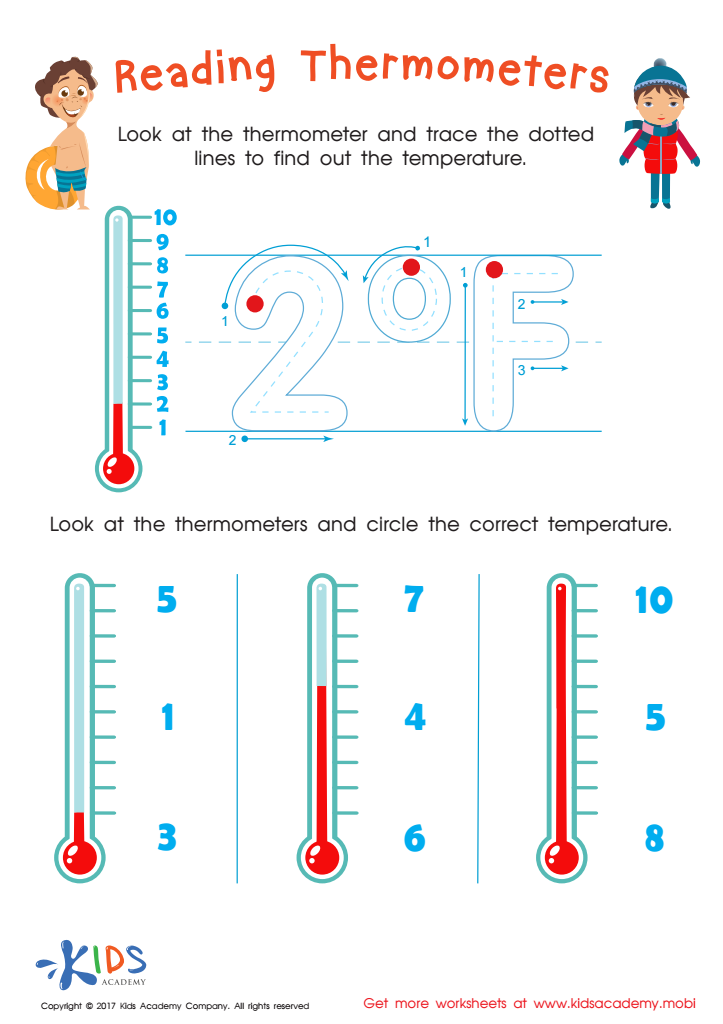
Reading Thermometers Printable
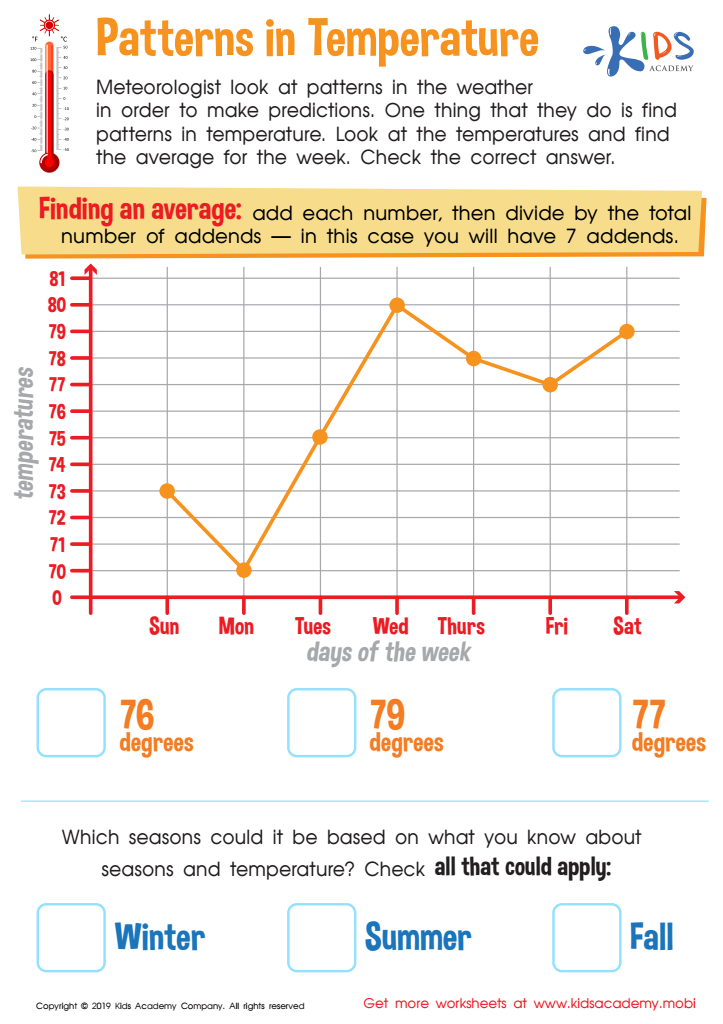
Patterns in Temperature Worksheet








Reading thermometers is an essential science skill for children ages 3-8, as it aids in their early development for several reasons. At its core, it introduces kids to basic numerical literacy and the concept of temperature, a fundamental aspect of their everyday environment. Understanding temperature can help children make sense of their world, from recognizing the difference between hot and cold during weather changes to understanding how their bodies react to different environments.
When parents and teachers incorporate thermometer reading into lessons, it boosts observational skills and critical thinking. Children learn to connect numbers on the thermometer with tangible experiences, like knowing when to wear a jacket or if their drink is too hot. Additionally, this activity can foster curiosity and a love for science, making them more likely to engage positively with scientific topics as they grow older.
Furthermore, thermometer reading activities can enhance language development as children learn new vocabulary words like "degrees," "Fahrenheit," and "Celsius." Practical experiences like these lay a strong foundation for future scientific understanding and math skills. Encouraging children to participate in such hands-on activities promotes a balanced development and helps build their confidence in their ability to explore and understand the world around them.







