
Science knowledge Science Worksheets for Ages 3-8
3 filtered results
Difficulty Level
Grade
Age
-
From - To
Subject
Activity
Standards
Explore our engaging Science Knowledge Worksheets designed for children ages 3 to 8. These interactive resources nurture curiosity and foster a love for science by covering essential concepts in an age-appropriate manner. Each worksheet introduces fascinating topics such as plants, animals, and the environment, all while enhancing critical thinking and observational skills. Perfect for homeschooling or school use, our worksheets are easy to print and designed to captivate young minds. Encourage exploration and discovery in the world of science today, providing your child with a strong foundation for lifelong learning. Unlock the wonders of science with our fun and educational worksheets!
Favorites
With answer key
Interactive
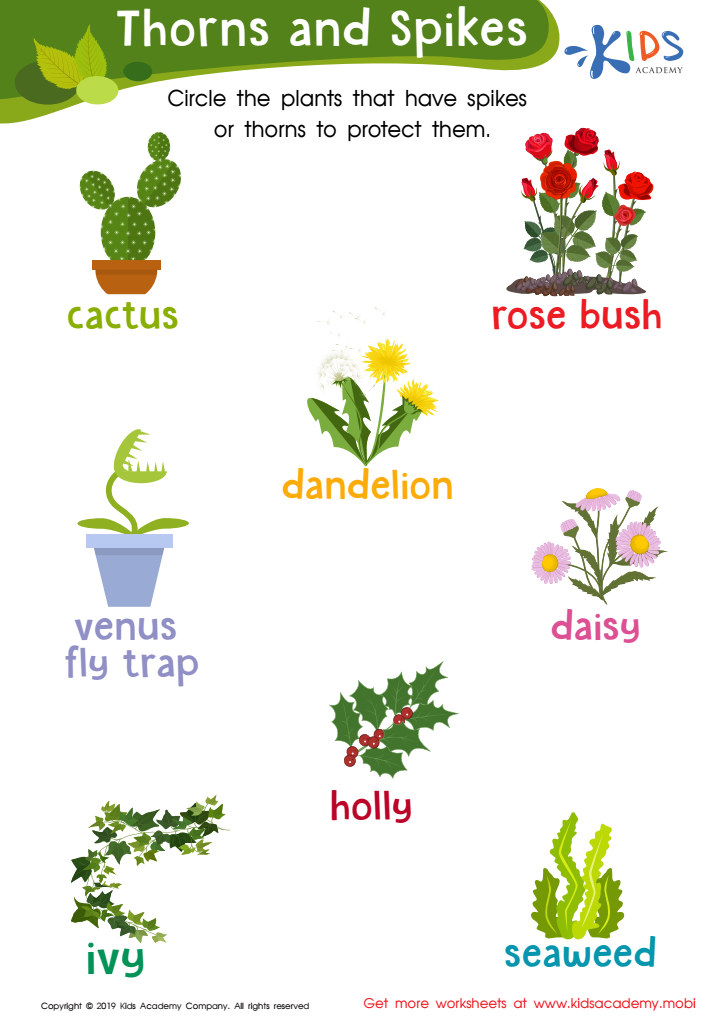
Thorns and Spikes Worksheet
Can your students name and identify the plants and flowers in this worksheet? Ask them to read out the names and circle the ones with spikes or thorns. Help them appreciate nature's beauty and understand how plants protect themselves.
 Assign to My Students
Thorns and Spikes Worksheet
Worksheet
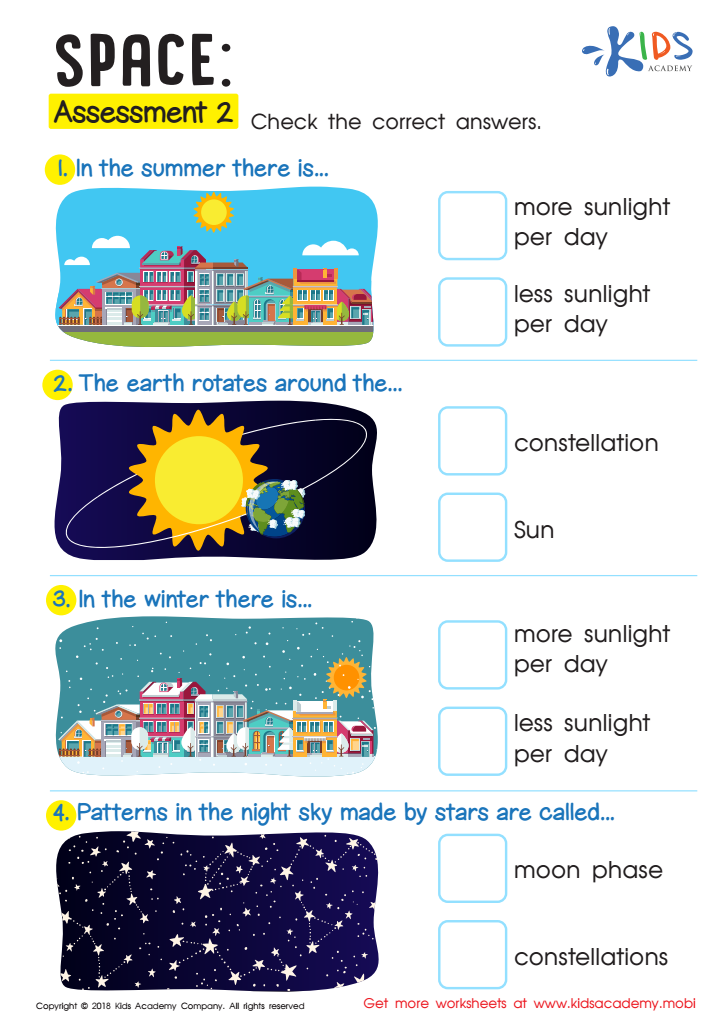
Space: Assessment 2 Worksheet
Test your kids' knowledge of the weather, constellations and Earth with this worksheet. Show them the 4 images and ask what's happening; then read the questions and options and help them pick the right answers. This printout is a helpful and fun way to learn!
Space: Assessment 2 Worksheet
Worksheet
Join Kids Academy for Free
Who is primarily going to use this learning content?







Parents and teachers should prioritize science knowledge for children ages 3-8 because it lays the foundation for critical thinking and curiosity. At this early age, children's innate curiosity about the world can be harnessed through scientific exploration, helping them develop essential skills such as observation, questioning, and problem-solving. Engaging children in hands-on activities like simple experiments, nature walks, and interactive storytelling can stimulate their interest and sense of wonder.
Moreover, understanding basic scientific concepts promotes cognitive development and essential literacy skills. Science education nurtures language development as children learn to articulate their thoughts, share observations, and collaborate with peers. It also encourages a growth mindset, enabling children to embrace challenges and view failures as learning opportunities.
Additionally, science encourages a sense of responsibility towards the environment and societal issues. Teaching children about ecosystems, weather patterns, and healthy living fosters awareness of their role in the world, instilling values of respect and stewardship.
By integrating science into early education, parents and teachers not only enrich children's learning experiences but also prepare them for a future where scientific literacy is paramount. Ultimately, nurturing a love for science at a young age cultivates a generation of informed, capable, and engaged citizens.







