Understanding landforms Science Worksheets for Ages 3-8
3 filtered results
-
From - To
Explore the wonders of Earth with our "Understanding Landforms Science Worksheets" designed specifically for children aged 3-8! These engaging and interactive worksheets introduce young learners to essential geographical concepts, helping them identify and understand various landforms such as mountains, valleys, and rivers. Through colorful illustrations and age-appropriate activities, kids will develop a foundational knowledge of Earth's surface features while stimulating their curiosity about nature. Perfect for classroom settings or home learning, these worksheets support early cognitive development and promote a love for science. Dive in now and make learning about landforms fun and engaging for your budding explorers!
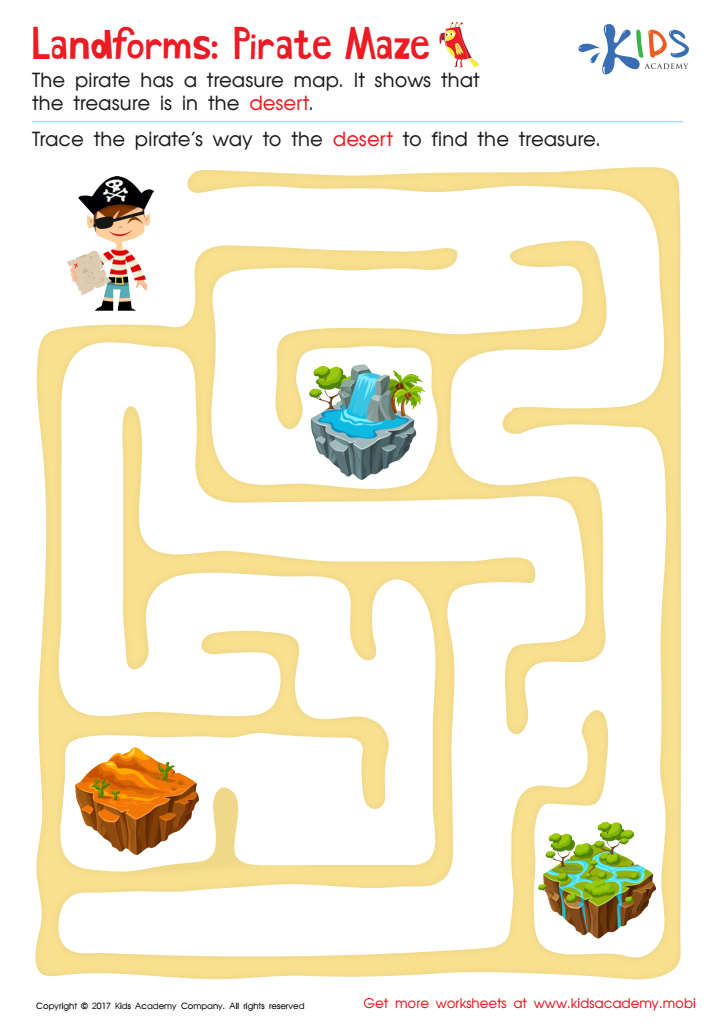
Landforms: Pirate Maze Printable
 Assign to My Students
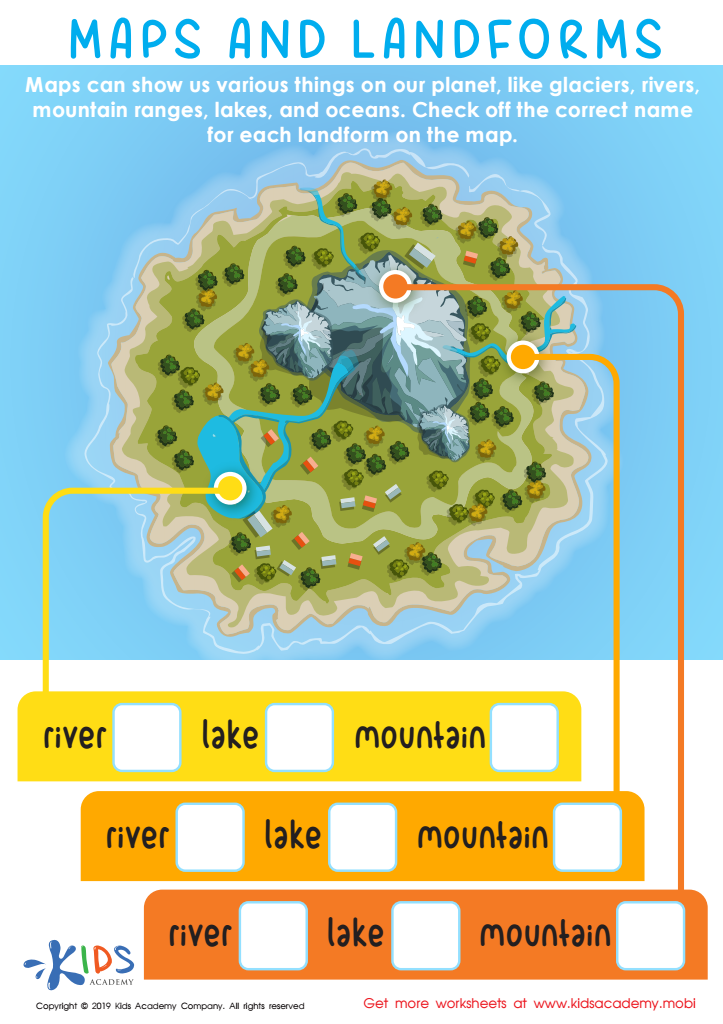
Maps and Landforms Worksheet
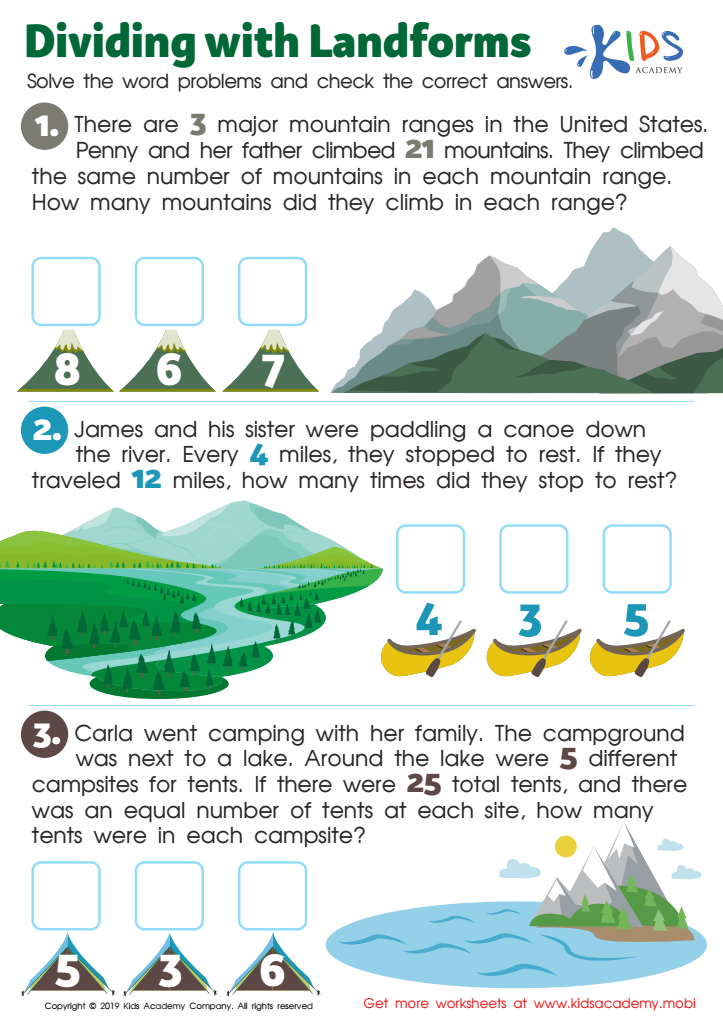
Dividing with Landforms







Understanding landforms is crucial for children aged 3-8 as it forms a foundational aspect of their science education and enhances their understanding of the world around them. By introducing young learners to various landforms like mountains, rivers, valleys, and plains, parents and teachers foster a sense of curiosity and exploration. This early exposure helps develop observational skills and encourages children to ask questions about their environment.
Incorporating landforms into science curriculum promotes not only geographic awareness but also sparks interest in nature and the importance of preservation. By grasping how landforms shape weather patterns, ecosystems, and human activities, children can connect with broader concepts such as biodiversity, climate change, and conservation.
Furthermore, studying landforms is an excellent way to incorporate interdisciplinary approaches, linking science with art, storytelling, and physical activities. Engaging in hands-on activities, like creating landform models or conducting simple experiments, cultivates critical thinking and collaboration skills. As kids develop spatial awareness and mapping skills through these lessons, they build a strong foundation for future schooling.
In essence, understanding landforms gives children a deeper appreciation of their world and equips them with essential skills, fostering lifelong learners who are informed and engaged with their environment.







