
Understanding light sources Science Worksheets for Ages 3-8
6 filtered results
Difficulty Level
Grade
Age
-
From - To
Subject
Activity
Standards
Introducing "Understanding Light Sources" Science Worksheets for Ages 3-8! Our engaging and interactive worksheets are designed to help young learners grasp the basics of light sources in a fun and educational way. Children will explore different sources of light, learn to identify natural and artificial light, and understand their importance in our daily lives. With colorful illustrations and age-appropriate activities, these worksheets make science accessible and enjoyable. Perfect for classroom use or at-home learning, "Understanding Light Sources" will ignite curiosity and foster a love for science in budding young minds. Download now and start your illuminating journey!
Favorites
With answer key
Interactive
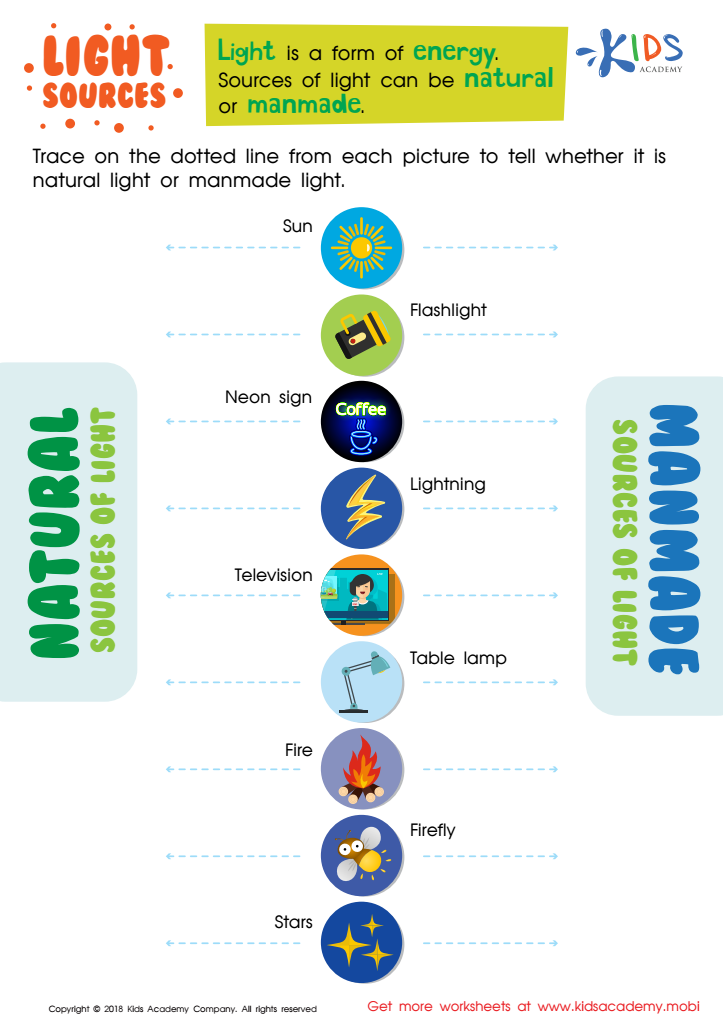
Natural and Manmade Light Sources Worksheet
Have your child learn about natural and manmade light sources with this fun worksheet! They'll distinguish the sun, fireflies and more as either natural or artificial sources. Brighten up their knowledge with this engaging activity!
 Assign to My Students
Natural and Manmade Light Sources Worksheet
Worksheet
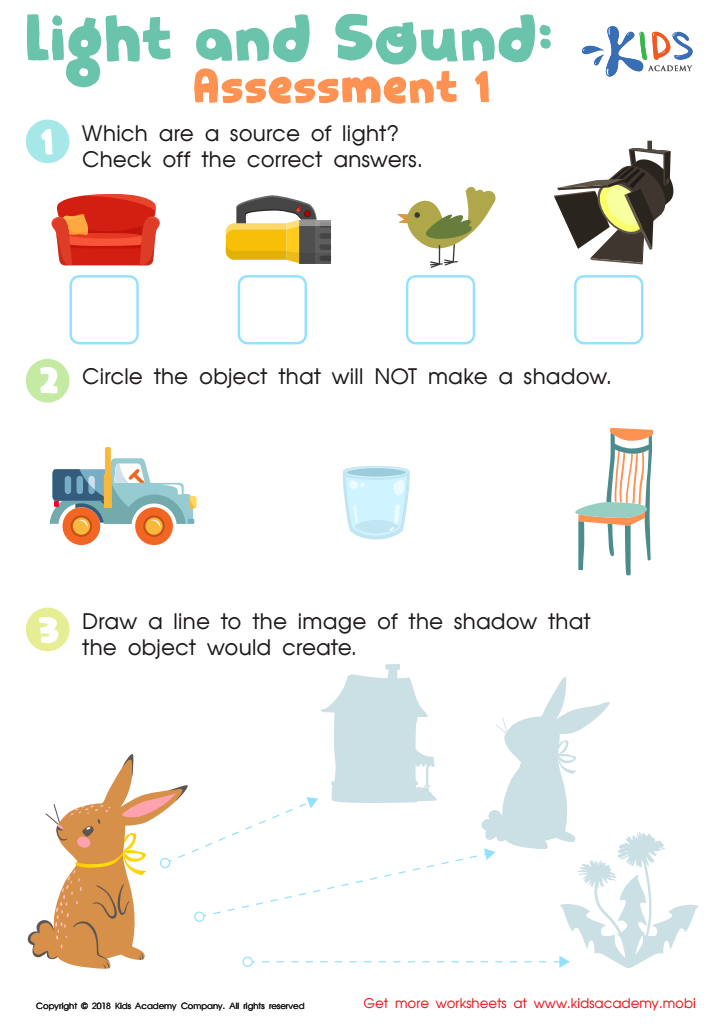
Light and Sound: Assessment 1 Worksheet
Can your kids name a light source? Challenge them to name the sun and moon, then point out objects they use when the sun sets. Look through the worksheet with them and ask them to identify the light sources. Help them check off the correct answers.
Light and Sound: Assessment 1 Worksheet
Worksheet
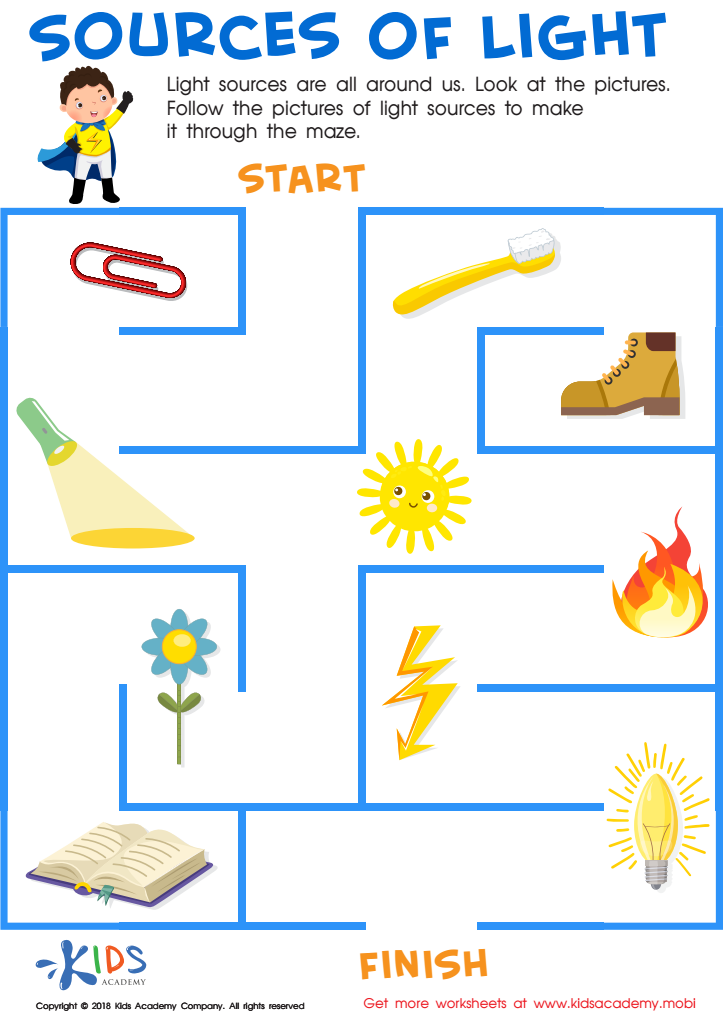
Sources of Light Worksheet
Help your child explore sources of light with this printout exercise. Ask them if they know the sun is the reason for day and night. Then point out other common light sources, then work together to guide them through the maze from start to finish.
Sources of Light Worksheet
Worksheet
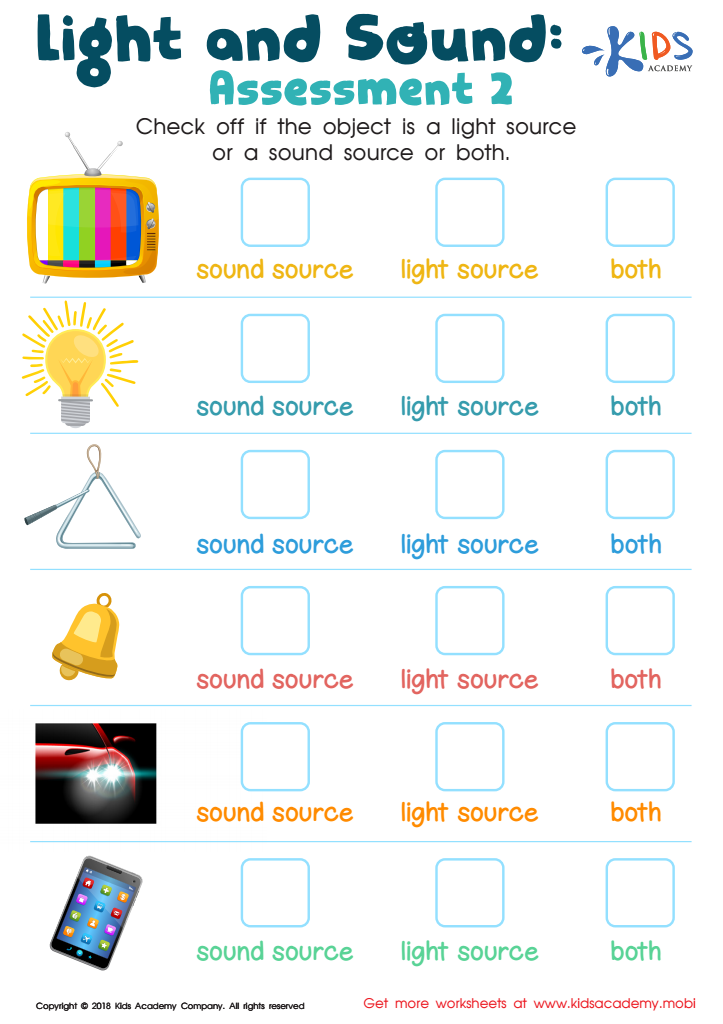
Light and Sound: Assessment 2 Worksheet
This worksheet introduces your kids to light and sound, with common sources of each. Identify the objects and help them check if it's a light source, a sound source, or both. Colourful and simple, it's a great way to teach your little ones! (80 words)
Light and Sound: Assessment 2 Worksheet
Worksheet
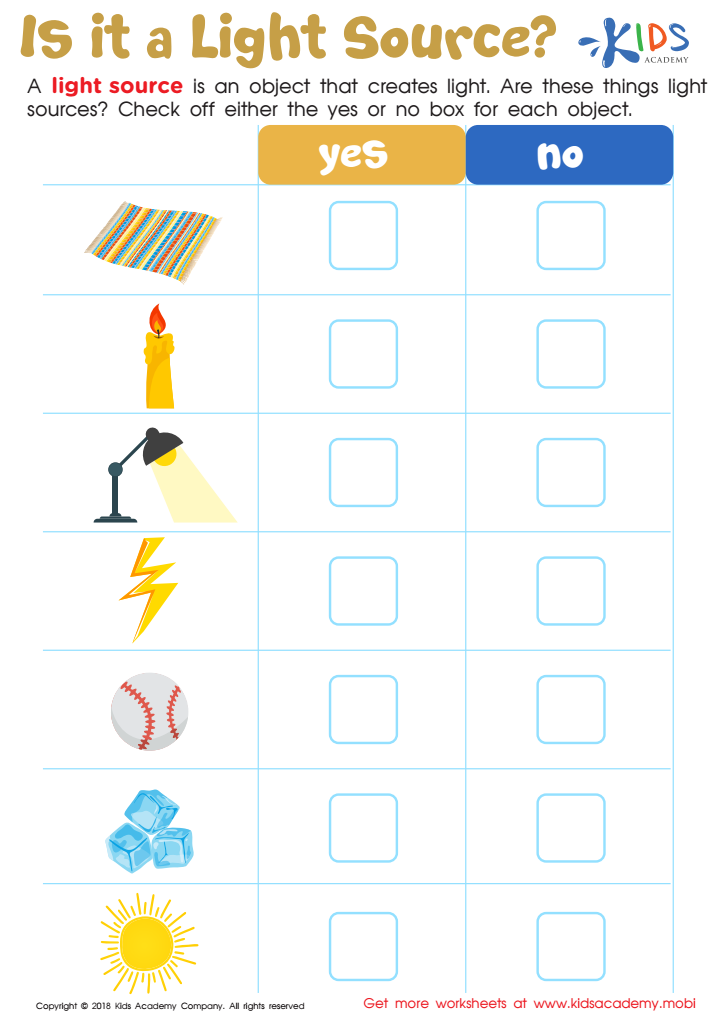
Is It a Light Source? Worksheet
This worksheet is a fun way to teach kids about light sources. Children must identify natural sources like the sun and lightning, and man-made sources such as candles and lamps. Ask them to look at each object and check the box to indicate if it's a light source or not.
Is It a Light Source? Worksheet
Worksheet
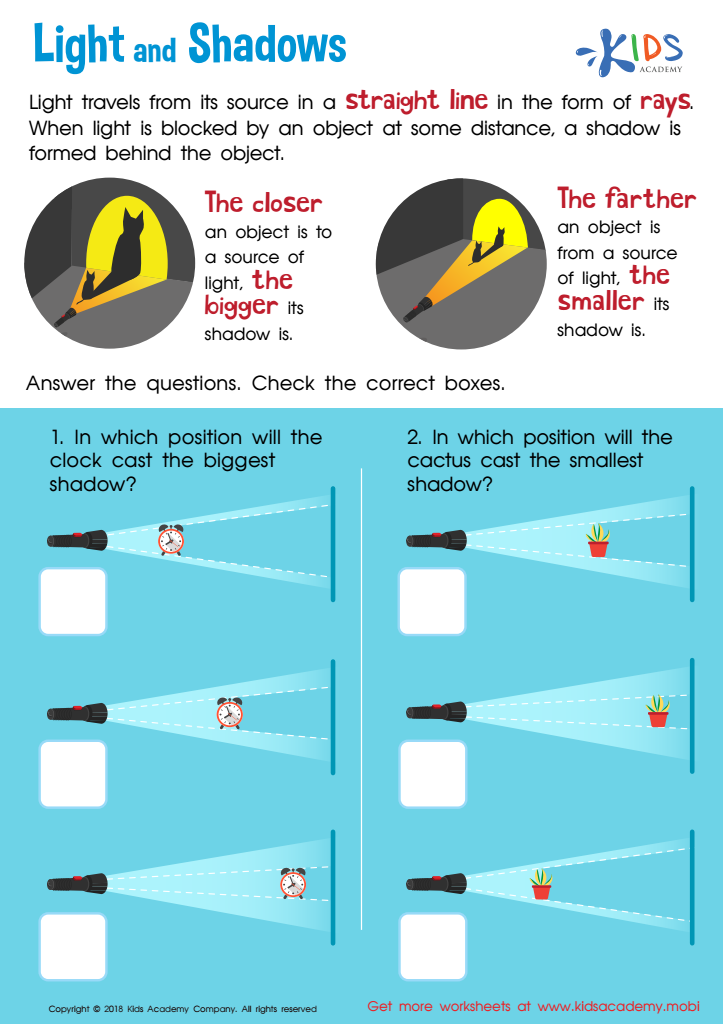
Light and Shadow Worksheet for Grade 3
Kids are often scared of shadows, but they can learn that they're not so scary! This worksheet helps grade 3 kids understand how light rays and objects create shadows, and how they can be large or small. Teach your child with this interesting worksheet!
Light and Shadow Worksheet for Grade 3
Worksheet
Learning Skills
Join Kids Academy for Free
Who is primarily going to use this learning content?







Understanding light sources is crucial for young children aged 3-8 as it fosters their natural curiosity and sets a foundation for scientific literacy. At this formative stage, children are highly observant and inquisitive about the world around them. Introducing light sources—like the sun, lamps, and flashlights—not only satisfies their innate curiosity but encourages critical thinking and exploration.
For parents and teachers, teaching about light sources offers numerous educational benefits. It enables children to grasp fundamental scientific concepts early on, which are essential building blocks for more complex subjects later. Through simple, hands-on activities such as shadow play, children learn to distinguish between natural and artificial light, leading to a better understanding of their environment. This learning process enhances cognitive development and cultivates problem-solving skills as children ask questions, make observations, and draw conclusions.
Moreover, understanding light encourages creativity and imagination. Activities like making shadow puppets or observing how light interacts with various objects can be both educational and fun, enhancing children’s engagement and retention of information. Integrating light source concepts into early childhood education ensures that kids gain an essential appreciation for science, sparking a lifelong interest in learning and discovery.







