Understanding magnetism Science Worksheets for Ages 3-8
4 filtered results
-
From - To
Explore the wonders of magnetism with our engaging science worksheets designed for children aged 3-8. These activities introduce young learners to the fascinating world of magnets through fun, interactive exercises that foster curiosity and critical thinking. Our worksheets cover essential concepts such as magnetic attraction and repulsion, essential properties of magnets, and real-life applications, making learning both enjoyable and educational. Perfect for preschool and early elementary classrooms, these resources help children develop foundational science skills while stimulating their imagination. Download now to spark your child’s interest in science and help them discover the magic of magnetism!
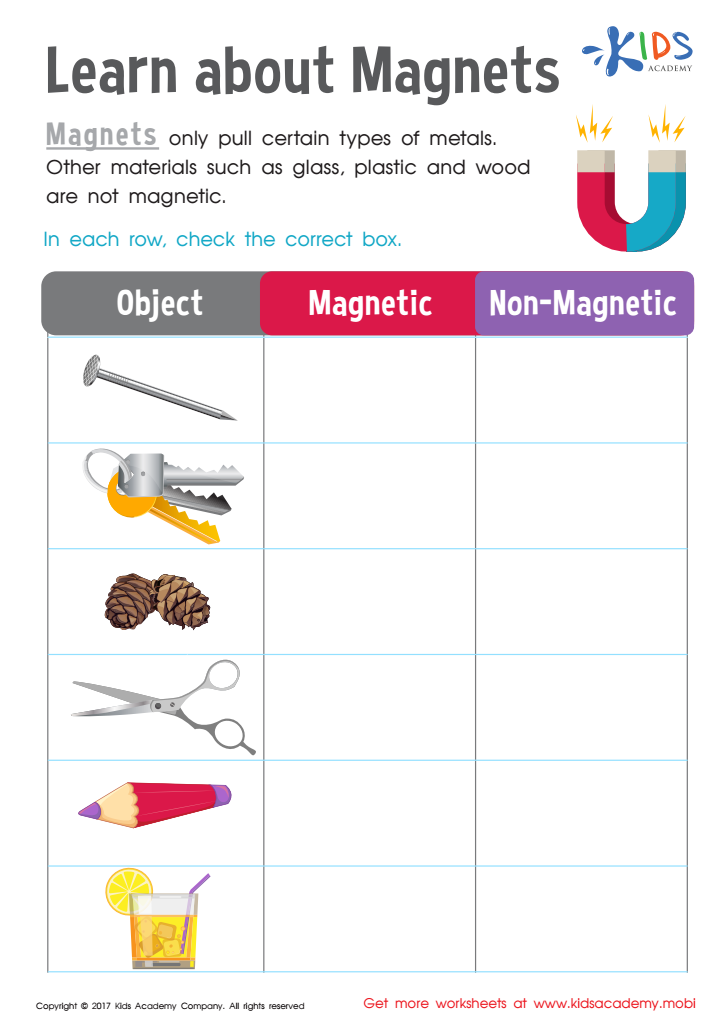
Magnetic Or Not Worksheet
 Assign to My Students
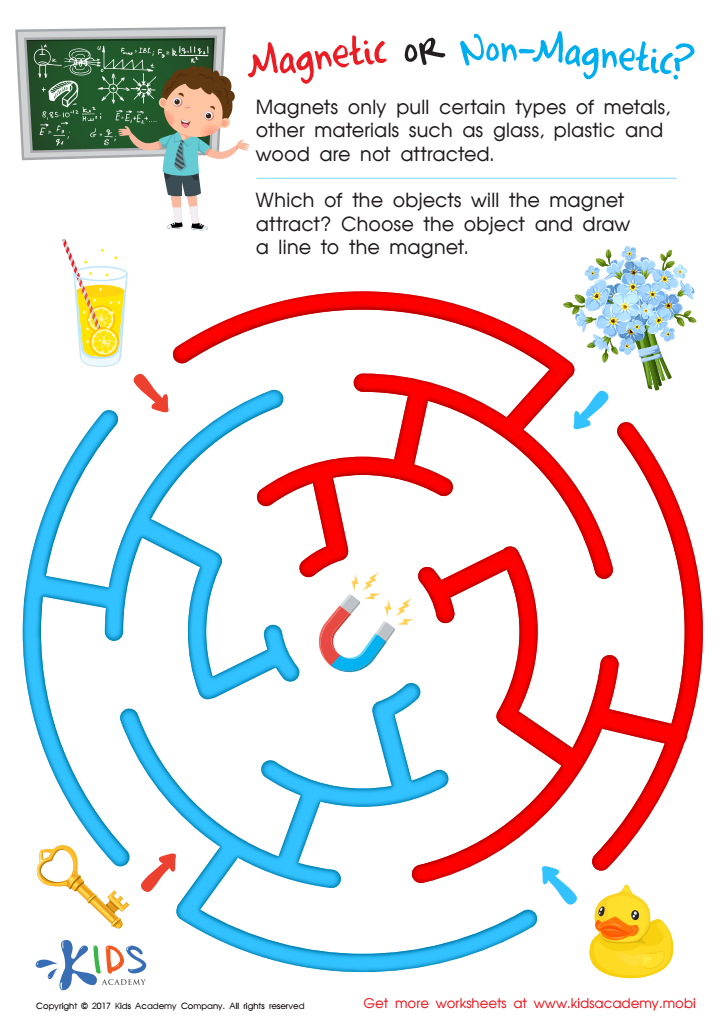
Magnetic or Non–Magnetic Worksheet
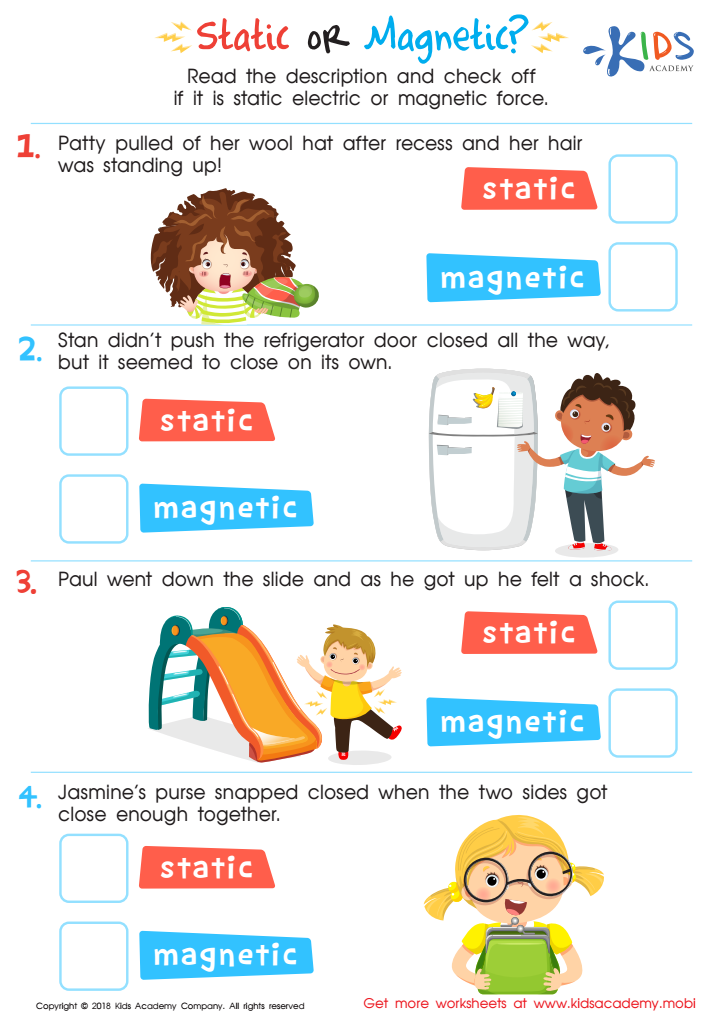
Static or Magnetic Printable Worksheet
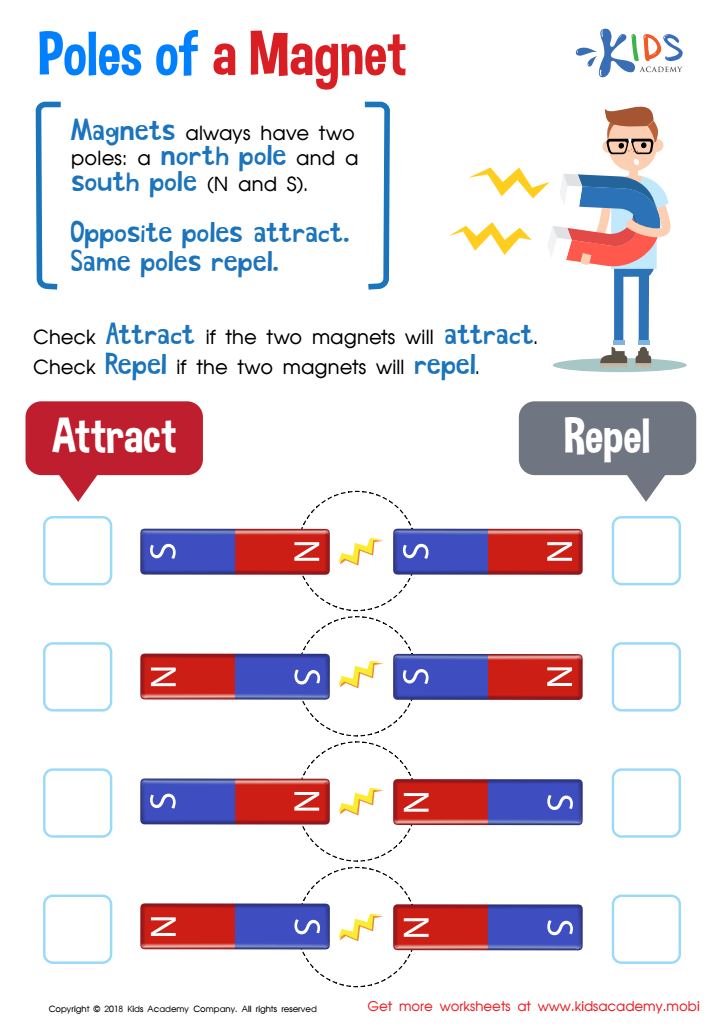
Magnet Poles Attract or Repel Worksheet





Understanding magnetism is crucial for children ages 3-8 as it lays the foundation for scientific literacy and critical thinking. At this age, children are naturally curious, and engaging them in simple concepts of magnetism can ignite their interest in science. Interactive activities, such as using magnets to explore attraction and repulsion, help develop their observational skills and encourage hands-on learning.
Learning about magnetism promotes cognitive development by introducing concepts of cause and effect. When children experiment with magnets, they learn to hypothesize results, conduct tests, and analyze outcomes, fostering early scientific reasoning.
Moreover, grasping fundamentals of magnetism can enhance problem-solving skills. Understanding how magnets work can have practical applications in everyday life, from technological devices to transportation systems. This knowledge encourages children to think innovatively about how magnetic forces influence the world around them.
Additionally, integrating science concepts such as magnetism can facilitate interdisciplinary learning. It can be applied in art (magnetic designs), math (measuring distances), and language (describing experiments). For parents and teachers, nurturing this curiosity through engaging learning experiences can foster a love of science, preparing young learners for more complex topics in the future.







