
Enhancing observational skills Physical Science Worksheets for Ages 3-8
5 filtered results
Difficulty Level
Grade
Age
-
From - To
Subject
Activity
Standards
Enhance your child's observational skills with our Physical Science Worksheets designed for ages 3-8. At Kids Academy, we offer engaging, age-appropriate activities that nurture curiosity and sharpen analytical abilities. These printable worksheets incorporate captivating exercises, vibrant visuals, and fun experiments, guiding young learners to notice details and make keen observations. Perfect for at-home learning or classroom use, our resources support essential early science education. Boost your child's critical thinking and love for discovery today with Kids Academy’s expertly crafted Physical Science materials. Download now and embark on an exciting journey of exploration!
Favorites
With answer key
Interactive
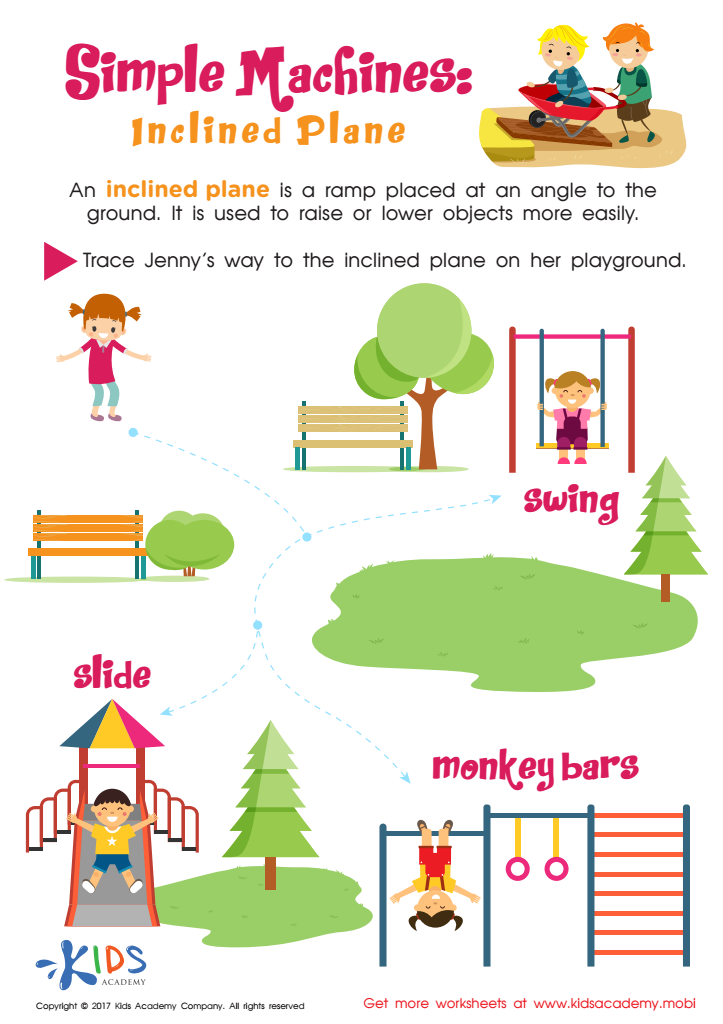
Simple Machines Inclined Plane Worksheet
This fun worksheet will help them increase their science skills while they have fun.
 Assign to My Students
Simple Machines Inclined Plane Worksheet
Worksheet
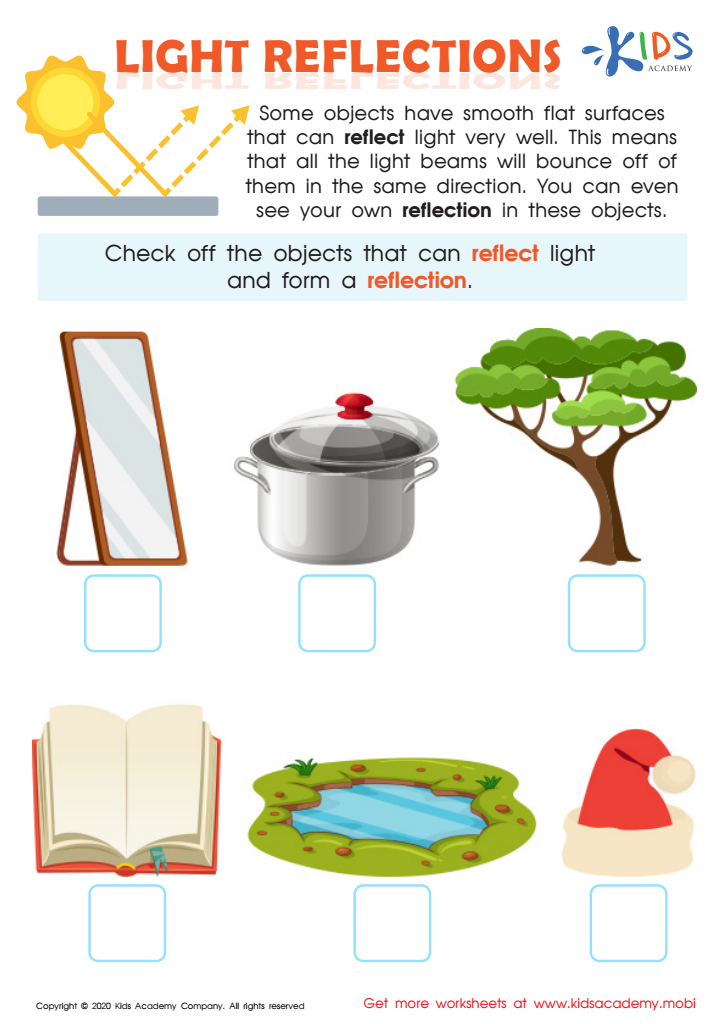
Light Reflections Worksheet
Teach your students that some objects reflect light and form a reflection. Ask them to name examples, then look at pictures and check off which objects can do this. Have them note how the light bounces off these surfaces, and observe their own reflections.
Light Reflections Worksheet
Worksheet
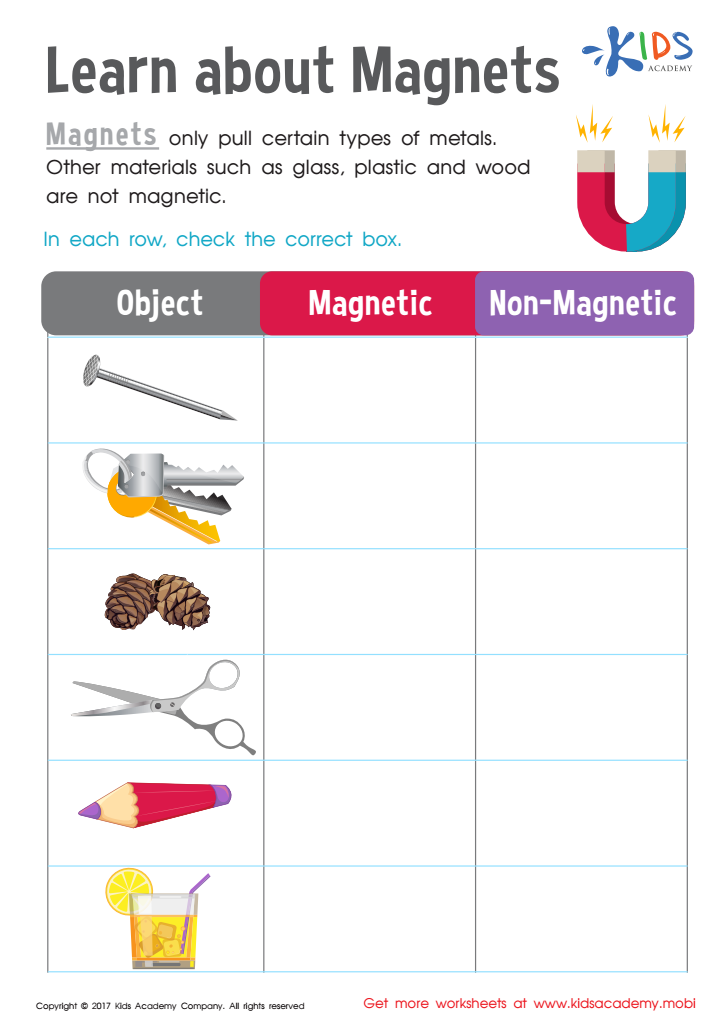
Magnetic Or Not Worksheet
Kids will love discovering the magical power of magnetism with this fun worksheet.
Uncover the magic of magnetism with this fun worksheet! Kids will love identifying objects that are magnetic and those that are not. Objects made of metal and those that aren't can be identified, helping your child to gain valuable practice and explore the mysterious power of magnetism!
Magnetic Or Not Worksheet
Worksheet
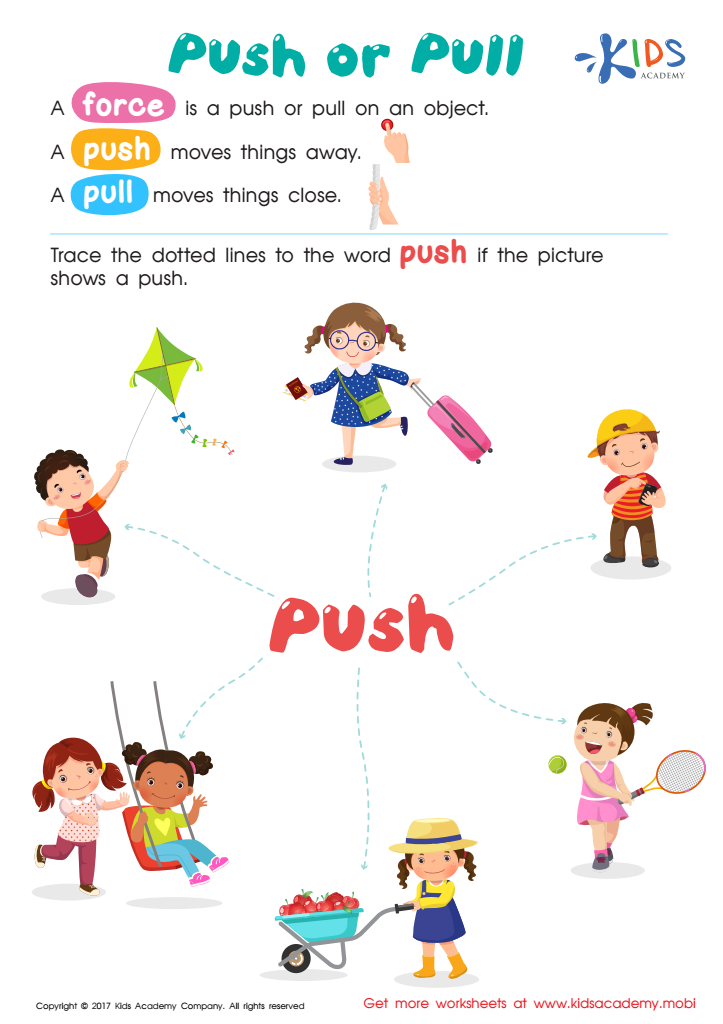
Push or Pull Worksheet
and which involve pulling! With this fun worksheet, your child will learn about force and its simple application in everyday activities. Get them started with Push or Pull! (80 words)
Push or Pull Worksheet
Worksheet
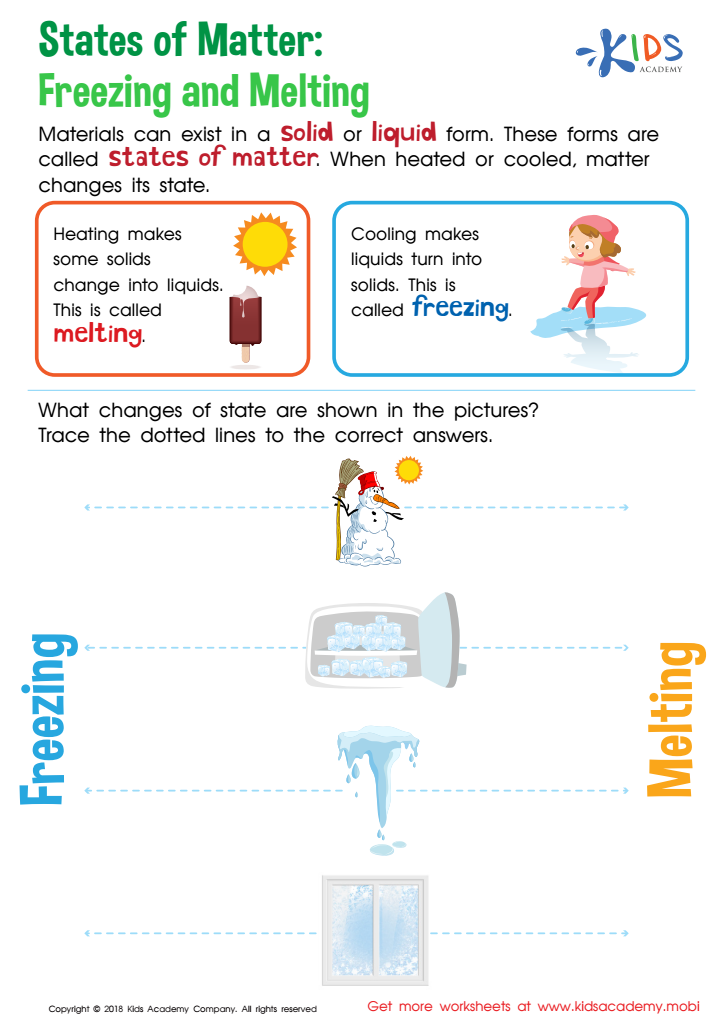
States of Matter: Freezing and Melting Worksheet
Have students look through the pics in the worksheet. Ask them what changes of state are shown, then trace the lines to the right answers. Matter can come in liquid or solid form, and changes between the two when heated or cooled (melting/freezing).
States of Matter: Freezing and Melting Worksheet
Worksheet
Join Kids Academy for Free
Who is primarily going to use this learning content?








Enhancing observational skills in physical science for children ages 3–8 is crucial for a multitude of reasons. At this early developmental stage, children's brains are incredibly malleable and receptive to new information. Cultivating strong observational skills lays a foundational drive for scientific curiosity and critical thinking. Observational skills involve noticing details, identifying patterns, and comparing similarities and differences in their environment—all essential aspects of scientific inquiry.
Parents and teachers who focus on refining these skills can support children in becoming more aware of their surroundings, better problem solvers, and more adept in asking insightful questions. Moreover, these skills are transferable; children who excel in observation tend to be more competent in other areas of learning, such as reading comprehension and math, as they learn to pay attention to detail and draw conclusions based on their observations.
Furthermore, physical science concepts like simple forces, states of matter, and properties of materials become much more accessible when children actively engage in observing real-world phenomena. Beyond academics, nurturing these skills also boosts confidence as kids feel more capable of understanding their world. Therefore, engaging young children in observational activities fosters not just immediate educational benefits but also a lifelong appreciation for science and learning.







