Problem-Solving Skills Physical Science Worksheets for Ages 3-8
4 filtered results
-
From - To
Discover engaging Problem-Solving Skills Physical Science Worksheets designed for ages 3-8 at Kids Academy! Our expertly-crafted worksheets captivate young learners' curiosity while building critical problem-solving abilities. These activities emphasize hands-on learning experiences in scientific concepts such as forces, motion, and energy. With colorful illustrations and age-appropriate challenges, children develop logical thinking, creativity, and analytical skills. Perfect for both classroom and home use, our worksheets help lay a strong foundation for future STEM success. Explore our collection today to inspire the next generation of problem solvers through fun and educational physical science adventures!
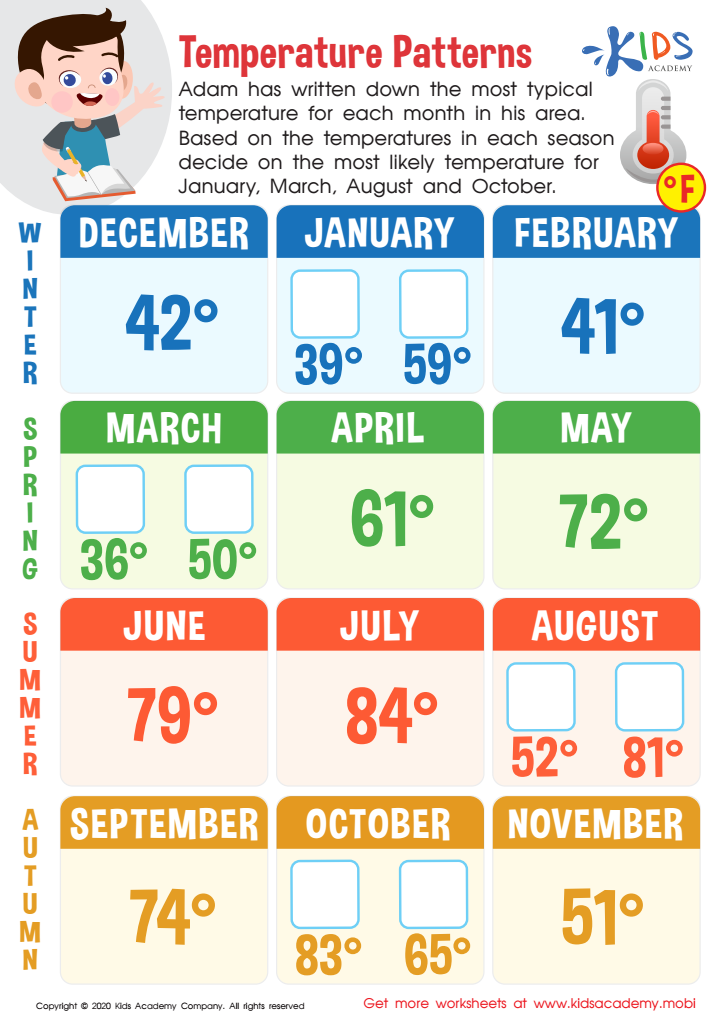
Temperature Patterns Worksheet
 Assign to My Students
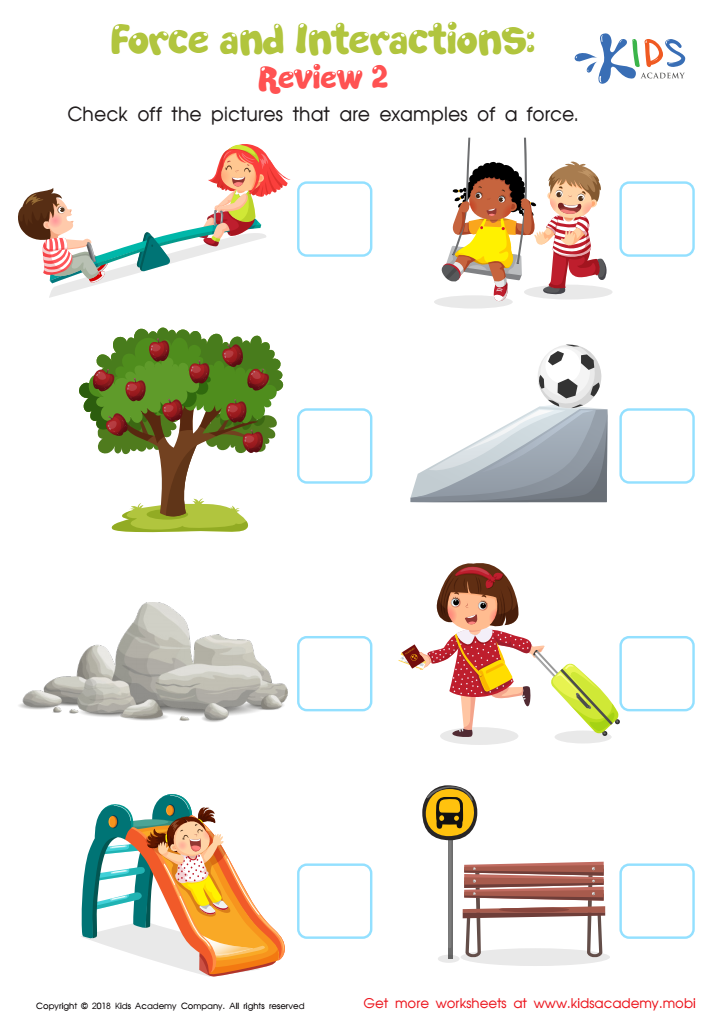
Force and Interactions: Review 2 Worksheet
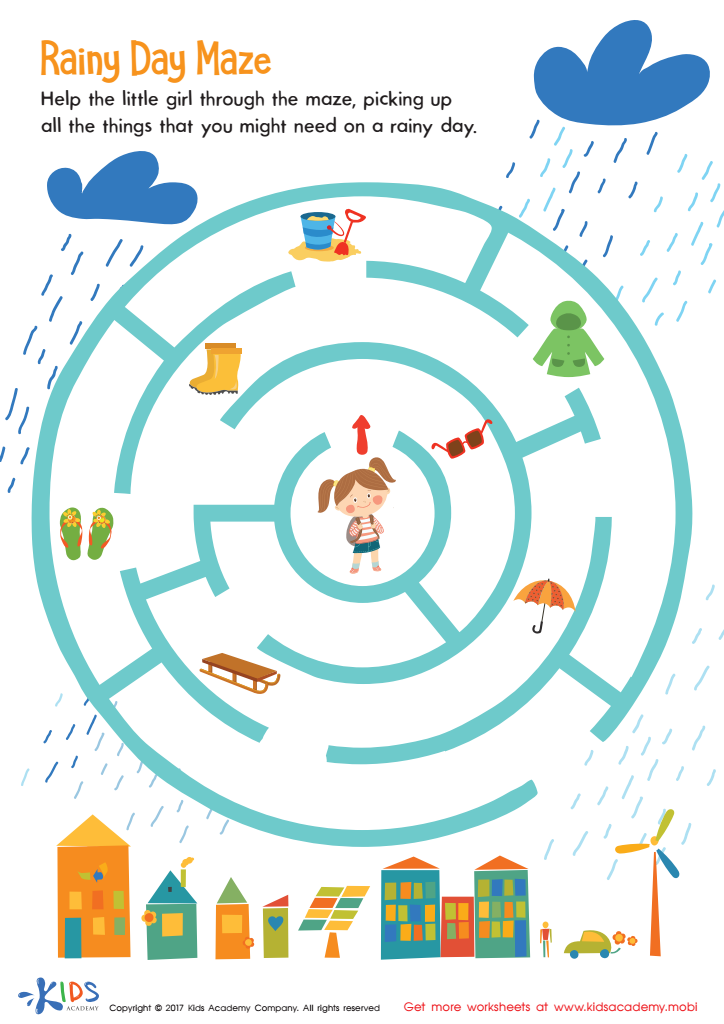
Rainy Day Maze Worksheet
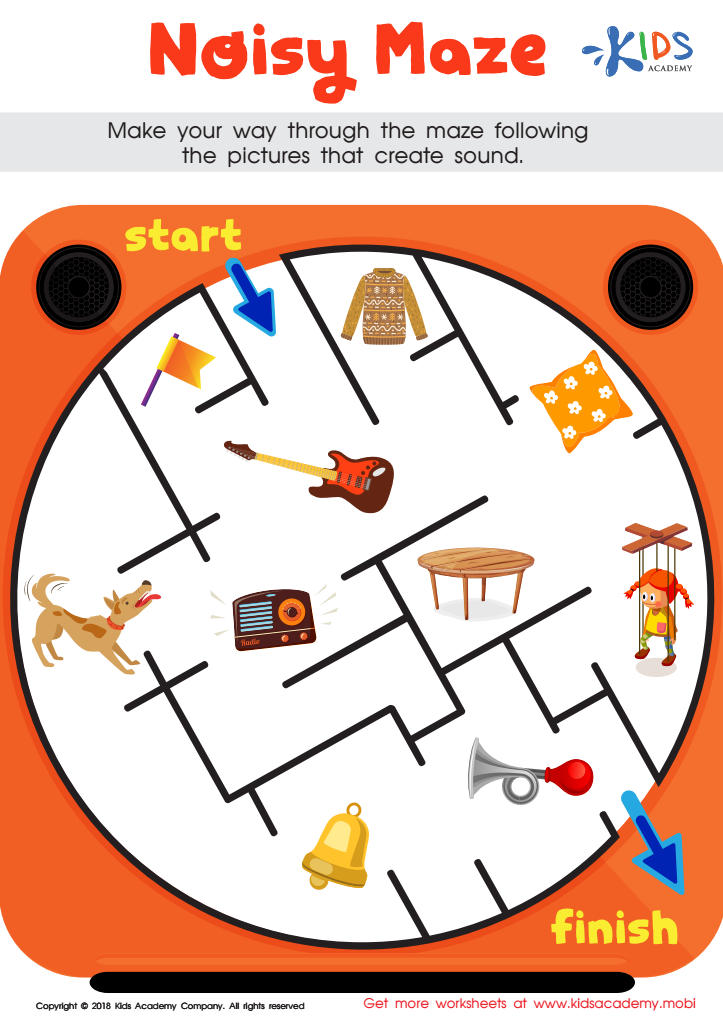
Noisy Maze Worksheet



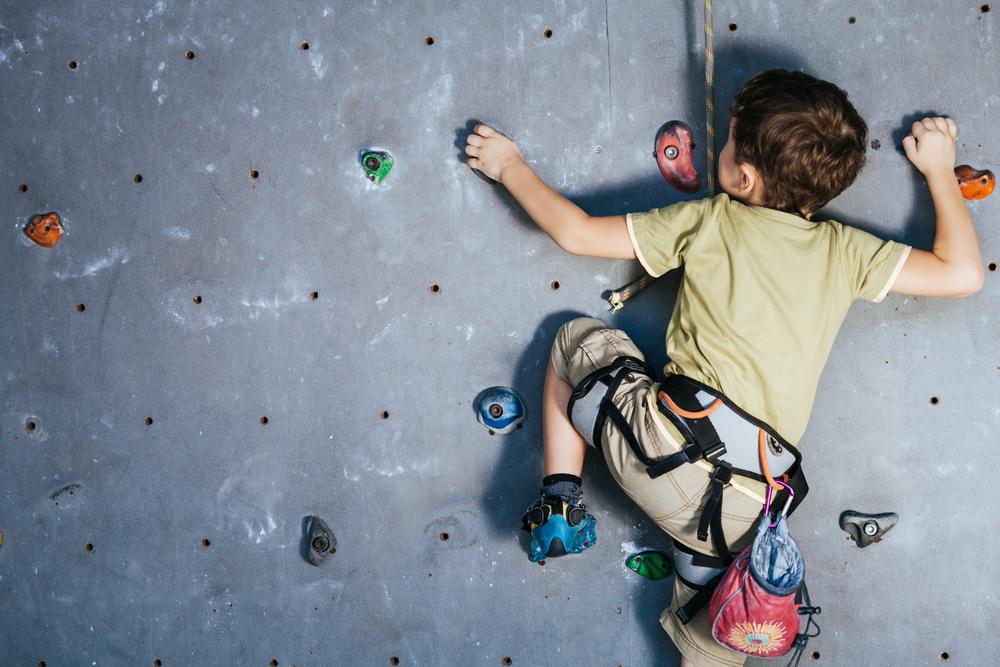

Parents and teachers should recognize the importance of developing problem-solving skills within physical science for children ages 3-8, as these early years are critical for cognitive development. Engaging in problem-solving activities enhances children's critical thinking and ability to understand the world around them. For instance, when children play with building blocks or experiment with simple tools, they learn about balance, gravity, and cause-and-effect relationships in a hands-on way, fostering both their curiosity and analytical skills.
Equipping children with these foundational skills in a subject as fundamental as physical science also promotes persistence and resilience. Problem-solving requires children to try multiple approaches and learn from their failures, which builds perseverance and adaptability—traits that are essential for success in all walks of life.
Moreover, introducing physical science concepts early on prepares children for more complex scientific and mathematical learning in later years. Early experiences with problem-solving can lead to greater interest and proficiencies in STEM fields, which are increasingly vital in the modern world.
By nurturing problem-solving skills in physical science from a young age, parents and teachers do not just teach science; they lay the groundwork for lifelong learning and the ability to tackle complex problems, thereby fostering the growth of well-rounded, capable individuals.







