Spatial awareness Physical Science Worksheets for Ages 3-8
4 filtered results
-
From - To
Enhance your child’s cognitive development with our Spatial Awareness Physical Science Worksheets for ages 3-8. Specifically designed to build essential learning skills, these engaging printables help young learners understand concepts of position, distance, and direction. Tailored to foster problem-solving abilities and critical thinking, our worksheets support early education while making learning fun and interactive. Perfect for home or classroom use, they combine vibrant visuals and cutting-edge educational strategies to aid in developing spatial intelligence. Empower your child with the tools they need for future academic success. Explore our comprehensive collection today!
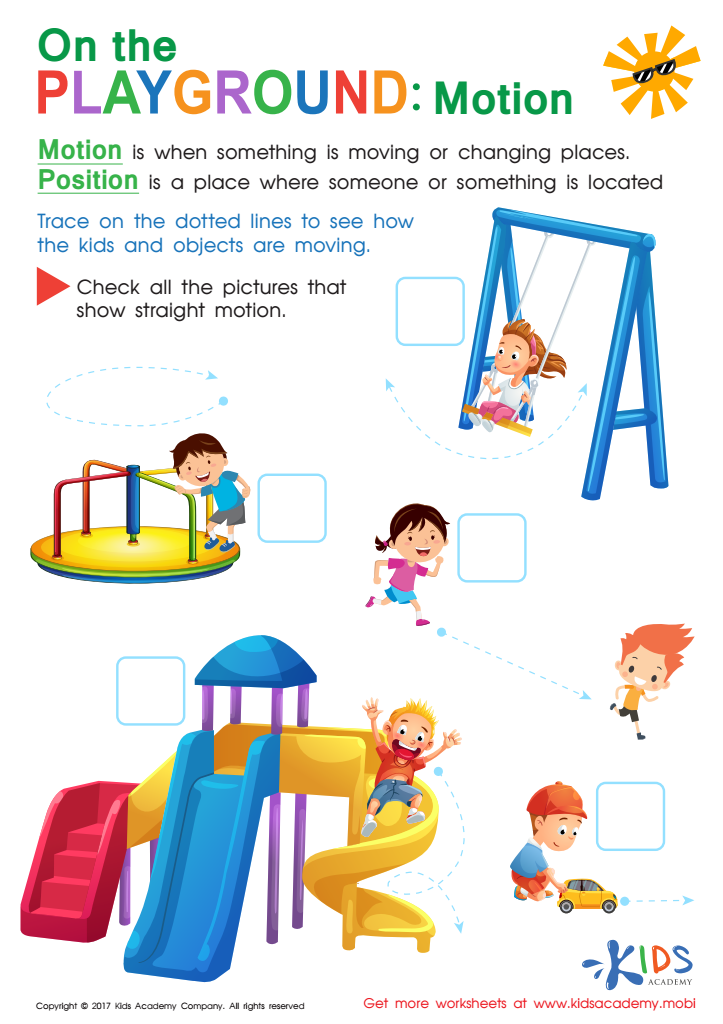
Position and Motion Worksheet
 Assign to My Students
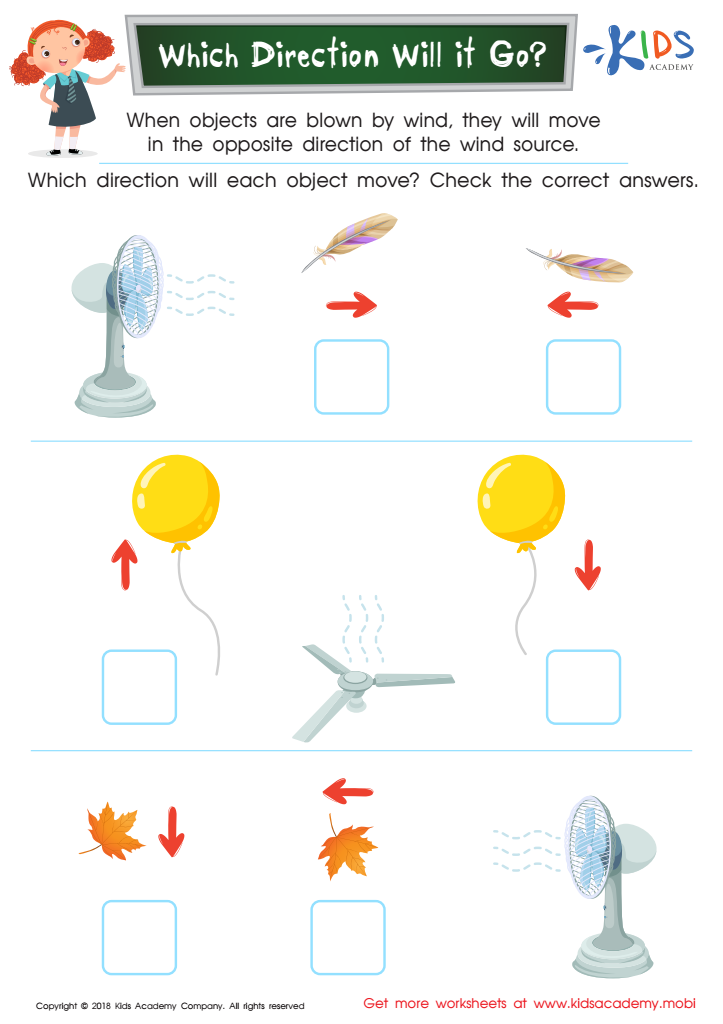
Which Direction Will it Go? Worksheet
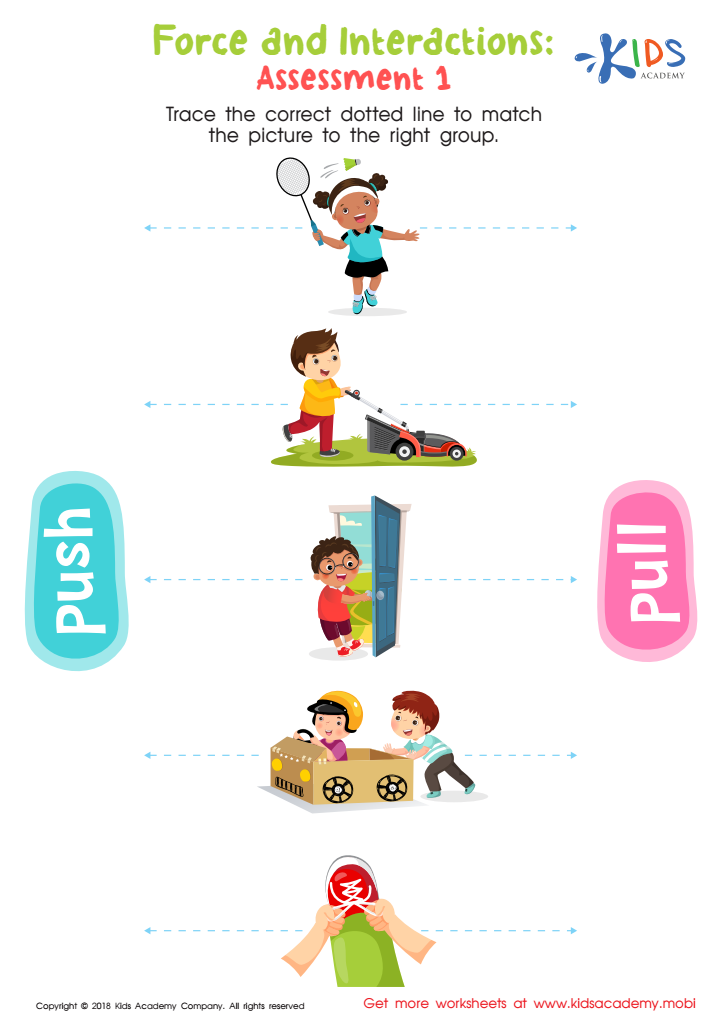
Force and Interactions: Assessment 2 Worksheet
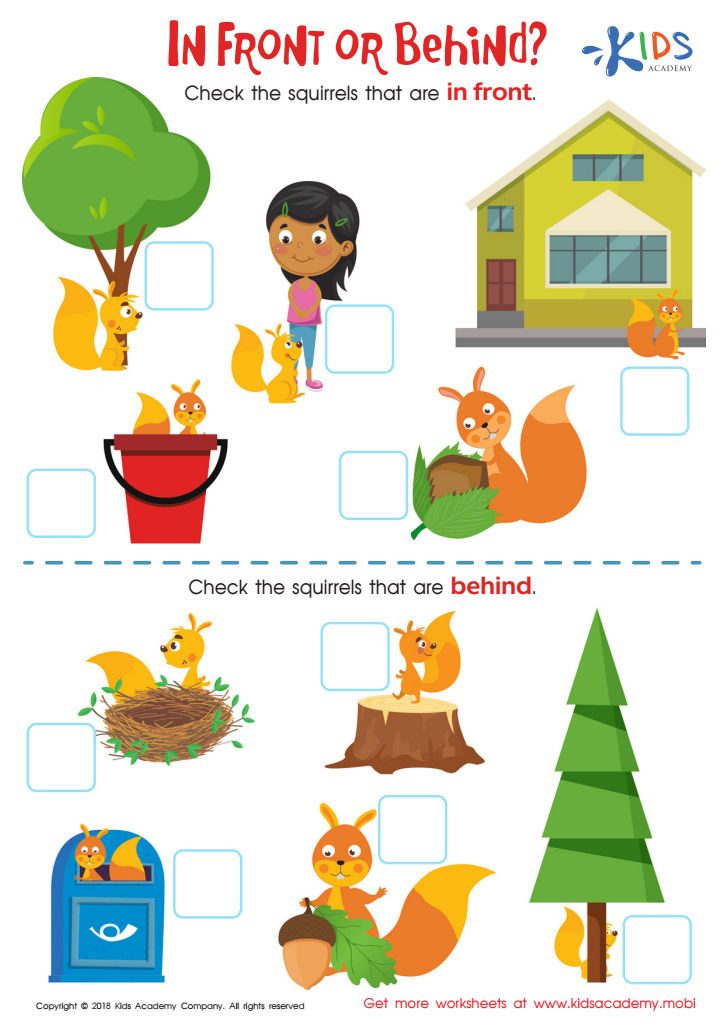
In Front or Behind: Part 2 Worksheet







Spatial awareness is a crucial foundational skill for young children, and it significantly influences their overall physical and cognitive development. For ages 3-8, understanding spatial relationships—how objects and people occupy space and interact—plays an essential role in various everyday activities and academic learning.
Firstly, spatial awareness directly affects coordination and motor skills. Children with good spatial awareness can better navigate their environment, enabling them to participate in physical activities like running, climbing, and playing sports safely and competently. This development promotes physical fitness and confidence.
Moreover, spatial skills are closely linked to academic achievements, particularly in mathematics and science. Early experiences with spatial concepts such as shape, size, distance, and position form the bedrock of mathematical thinking. This includes the ability to understand geometry, measure quantities, and recognize patterns—skills critical for problem-solving in later years.
Additionally, spatial awareness aids in daily tasks and social interactions. Simple activities like walking in a crowded space, drawing, assembling puzzles, and organizing personal belongings require an understanding of spatial positioning and relationships.
Finally, nurturing these skills supports cognitive abilities, fostering important attributes like attention to detail and spatial memory. By supporting spatial awareness development through play, hands-on activities, and exploration, parents and teachers help children build a strong foundation for future learning and holistic growth.







