Color Identification Community Worksheets for Ages 3-8
3 filtered results
-
From - To
Discover our Color Identification Community Worksheets, designed specifically for children ages 3-8! These engaging and interactive printables are perfect for young learners exploring the vibrant world around them. Through fun activities, your little ones will develop essential color recognition skills while learning about their community and environment. Each worksheet blends creativity and education, making it easy for parents and educators to instill foundational concepts in a playful manner. Enhance your child’s learning experience with our colorful resources that encourage exploration and joy. Join our community today and watch your child’s confidence soar as they identify and interact with colors all around them!
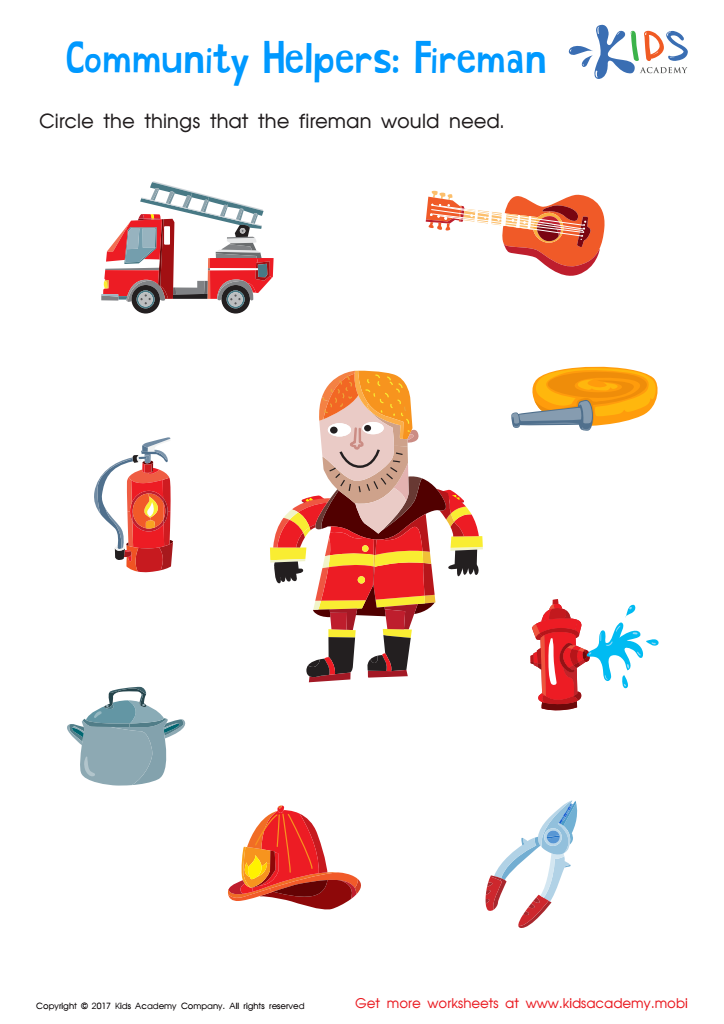
Fireman Worksheet
 Assign to My Students
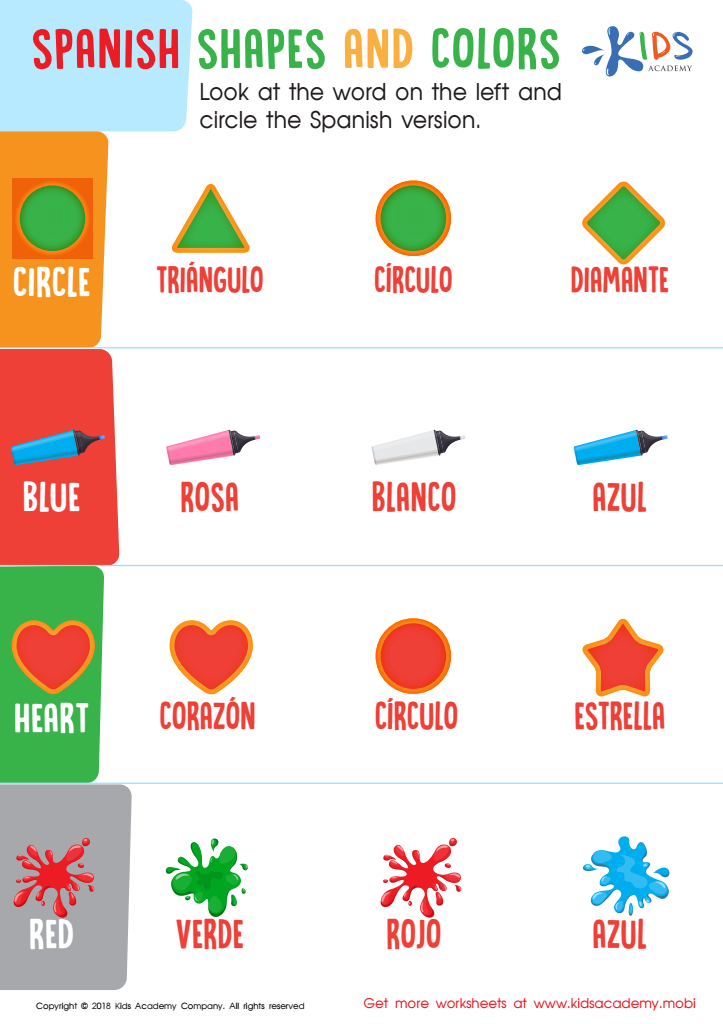
Spanish Shapes and Colors Worksheet
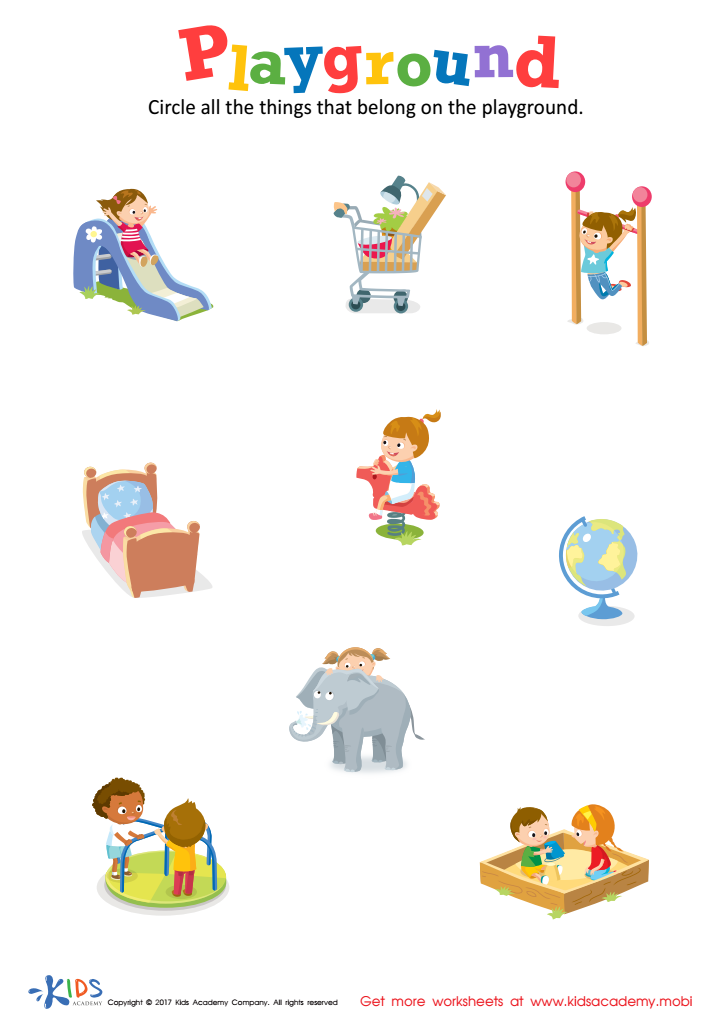
Playground Worksheet







Color identification is a fundamental skill for young children, playing a crucial role in their cognitive, emotional, and social development. Parents and teachers of children aged 3-8 should prioritize color identification because it directly impacts various areas of learning. Firstly, it enhances language development; children learn to articulate color names, which supports vocabulary expansion. Secondly, understanding colors is essential for early math skills, as it helps children grasp concepts like sorting, categorization, and patterns.
Moreover, color identification fosters creativity and self-expression. Engaging with colors through art and play is vital for developing imaginative thinking. It also aids in emotional development; colors often evoke feelings and associations, helping children articulate their emotions and understand those of others.
Furthermore, being part of a Color Identification Community encourages social interaction among children. It provides opportunities for cooperative play, discussion, and exploration, promoting team-building skills. For parents, actively participating in community activities related to color identification can strengthen their bond with their children and support a collaborative learning environment.
In conclusion, emphasizing color identification equips children with essential skills for various aspects of their lives, making it an important focus for both parents and educators in early childhood development.








