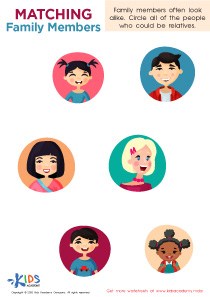
Understanding patterns History Worksheets for Ages 3-8
3 filtered results
Difficulty Level
Grade
Age
-
From - To
Subject
Activity
Standards
Discover the joy of learning with our "Understanding Patterns History Worksheets" designed for children aged 3-8! These engaging worksheets introduce young learners to the concept of patterns in history, fostering critical thinking and analytical skills. Through colorful illustrations and interactive activities, children will explore significant historical themes, recognize sequences, and enhance their comprehension of the world around them. Ideal for home or classroom use, our worksheets can be seamlessly integrated into your educational routine, making learning fun and effective. Equip your students with foundational skills in history and pattern recognition today! Download our worksheets and inspire the next generation of thinkers.
Favorites
With answer key
Interactive
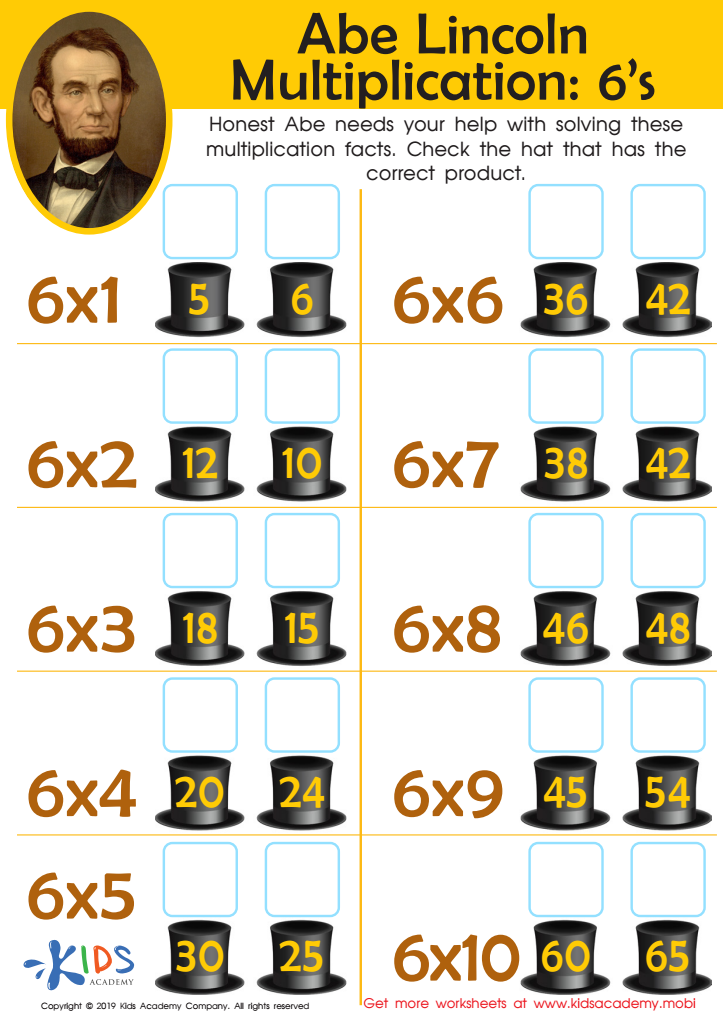
Abe Lincoln Multiplication: 6’s Worksheet
Abraham Lincoln is a key figure in US history. Remind your kids of his contributions and challenge them with this multiplication worksheet! Ask them to solve the facts in the picture and check the hat with the correct product.
 Assign to My Students
Abe Lincoln Multiplication: 6’s Worksheet
Worksheet
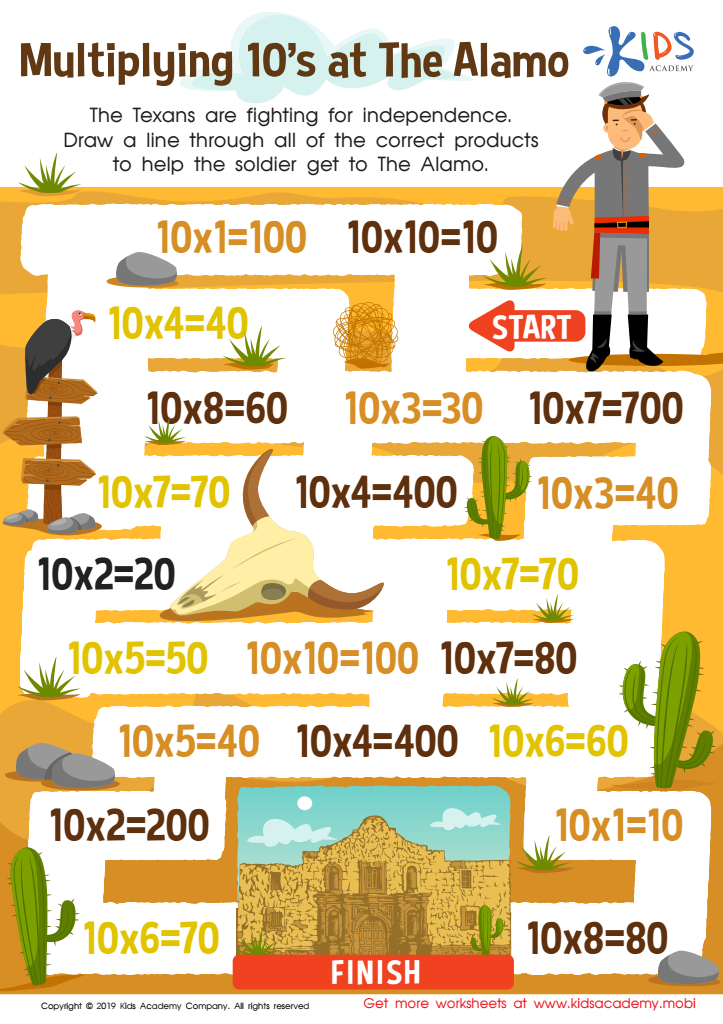
Multiplying 10’s at The Alamo Worksheet
Teach your kids easy tricks to simplify any multiplication problem. For example, when multiplying any number by 10, the result will always end in a zero. To help the Texans in this worksheet, draw a line through all of the correct products to get them to The Alamo.
Multiplying 10’s at The Alamo Worksheet
Worksheet
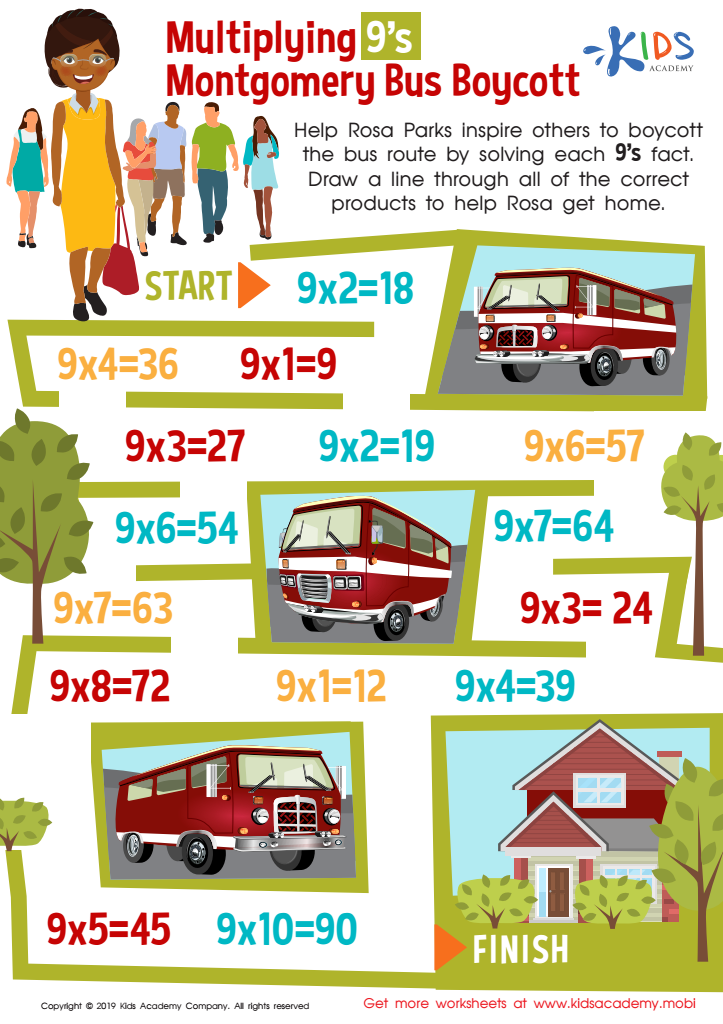
Multiplying 9’s Montgomery Bus Boycott Worksheet
As your students learn math, the numbers get bigger. This worksheet is great for learning the nine times table. Help Rosa Park get home - ask them to solve each multiplication fact, then draw a line through the correct products. Encourage your students to stand up for what's right!
Multiplying 9’s Montgomery Bus Boycott Worksheet
Worksheet
Join Kids Academy for Free
Who is primarily going to use this learning content?





.jpg)


Understanding patterns in history is crucial for children ages 3-8 as it lays the foundation for critical thinking and cognitive development. At this early stage, children are naturally curious and begin to notice relationships and sequences in the world around them. Teaching them to recognize historical patterns, such as the cycles of change and continuity in society, helps them develop analytical skills that are essential for problem-solving later in life.
For parents and teachers, fostering an understanding of historical patterns cultivates children's ability to make connections between past and present, encouraging them to see how history informs their own lives. It facilitates discussions about cultural heritage and the importance of traditions, enriching their emotional intelligence and sense of identity.
Moreover, children learn to predict outcomes and understand cause-and-effect relationships through pattern recognition, which enhances their literacy and numeracy skills. By engaging with history through stories and activities, parents and teachers can make learning enjoyable, nurture imagination, and instill a lifelong love for learning. Ultimately, helping young children understand patterns in history prepares them to be informed, empathetic, and engaged citizens, empowering them to drive positive change in their communities.