
Shape Recognition Social Studies Worksheets for Ages 3-8
4 filtered results
Difficulty Level
Grade
Age
-
From - To
Subject
Activity
Standards
Discover engaging "Shape Recognition Social Studies Worksheets for Ages 3-8" on our dedicated webpage. Perfectly crafted to harmonize foundational shape recognition skills with essential social studies concepts, these worksheets captivate young learners through interactive and educational activities. Children will boost their cognitive development while exploring various shapes and their applications within community and cultural contexts. Designed by educators, each worksheet promotes hands-on learning, critical thinking, and enhances visual-spatial intelligence, ensuring a solid educational foundation. Delight your kids with creative exercises that make learning fun, accessible, and impactful, preparing them for future academic success. Visit now and spark their curiosity!
Favorites
With answer key
Interactive
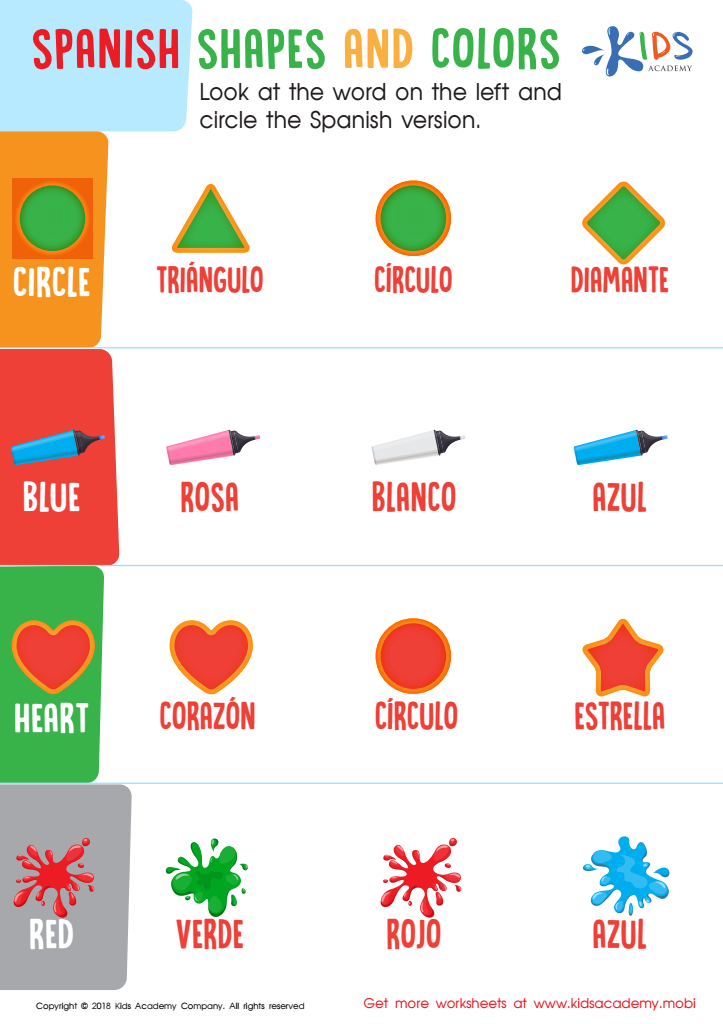
Spanish Shapes and Colors Worksheet
Encourage your children to learn another language from an early age. For example, Spanish - use a worksheet to help with the basics. Point to the English word and ask them to identify and circle the corresponding Spanish word on the right. This way, your kids will grow up with familiarity of the language.
 Assign to My Students
Spanish Shapes and Colors Worksheet
Worksheet
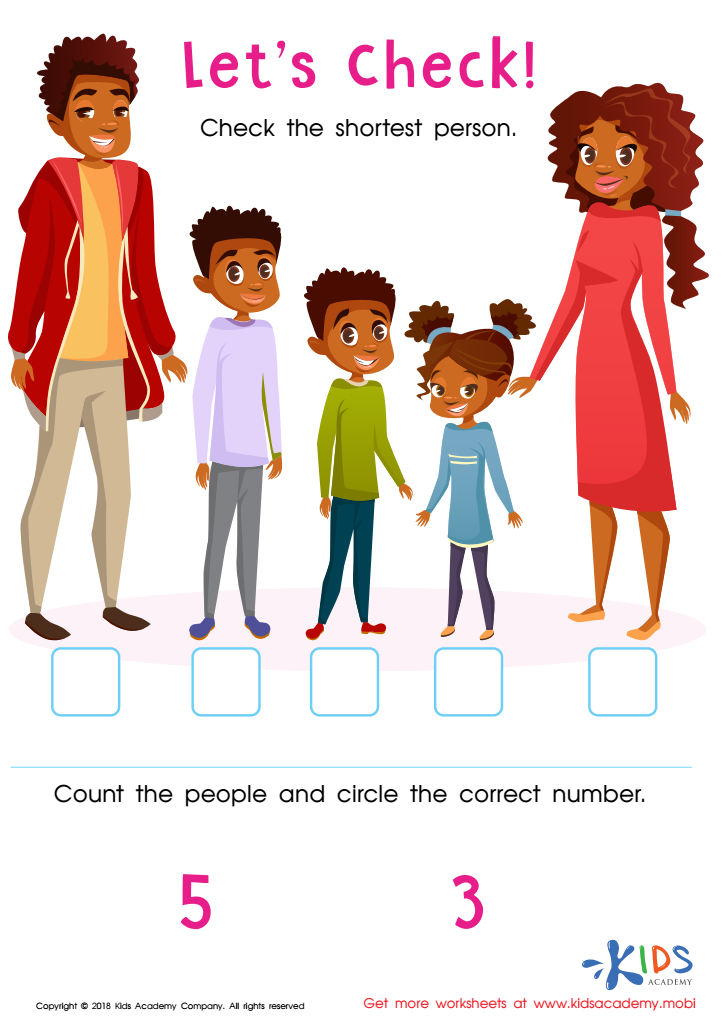
Let's Check! Assessment Worksheet
Check your child's understanding of height with this worksheet. Ask them to sort the objects in order of size and identify the tallest and shortest member of the family in the picture. See if they can correctly arrange the items from tallest to shortest.
Let's Check! Assessment Worksheet
Worksheet
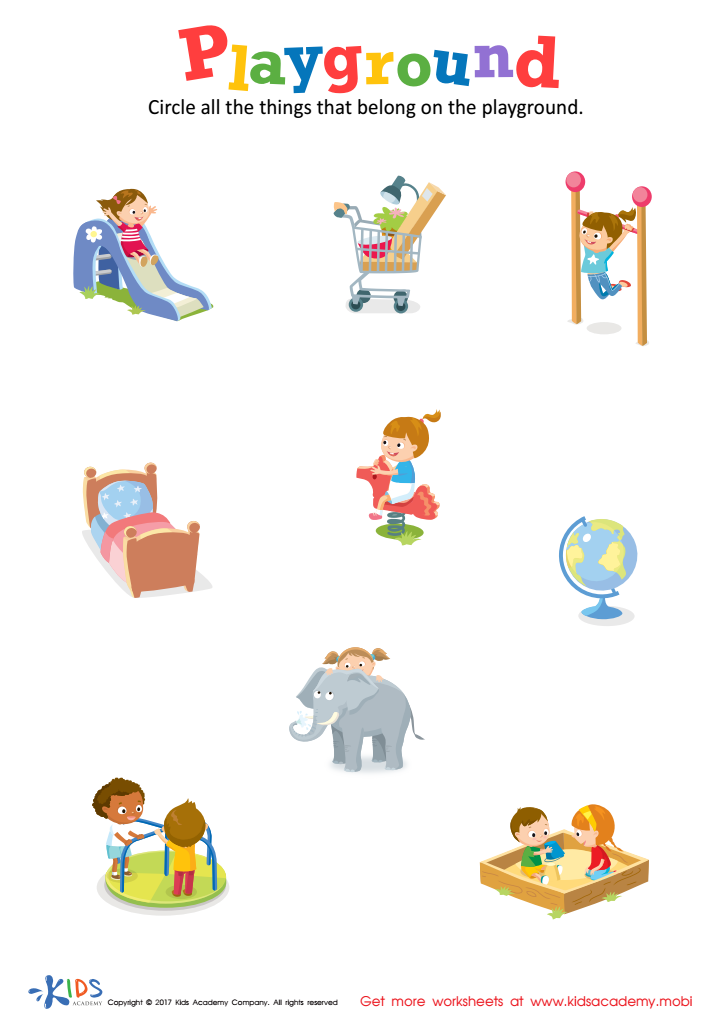
Playground Worksheet
Head to the park with this playground worksheet! It strengthens sorting and cognitive skills while encouraging problem solving. Plus, it's fun-filled and engaging! When finished, head out to the park to see what items your child finds in the playground!
Playground Worksheet
Worksheet
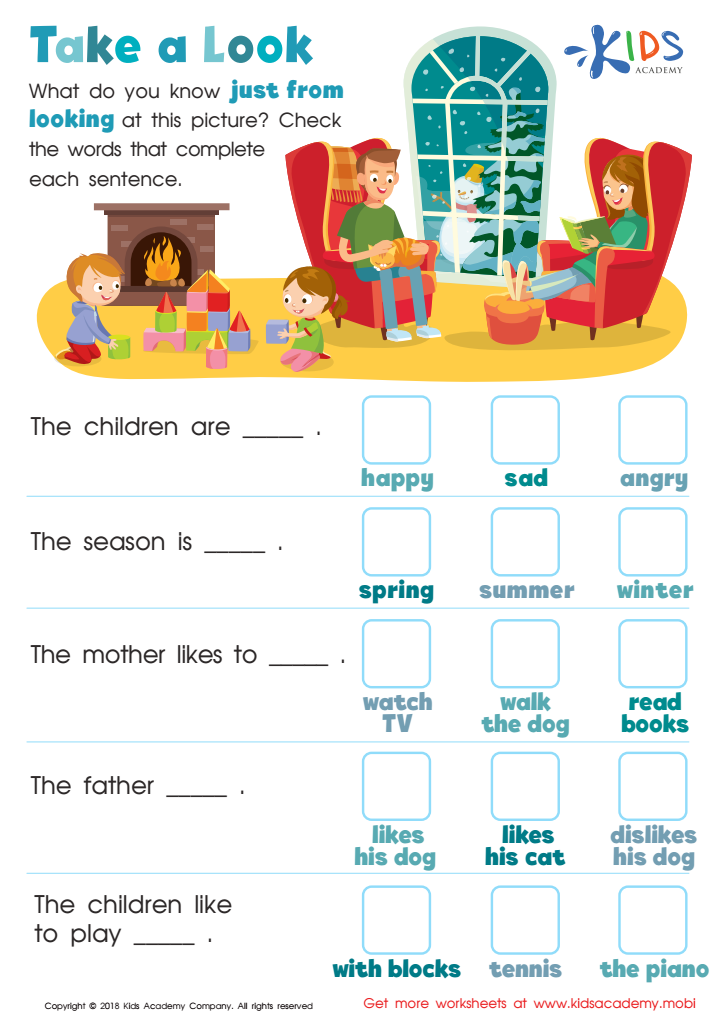
Take a Look - Part 1 Worksheet
Young learners gain understanding when using picture clues when reading. Looking at illustrations can help students learn the meaning of key vocabulary when reading fiction or informational text. Ask your students to look at the worksheet and observe what they can learn from the picture. It's a great comprehension strategy for early readers.
Take a Look - Part 1 Worksheet
Worksheet
Join Kids Academy for Free
Who is primarily going to use this learning content?








Shape recognition is a crucial early learning skill that forms a foundational block not only in mathematics but across a range of disciplines, including social studies. For children ages 3-8, the ability to identify and discern shapes enhances cognitive development and fosters spatial awareness.
In the context of social studies, shape recognition helps young learners better understand their environment. For example, recognizing the shapes and layouts of various countries, landmarks, and historical artifacts can deepen a child's grasp of geography and history. By observing and interpreting shapes in maps, buildings, and cultural symbols, children gain insights into the physical and cultural landscape of their world.
This skill also supports problem-solving and critical thinking. As children classify objects based on shape, they learn to notice patterns and make connections. For example, distinguishing between circular city layouts versus grid systems can tell a story about urban planning and cultural differences.
Moreover, integrating shape recognition into social studies activities promotes a multi-disciplinary approach that keeps learning engaging. Arts and crafts projects, interactive games, and storytelling that involve shapes encourage creativity and hands-on learning, making education a more lively and holistic experience.
In summary, prioritizing shape recognition within early education, especially in social studies, not only fortifies essential cognitive skills but also enriches a child's overall understanding of their world.








