Cursive Writing Worksheets for Ages 3-8 - Page 2
26 filtered results
-
From - To
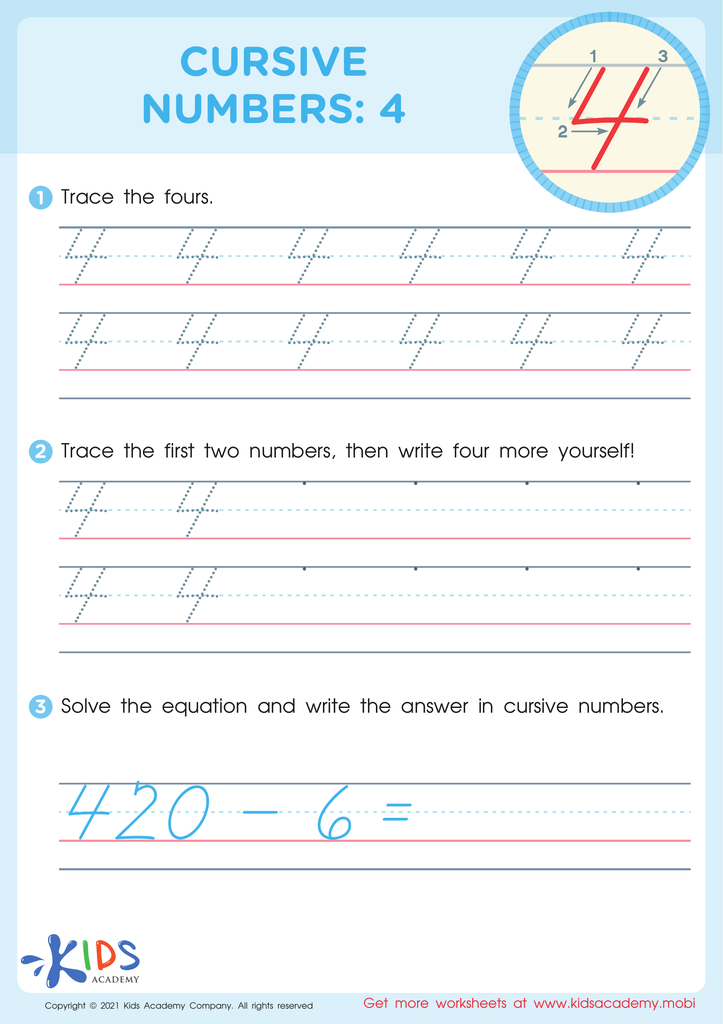
Cursive Numbers: 4 Worksheet
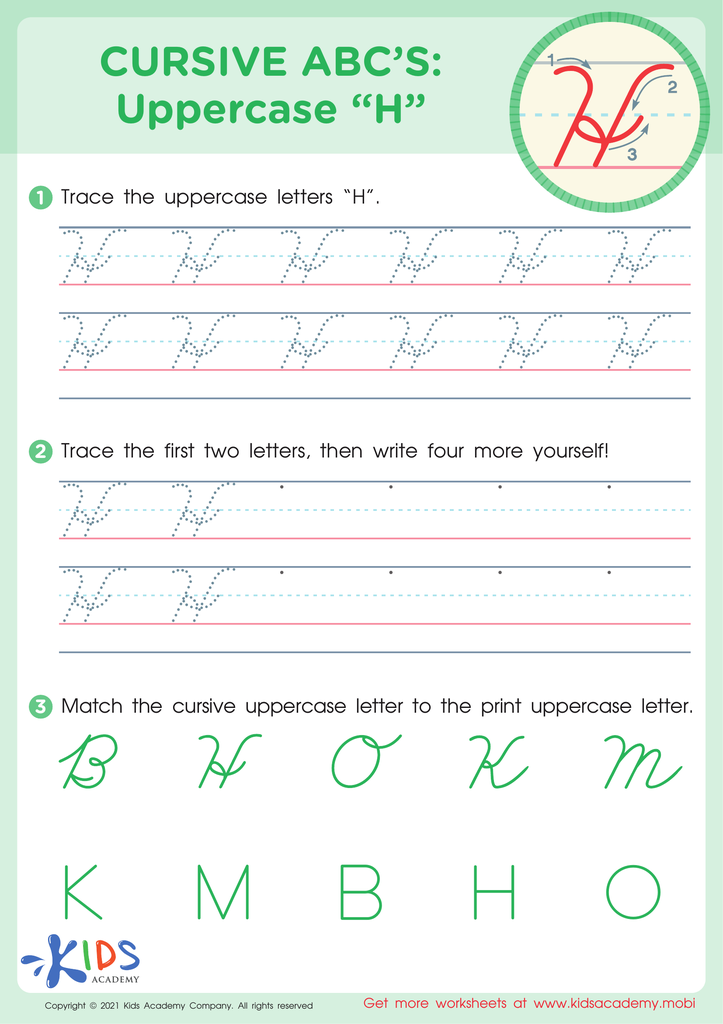
Cursive ABCs: Uppercase H






Cursive writing for children ages 3-8 can be a cornerstone of their developmental journey, garnering concern and attention from parents and teachers alike. At this young age, children’s brains are incredibly malleable and receptive to new skills, making it an optimal time for motor skill development. Engaging in cursive writing enhances fine motor abilities by requiring precise and coordinated movements. This not only aids in handwriting legibility but may also improve overall dexterity.
Furthermore, studies have shown that the act of writing in cursive can facilitate cognitive development. The fluid motion of cursive stimulates brain activities related to the understanding of language, leading to heightened reading and writing capabilities. This method encourages children to see words as a whole, rather than disconnected letters, which can boost word recognition and spelling.
On another note, the practice of cursive writing fosters a sense of accomplishment and self-discipline, qualities invaluable during formative educational years. Additionally, cursive writing can be faster and more efficient than printing, providing children with a foundational skill that could aid in note-taking and efficiency in the future.
In summary, introducing cursive writing to young children contributes substantially to their fine motor skills, cognitive growth, and self-confidence, making it a beneficial, multifaceted investment in their overall educational journey.








