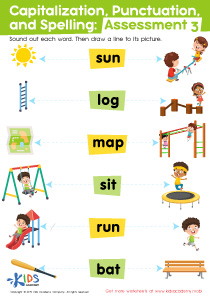
English grammar practice Grammar Worksheets for Ages 3-8
3 filtered results
-
From - To
Enhance your child's language skills with our engaging English grammar practice worksheets, designed specifically for ages 3-8. These printable resources provide a fun and interactive way for young learners to explore essential grammar concepts, including parts of speech, sentence structure, and punctuation. Each worksheet is aligned with educational standards and features vibrant illustrations to captivate children’s interest. Perfect for use at home or in the classroom, our worksheets encourage independent learning and help build foundational grammar skills. Foster a lifelong love for language and set your child on the path to writing success with our user-friendly printable resources today!
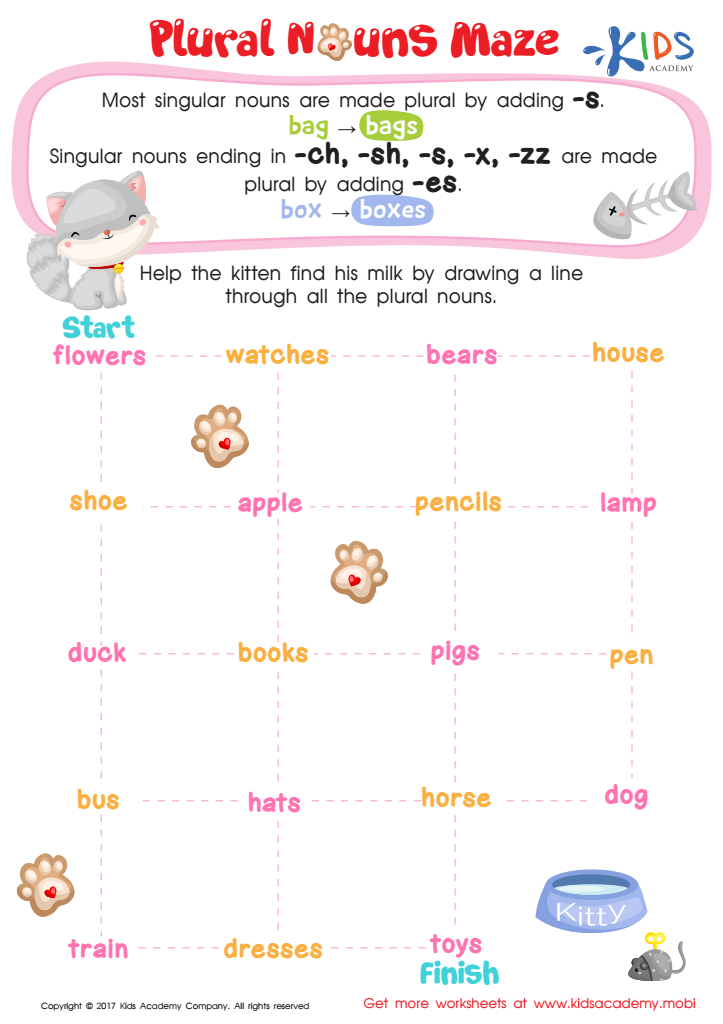
Plural Nouns Maze Worksheet
 Assign to My Students
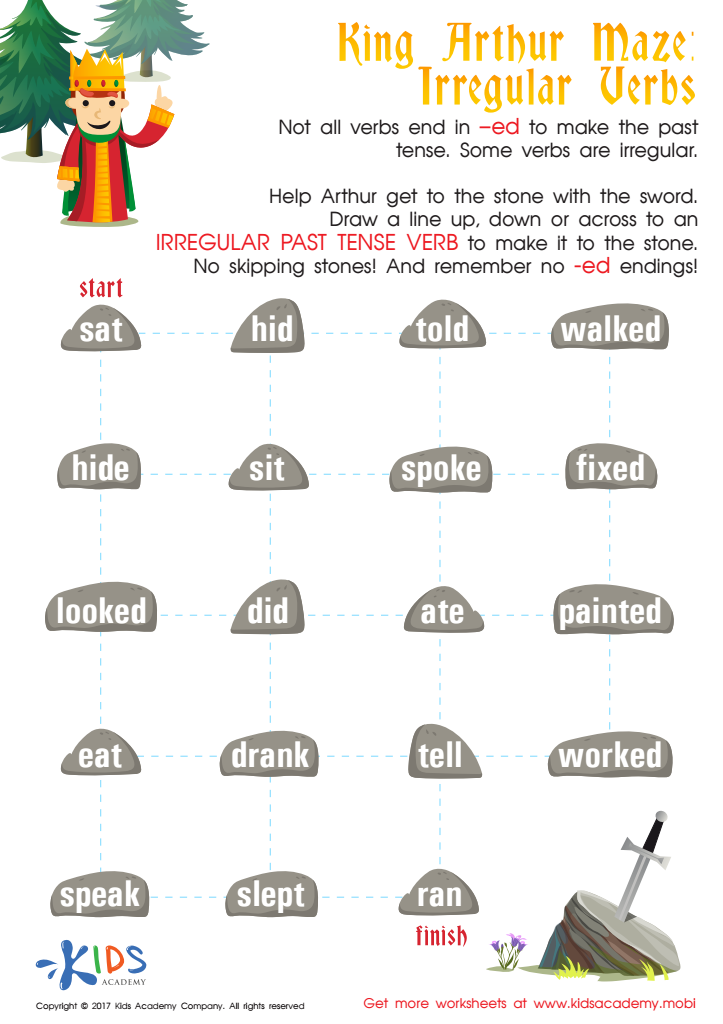
Irregular Verbs: Stones Worksheet
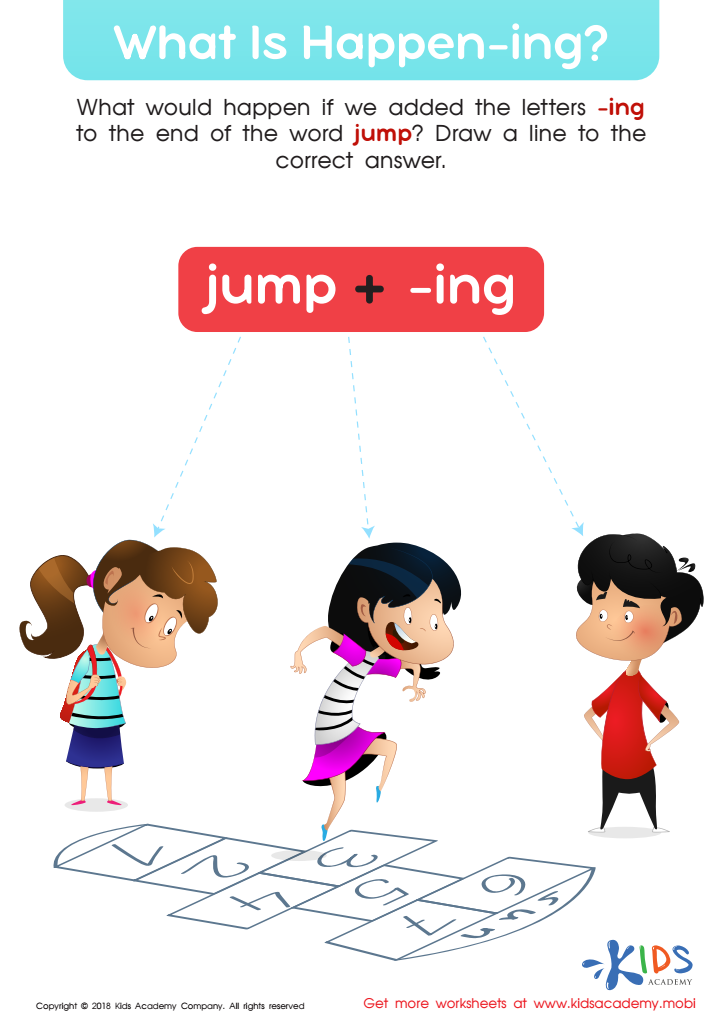
What Is Happen-Ing? Worksheet


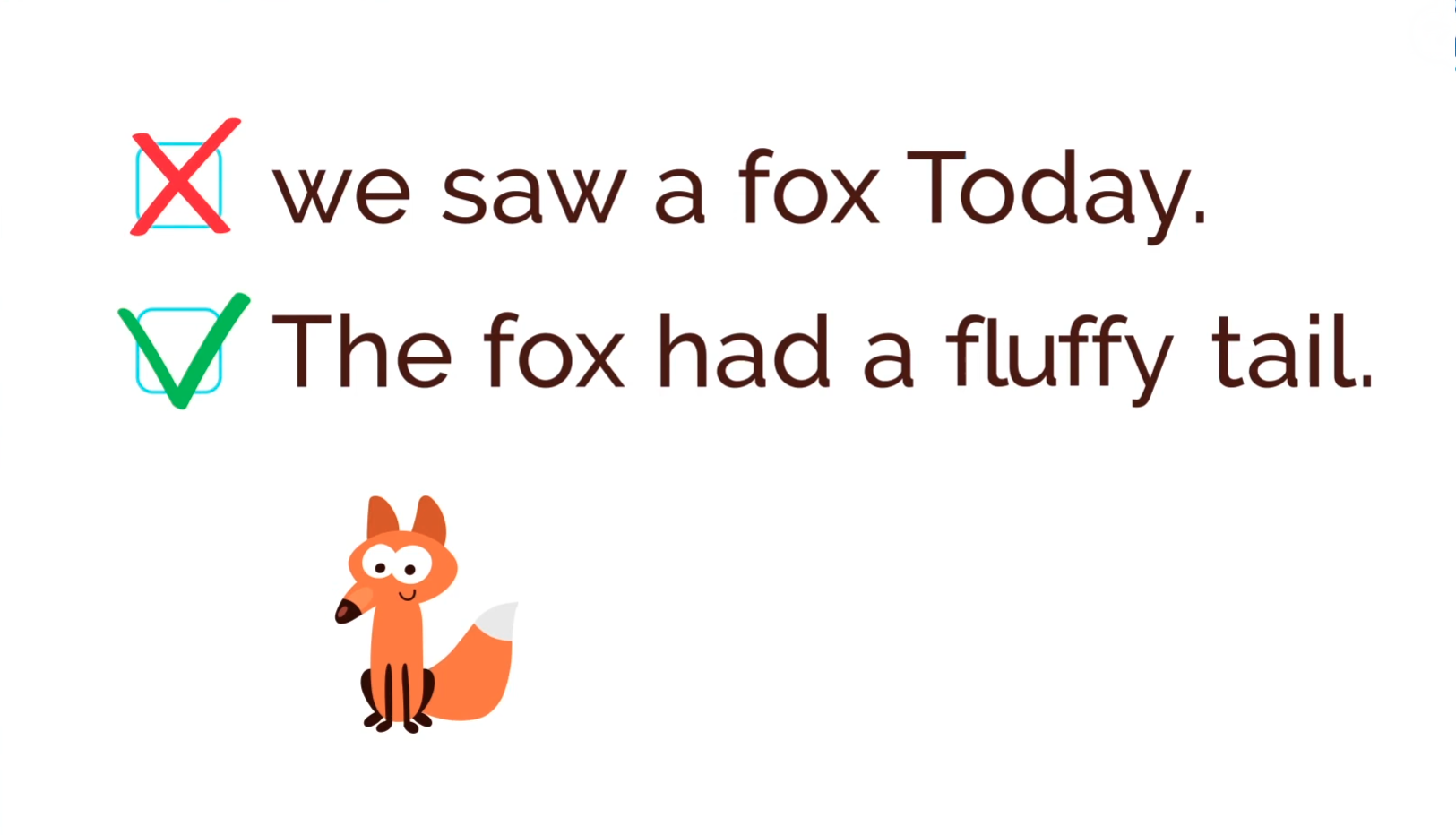





Understanding English grammar is crucial for children aged 3-8 as it lays the foundation for strong language skills. At this stage, children are developing basic communication abilities, and a strong grasp of grammar helps facilitate their expression and understanding. Parents and teachers should care about grammar practice because it enhances vocabulary and writing skills, fostering clear and effective communication.
Grammar provides the structure that helps children organize their thoughts and articulate them coherently. By learning the rules of grammar, children also gain confidence in speaking and writing, as they know how to construct sentences correctly. Furthermore, grammar practice encourages cognitive development, as children learn to analyze and differentiate between various parts of speech and sentence structures.
Engaging with grammar at a young age prepares children for academic success. A solid foundation in grammar aids in reading comprehension, making it easier to grasp more complex literature as they progress in school. Additionally, fostering these skills promotes a lifelong love of learning and supports future language acquisition. In summary, English grammar practice for young children is essential, as it equips them with the vital tools needed for effective communication, academic achievement, and confidence in their language abilities.