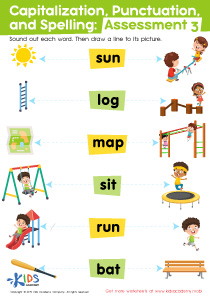
Enhancing Reading Comprehension Grammar Worksheets for Ages 3-8
4 filtered results
Difficulty Level
Grade
Age
-
From - To
Subject
Activity
Standards
Boost your child's reading and writing skills with our "Enhancing Reading Comprehension Grammar Worksheets for Ages 3-8." Designed to combine learning and fun, these worksheets help young learners improve their grammar while developing key comprehension skills. Crafted by educational experts, each activity engages children in reading practice and understanding sentence structures, punctuation, and proper grammar usage. Perfect for at-home learning or classroom use, these resources are an invaluable tool for parents and teachers. Spark curiosity and build a strong educational foundation effortlessly, fostering confident and proficient readers in just a few simple steps. Visit us now to explore our vast collection!
Favorites
With answer key
Interactive
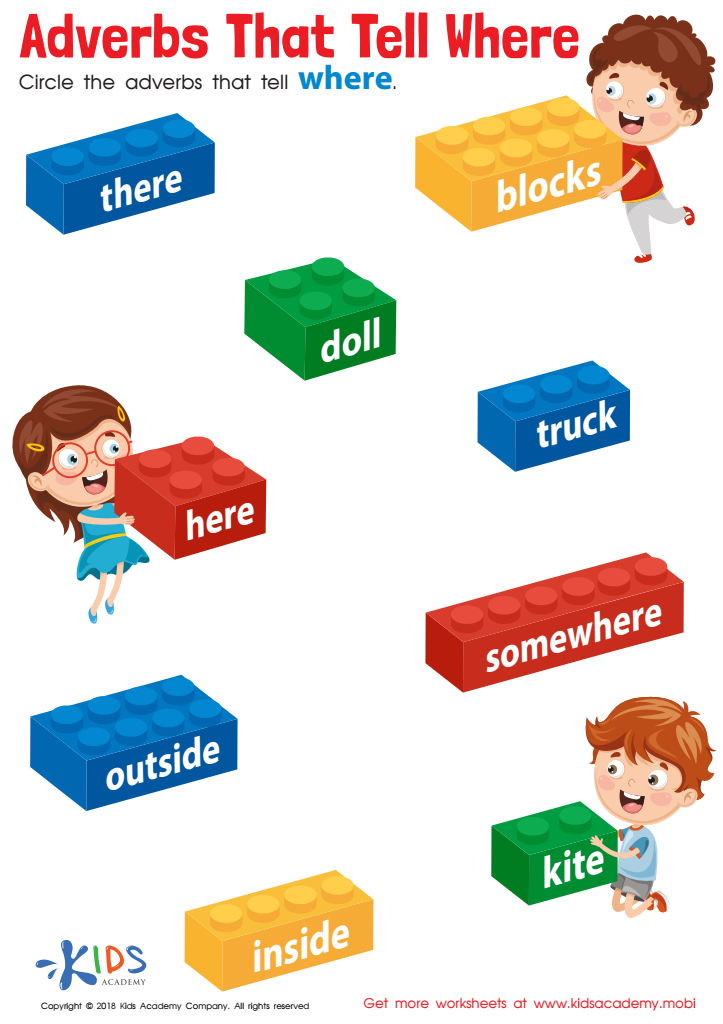
Adverbs That Tell Where Worksheet
Help your kids identify adverbs with a fun worksheet. Read the words aloud and ask them to circle the adverbs showing 'where.' Give them easy examples, like 'the girl stood over there.' See if they can create their own examples. This activity makes learning adverbs fun!
 Assign to My Students
Adverbs That Tell Where Worksheet
Worksheet
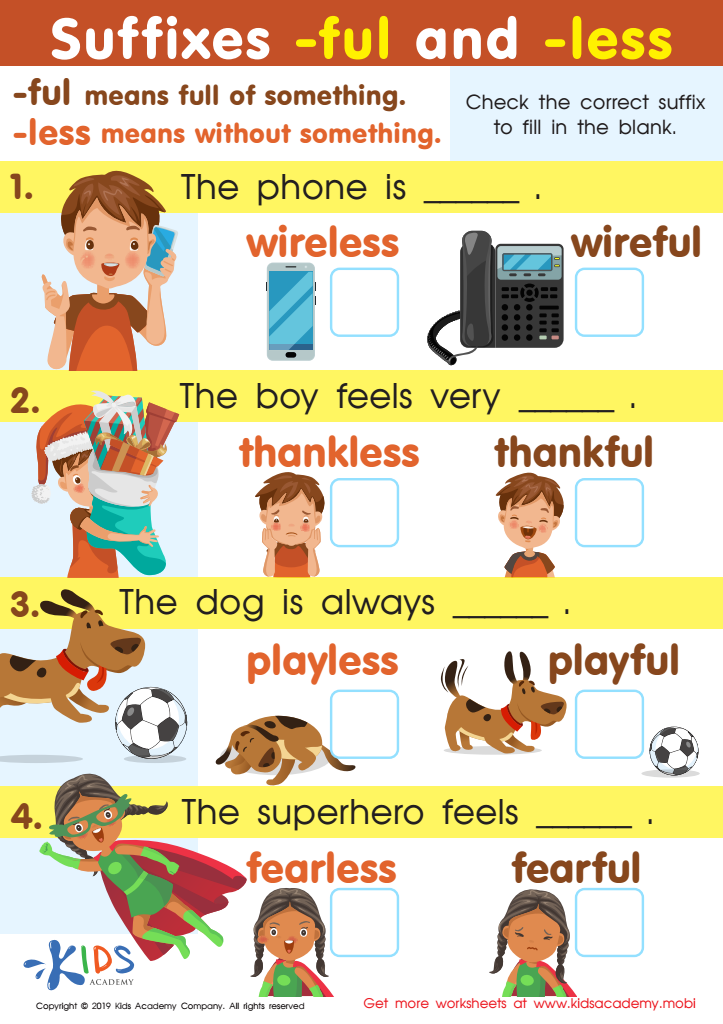
Suffixes –ful and –less Worksheet
Before you start this worksheet, make sure your kids know about suffixes. Explain that they're added to the end of words to change their meaning. In the worksheet, kids will learn about the suffixes –ful and –less. Look at the sentences in the picture with them, and help them to choose the right one for each blank.
Suffixes –ful and –less Worksheet
Worksheet
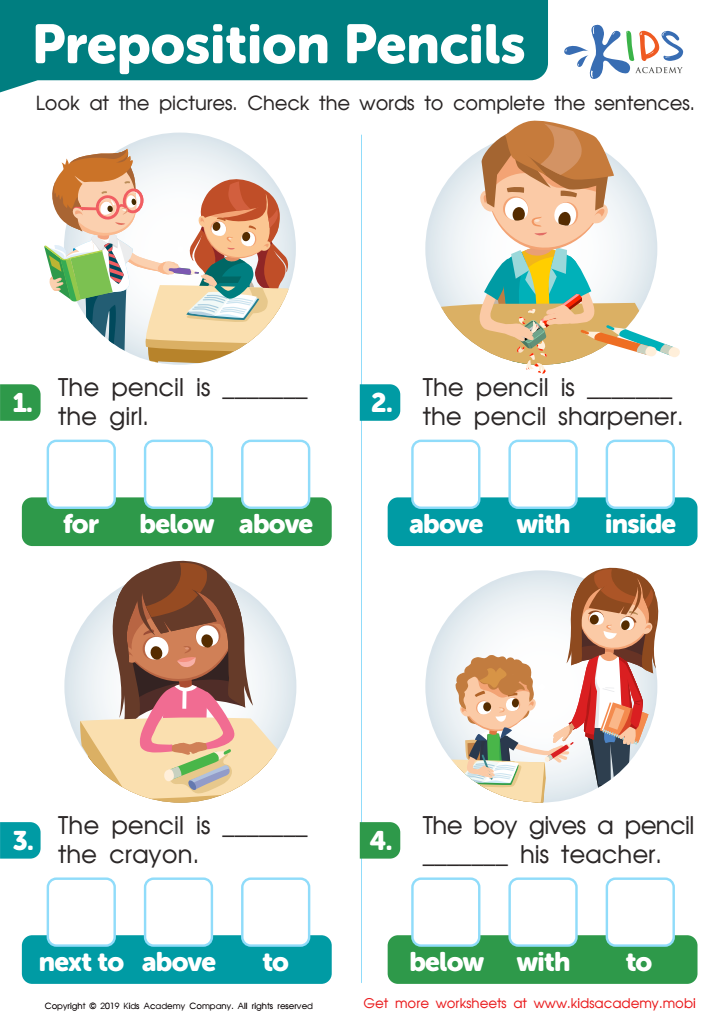
Preposition Pencils Worksheet
Constructing sentences follows rules. Parts of speech like nouns, verbs, adverbs, pronouns, and prepositions help. This worksheet focuses on prepositions. Explain prepositions to your child, then examine the pictures together and help them complete the sentences.
Preposition Pencils Worksheet
Worksheet
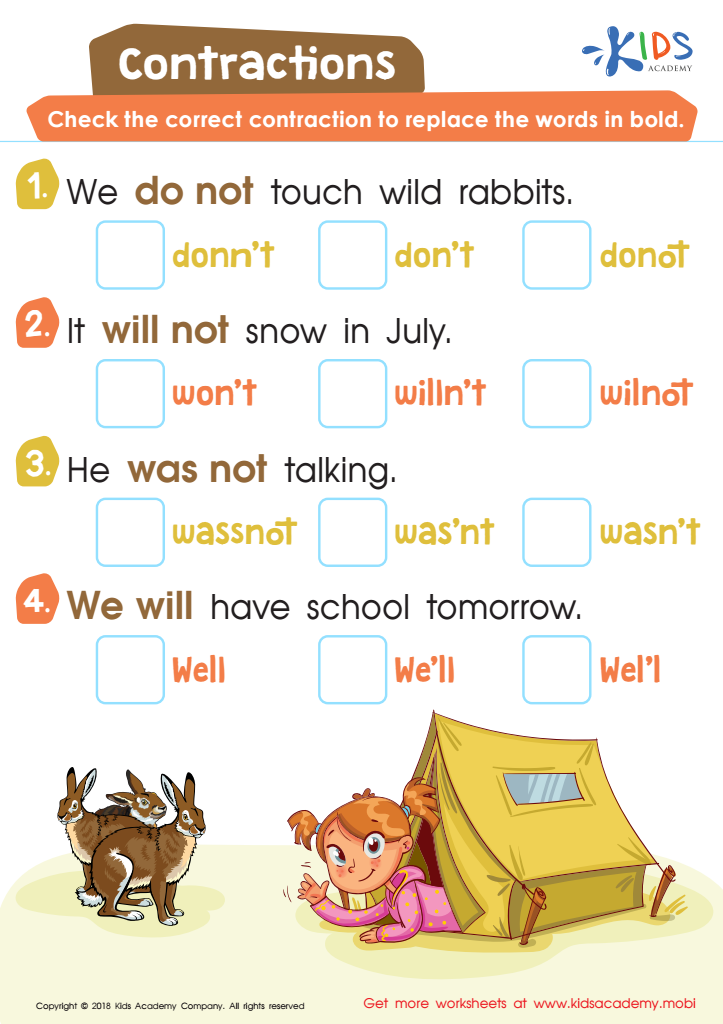
Contractions Worksheet
Contractions are popular in English and make writing/reading easier. For example: I'm, they're, she's. Ask your students to give more examples. Then, read the sentences in this worksheet and help them check the correct contraction to replace the words in bold.
Contractions Worksheet
Worksheet
Join Kids Academy for Free
Who is primarily going to use this learning content?





Enhancing reading comprehension and grammar for children aged 3-8 is crucial for their overall cognitive and linguistic development, serving as a foundation for future learning success. During these formative years, children's brains are exceptionally receptive to language acquisition and cognitive growth. Strong reading comprehension skills allow children to understand and retain the content they read, fostering a lifelong love of reading and learning. Moreover, proficiency in grammar helps in constructing clear and precise sentences, which is essential for effective communication.
Parents and teachers play a pivotal role in this developmental stage. By focusing on reading comprehension, they can ensure that children not only decode words but also grasp the meaning behind them. Storytelling, asking open-ended questions, and encouraging discussions about the text can significantly enhance comprehension skills. Similarly, integrating grammar lessons—such as identifying parts of speech, constructing simple sentences, and correcting common errors—helps children articulate their thoughts more coherently.
Investing time in developing these skills early on mitigates future learning difficulties and builds a solid educational foundation. Children who master reading comprehension and grammar early are better prepared for academic challenges, fostering confidence and enthusiasm for lifelong education. Therefore, parents and teachers should prioritize these skills to ensure holistic development and academic success.